On a hazy afternoon in 1931, a ferry pulls into lower Manhattan. Ahead, a jagged forest of stone and steel rises from the water. The Woolworth Building, the new Bank of Manhattan tower at 40 Wall, and the just-finished Empire State Building stab into the sky. But look a little closer at a photo from that year and you notice something odd: long stretches of low roofs, tenements, warehouses, and church spires. The gaps between the giants are almost as striking as the towers themselves.
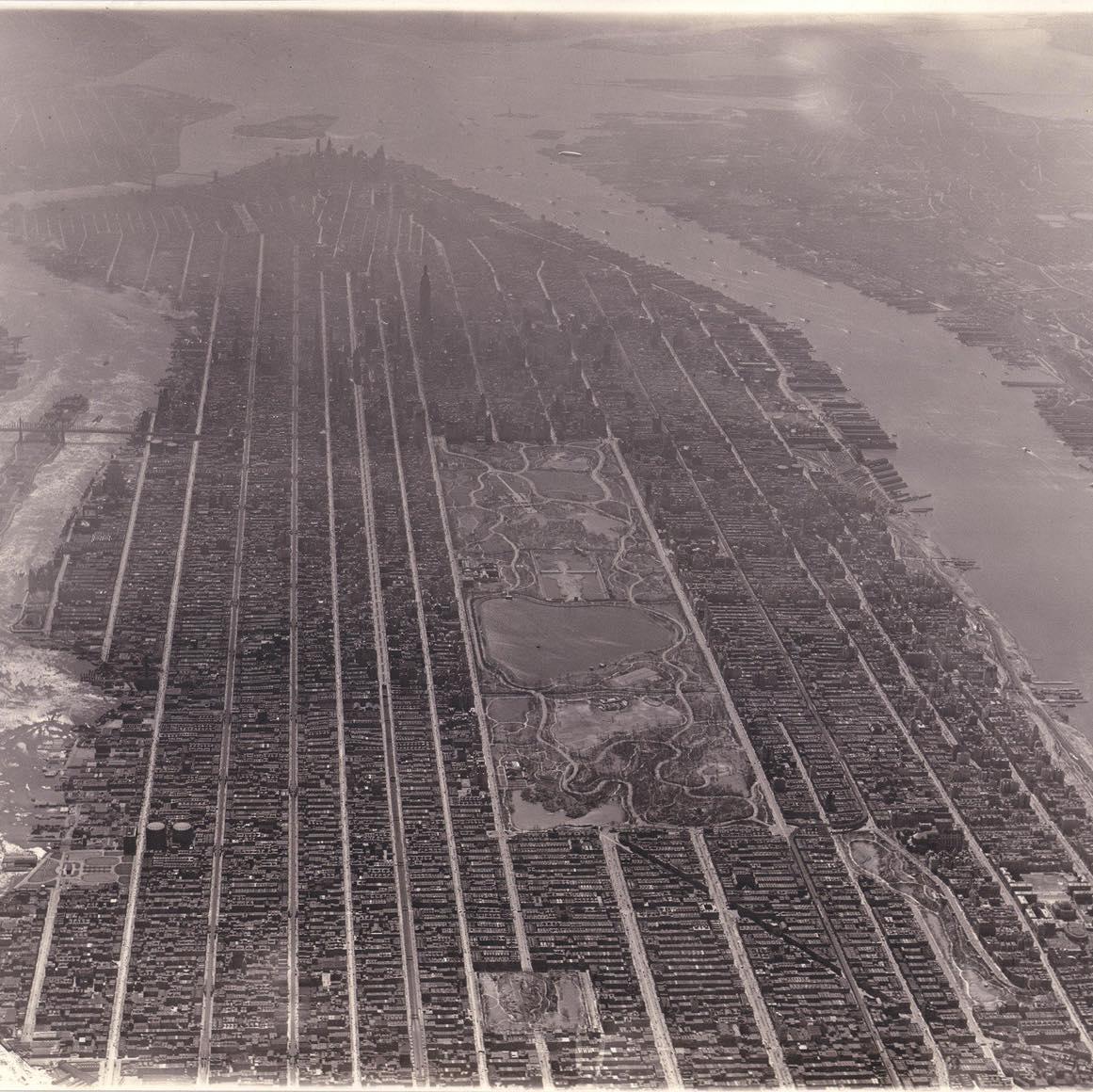
That is the Manhattan people forget. When a Reddit thread shares a 1931 photo with a title like “Manhattan before most skyscrapers,” the instinctive reaction is confusion. Weren’t there already tons of skyscrapers by then? Wasn’t the city already a wall of glass and steel? The short answer: yes and no. By 1931 Manhattan had some of the tallest buildings on earth, but the modern high-rise canyon effect was still in its early stages.
Here are five things people usually get wrong about Manhattan in 1931, what was actually going on, and why it mattered for the city that came after.
1. “By 1931, Manhattan was already a forest of skyscrapers”
The myth: People look at any old black-and-white skyline and assume Manhattan was already packed solid with skyscrapers by the early 1930s. In reality, the tall buildings were clustered and surrounded by a much lower city.
In 1931, New York did have some of the tallest buildings in the world. The Empire State Building opened that year at 1,250 feet. The Chrysler Building, finished in 1930, briefly held the height record at 1,046 feet. Downtown, the Woolworth Building (completed 1913) and 40 Wall Street (completed 1930) dominated lower Manhattan.
But those towers were spikes, not a solid wall. Much of Manhattan was still made up of 4- to 10-story buildings, especially outside the financial district and Midtown’s new business core. The blocks between Broadway and the Hudson, or between Third Avenue and the East River, often looked more like a 19th-century port city than a futuristic metropolis.
A 1931 aerial photo of Manhattan shows this clearly. Lower Manhattan has a tight cluster of tall buildings around Wall Street and Broadway. Midtown has a second cluster around 42nd Street, with the Chrysler Building and the Empire State Building rising above everything. Between them, especially in the 30s, you see a lot of mid-rise loft buildings and older structures. Uptown, Harlem and Washington Heights are mostly low- to mid-rise, with only a few towers near major avenues.
Skyscrapers in 1931 were still expensive, specialized tools. They went where land was most valuable and where transit made dense office work possible. That meant concentrated pockets, not a uniform skyline.
Why it mattered: Because the skyscrapers were so concentrated, they created two powerful business districts that shaped commuting patterns, real estate values, and where New Yorkers worked for the rest of the 20th century.
2. “The Empire State Building opened into a crowded skyline”
The myth: People imagine the Empire State Building joining a packed Midtown skyline in 1931, just one more giant among many. In truth, it towered over a relatively low neighborhood and was famously underused at first.
The Empire State Building rose on the site of the old Waldorf-Astoria Hotel on Fifth Avenue between 33rd and 34th Streets. When construction started in 1930, that stretch of Midtown was not yet the dense office district it would become. Grand Central Terminal and the Chrysler Building anchored a business cluster around 42nd Street. Times Square was a theater and entertainment zone. But south of 34th, the area leaned more toward retail, hotels, and lofts than skyscraper offices.
Al Smith, former governor of New York, chaired the Empire State project. The developers, led by John J. Raskob, were betting that Midtown’s business core would move south toward their building. Then the Great Depression hit. When the building opened on May 1, 1931, it was the tallest in the world, but it was also famously empty. For years, New Yorkers joked about the “Empty State Building.” Many floors sat vacant or underused through the 1930s.
Look at photos from the early 1930s: the Empire State Building rises far above a sea of much shorter buildings. The nearby skyscrapers that feel “normal” to us today, like the later office towers around Herald Square and along Sixth Avenue, had not yet been built. The Empire State was a solitary giant on the southern edge of Midtown’s high-rise cluster.
Skyscrapers in 1931 were not automatic money machines. They were risky bets on future demand. The Empire State Building only became fully successful after World War II, when Midtown’s office market finally grew into the space the developers had imagined.
Why it mattered: The Empire State Building helped pull Midtown’s commercial gravity southward, shaping where office districts and transit hubs would grow for decades, even though it spent its early years half empty.
3. “Old New York disappeared once skyscrapers arrived”
The myth: There is a common idea that once skyscrapers went up, the older 19th-century city vanished overnight. In 1931, though, much of “old New York” was still very visible between the new towers.
Walk a 1931 Manhattan street in your mind. You would see cast-iron loft buildings from the 1870s in SoHo and Tribeca, five-story tenements on the Lower East Side, brownstone rows on the Upper West Side, and church spires poking above low roofs all over the island. The skyline photos that go viral today tend to be taken from the harbor or from the air, which exaggerate the tall buildings and flatten everything else. On the ground, the city still looked mixed and patchy.
Trinity Church at the end of Wall Street is a good example. Completed in 1846, it was once one of the tallest points in the city. By 1931 it was dwarfed by nearby skyscrapers like 40 Wall Street and the Bankers Trust Building at 14 Wall Street. Yet in street-level photos from that year, Trinity’s spire still anchors the view up Wall Street. The churchyard, with its 18th- and 19th-century gravestones, sits in the shadow of modern towers but has not gone anywhere.
Another example: the South Street waterfront. In 1931, the East River piers still handled a lot of cargo. Warehouses, low brick buildings, and old counting houses lined the river, even as the new skyscrapers rose a few blocks inland. The modern glass-and-steel Financial District that people picture today did not fully replace that older port city until the 1950s and 1960s.
Skyscrapers did not erase old New York overnight. They layered on top of it. Tenements, brownstones, and lofts remained home and workplace for most New Yorkers in 1931. The vertical city of postcards was still mostly a business phenomenon, not a residential one.
Why it mattered: Because the old city persisted under and between the towers, Manhattan in 1931 was a place where 19th-century housing, early 20th-century industry, and modern finance all collided on the same blocks, shaping the social and economic tensions that defined prewar New York.
4. “Skyscrapers spread evenly across the island”
The myth: Looking at a stylized skyline, people imagine tall buildings marching up the island in a neat gradient. In reality, 1931 Manhattan had two main skyscraper clusters and large areas with almost no high-rises at all.
By 1931, the pattern was clear. Downtown, the financial district around Wall Street and Broad Street had been building up since the early 1900s. The Woolworth Building near City Hall, completed in 1913, was the star of that cluster. The Equitable Building (1915) and 40 Wall Street (1930) filled in the canyon effect. This was the old business core, tied to the port and the stock exchange.
Midtown was the new challenger. The opening of Grand Central Terminal in 1913 and the spread of electric subways turned 42nd Street into a magnet for offices and hotels. The Chrysler Building and the Daily News Building (completed 1930) anchored the east side. Times Square pulled theaters and advertising. The Empire State Building, as mentioned earlier, tried to pull that energy south.
Between these two clusters, especially in the 20s and 30s streets, you had a mix of older lofts, garment factories, and mid-rise commercial buildings. The Garment District, roughly in the West 30s, was busy and dense but not especially tall. Uptown, beyond 59th Street, you saw apartment houses and some institutional buildings, but very few true skyscrapers.
One clear example of this uneven growth is the New Yorker Hotel, opened in 1930 on Eighth Avenue at 34th Street. At 43 stories, it was one of the tallest hotels in the world. But look at early photos: it rises from a mostly low-rise area west of Penn Station. It is a lone giant on the west side, not part of a continuous wall of towers.
Skyscrapers in 1931 followed money, transit, and zoning rules, not any aesthetic plan. The 1916 Zoning Resolution, passed after the massive Equitable Building cast deep shadows on its neighbors, encouraged setback designs and limited how much of a lot could be built straight up. That produced the wedding-cake profiles of many 1920s and 1930s towers, but it also concentrated the tallest buildings where land values justified the cost.
Why it mattered: The uneven spread of skyscrapers locked in a two-core city, with Downtown and Midtown competing and cooperating as business hubs, a pattern that still shapes where New Yorkers work and commute today.
5. “1931 Manhattan was already a modern glass-and-steel city”
The myth: When people say “before most skyscrapers,” they often picture the difference between 1931 and today as mainly a matter of height and quantity. They miss that the very style and purpose of tall buildings were different.
In 1931, the skyscraper was still mostly a masonry-clad object. Steel frames carried the load, but facades were stone, brick, or terra cotta. The Woolworth Building looks like a Gothic cathedral stretched upward. The Chrysler Building is an Art Deco sculpture with stainless steel crown and ornamented spire. Even the Empire State Building, relatively plain, is a limestone and granite shaft with setbacks, not a glass curtain wall.
Glass curtain walls, the style that defines the modern skyline, did not arrive in force until the 1950s and 1960s with buildings like the Lever House (1952) and the Seagram Building (1958) on Park Avenue. In 1931, windows were smaller, offices were darker, and air conditioning was rare. Tenants opened windows to cool off. The skyscraper was a vertical stack of traditional offices, not a climate-controlled glass box.
The people inside were different too. In 1931, Manhattan’s towers were dominated by banks, insurance firms, law offices, and trading companies. The New York Stock Exchange, though not itself a skyscraper, anchored this world. Radio was just becoming a big tenant. NBC moved into the RCA Building at Rockefeller Center only in the mid-1930s, after that complex rose. Tech companies in the modern sense did not exist. The high-rise city was a machine for finance, trade, and corporate paperwork.
Even the way people reached those buildings felt different. The subway system was extensive by 1931, but many commuters still arrived by ferry or commuter rail to terminals like Penn Station and Grand Central. The car was present but had not yet reshaped Manhattan’s core the way it would after World War II. Streets were crowded with trolleys, trucks, and pedestrians. Parking garages were rare. The skyscraper city was dense but not yet fully car-oriented.
So when someone looks at a 1931 photo and says “before most skyscrapers,” they are partly reacting to style. The buildings look heavier, more ornate, less glassy. The gaps between them are wider. The city feels like a halfway point between the 19th-century port town and the late 20th-century corporate skyline.
Why it mattered: Because 1931’s skyscrapers were stone-clad, less glassy, and built for a different kind of office work, they created a city that felt monumental and vertical but still pre-modern in daily life, a transitional stage that shaped how New Yorkers experienced work, light, and space.
Manhattan in 1931 sat on a hinge. The Empire State Building had just opened. The Chrysler spire still gleamed as a new arrival. Yet most New Yorkers lived and worked in buildings far shorter, older, and more cramped than the towers that dominate our mental picture.
That is why photos from that year feel slightly uncanny. You recognize the icons, but the gaps between them look too wide. The waterfront is still a working port. The highways and glass boxes are missing. The city is in mid-transformation.
Understanding that moment matters because it reminds us that skylines are not static symbols. They are snapshots of risk, technology, and guesswork. In 1931, developers were betting on a future that had not arrived yet, stacking stone and steel into the sky while the Great Depression hollowed out their tenant lists. The Manhattan we know today grew into those bets, filled the gaps, and replaced many of the older buildings that still dominated the island in that Reddit photo.
So when you see “Manhattan before most skyscrapers” under a 1931 image, remember: the giants were already there, but they were still outnumbered. The modern skyline was a work in progress, not a finished product.
Frequently Asked Questions
What did Manhattan actually look like in 1931?
In 1931, Manhattan had a few very tall skyscrapers clustered in Downtown and Midtown, like the Empire State Building, Chrysler Building, and Woolworth Building. But most of the island was still made up of 4- to 10-story buildings, tenements, brownstones, and warehouses. The skyline had dramatic spikes, not a continuous wall of towers.
Was the Empire State Building empty when it opened?
Yes, the Empire State Building struggled with low occupancy when it opened in 1931 during the Great Depression. Many floors sat vacant for years, and New Yorkers jokingly called it the “Empty State Building” until office demand finally caught up after World War II.
Were there already lots of skyscrapers in New York by 1931?
There were several skyscrapers by 1931, and New York had some of the tallest buildings in the world. However, they were concentrated in two main clusters around Wall Street and Midtown. Large parts of Manhattan, especially uptown and along the rivers, remained mostly low- to mid-rise.
When did Manhattan get its modern glass-and-steel skyline?
The modern glass-and-steel look arrived after World War II, especially in the 1950s and 1960s with buildings like Lever House (1952) and the Seagram Building (1958). In 1931, most skyscrapers still had stone, brick, or terra cotta facades and smaller windows, not full glass curtain walls.