Somewhere in 14th‑century Europe, a farmer’s plow hit something hard. Not a rock. A bone. Huge, curved, heavier than anything from a cow or horse. The local priest came to look. People argued. Giant? Dragon? Proof from the Bible? No one said “dinosaur.” The word did not exist.
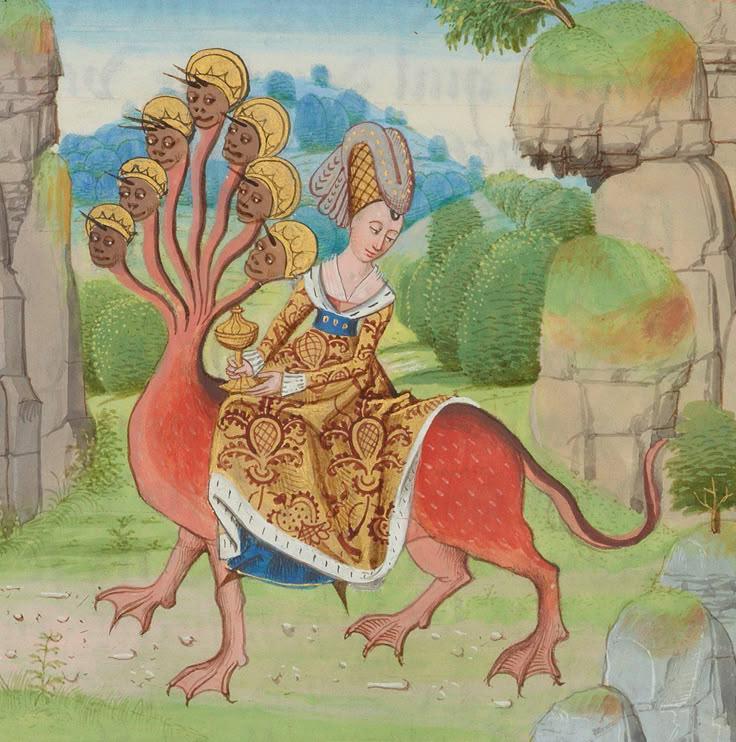
Medieval people absolutely found large fossil bones. They had myths of dragons and giants. They read ancient authors who described strange creatures and “stones that were once animals.” But they did not have a concept of deep geological time or extinct prehistoric reptiles. So when they encountered fossils, they fit them into the stories and theology they already knew.
By the end of this story, you will see why medieval Europe had dragons instead of dinosaurs, how people explained giant bones, and how those explanations shaped the later birth of paleontology.
Did medieval people ever actually find dinosaur bones?
They did, though they did not know what they were.
Fossils turn up in places where people dig: fields, quarries, mines, riverbanks. Medieval Europe had all of those. We do not have a medieval diary entry that says, “Today I found a Tyrannosaurus femur,” but we do have enough indirect evidence to be confident large fossils were encountered and sometimes kept.
One clear example is not from Europe but from China, where written records are better for this topic. By the Song dynasty (10th–13th centuries), Chinese apothecaries sold what they called “dragon bones” and “dragon teeth.” These were dug from the ground, ground up, and used in medicine. Modern studies of some of these old pharmacy collections have identified many of them as dinosaur fossils.
Europe had similar practices, just with less paperwork. From the 12th century on, we hear about “giant bones” displayed in churches or town halls. The most famous case is in the town of Klagenfurt in present‑day Austria. Around 1335, miners unearthed a huge skull near a marsh. Locals decided it belonged to a dragon killed by a legendary hero. They hung the skull in the town hall as proof. The skull is still there. Modern analysis shows it is the skull of a woolly rhinoceros, not a dragon.
In other places, massive bones were interpreted as the remains of biblical giants, especially the Nephilim mentioned in Genesis. Large femurs and vertebrae, probably from mammoths or other Ice Age mammals, were shown to visitors as “giant bones.”
So medieval people did encounter large fossils, and sometimes preserved them. They just slotted them into dragons, giants, or marvels, which shaped how later generations thought about monsters and the deep past.
What did medieval people think fossils were?
Here is the key point: medieval Europeans did not have a single, unified theory of fossils. They had several competing ideas, most of them inherited from ancient Greek and Roman writers.
Some ancient authors, like Xenophanes (6th century BCE), had noticed seashells high in mountains and suggested that land had once been under the sea. Others, like Aristotle, thought fossils might be “failed” or incomplete attempts by nature to form animals or stones that grew in the earth like crystals.
Medieval scholars read these ideas in Latin translations. They also had to reconcile them with Christian theology. The Bible did not mention fossils, but it did describe Creation, the Flood, and a world only a few thousand years old, based on common medieval chronologies.
So several explanations circulated:
• Some thought fossils were just “sports of nature,” odd stones that happened to look like bones or shells.
• Others, following writers like Isidore of Seville (7th century), accepted that some stones had once been living things but did not push the idea very far.
• A few associated fossils with the Flood of Noah, as remains of creatures drowned and buried. This idea grew stronger in the later Middle Ages and early modern period.
What almost no one suggested was that fossils were the remains of entire species that had vanished long before humans. Extinction as a concept was deeply uncomfortable. If God created the world good and ordered, why would he allow whole species to disappear?
Because medieval thinkers saw fossils through a theological and classical lens, they treated them as curiosities or moral lessons, not as evidence for a deep prehuman past. That habit of mind delayed the idea of deep time and extinction, which are necessary before anyone can even imagine dinosaurs.
Why dinosaurs were impossible in a medieval worldview
To know about dinosaurs, you need three things: the idea of very deep time, the idea that species can go extinct, and the ability to classify fossils as belonging to unknown kinds of animals. Medieval Europe had none of these in a modern sense.
First, time. Most medieval Christian chronologies, drawing on writers like the 4th‑century bishop Eusebius and later Bede, placed Creation around 4000 BCE, give or take a few centuries. That meant the entire history of the world was about six thousand years long.
Six thousand years is long enough for ancient empires and forgotten cities. It is not nearly long enough for geological processes that bury, compress, and expose dinosaur‑bearing rock layers. Without deep time, fossils could only be recent: from the Flood, from giants, or from strange natural processes.
Second, extinction. Medieval bestiaries, those illustrated animal books copied in monasteries, include real animals like lions and elephants, but also unicorns and dragons. The world was seen as a complete, ordered creation. If God made a kind of animal, that kind still existed somewhere, even if only at the edge of the known world.
To say that God had created animals that no longer existed raised uncomfortable questions. Had God changed his mind? Had creation failed? So most thinkers assumed that any creature mentioned in ancient texts still lived somewhere, perhaps in distant Africa or Asia.
Third, classification. Medieval scholars relied heavily on authority. If Aristotle or Pliny the Elder had not described an animal, it was hard to fit it into learned categories. A strange bone was more likely to be linked to a known creature (a giant human, a dragon) than to an unknown, extinct type.
Because of this intellectual framework, the very idea of “prehistoric reptiles that lived millions of years before humans and then went extinct” was not just missing. It was structurally impossible. The mental furniture was not there. That absence explains why dinosaur bones, when found, were absorbed into myths of dragons and giants instead of creating a new category of ancient life.
Dragons, giants, and how myths absorbed fossils
If you want to see medieval people grappling with the idea of huge, dangerous creatures, look at their dragons.
Medieval Europe was full of dragon stories. Saints like George, Margaret, and Martha were said to have fought dragons. Chronicles mention dragons appearing as omens. Bestiaries describe dragons as giant serpents, sometimes winged, hoarding treasure or threatening towns.
Were these “really” about dinosaurs? No. Dragon myths have many roots: ancient Near Eastern chaos monsters, biblical serpents, classical stories, and human fear of snakes and predators. But in some cases, fossil finds likely reinforced and shaped these stories.
In parts of France, Italy, and Germany, large bones were linked to local dragon legends. The Klagenfurt skull is one example. In 15th‑century Italy, the city of Verona displayed a huge rib as the bone of a dragon killed by the city’s patron saint. Modern paleontologists suspect it was a rib from a large prehistoric mammal.
Giants filled a similar role. The Bible mentioned giants, and medieval people took that seriously. When they found an oversized femur or skull fragment, it was natural to say, “Here is proof.” In 1456, for instance, a massive skeleton was unearthed near Lucerne in Switzerland. Locals called it a giant named Tsu Tsu. Later study suggests it was a mammoth.
None of these cases involve dinosaurs in the strict sense. Most of the bones were from Pleistocene mammals, not Jurassic or Cretaceous reptiles. But the pattern matters. Large, ancient bones fed into stories of dragons and giants. Those stories then hardened into local tradition and religious symbolism.
Because fossils were absorbed into myth and theology, they did not push people to imagine a separate, deep, prehuman world of strange animals. That absorption delayed the mental leap that would later produce the idea of dinosaurs.
What did educated medieval writers actually say about fossils and monsters?
It is tempting to think of “medieval people” as one group, but a peasant finding a bone and a university scholar in Paris did not think the same way. So what did the educated side of society write about these things?
Isidore of Seville, writing around 600 in his Etymologies, mentioned “fossils” only indirectly, in sections on stones and metals. He repeated ancient ideas that some stones resembled animals and plants, and that some were formed from them. He did not build a theory of past worlds from this.
Later, in the 13th century, scholars like Albertus Magnus and Thomas Aquinas engaged more directly with Aristotle’s natural philosophy. They discussed how forms arise in matter, how animals reproduce, how monsters (in the sense of malformed births) occur. But fossils, when they appeared, were usually treated as oddities, not as evidence.
There were exceptions. Some medieval Islamic scholars, working with the same Greek sources, speculated more boldly about changing seas and buried creatures. Al‑Biruni (11th century) noted marine fossils in mountains and suggested that land and sea had changed places over long periods. His ideas did not translate directly into a dinosaur theory, but they show that some thinkers were willing to imagine longer timescales.
Even so, no medieval writer, Christian or Muslim, produced anything like a theory of extinct reptilian species from a distant age. That step required not just observation, but a break with the authority of ancient texts and a new sense of time.
Because learned writers treated fossils as marginal curiosities, they did not give later generations a ready‑made theory of ancient life. That vacuum set the stage for early modern naturalists to argue fiercely over what fossils meant.
From medieval dragons to early modern dinosaurs: what changed?
Dinosaurs as a concept are a 19th‑century invention. The word “dinosaur” was coined in 1842 by the British anatomist Richard Owen to describe a group of large fossil reptiles like Iguanodon and Megalosaurus. So what happened between medieval dragon bones and Owen’s dinosaurs?
Several long shifts began in the late Middle Ages and accelerated in the 16th–18th centuries.
First, more systematic collecting. Renaissance princes and scholars built “cabinets of curiosities” that gathered shells, bones, minerals, and exotic animals. Fossils moved from church walls and village legends into collections where they could be compared and studied.
Second, the authority of ancient texts weakened. The scientific revolution encouraged people to trust observation and experiment over tradition. When naturalists like Nicolaus Steno in the 17th century studied fossil shark teeth, they argued that these really were teeth from once‑living animals, buried in ancient sediments.
Third, geology invented deep time. In the 18th century, thinkers like James Hutton and later Charles Lyell argued that the Earth was far older than a few thousand years. Slow processes like erosion and sedimentation, operating over immense spans of time, could explain rock layers and fossils.
Fourth, extinction became thinkable. In the late 18th and early 19th centuries, Georges Cuvier compared fossil bones of mammoths and other animals with living species. He concluded that some kinds of animals had disappeared entirely. Extinction was real.
Once you have deep time, extinction, and systematic fossil study, dinosaurs become possible as a concept. When large reptilian bones were found in England and elsewhere, they were no longer dragons or giants. They were members of a lost world.
The medieval habit of treating big bones as dragons did not cause paleontology, but it did create a long record of people noticing something strange in the ground. The shift from dragon to dinosaur marks a change in how humans see their place in time: not at the center of a short, fixed story, but as late arrivals in a very long one.
So did any medieval person “know about dinosaurs” at all?
If by “know about dinosaurs” you mean “recognize that there were once giant reptiles living millions of years before humans, now extinct, whose bones we find in rock,” the answer is no. That idea depends on concepts that only came together between the 17th and 19th centuries.
If you mean “encounter dinosaur bones and wonder about them,” then yes, especially in places like China where dinosaur fossils were common and used as “dragon bones.” Medieval Europeans also encountered large fossils, though most of the ones we can trace were from Ice Age mammals rather than dinosaurs.
Medieval people did not confuse living animals with dinosaurs. They did not think humans and dinosaurs coexisted. Instead, they slotted fossils into categories they already had: dragons, giants, monsters, marvels, signs from God.
That response tells us something about how human minds work. When we meet evidence that does not fit our story of the world, we usually adjust the evidence, not the story. Medieval Europe had a short timeline, a complete creation, and strong respect for ancient authorities. Within that frame, dinosaurs could not appear.
By tracing how dragon bones became dinosaur fossils, we see how ideas about time, nature, and God had to shift before humans could imagine a world where we were not always here, and where whole kinds of creatures could vanish long before we arrived.
Why this still matters when we talk about dinosaurs today
Modern debates about evolution, the age of the Earth, and human origins often replay older arguments in new language. Some people still try to fit fossils into a short biblical timescale or treat dinosaurs as creatures from a recent, human‑filled past.
Looking back at the Middle Ages shows how much work it took to get from “giant bones prove there were giants” to “these bones belong to extinct animals from deep time.” None of that was automatic. It required people to question inherited stories and accept that the world is far older and stranger than their ancestors imagined.
Medieval people did not know about dinosaurs. What they did know, and how they explained the bones they found, helped shape the long path to the science that named them.
Frequently Asked Questions
Did medieval people ever find dinosaur fossils?
Yes, medieval people did encounter large fossils, though they did not recognize them as dinosaur remains. In Europe, most identifiable medieval finds were actually from Ice Age mammals like mammoths or woolly rhinoceroses, which were interpreted as the bones of dragons or biblical giants. In China, many “dragon bones” used in traditional medicine have turned out to be dinosaur fossils, but they were not understood as remains of extinct prehistoric reptiles.
Did medieval Europeans believe humans and dinosaurs lived at the same time?
No. Medieval Europeans had no concept of dinosaurs at all, so they never imagined humans living alongside them. They believed in a relatively short Earth history of a few thousand years and saw fossils as either odd stones, remains from the biblical Flood, or proof of giants and dragons. The idea of dinosaurs living millions of years before humans only emerged in the 19th century with modern geology and paleontology.
How did medieval people explain giant bones and fossils?
Medieval explanations for giant bones drew on the Bible, classical texts, and local legend. Large femurs or skulls were often said to be from biblical giants like the Nephilim, or from dragons slain by saints or heroes. Some scholars repeated ancient ideas that fossils were stones that grew in the earth or failed attempts by nature to form animals. Very few writers connected fossils to long‑vanished species or deep geological time.
When did people first realize fossils were from extinct animals like dinosaurs?
The realization that fossils came from extinct animals developed between the late 18th and early 19th centuries. Georges Cuvier used comparative anatomy to show that some fossil animals, such as mammoths, had no living counterparts, which supported the idea of extinction. At the same time, geologists like James Hutton and later Charles Lyell argued for a very old Earth. With deep time and extinction accepted, 19th‑century scientists such as Richard Owen could identify large fossil reptiles as a distinct group and coin the term “dinosaur” in 1842.