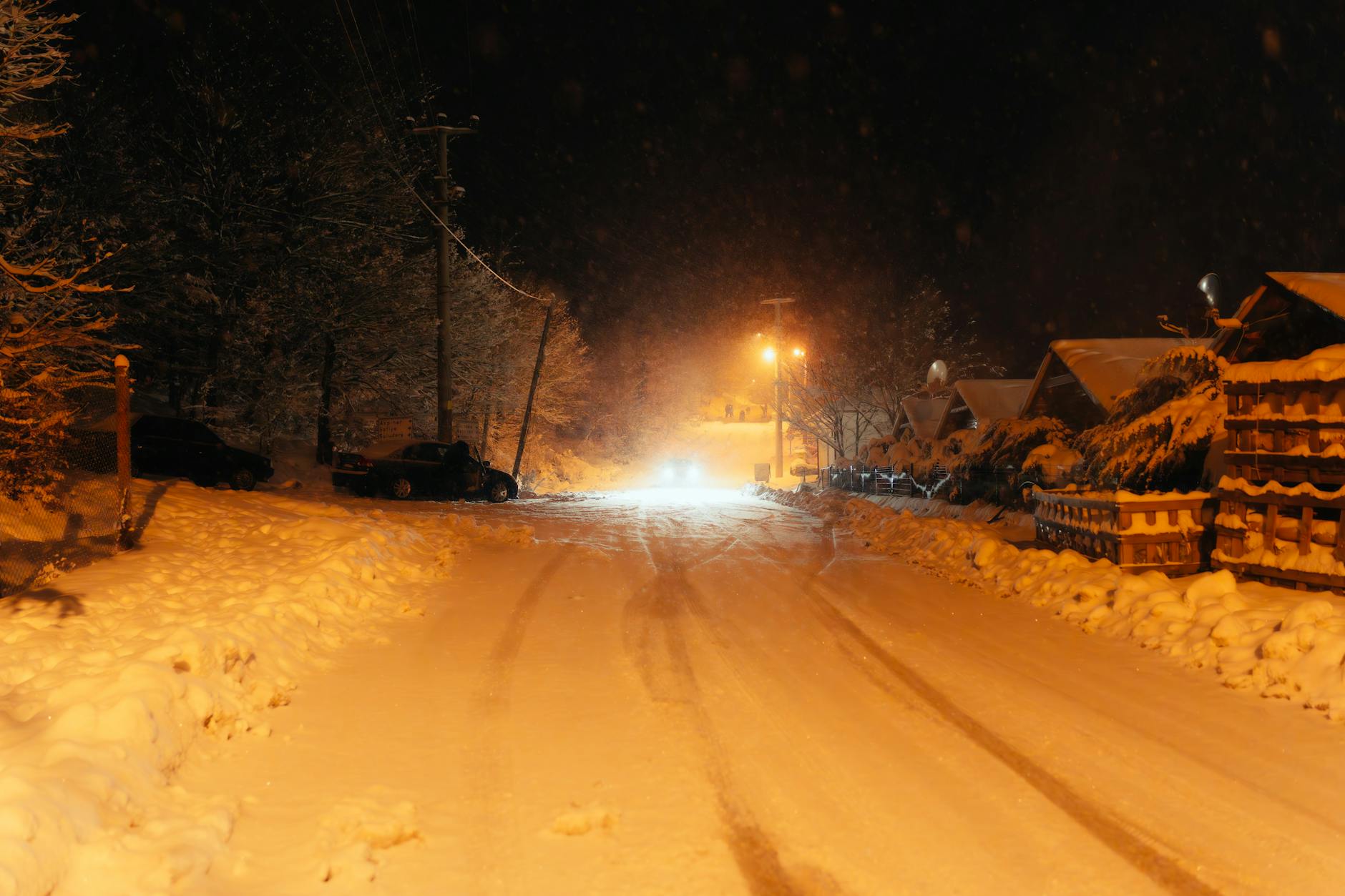
On a frozen February night in 1943, a handful of men on skis crept toward a concrete fortress clinging to a Norwegian mountainside. Below them, floodlights glared over a deep ravine. Inside the building, German guards dozed, unaware that the barrels in the basement held something Hitler’s scientists thought might win the war: heavy water.
Operation Gunnerside was the British-backed Norwegian raid on the Vemork heavy water plant that damaged Nazi Germany’s ability to build an atomic bomb. A small team of commandos infiltrated occupied Norway, sabotaged the facility, and escaped into the snow. The raid did not single-handedly “stop Hitler getting the bomb,” but it did slow and complicate Germany’s nuclear efforts at a key moment.
To understand why this obscure industrial plant in Telemark mattered, you have to follow three threads: what heavy water is, why the Nazis cared about it, and how a group of hungry, half-frozen Norwegians managed to walk into a guarded plant, plant explosives under the noses of the Germans, and get away.
Why heavy water mattered to Hitler’s bomb project
Start with the chemistry. Ordinary water is H2O. Heavy water is D2O, where the hydrogen atoms are replaced by deuterium, a heavier isotope. It looks like water, pours like water, and in large enough doses can kill you. In a nuclear reactor, heavy water acts as a moderator. It slows down neutrons so they are more likely to cause fission in uranium.
In the late 1930s and early 1940s, physicists in several countries were racing to figure out how to create a controlled chain reaction. You could do it with graphite or with heavy water. The German nuclear program, led by physicists such as Werner Heisenberg, pursued heavy water as a key ingredient for a reactor that could produce plutonium for a bomb.
There was a catch. Heavy water is rare. It has to be separated from ordinary water in an energy-intensive process. In 1934, the Norwegian company Norsk Hydro built a plant at Vemork, near the town of Rjukan, to produce hydrogen by electrolysis. As a byproduct, it could produce heavy water. By the outbreak of World War II, Vemork was the only industrial-scale heavy water production facility in the world.
When Germany invaded Norway in April 1940, the plant fell under German control. The French and British had already tried to buy up and remove existing heavy water stocks before the invasion, and some barrels were smuggled out to France and then Britain. But under occupation, production resumed. By 1942, the plant was turning out tens of kilograms of heavy water per month.
That made Vemork a strategic target. Allied intelligence, through intercepted communications and reports from Norwegian resistance, concluded that if Germany ever built a working reactor, the heavy water from Vemork would be at its core. The plant turned from an obscure hydroelectric facility into a pressure point in the global race for the bomb. So the heavy water made Vemork one of the few industrial sites where a small sabotage operation could influence a continental-scale scientific arms race.
From theory to target: how Vemork landed on the Allied hit list
The German nuclear program, often called the Uranverein (Uranium Club), was never as unified or well funded as the later Manhattan Project. It was scattered among universities and research institutes, hampered by bureaucracy, and bled of talent by Nazi antisemitic policies. But in 1941–42, Allied leaders did not know that. They had to assume the worst.
Reports trickled in. Norwegian engineers and workers at Vemork, some sympathetic to the resistance, passed word about German interest in heavy water. British intelligence picked up references to shipments of “special water.” Scientists in Britain, including refugee physicists, warned that if Germany secured enough heavy water and uranium, a reactor and then a bomb were plausible.
By mid-1942, the British Special Operations Executive (SOE), the agency created to “set Europe ablaze” through sabotage and resistance, had Vemork on its target list. The question was how to hit it. A bombing raid risked missing the specific heavy water equipment or killing large numbers of Norwegian civilians. A commando raid would be difficult. The plant sat on a steep mountainside, protected by cliffs and a deep ravine, with a single road and a guarded bridge.
SOE decided on a two-stage plan. First, a small Norwegian team would parachute into the Telemark region to gather intelligence and prepare a landing site. This was Operation Grouse. Then a larger group of British-trained commandos would land by glider, join the advance team, and attack the plant. That second phase was codenamed Operation Freshman.
In October 1942, four Norwegians from the resistance, trained in Britain, jumped into the Hardangervidda plateau. They were the Grouse team: Jens-Anton Poulsson, Arne Kjelstrup, Knut Haugland, and Claus Helberg. They landed in a remote, snow-covered wilderness, set up a base, and began watching Vemork. They were the eyes and ears for an attack that, if it worked, might tilt the nuclear balance. So the decision to target Vemork turned a local resistance effort into a strategic operation at the intersection of science and war.
The disaster of Operation Freshman and the cost of failure
Operation Freshman was the first attempt to destroy the heavy water plant, and it went badly from the start. In November 1942, two gliders carrying British sappers, towed by Halifax bombers, took off for Norway. The plan was to land on the plateau, link up with the Grouse team, and then attack Vemork together.
Bad weather, navigation errors, and technical problems wrecked the mission. One Halifax crashed into a mountainside. Both gliders crash-landed far from the intended zone. Survivors were scattered, injured, and disoriented in harsh winter conditions. None reached the Grouse team.
The Germans quickly found the wrecks and rounded up survivors. Under Hitler’s Commando Order, which mandated the execution of captured commandos, many of the British soldiers were shot after interrogation. Some were tortured first. A few died from their injuries or exposure.
The Grouse team, waiting in the snow with dwindling supplies, realized the mission had failed. They had to survive the winter on their own, living off reindeer and ration drops, constantly at risk of discovery. For weeks, they were a forgotten fragment of a failed plan.
Operation Freshman is often overshadowed by the later success of Gunnerside, but it mattered. It showed how hard it was to bring conventional forces into Norway’s interior. It alerted the Germans that the Allies were interested in the region, though they did not yet know exactly why. It also hardened Allied resolve. If they tried again, it would have to be with a smaller, more flexible team that could move like locals, not like an airborne assault. So the Freshman disaster forced SOE to rethink its approach and paved the way for a leaner, more Norwegian-led operation.
Operation Gunnerside: how a handful of men broke into a fortress
SOE’s second attempt was Operation Gunnerside. This time, the raiding party would be entirely Norwegian, trained in Britain, and inserted by parachute to join the surviving Grouse team.
In February 1943, six men jumped over the Hardangervidda plateau: Joachim Rønneberg (the leader), Knut Haukelid, Fredrik Kayser, Kasper Idland, Hans Storhaug, and Birger Strømsheim. They landed in a blizzard, found each other, then located the Grouse team, which had survived months in the wilderness. The combined group, now often referred to simply as the Gunnerside team, prepared for the attack.
The Germans had reinforced security after Operation Freshman. Guards patrolled the bridge leading to the plant. The road was watched. The plant itself sat above a 200-meter-deep ravine, with a frozen river at the bottom. Barbed wire and floodlights ringed the perimeter.
On the night of 27–28 February 1943, the team set out on skis. They chose the ravine. In the dark, in deep snow, they climbed down one side, crossed the icy river, and scrambled up the other. They found a way through a fence and reached a little-used railway line that led into the plant area. The approach that German planners considered impossible turned out to be their way in.
Once inside the perimeter, they split up. Some covered the outside. Others, including Rønneberg and Kayser, moved toward the basement where the electrolysis cells and heavy water equipment were located. They wore British uniforms under their Norwegian clothes, a deliberate choice. If captured, they wanted to be treated as regular soldiers, not as saboteurs subject to summary execution.
They found an unlocked door. Inside, they encountered a Norwegian caretaker. They confronted him, quietly explained what they were doing, and asked him to stay calm. He cooperated. The saboteurs located the heavy water production room and placed explosive charges on the high-pressure pipes and cells, attaching delayed fuses. They also left a British-made Thompson submachine gun at the scene to make it look like a British raid, not a local resistance job, to reduce the risk of reprisals against Norwegians.
The charges went off around 1 a.m. They destroyed key parts of the heavy water equipment and dumped hundreds of kilograms of heavy water. No one was killed. The team slipped back into the night. Some skied toward Sweden, covering hundreds of kilometers in brutal winter conditions. Others stayed in Norway to continue resistance work.
Operation Gunnerside is often described as one of the most successful sabotage missions of the war. A small team, with minimal casualties, inflicted targeted damage on a high-value industrial site. So the raid showed that a handful of well-trained locals, using knowledge of terrain and careful planning, could punch far above their weight in a global conflict.
After the raid: German repairs, Allied bombing, and the ferry sinking
The Gunnerside raid did not end heavy water production forever. The Germans repaired the plant within months. By summer 1943, Vemork was producing again, though at reduced capacity. That fact often surprises people who imagine the raid as a single decisive blow that “ended” the program.
Allied leaders knew the plant had been damaged but not destroyed. In November 1943, the USAAF and RAF launched a heavy bombing raid on Rjukan and Vemork. Hundreds of bombers dropped loads on the area. The attack damaged buildings and killed Norwegian civilians. It did less damage to the core heavy water equipment than hoped. Precision bombing from high altitude in a mountainous region was a blunt instrument.
The Germans, shaken by the combination of sabotage and bombing, decided to shut down heavy water production in Norway and move remaining stocks and some equipment to Germany. In early 1944, they prepared to ship barrels of heavy water by rail to the port of Tinnsjø, then by ferry across the lake on the vessel SF Hydro, then onward by train to the continent.
Norwegian resistance learned of the plan. Knut Haukelid, one of the Gunnerside saboteurs who had remained in Norway, led a new operation. On the night of 19 February 1944, saboteurs snuck aboard the SF Hydro while it was docked and planted explosives below the waterline, set to detonate when the ferry was over the deepest part of the lake.
The next morning, as the ferry crossed Tinnsjø, the charges exploded. The ship sank in deep water, taking the heavy water barrels with it. Tragically, several Norwegian civilians died in the sinking along with German soldiers and crew. The resistance had weighed the risk and gone ahead, judging the cargo’s importance too high to ignore.
The Germans did not attempt to salvage the barrels. The heavy water was lost. Combined with the earlier sabotage and bombing, this meant that by 1944, Germany’s access to large quantities of heavy water from Norway was effectively cut off. So the post-Gunnerside actions, especially the ferry sinking, turned a daring raid into a sustained campaign that strangled the heavy water supply line.
Did Operation Gunnerside really stop Hitler’s atomic bomb?
This is the question that keeps coming up in documentaries and Reddit threads: did the Norwegian heavy water sabotage “deprive the Nazis of the atomic bomb” in a literal sense?
The honest answer is more nuanced. Most historians agree that Germany was unlikely to build a working atomic bomb before the end of World War II, even without the Vemork sabotage. The German nuclear program suffered from underfunding, divided leadership, theoretical miscalculations, and the loss or sidelining of key scientists. Heisenberg and his colleagues misjudged the amount of fissile material needed and never built a functioning reactor during the war.
That said, heavy water from Vemork was central to the German reactor effort. Without a reliable supply, experiments were delayed, scaled down, or made more difficult. The sabotage operations forced the Germans to divert resources to repair, protection, and relocation. They introduced uncertainty and caution into a program that was already struggling.
Operation Gunnerside did not, by itself, take Hitler from “almost has a bomb” to “no chance.” Germany was never as close as Allied leaders feared. But the Allies did not know that in 1942–43. From their perspective, denying the enemy heavy water was a rational insurance policy against a catastrophic outcome.
In practical terms, the raids and the ferry sinking helped ensure that the German reactor project never got the stable conditions and materials it needed to progress quickly. They removed one of the few advantages Germany had in nuclear materials. So the significance of Gunnerside lies less in a dramatic last-minute save and more in how it compounded the structural weaknesses of the Nazi nuclear effort.
Legacy: memory, myth, and what Vemork tells us about war and science
After the war, the story of the Norwegian heavy water sabotage took on a life of its own. Books, films, and TV dramas, from the 1965 movie “The Heroes of Telemark” to later documentaries and series, turned the operation into a classic commando tale: skis, explosives, and stoic men in white camouflage.
Some of these retellings inflated the direct impact of the raid, suggesting that without it, Hitler would almost certainly have had a bomb. That makes for a cleaner narrative, but it does not match the more tangled historical record. The German program’s own flaws mattered at least as much as Allied sabotage.
The real story is more interesting. Vemork shows how industrial infrastructure, obscure chemical processes, and local resistance networks can intersect with world-shaping scientific races. A hydroelectric plant built to make fertilizer ended up at the center of a nuclear arms contest. Norwegian workers and farmers, British planners, and German physicists all became part of the same chain of cause and effect.
For Norway, the operation became a symbol of resistance under occupation. Several of the saboteurs continued to serve in various roles after the war. Joachim Rønneberg, for instance, spent decades giving talks, often emphasizing not heroism but preparation, teamwork, and luck.
For historians of science and war, Vemork is a case study in how small, targeted actions can shape technological development by attacking supply chains rather than laboratories. It reminds us that weapons programs depend not only on brilliant scientists but on factories, shipping routes, and the willingness of local people to cooperate or resist.
Today, the former Vemork plant is a museum. The heavy water equipment is gone. The ravine is quiet. But the story of Operation Gunnerside still matters because it captures a rare moment when a handful of people, moving through snow and darkness, nudged the arc of a global scientific race away from one of its darkest possible outcomes.
Frequently Asked Questions
What was Operation Gunnerside in World War II?
Operation Gunnerside was a 1943 British-backed Norwegian commando raid on the Vemork heavy water plant in occupied Norway. A small team infiltrated the facility, planted explosives on the heavy water production equipment, and escaped, damaging Nazi Germany’s ability to obtain heavy water for its nuclear reactor experiments.
Did the Norwegian heavy water sabotage stop Hitler from getting the atomic bomb?
The sabotage at Vemork did not single-handedly “stop” Hitler from getting an atomic bomb, because the German nuclear program had deeper problems such as underfunding, miscalculations, and loss of key scientists. However, the raids and the later sinking of the SF Hydro ferry disrupted Germany’s heavy water supply, slowed reactor work, and removed one of the few material advantages the Nazi program had.
What is heavy water and why did Nazi Germany want it?
Heavy water is water in which the hydrogen atoms are replaced by deuterium, a heavier isotope of hydrogen. In a nuclear reactor, heavy water can act as a moderator, slowing neutrons so they are more likely to cause fission in uranium. German physicists pursued a heavy water–moderated reactor as a path to producing plutonium for a potential atomic bomb, which made the Norwegian Vemork plant, then the only large producer, strategically important.
What happened to the heavy water after Operation Gunnerside?
After Operation Gunnerside damaged the Vemork plant, the Germans repaired it and resumed production at a reduced level. Allied bombing in late 1943 and German fears of further attacks led to a decision to move existing heavy water stocks to Germany. In February 1944, Norwegian saboteurs sank the ferry SF Hydro on Lake Tinnsjø, sending barrels of heavy water to the bottom and effectively cutting off that supply route.