On a May night in 2003, in the Rafah refugee camp at the southern edge of the Gaza Strip, a small group stepped out of a shattered house into the dark.
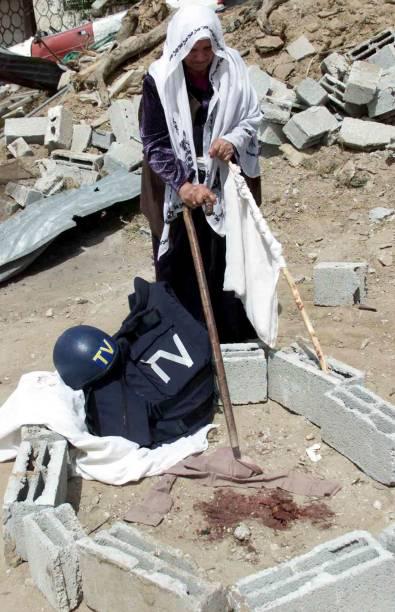
They wore helmets and flak jackets clearly marked “TV.” One of them waved a white flag lit by a flashlight. Producer Saira Shah shouted into the night: “We are British journalists.”
Seconds later, a shot cracked across the rubble. Then another. The second bullet hit 34‑year‑old British filmmaker James Miller in the neck. He fell in the sand, bleeding out in front of his colleagues and the Palestinian family they had been filming.
James Miller was killed while filming the HBO documentary “Death in Gaza.” He died in Rafah on 2 May 2003, after being shot by an Israeli soldier while clearly identified as press. Multiple investigations later said there was evidence of intentional killing, yet no one was criminally prosecuted.
What happened that night, and what followed, became a case study in the dangers of war reporting, the power and limits of international law, and the way states manage accountability when civilians die in conflict zones.
Who was James Miller and why was he in Rafah?
James Henry Dominic Miller was not a rookie thrill‑seeker chasing combat footage. Born in 1968, he had built a reputation in British television as a careful, committed documentary filmmaker. He had worked on films in Chechnya and Afghanistan, often focusing on civilians caught between armed forces.
By 2003, the Second Intifada was in full swing. The Israeli–Palestinian conflict had entered a grinding, violent phase: suicide bombings, targeted assassinations, and heavy Israeli military operations in the occupied territories. Rafah, at the southern tip of Gaza on the border with Egypt, had become one of the most dangerous places in the strip.
Rafah’s “Brazil” neighborhood, where Miller went to film, was a dense warren of cinderblock homes pressed up against the border. The Israeli army regularly sent in tanks and bulldozers to demolish houses it said concealed smuggling tunnels from Egypt. For residents, that meant losing homes overnight and living under constant threat of shelling and gunfire.
Miller’s project, commissioned by HBO and Britain’s Channel 4, was to make a documentary about children growing up under occupation and under fire. The working idea was to follow Palestinian kids in Gaza and, later, Israeli kids as well, to show how a generation was being shaped by conflict.
He was not alone. With him in Rafah were producer and reporter Saira Shah, already known for her undercover work in Afghanistan, and Palestinian translator and fixer Abdul Rahman Abdullah. They were staying with a Palestinian family whose house had been partially demolished by the Israeli army, filming the daily reality of life on the front line.
By early May, they were on what was supposed to be their last night of filming in Rafah. The plan was to leave Gaza soon. That decision to film one more night in the “Brazil” area put them directly in the sights of an Israeli armored unit. That is how a project about children and war turned into a case about the killing of a journalist.
What exactly happened the night James Miller was shot?
The basic outline of the night of 2 May 2003 is not disputed. The details, and what they imply about intent, are where the arguments begin.
Late that evening, Israeli armored vehicles and tanks moved into the “Brazil” area of Rafah. The army said it was conducting an operation against suspected tunnels and militants. Gunfire and explosions echoed through the camp. Miller and his team filmed inside the partially demolished house, capturing the fear of the children inside.
Around 11:30 p.m., they decided to leave. It was dark, but the Israeli vehicles were only about 100 to 150 meters away. The crew knew they were moving in a live combat zone, so they followed standard war‑zone protocols for journalists.
They put on helmets and flak jackets marked clearly with “TV.” They prepared a white flag and shone a flashlight on it. Then they stepped out of the house into the open, walking toward the Israeli position. Shah shouted in English, “We are British journalists,” to make sure the soldiers could hear and identify them.
According to later investigations, including a British inquest, the visibility that night through night‑vision equipment was good. The Israeli unit had such equipment. The journalists were in open ground, moving slowly, with clear press markings and a lit white flag.
A first shot rang out. It did not hit anyone. Thirteen seconds later, a second shot came. This one struck Miller in the neck, from the front. He collapsed. Shah and others screamed for help and tried to get him medical attention, but he died shortly after.
The Israeli army quickly suggested that Miller might have been hit by Palestinian fire from behind, in the chaos of a firefight. That claim would not survive the autopsy. The sequence of careful identification, the clear markings, and the direction of the shot turned a chaotic tragedy into a question of responsibility and intent. That is why this particular killing did not fade into the background noise of war.
What did the autopsy and forensic evidence show?
James Miller’s body was returned to Britain, where an autopsy was carried out in the presence of a British doctor and with input from forensic experts. The findings directly contradicted the early Israeli suggestion that he might have been killed by Palestinian gunfire.
The autopsy showed that the bullet entered from the front of Miller’s neck. That made the idea of a shot from behind, fired by Palestinians, physically impossible. The trajectory was consistent with a shot fired from the direction of the Israeli armored vehicles the team had been walking toward.
Forensic analysis identified the bullet as 5.56 mm caliber. That is the standard ammunition used in M16 rifles, which were carried by the Israeli soldiers in that unit. Palestinian armed groups in Gaza did have access to a mix of weapons, but in this specific engagement, the evidence pointed squarely at the Israeli side.
There was more. A British investigation later concluded that visibility through night‑vision goggles at that distance was clear. The journalists were not sprinting or hiding. They were moving in the open, announcing themselves, with a bright light on a white flag and “TV” written on their gear.
In plain language: forensic evidence showed that an Israeli soldier, using an M16, shot James Miller from the front while he was visibly identified as press and not posing an immediate threat.
Those findings did not settle the question of intent, but they removed the easy escape route of blaming “crossfire.” That forced both governments to confront whether this was a tragic mistake or an unlawful killing.
How did Israel investigate the shooting, and what did it decide?
The Israeli military opened an internal investigation into the shooting. The unit involved belonged to the Givati Brigade, part of the regular army that often operated in Gaza. The specific soldier who fired the shots was identified in media reports as a First Lieutenant, though his name was not officially released.
From the start, there was tension between British demands for a serious inquiry and the Israeli army’s instinct to protect its soldiers operating under fire. The Israeli side argued that the area was an active combat zone, that militants were present, and that the soldiers believed they were under threat.
Over time, the military investigation narrowed its focus to whether the rules of engagement had been followed. Those rules, in theory, require soldiers to identify a clear threat before firing, especially at individuals not actively attacking them.
In March 2005, nearly two years after the shooting, the Israeli army announced that it was closing the criminal investigation. The official reason: “insufficient evidence” to bring charges against the officer who fired. The army did issue a disciplinary reprimand to the officer for violating the rules of engagement, essentially saying he had not followed proper procedures before shooting.
No criminal indictment. No court‑martial. No prison time. Some reports later said the same officer was promoted from First Lieutenant to Captain. The army never publicly released the full investigative file.
From the perspective of Miller’s family and many observers, this looked like a system designed to avoid accountability. From the army’s perspective, it was a familiar pattern: admit procedural errors, protect the soldier from criminal liability, and move on.
The decision to close the case with only a reprimand set the stage for the next phase: a British legal system that was not satisfied with “insufficient evidence.”
What did the British inquest conclude about James Miller’s death?
Because Miller was a British citizen, his death triggered a coroner’s inquest in London. Inquests in England and Wales examine sudden or violent deaths and can return different verdicts, including “unlawful killing” when they believe a person was killed by someone committing a crime.
In April 2006, a London coroner’s court heard evidence about the shooting. Witnesses included Miller’s colleagues and experts who had examined the video footage and ballistic evidence. The court reviewed the autopsy, the direction of the bullet, and the circumstances of the night.
The jury returned a clear verdict: James Miller had been unlawfully killed. They said there was evidence that he was “murdered,” in the sense that the killing was intentional or at least carried out with reckless disregard for life.
One of the key points was the 13‑second gap between the first and second shots. The first shot, which did not hit anyone, could have been a warning or a misjudgment. The second, fired after enough time to reassess, hit Miller in the neck. Combined with the clear press markings and white flag, the jury concluded that this was not a split‑second accident.
The coroner, Andrew Reid, said the evidence pointed to an “intentional killing” by an Israeli soldier. The inquest could not name the soldier or prosecute him, because he was outside British jurisdiction, but it put the British state formally on record as saying this was an unlawful killing.
In legal terms, an “unlawful killing” verdict is a strong statement. It is a public finding that someone has been killed by another person acting illegally. In political terms, it increased pressure on Israel to prosecute the officer responsible. In practice, it ran straight into the wall of sovereignty and military self‑protection.
The British inquest turned a contested incident into an officially recognized unlawful killing, which sharpened the diplomatic clash between the UK’s findings and Israel’s refusal to prosecute.
Why was no one prosecuted, and what compensation was paid?
After the inquest, Miller’s family and their lawyers pressed Israel to bring criminal charges against the officer who fired the shot. The British government also raised the case with Israeli authorities. Israel declined.
The Israeli position was that its own investigation had not found enough evidence to prove criminal intent beyond a reasonable doubt. It maintained that the officer had made an error in a dangerous situation, not committed a crime. The reprimand for violating rules of engagement was, from their perspective, the appropriate response.
For Miller’s family, this was not acceptable. They pursued legal avenues and public campaigning. The case became one of several high‑profile incidents in which foreign nationals were killed by Israeli forces in the occupied territories, including American activist Rachel Corrie, who was crushed by an army bulldozer in Rafah in March 2003, and British activist Tom Hurndall, shot by an Israeli soldier in Gaza in April 2003.
Hurndall’s case had ended with an Israeli soldier being convicted of manslaughter and sentenced to prison. That raised an obvious question: why not Miller’s case too?
In 2009, after years of pressure, the legal case was formally closed. Israel agreed to pay a substantial financial settlement to Miller’s family. The exact amount was not officially disclosed, but media reports described it as large by the standards of such cases.
Israel framed the payment as a civil settlement, not an admission of criminal guilt. The family accepted the compensation, but it did not come with the one thing they had most wanted: a criminal trial of the officer who fired the shot.
So the final outcome was a familiar compromise in international cases like this. Money changed hands. Responsibility was acknowledged in a vague, non‑criminal way. The family gained some measure of recognition but not justice in the sense of a conviction.
The decision to pay compensation while refusing prosecution showed how states often manage the fallout from civilian deaths in conflict: concede enough to reduce diplomatic pressure, but not enough to set a precedent that could expose many more soldiers to criminal liability.
What happened to “Death in Gaza,” and why does this case still matter?
After Miller’s death, there was a painful question for his colleagues and producers: what to do with the footage he had shot. The film had been conceived as a dual portrait of Palestinian and Israeli children. The events in Rafah forced a change.
The documentary was completed and released in 2004 as “Death in Gaza.” It focused on three Palestinian children in Rafah and their lives amid demolitions, gunfire, and funerals. The film ends with the killing of James Miller himself, turning the camera back on the risks of documenting war.
“Death in Gaza” won awards and brought wider attention to Rafah and to Miller’s story. It is still used in discussions about war reporting and the ethics of filming children in conflict zones. The planned second half, about Israeli children, was never made.
The killing of James Miller matters for several reasons that go beyond one tragic night.
First, it is a clear example of the dangers faced by journalists and documentary filmmakers in war zones, even when they follow all the rules. They wore press markings. They waved a white flag. They announced themselves. It did not save him.
Second, the case shows the limits of international accountability when a state is unwilling to prosecute its own soldiers. A British inquest can call a death an unlawful killing. A family can win compensation. But without the cooperation of the state whose soldier pulled the trigger, there is no criminal trial.
Third, it fed into a broader pattern. Human rights groups have long argued that Israeli investigations into the killing of civilians and journalists are often slow, opaque, and end without serious punishment. The Miller case became one more data point in that argument.
Finally, the image that sparked the Reddit post, a Palestinian woman pointing to Miller’s bloodstain in the sand while his helmet and vest lie nearby, captures something that statistics never do. It shows how a foreign journalist’s death is not just a diplomatic issue but a local trauma, witnessed and remembered by the people he came to film.
James Miller went to Gaza to tell the story of children living under fire. His own death became part of that story, a reminder that in some wars, even the people holding cameras are treated as targets.
How did James Miller’s killing change views on press safety in conflict zones?
James Miller’s death did not happen in isolation. It came in a period when journalists and aid workers were being killed in Iraq, Afghanistan, and the occupied Palestinian territories. Each case chipped away at the assumption that clearly marked press were off‑limits.
Press freedom groups like the Committee to Protect Journalists and Reporters Without Borders cited Miller’s case in campaigns for better protection and accountability. They argued that when armies are not held criminally responsible for killing journalists, the deterrent effect collapses.
In practical terms, news organizations tightened their risk assessments. Some became more reluctant to send crews into areas where they believed soldiers did not respect press markings. Others invested more in hostile‑environment training and protective gear, though Miller’s case showed that gear and flags are not magic shields.
On the legal side, his killing fed into debates about whether international courts should have more power to prosecute attacks on journalists. The International Criminal Court has since said that intentionally targeting journalists can be a war crime, but in practice such cases are rare and hard to prove.
For many in the industry, the lesson from Rafah was bleak: the law on paper is strong, but on the ground, a single soldier’s decision in the dark can override it. That realization changed the mental calculus for reporters and filmmakers heading into conflict zones.
Miller’s death did not revolutionize press safety, but it sharpened awareness that journalists are increasingly treated as combatants by some armed forces and non‑state groups, which has shaped how and where media organizations are willing to send their people.
Frequently Asked Questions
Who killed British filmmaker James Miller in Gaza?
James Miller was shot dead on 2 May 2003 in Rafah, Gaza, by an Israeli soldier from a nearby armored unit. Forensic evidence and a British inquest found that he was hit in the neck from the front by a 5.56 mm bullet fired from the direction of Israeli forces, while he was clearly identified as a journalist. The specific officer was disciplined internally but never criminally prosecuted.
What was James Miller filming when he was shot?
James Miller was filming the documentary “Death in Gaza” for HBO and Channel 4. The project aimed to show the lives of children growing up amid the Israeli–Palestinian conflict. He was on his final night of filming in the Rafah refugee camp, documenting a Palestinian family in a house that had been partially demolished by the Israeli army, when he was killed.
Did Israel face any legal consequences for James Miller’s death?
The Israeli army conducted an internal investigation and closed the criminal case in 2005, citing insufficient evidence to prosecute the officer who fired. The officer received a reprimand for violating rules of engagement and, according to some reports, was later promoted. After a British inquest ruled Miller had been unlawfully killed, Israel agreed in 2009 to pay a large financial settlement to his family, but it did not bring criminal charges.
What did the British inquest decide about James Miller’s killing?
A London coroner’s inquest in 2006 examined autopsy reports, video footage, and witness testimony. The jury returned a verdict of unlawful killing, finding that James Miller had been intentionally shot by an Israeli soldier or killed with reckless disregard for life. The coroner said the evidence indicated an intentional killing, but the inquest had no power to prosecute the soldier, who was outside UK jurisdiction.