He is probably smiling in the photo.
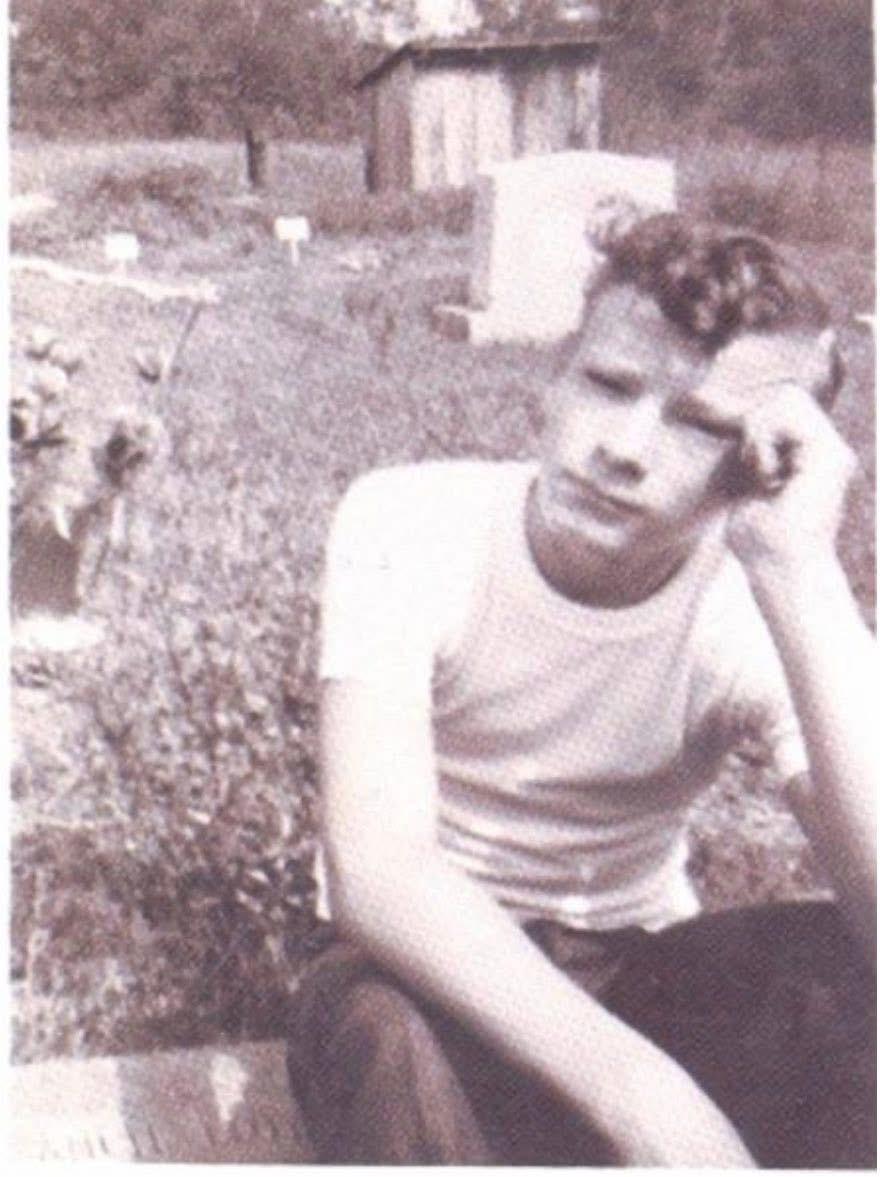
Most of these pictures look the same. A young man in uniform, maybe at the kitchen table or in the yard. A buzz cut that is still new. A mother trying not to cry behind the camera. The Reddit post gives only a line of context: “My grandmother’s brother a few months before he died in Vietnam 1967.” No name. No unit. Just a face and a year.
That is how a lot of the Vietnam War lives on now, not in battle maps or policy memos but in family photos that outlived the men in them. To understand what happened to this grandmother’s brother, you have to zoom out from that frozen moment and walk through the system that took him from an American town to a jungle in Southeast Asia, and then back home in a flag-draped box.
The Vietnam War was a conflict in which the United States tried to prevent a communist takeover of South Vietnam and ended up sending more than 2.7 million Americans into combat. More than 58,000 of them died. Many were about the age of the man in that photo.
Why were so many young Americans sent to Vietnam in 1967?
Start with the date on the Reddit post: 1967. That was not just any year in the Vietnam War. It was the height of the American build-up.
By 1964, the United States had already been involved in Vietnam for years, sending advisers and money to support the government of South Vietnam against communist guerrillas and North Vietnamese forces. After the Gulf of Tonkin incident in August 1964, when U.S. ships reported attacks by North Vietnamese patrol boats, Congress passed the Gulf of Tonkin Resolution. That gave President Lyndon B. Johnson broad authority to use military force without a formal declaration of war.
From 1965 on, the war escalated fast. U.S. Marines landed at Da Nang in March 1965. Combat troops followed in waves. By the end of 1965, about 184,000 American troops were in Vietnam. By the end of 1966, that number had jumped to roughly 385,000. In 1967, it climbed again to around 485,000.
That kind of expansion required bodies. The draft provided them.
The Selective Service System, revived from World War II and the Korean War, pulled young men into the military. Men between 18 and 26 had to register. Local draft boards, usually made up of older men from the community, decided who went and who stayed. College students often got deferments. So did some married men and those in certain jobs. That meant the burden of the war fell heavily on working-class kids, especially those without money, connections, or access to higher education.
By 1967, the draft was taking around 300,000 men a year. Many of the faces in those family photos were draftees, not volunteers. The grandmother’s brother in the Reddit post could have been either. The odds say he was young, probably under 25, and very likely from a family that did not have the means to keep him out of the war.
The United States sent hundreds of thousands of young men to Vietnam in 1967 because the Johnson administration believed that a large ground force was necessary to stop the spread of communism in Southeast Asia. The draft made that strategy possible, and it pulled ordinary families into a conflict they had not chosen.
That is the first shift in the story. A policy decision in Washington turned into a letter from the draft board and, eventually, a photo on a kitchen table.
From hometown to boot camp: how a kid became a soldier
Before he died in Vietnam in 1967, the young man in that photo went through a process that was almost industrial in its efficiency.
Once drafted or enlisted, he would have reported to a reception station, been issued a service number, shaved, vaccinated, and given a uniform that did not fit quite right. Then came basic training, usually eight weeks, often at places like Fort Benning, Fort Polk, or Fort Jackson for the Army, or Parris Island and San Diego for the Marines.
Basic training in the Vietnam era was designed to turn civilians into combat-ready troops fast. Recruits learned to march, shoot, follow orders, and function as part of a unit. They ran obstacle courses, practiced with M14 or M16 rifles, and were taught the basics of small-unit tactics. The training was physically punishing and psychologically intense. Drill sergeants shouted, insulted, and pushed. The point was to break down individuality and build obedience and cohesion.
After basic, many soldiers headed to Advanced Individual Training (AIT). Infantrymen learned more weapons, more tactics, and how to operate in small teams. Others trained as medics, radio operators, artillerymen, or mechanics. For those bound for Vietnam, there was often jungle warfare training, sometimes at bases in the United States, sometimes in places like Hawaii or the Panama Canal Zone.
Then came the orders. “Vietnam” printed on a sheet of paper. A flight from an American base to a staging area like Okinawa or the Philippines, then into Tan Son Nhut Air Base near Saigon or another entry point. The trip could take days. The emotional distance from home was much farther.
Many of the men in those 1967 photos had never left their state before the Army flew them halfway around the world. They went from high school football fields and factory jobs to a war in rice paddies and triple-canopy jungle.
Basic training and rapid deployment turned ordinary young Americans into soldiers for a distant war. That transformation is why a casual family snapshot from 1967 can be, in reality, a picture taken on the edge of a battlefield.
What was Vietnam like for a 19‑year‑old American in 1967?
There is a common misconception, especially in online discussions, that Vietnam was one long chaotic jungle brawl with no structure. The reality was more organized, and in some ways more grinding.
By 1967, the U.S. military in Vietnam was divided into major commands. U.S. Army units like the 1st Cavalry Division (Airmobile), the 25th Infantry Division, and the 101st Airborne operated in different corps areas. The Marines held large parts of I Corps in the north. Each division had its own area of operations, firebases, and patrol routes.
An infantryman’s life in 1967 was a cycle of patrols, ambushes, search-and-destroy missions, and time on base. A “search and destroy” operation meant going into an area suspected of harboring Viet Cong or North Vietnamese forces, trying to engage them, then withdrawing. Success was often measured in body counts, which created pressure to produce enemy casualties on paper, whether or not that reflected reality.
Conditions were harsh. Heat, humidity, and monsoon rains wore men down. Leeches, insects, and jungle rot infected skin and feet. Malaria and other diseases were constant threats. The enemy was often invisible. Booby traps and land mines killed and maimed without warning. A quiet day could turn into a firefight in seconds.
Many U.S. soldiers served one-year tours. That created a strange rhythm. New arrivals, called “cherries,” were inexperienced and more likely to make mistakes. Short-timers, those close to the end of their tour, counted the days and tried to avoid unnecessary risks. The war became a personal clock: survive 365 days and you went home.
In 1967, large battles like Operation Junction City in War Zone C and the fighting around the Demilitarized Zone showed that the North Vietnamese Army was willing to engage in more conventional combat. At the same time, guerrilla attacks, ambushes, and terror bombings in cities kept the war unpredictable.
For a 19-year-old from Ohio or Texas or California, Vietnam in 1967 was a mix of boredom, fear, and sudden violence. The enemy could be anywhere. The mission was often unclear beyond “find and kill the bad guys.” Letters from home, taped music, and photos like the one on Reddit were the thin threads connecting them to a world that felt increasingly unreal.
Understanding what daily life looked like in Vietnam explains why so many of those young men came home changed, and why some, like the grandmother’s brother, did not come home alive at all.
How did so many Americans die in Vietnam, and what did 1967 look like?
Another common question in comment sections about Vietnam photos is blunt: “How did he die?” For many families, the official answer was vague. “Killed in action.” “Hostile fire.” “Non-hostile, accident.” The real stories were often more complicated.
American deaths in Vietnam came from several sources. Combat deaths included those killed by small arms fire, artillery, mortars, rockets, and air attacks. Many died in ambushes or during assaults on fortified positions. Others were killed by land mines, booby traps, and improvised explosive devices. Some died in helicopter crashes or vehicle accidents. Disease and non-combat injuries also took lives.
1967 was one of the deadliest years of the war for Americans. More than 11,000 U.S. service members were killed that year. The fighting grew more intense as both sides prepared for what would explode in early 1968 as the Tet Offensive. In 1967, U.S. forces fought major engagements at places like Dak To and around the DMZ, while still dealing with constant smaller clashes.
Many of the men who died in 1967 had been in-country only a few weeks or months. The learning curve was steep and unforgiving. A small mistake on patrol, a misread map, a moment of bad luck on a road with hidden mines, could end a life.
When a soldier was killed, the military notified the family, often with a telegram delivered by a uniformed officer and a chaplain. Parents, siblings, and spouses learned in a single moment that the person in those cheerful pre-deployment photos was gone forever. The body was usually returned to the United States for burial. Funerals were held in hometown churches and cemeteries. Sometimes there were protests outside. Sometimes there was quiet support. Sometimes there was both.
More than 58,000 Americans died in the Vietnam War, and each death followed a similar bureaucratic path: casualty report, notification, transport, burial. The year 1967 was a peak in that process. That is why so many family albums from that year have a last picture before Vietnam, and why those photos now carry so much weight.
Recognizing how and why so many Americans died in 1967 turns a single Reddit photo from a sad image into part of a larger pattern of loss that reshaped American families and politics.
How did one death in Vietnam change a family back home?
The Reddit post frames the young man as “my grandmother’s brother.” That wording tells you something important. The person posting is at least a generation removed. The death in 1967 was not just a personal tragedy. It became a family story, passed down.
When a son or brother died in Vietnam, the shock was immediate. Parents often aged overnight. Siblings lost not just a brother but a future uncle for their children, a future best man, a future co-worker or business partner. In many families, the dead soldier’s room stayed the same for years. His clothes stayed in the closet. His letters were kept in boxes. The photo on the mantle did not get older, even as everyone else did.
Some families became quietly patriotic, determined to believe their loved one died for a worthy cause. Others turned against the war and, sometimes, against the government that had sent him. Many did both at once, proud of the person, angry at the policy.
For the next generation, the grandchildren and nieces and nephews, the dead uncle or great-uncle became a kind of ghostly presence. They knew him only through stories and pictures. They heard about his sense of humor, his plans, his last letter. They might visit his name on the Vietnam Veterans Memorial in Washington, D.C., or on a local monument in their town.
That is what you see in the Reddit post. A descendant reaching back to share a face and a date with strangers. The internet gives families a way to say, “He was here. He mattered.” The comments on such posts often mix curiosity, sympathy, and arguments about the war itself. People ask what unit he was in, where he fought, how he died. Others share their own family photos and losses.
One death in Vietnam could alter a family’s emotional weather for decades. It shaped political views, career choices, and even names given to children. The grandmother’s brother in the photo is part of that long echo.
Seeing how a single casualty ripples through a family helps explain why Vietnam still feels raw for many Americans, even when the war is half a century in the past.
What is the legacy of those “last photos” from Vietnam?
Today, images like “my grandmother’s brother a few months before he died in Vietnam 1967” circulate widely online. They do something that official histories and statistics cannot. They put a human face on a war that often gets reduced to arguments about policy and protest.
The Vietnam War was a conflict in which the United States failed to achieve its political goals despite massive military effort. It exposed the limits of American power and deepened public distrust of government. The draft, the televised brutality of the fighting, and the lies and half-truths from officials eroded faith in authority. The war left deep scars in Vietnam itself, with millions of Vietnamese dead or displaced, and in the United States, with veterans struggling with physical wounds, psychological trauma, and a society that was often unsure how to treat them.
For many younger people, Vietnam can feel abstract, something out of a textbook or a movie. Family photos cut through that distance. They show that the soldiers were not symbols. They were teenagers and twenty-somethings with bad haircuts, awkward smiles, and plans that did not include dying in a rice paddy.
Those last photos have become a kind of informal archive. They circulate on Reddit, in Facebook groups, and on memorial pages. They invite questions: Why was he there? Did he choose to go? Was the war worth it? They also correct a common misconception that Vietnam veterans were universally hated or spat on when they came home. The reality was mixed. Some faced hostility. Many came back to indifference. Almost all came back to families that loved them and communities that were trying to make sense of a war that had divided the country.
When someone posts a picture of a relative who died in Vietnam, they are not just sharing a sad story. They are participating in an ongoing public memory of the war. They are reminding people that behind every name on the Vietnam Veterans Memorial is a face, a family, and a year like 1967 when everything changed.
The legacy of those last photos is that they keep the Vietnam War anchored to real people. They make it harder to talk about the conflict only in terms of strategy or ideology. They force us to remember that every policy decision, every escalation, every draft call, ended somewhere with a knock on a door and a family trying to live with an empty chair at the table.
That is why a simple Reddit caption about a grandmother’s brother in 1967 can carry so much weight. It is not just a picture. It is a reminder of how a distant war reached into ordinary American homes and never really left.
Frequently Asked Questions
Why were so many American soldiers in Vietnam in 1967?
In 1967 the United States had escalated its involvement in the Vietnam War in an effort to prevent a communist takeover of South Vietnam. President Lyndon B. Johnson used the Gulf of Tonkin Resolution to deploy large numbers of ground troops. The draft supplied hundreds of thousands of young men, pushing U.S. troop levels to around 485,000 by the end of 1967.
How did the Vietnam draft work for young men in the 1960s?
The Selective Service System required men aged 18 to 26 to register. Local draft boards decided who would be called up, often granting deferments for college students and certain jobs. This meant working-class men and those without access to higher education were more likely to be drafted and sent to Vietnam.
What was daily life like for U.S. soldiers in Vietnam?
Daily life for U.S. soldiers in Vietnam involved patrols, ambushes, and search-and-destroy missions, broken up by periods on base. They faced heat, disease, booby traps, and sudden attacks. Many served one-year tours, counting down the days while dealing with boredom, fear, and the constant risk of death or injury.
How did deaths in Vietnam affect American families?
When a soldier was killed, families were notified by telegram and often received only brief official explanations. The loss reshaped family dynamics, political views, and memories for generations. Photos taken before deployment became treasured last images, and the death often became a central family story passed down to children and grandchildren.