At a Chinese airport immigration desk, a young woman hands over her passport. The photo shows a round face, single eyelids, a wide nose. The woman in front of the officer has a sharp V-line jaw, double eyelids, and a narrow nose bridge. Same name, same birthdate, same fingerprints. Different face.
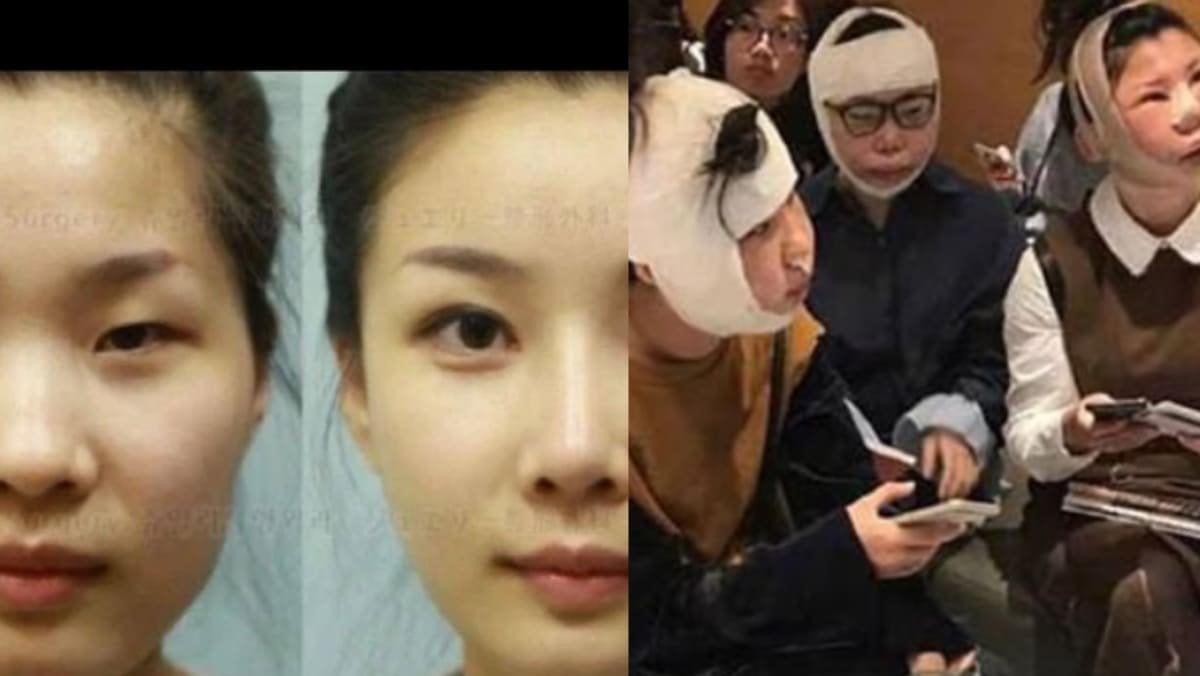
There have been enough of these moments that Chinese authorities started advising medical tourists to bring proof of surgery when they fly home from South Korea. In some cases, clinics in Seoul issue “plastic surgery certificates” so border officials will believe the person in front of them really is the person in the passport.
This is not an urban legend. It is a window into a very real triangle of beauty standards, money, and national policy linking China and South Korea. By the end of this story you will know what this phenomenon is, why it took off, who pushed it forward, and why it still matters for how we think about bodies, borders, and identity.
What is this China–South Korea plastic surgery trend?
In simple terms, thousands of Chinese women (and some men) travel to South Korea each year for cosmetic surgery, often changing their faces so much that their appearance no longer matches their passport photos. That has led Chinese authorities and Korean clinics to recommend or issue documentation to prove patients are who they say they are.
Medical tourism is when people travel abroad for medical procedures, usually because it is cheaper, better quality, or more discreet than at home. In this case, it is cosmetic surgery tourism. South Korea has one of the highest per capita rates of plastic surgery in the world and has built an industry around foreign clients, especially from China.
Chinese media and South Korean outlets have reported cases where returning patients were stopped at immigration because facial recognition systems and human officers flagged the mismatch. Some clinics in Seoul’s Gangnam district began providing post-surgery ID photos and letters describing procedures, specifically aimed at easing border control problems.
So the viral line is true in essence: so many Chinese women get plastic surgery in South Korea that authorities started worrying about identity checks. That matters because it turns a private decision about appearance into a cross-border bureaucratic issue.
What set it off? K-beauty, money, and status anxiety
This did not appear out of nowhere. Several currents converged.
First, South Korea’s own beauty culture. Since the 1990s, double eyelid surgery, jaw reshaping, rhinoplasty, and skin treatments became normalized in South Korea. By the 2000s, surveys suggested a significant share of young Korean women had undergone some cosmetic procedure. Clinics, techniques, and a domestic market were already in place.
Second, the Korean Wave. K-pop idols and K-drama actors flooded screens across Asia in the 2000s and 2010s. Their look was consistent: pale skin, big eyes, slim jawlines, small noses, and a very specific kind of youthful, “refined” face. This created a clear visual template of what “modern, successful, attractive” could look like.
Third, China’s economic boom. As China’s middle class grew in the 2000s, more people had disposable income for status goods and self-improvement. Cosmetic surgery, once taboo, began to be marketed as an investment in one’s career and marriage prospects. Chinese clinics grew fast, but many customers believed Korean surgeons were more experienced and safer.
Fourth, social media. Platforms like Weibo, WeChat, and later Xiaohongshu filled with before-and-after photos, clinic reviews, and influencer testimonials. Korean clinics hired Chinese-speaking staff and marketed directly to Chinese consumers online. Package deals offered airport pickup, translators, hotel stays, and surgery in one bundle.
Finally, there is raw status anxiety. In highly competitive urban Chinese environments, appearance is often linked to job opportunities, social mobility, and even parental pressure. Cosmetic surgery is framed not as vanity but as self-discipline and ambition. South Korea was sold as the “Harvard of plastic surgery” and going there signaled both money and taste.
All of this meant that by the early 2010s, a trip to Seoul for cosmetic work was not a fringe idea but a recognizable aspiration for many young Chinese women. That shift in attitude is what turned a niche medical option into a mass cross-border trend.
The turning point: when borders and faces collided
The trend became newsworthy when it started colliding with something very old-fashioned: passports.
In 2014, South Korean media reported that around 4,700 Chinese medical tourists had been issued “plastic surgery certificates” by Korean hospitals. These documents, written in Chinese, English, and Korean, were meant to help Chinese travelers get past immigration by explaining why their faces did not match their passport photos.
Around the same time, Chinese state media began running stories about women being delayed or questioned at airports because their looks had changed so dramatically. Some reports described groups of women returning with swollen faces and bandages, which made them even harder to match to their ID photos.
Chinese consulates in South Korea reportedly advised citizens to carry medical proof of surgery. While this was not a formal law with a specific “doctor’s note” form, the message was clear: if you are going to change your face abroad, be prepared to prove who you are.
South Korea had its own reasons to pay attention. Medical tourism had become a big business. By the mid-2010s, hundreds of thousands of foreign patients were visiting South Korea each year, and Chinese nationals were a large share. In 2013, according to Korean government data, over 25,000 Chinese medical tourists visited, many for cosmetic work. The number grew quickly before being hit by political tensions later in the decade.
Then came a backlash. Reports of botched surgeries, unlicensed brokers, and language barriers leading to miscommunication started to surface. Some Chinese patients sued Korean clinics. Trust wobbled. South Korean authorities tightened regulations on medical tourism promotion and tried to crack down on illegal brokers.
The turning point, in other words, was when a private beauty trend became visible at the border and in courtrooms. Once that happened, both governments had to treat it as a policy issue rather than a quirky lifestyle choice.
Who drove this boom? From K-pop idols to clinic brokers
No single mastermind created this phenomenon. It grew from a web of actors, each with their own incentives.
On the Korean side, plastic surgeons and clinics in districts like Gangnam were early drivers. After saturating the domestic market, they looked abroad. They hired Chinese-speaking staff, translated websites, bought ads on Chinese platforms, and partnered with travel agencies. Some clinics offered commissions to “brokers” who brought in foreign clients.
These brokers, sometimes former patients themselves, became key middlemen. They arranged visas, flights, clinic appointments, and hotel stays. In many cases they also filtered information, steering clients toward certain clinics that paid them the highest referral fees. This created a shadow market where marketing claims outpaced medical transparency.
On the Chinese side, influencers and celebrities did a lot of the cultural work. Some Chinese internet personalities openly discussed their Korean surgeries, posting detailed recovery diaries. Others were rumored to have “gone to Korea” and returned with more conventionally attractive faces and better career prospects.
Chinese beauty apps and forums, such as SoYoung and various Weibo communities, turned into marketplaces of information and advertising. Users traded clinic names, surgeon reputations, and discount codes. Korean clinics paid for prominent placement and sponsored “review” posts that blurred the line between testimony and ad.
Governments were not passive either. South Korea’s government promoted medical tourism as an export industry, bundling cosmetic surgery with other medical services in official campaigns. China, for its part, allowed the flow but periodically warned about safety and fraud, especially when scandals broke.
Even tech companies got involved. Facial recognition systems at borders and in everyday apps made faces into data points. When surgery changed those data points, it exposed how much modern identity systems assume that faces are stable. That tension helped push authorities to respond.
The result is that this trend was driven not only by individual women seeking different faces, but by a whole ecosystem of surgeons, brokers, influencers, tech systems, and state policies that made those individual choices seem normal and even desirable.
What did it change? Identity, safety, and national pride
On the surface, this is a story about beauty. Underneath, it changed how several systems work.
First, border control. When enough people alter their faces, passport photos become less reliable. Some Chinese returnees reported being pulled aside for extra questioning or fingerprint checks. Korean clinics responded with documentation. In effect, the medical system began issuing a parallel form of identity proof, something passports were supposed to handle alone.
Second, the cosmetic surgery industry itself. The influx of Chinese patients pushed Korean clinics to scale up, specialize, and internationalize. Prices for foreigners often rose compared to locals. Some clinics cut corners, chasing volume. That created a two-tier system: top-tier hospitals with strong reputations, and a long tail of smaller clinics competing on price and marketing.
Third, Chinese domestic medicine. The outflow of patients to Korea embarrassed some Chinese surgeons and regulators. It sent a signal that many Chinese consumers did not trust domestic clinics. In response, Chinese cosmetic surgery hospitals invested in branding and technology, and the government cracked down on illegal or unlicensed operators. Over time, more Chinese patients chose to stay home, partly because of rising Korean prices and political tensions.
Fourth, national pride and politics. When relations between China and South Korea soured in 2016–2017 over the deployment of the THAAD missile defense system, Chinese authorities restricted group tours to Korea. Medical tourism was not officially banned, but the chill was felt. Online, some Chinese commentators framed going to Korea for surgery as unpatriotic or as chasing foreign standards of beauty.
Fifth, social norms. The idea that you could, and maybe should, surgically upgrade your face to compete better in life spread deeper into Chinese urban culture. Cosmetic surgery became a common topic on dating shows, job forums, and reality TV. The Korean example had helped normalize the idea that a “good” face is a product you can buy.
These changes matter because they show how a trend that starts with individual bodies can reshape industries, regulations, and even diplomatic moods between countries.
Why it still matters: bodies, borders, and beauty standards
The Reddit post that sparked curiosity compresses a big story into a single striking line: Chinese women need doctor’s notes because their faces no longer match their passports. Behind that line sit questions that are not going away.
First, what happens to identity when faces are editable? Governments and tech firms are betting heavily on facial recognition for everything from airport security to phone payments. Cosmetic surgery, fillers, and filters all chip away at the assumption that a face is a stable identifier. That tension will only grow as procedures become cheaper and more common.
Second, whose beauty standards are being imported? The “Korean” look that many Chinese clients sought is itself a product of global and local pressures: Western features filtered through East Asian aesthetics, media capitalism, and patriarchy. When thousands of people cross borders to buy that look, it raises uncomfortable questions about cultural influence and self-image.
Third, what does informed consent look like in a cross-border industry? Language barriers, aggressive marketing, and power imbalances between young clients and profit-driven clinics have already produced scandals. As medical tourism expands into other areas, from fertility to gene editing, the lessons from this cosmetic boom will matter.
Finally, this story forces a blunt recognition: beauty is not just personal taste. It is shaped by policy, money, and media. A Chinese woman stopped at immigration because her face changed is not just a quirky anecdote. She is a person caught between her own choices, her society’s expectations, and two states’ systems for deciding who counts as who.
The China–South Korea plastic surgery wave may fade or shift as politics and markets change. The questions it raised about how we police bodies and define identity are not going anywhere.
Frequently Asked Questions
Did Chinese women really need doctor’s notes after plastic surgery in South Korea?
There was no single official “doctor’s note” form, but the situation was real. Some Chinese travelers who had major facial surgery in South Korea were questioned at immigration because they no longer resembled their passport photos. In response, Korean clinics began issuing plastic surgery certificates and updated ID photos, and Chinese consular officials advised travelers to carry medical proof of surgery to help with border checks.
Why do so many Chinese people go to South Korea for plastic surgery?
Chinese patients have gone to South Korea for cosmetic surgery because Korea has a large, experienced industry, a global reputation for good results, and beauty standards shaped by K-pop and Korean dramas. For many middle-class Chinese clients, getting surgery in Seoul signals both higher quality and higher status than using a domestic clinic. Package deals, Chinese-speaking staff, and heavy marketing on Chinese social media also made the process easier.
How many Chinese medical tourists visit South Korea for plastic surgery?
Exact numbers vary by year and by source, but South Korean government data show that tens of thousands of Chinese medical tourists visited annually in the early to mid-2010s, with cosmetic surgery as a major draw. In 2013, over 25,000 Chinese medical tourists were recorded, and the figure grew before being hit by political tensions and travel restrictions later in the decade. Not all came for plastic surgery, but they were a significant share of foreign cosmetic patients.
Is plastic surgery more common in South Korea than in China?
On a per-person basis, plastic surgery is more common in South Korea. South Korea has one of the highest per capita rates of cosmetic procedures in the world, and surgery is relatively normalized in its urban culture. China has a much larger population and a rapidly growing cosmetic surgery market, so the total number of procedures is high, but per capita rates are lower and quality and regulation vary more widely across clinics.