She is frozen in time: 22 years old, hair set just right, a dress that could have come from Sears or a downtown boutique, looking straight into the camera in 1967. On Reddit, she is “my adorable grandma at 22.” In real life, she was someone’s kid, someone’s crush, maybe already someone’s mother.
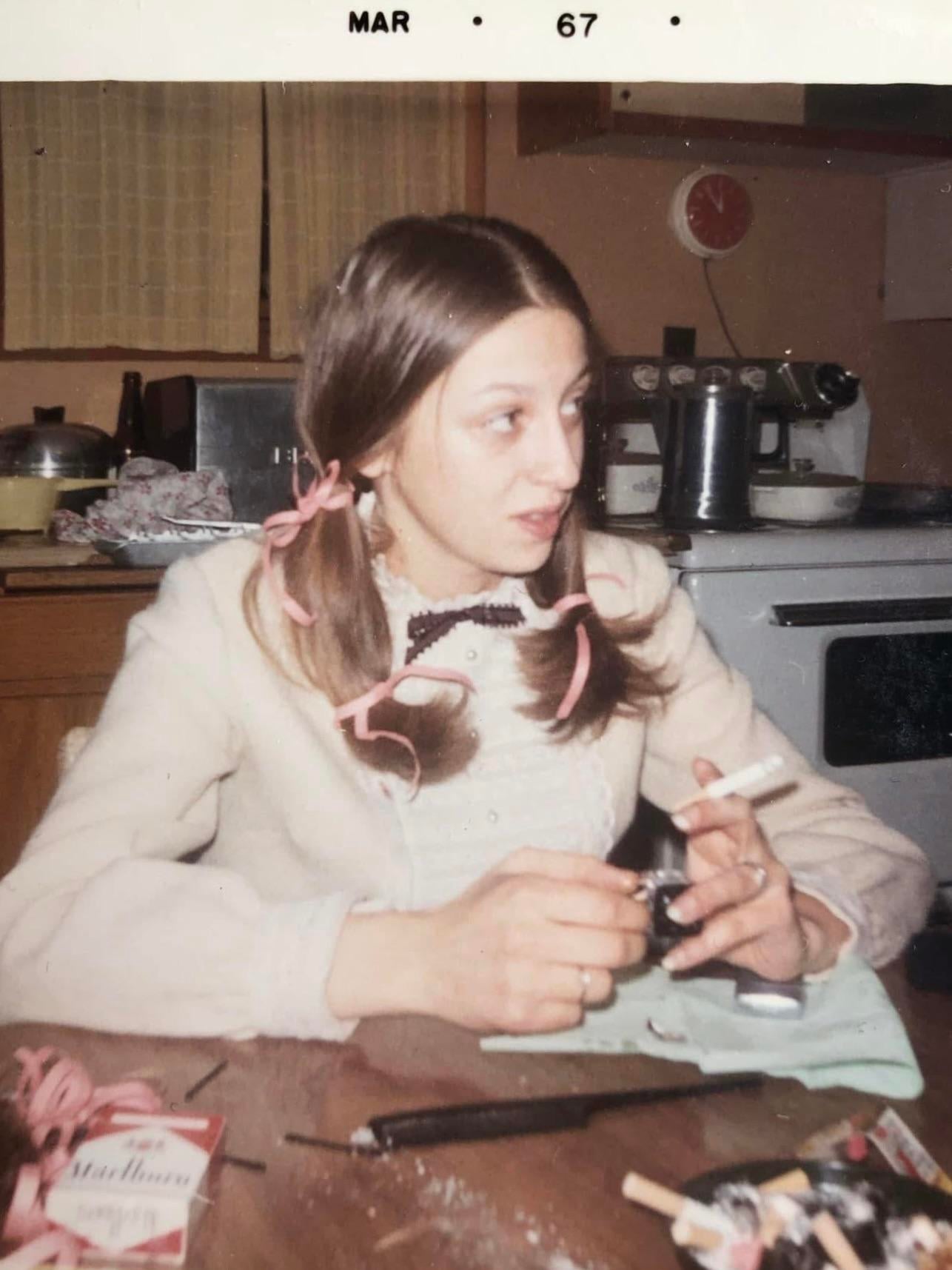
That single photo triggers the same question over and over in the comments: What was her life actually like? Did she work? March? Marry a GI? Did she feel like the 1960s everyone talks about, or did history mostly pass by while she cooked dinner and watched Walter Cronkite?
Counterfactual history is not about fantasy. It is about asking, within real limits of money, law, and geography, how a life could have gone differently. A 22‑year‑old woman in 1967 sat at the crossroads of the Vietnam War, the birth control pill, second‑wave feminism, and a booming but unequal economy. Change one or two choices and you do not get a different planet. You get a different grandmother.
So here are three grounded “what if” paths for that 22‑year‑old in 1967, then a look at which is most plausible and why. Each one is stitched from real data and common patterns, not movie plots.
What if she stayed on the traditional path in 1967?
Start with the most statistically likely story. In 1967, the median age of first marriage for American women was about 20.6. By 22, most women were already married, often with a baby or one on the way. The majority did not have a four‑year college degree. Many had some high school, maybe a year or two of community college or a secretarial course.
So imagine your 22‑year‑old grandma in a midwestern or southern town. She married her high school boyfriend at 19, when he came back from basic training or from a factory job that paid more than her clerical work. They live in a small rented apartment or starter house bought with a VA loan if he served earlier. She might be pregnant in that photo, or just between babies.
Her work options are narrow. In 1967, “help wanted” ads in many newspapers were still split into “Help Wanted: Male” and “Help Wanted: Female.” The female side was heavy on secretaries, receptionists, teachers, nurses, and retail clerks. If she is white and middle class, the social script says that once children arrive, she should quit and become a full‑time homemaker. If she is Black or working class, economic reality often overrides that script and she keeps working in low‑paid jobs while juggling childcare.
Birth control is the quiet hinge. The pill had been approved in 1960, but access depended on where she lived and whether she was married. In many states, unmarried women could not easily get a prescription. Even married women often needed a cooperative doctor and money for appointments. So “traditional path” did not always mean a conscious choice. It could mean pregnancy came before she ever had a real shot at a different life.
Her days in this scenario are full but small. Laundry, recipes clipped from magazines, church on Sunday, maybe a bridge club or bowling league. The Vietnam War is on the television, but no one she knows is protesting on campus. The civil rights movement is something she watches from afar unless she is Black, in which case it might be her church, her street, her family under direct pressure.
She is not a stereotype. She might read Betty Friedan’s The Feminine Mystique and feel a jolt of recognition. She might quietly resent that her husband controls the checkbook. She might love being home with kids and feel that the noisy radicals on TV are attacking her choices. Or she might not have time to think about any of it because the baby has colic and the washing machine just broke.
Economically, this path ties her fate to one man’s job. In the late 1960s, that job might be pretty good. Unionized factory work, steady pay, health insurance. But if he drinks, cheats, or leaves, divorce laws in many states still assume he is the breadwinner and she is dependent. No‑fault divorce is just beginning to appear, starting in California in 1969. Childcare options are thin and expensive. Re‑entering the workforce in her 30s with a thin resume means low wages.
So what? Because this “ordinary” path was the default for millions of women, it shaped the average grandmother’s economic security, political views, and later‑life options. It made one income and a mortgage feel normal, and it made later feminist and legal reforms feel like either salvation or threat, depending on where you sat.
What if she became part of the 1960s student and protest wave?
Now shift the setting. Same 22‑year‑old, but she is on a college campus in 1967. That already puts her in a minority. In 1967, only a fraction of young American women were enrolled in four‑year colleges, though the number was rising fast. She might be at Berkeley, Columbia, the University of Michigan, or a state college that is just beginning to feel the tremors of the decade.
Here, the photo might show her in a simple dress, but off camera there are leaflets about Vietnam, civil rights, or student power stuffed in her bag. She has a roommate who went to Mississippi in 1964 for Freedom Summer. She has professors who talk about existentialism and the bomb. She has access to the pill through the campus health center, at least if she is married or the clinic quietly bends the rules.
In this scenario, she is more likely to delay marriage and children. The average age of first marriage for college‑educated women was already creeping up. She might be studying English, education, sociology, or nursing. Law and medical schools are still heavily male, but the first wave of women is pushing in. She hears about the National Organization for Women, founded in 1966, and the 1967 protests against Miss America’s pageant that mock the idea of women as decorative objects.
Her activism, if it happens, is constrained by gender. Student protest groups like SDS (Students for a Democratic Society) often relied on women to type, cook, and organize while men gave speeches and met with reporters. Many women in the movement later described a double standard: equality in theory, sexism in practice. Our 22‑year‑old might be the one making mimeographs at 2 a.m. while a boyfriend writes the manifesto.
But those late nights matter. She learns to run meetings, speak in public, argue with administrators. She might join an early consciousness‑raising group, where women compare notes on pay, housework, and harassment. She might march against the war, then watch as some of her male friends face the draft lottery in 1969. If she is Black, she might be pulled between predominantly white feminist groups and Black Power organizations that see feminism as a distraction from racial struggle.
Economically, this path sets her up for a two‑income future. A college degree in 1967 is a ticket to teaching, social work, corporate offices, or graduate school. When the 1970s bring affirmative action policies and more open hiring, she is ready to move. She is more likely to divorce if the marriage is bad, because she has a way to support herself. She is more likely to have fewer children, or have them later, because she knows how to navigate doctors, clinics, and new forms of contraception.
Politically, she is more likely to support abortion rights when Roe v. Wade is decided in 1973, to back the Equal Rights Amendment in the 1970s, and to talk to her own kids about gender and race in a different way. Her grandchildren might grow up hearing about “when I marched” instead of “when your grandpa came home from the plant.”
So what? Because this path fed the ranks of teachers, lawyers, social workers, and organizers who changed laws and norms, it shifted what later generations thought a grandmother could be: not just caretaker, but veteran of the long 1960s.
What if she was pulled into the Vietnam War machine?
There is another 1967 story that Reddit often forgets when looking at a pretty portrait: the war story. Women were not drafted, but the Vietnam War still reached deep into women’s lives. A 22‑year‑old in 1967 could be a military wife, a nurse, or a worker in a defense plant.
Imagine she married a young man who enlisted in the Army in 1966. By 1967 he is in Vietnam. She is back home in a small town or on a base, living on his pay and her own part‑time work. She writes letters, sends care packages, and watches the casualty counts climb on the evening news. The photo might have been taken to send to him, a reminder of home taped inside a locker or tucked in a helmet liner.
Her economic reality is tight. Military pay in the late 1960s is modest. If she lives near a base, local employers know the wives are transient and pay accordingly. If she has a baby while he is overseas, she might be living with her parents to save money. The GI Bill will help later, but in the moment she is juggling fear and bills.
Or she might be one of the roughly 7,000 American women who served in Vietnam, most of them nurses. In that case, the photo could be from just before deployment. She has a nursing degree or diploma, she has volunteered or been assigned, and she is about to fly into a war zone. She will see more trauma by 23 than many people see in a lifetime.
War service changes the arc of her life. Combat nurses came home with PTSD before the term was common. They also came back with a sense of competence and authority that did not always fit neatly into 1970s expectations of wives and mothers. Some used the GI Bill to get more education. Some struggled with alcohol, depression, or a medical system that barely recognized women veterans.
Even without direct service, the war can reshape her. If her husband comes back with physical or psychological wounds, she becomes a caregiver. If he does not come back, she becomes a widow in her 20s. The government offers benefits, but the emotional and financial burden is heavy. She might remarry, or she might raise children alone while working full time.
Geography matters here. Women in coastal cities with strong antiwar movements might be pulled into protests as “military moms” or “GI wives against the war.” Women in conservative regions might double down on patriotic support, join the American Legion Auxiliary, and see protesters as traitors. Either way, the war is not background noise. It is the thing that decides where she lives, what jobs she can take, and how safe she feels.
So what? Because the Vietnam War threaded itself through marriages, careers, and mental health, it turned many grandmothers into quiet veterans of a conflict that official histories often frame as a male story.
Which path is most plausible for a 22‑year‑old woman in 1967?
So which of these counterfactuals fits “my adorable grandma at 22 in 1967” best? Without more details, we cannot know her exact story, but we can weigh probabilities.
Statistically, the traditional path wins. In 1967, most 22‑year‑old American women were married or about to be, and many already had at least one child. College attendance was rising, but the majority did not have degrees. The iconic images of protests and communes came from a relatively small slice of the population, amplified by cameras and memory.
That does not mean she was apolitical or passive. Even on the traditional path, she was living through the Civil Rights Act of 1964, the Voting Rights Act of 1965, the escalation of Vietnam, and the early stirrings of second‑wave feminism. Her opinions on those events, even if voiced only at the kitchen table, helped shape how her children and grandchildren thought about race, war, and gender.
The student‑activist path, while less common, is the second most plausible, especially if the photo shows certain tells: a campus setting, a book bag, fashion that skews toward mod or bohemian rather than strictly domestic. Women who took this route often became the grandmothers who later talked about “when we occupied the dean’s office” or “when we marched for the ERA.” Their influence shows up in family stories about college being non‑negotiable and daughters being told to have their own money.
The Vietnam‑entangled path is harder to see in a single portrait but was widespread in its own way. By 1967, hundreds of thousands of American men were in Vietnam. That meant hundreds of thousands of girlfriends, fiancées, wives, sisters, and mothers waiting at home. The odds that a 22‑year‑old woman knew someone in the war were high. Direct service as a nurse was rare by comparison, but for those women it was life‑defining.
Counterfactual history of an ordinary person is not about guessing the “right” movie version of her life. It is about seeing the constraints and options she faced. Laws about birth control and abortion. Newspaper ads that sorted jobs by gender. College admissions offices that quietly capped female enrollment. Draft boards that summoned the men around her. Family expectations that said a good daughter marries young and stays put.
When Reddit users stare at a 1967 portrait and ask, “Was she happy? Did she have choices?”, the honest answer is: she probably had fewer choices than a 22‑year‑old today, but more than her own mother had in 1947. The path she took, whether traditional, activist, war‑tangled, or some mix of all three, helped set the baseline from which her grandchildren measure freedom.
So what? Because understanding what a 22‑year‑old woman in 1967 realistically could and could not do turns a nostalgic photo into a historical document, and it explains why your grandma’s quiet decisions about work, marriage, and protest still echo in your life.
Frequently Asked Questions
What was life like for a 22-year-old woman in 1967?
Most 22-year-old women in 1967 were already married or about to be, and many had at least one child. A minority were in college or professional training. Work options were heavily gendered, with common jobs in teaching, nursing, clerical work, and retail. Access to birth control, local culture, race, and class all shaped how much freedom a young woman actually had.
How common was it for women in 1967 to go to college?
College attendance for women was rising in 1967 but still far from universal. A significant minority of young women attended four-year colleges, often in fields like education, nursing, or the humanities. Most women, especially from working-class backgrounds, did not complete a four-year degree, though many took secretarial courses, nursing programs, or community college classes.
Did most young women in 1967 support the Vietnam War or protest it?
Views were mixed and varied by region, class, and race. Some young women joined antiwar protests, especially on college campuses and in big cities. Many others supported the war or focused on supporting male relatives who served. Even women who never marched were affected by the draft, casualties, and the return of veterans with physical or psychological wounds.
How did birth control change women’s lives in the late 1960s?
The birth control pill, approved in 1960, gave many women more control over when to have children, but access in 1967 was uneven. Unmarried women often faced legal or practical barriers, and cost could be an issue. Where women could get reliable contraception, they were more likely to delay marriage and childbirth, pursue education or work, and shape their own life timelines.