On a cold March morning in 1926, a line of women in worn coats faced a wall of blue uniforms on a New York street. They were fur and leather workers, many of them Jewish and Italian immigrants, walking out of cramped loft factories where they stitched and cut for long hours under bad light and worse air. The police moved in with clubs. The women did not go back to work.
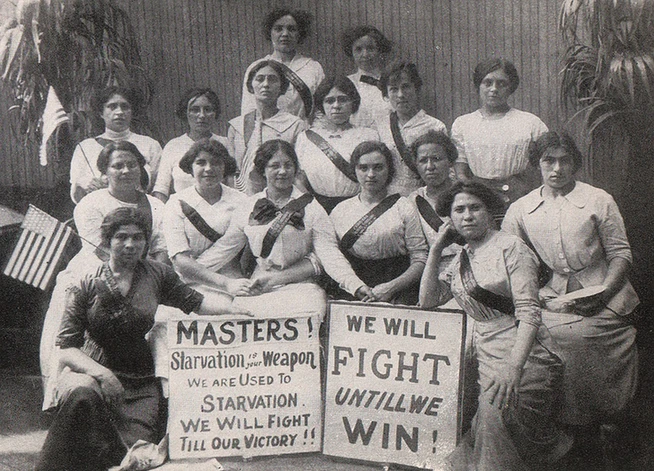
That strike by the Fur & Leather Workers Union, centered in New York City, ended with a 10 percent wage increase and a five‑day workweek. It was a concrete win in an industry that mixed luxury goods with sweatshop conditions. It also landed in the middle of a decade when American unions were on the defensive and women workers were treated as expendable.
The 1926 fur and leather strike was a small but real step toward shorter hours and better pay for women in light manufacturing. It showed that even in the anti‑union 1920s, organized women workers could win concessions. But what if that strike had failed, or gone very differently? What would that have meant for women workers, for the fur trade, and for the wider labor movement before the New Deal?
This is a counterfactual story built on real constraints: the economics of the fur trade, the politics of 1920s New York, and the fragile state of unions between World War I and the Great Depression.
What actually happened in the 1926 fur & leather strike?
First, the baseline. The Reddit post gives the skeleton: in early March 1926, the workers’ union in the fur and leather trades in New York, made up mostly of women, went on strike. They faced police violence but won a 10 percent wage increase and a five‑day workweek.
That lines up with what historians know about the period, even if the specific local contract details are scattered in union records and Yiddish‑language press rather than neat English summaries. The fur and leather trades in New York were heavily immigrant, heavily Jewish, and heavily female in certain job categories, especially sewing, lining, and finishing.
These were not glamorous jobs. The industry produced coats and stoles for the middle and upper classes, but the workers labored in lofts and tenement workshops. Hours often ran 50 to 60 per week. Pay was low and irregular, tied to seasonal demand and fashion cycles. The 10 percent raise and the shift to a five‑day week meant real money and real time off.
In the 1920s, a five‑day week was still an emerging demand. Some industries were experimenting with it, partly to spread employment and partly to appeal to workers in a tight labor market. But in many trades, especially those seen as “women’s work,” Saturday was still a normal workday.
So the 1926 strike did two things at once. It raised wages in a narrow slice of the garment sector, and it helped normalize the idea that women in light manufacturing deserved the same shorter workweek that male workers in heavier industries were starting to secure. That is the baseline from which the “what if” branches out. The real outcome nudged hours and pay upward for a vulnerable group, so what?
Scenario 1: The strike collapses and sets back women’s labor for a decade
In the first counterfactual scenario, the strike fails outright. The police beatings work as intended. The city courts back aggressive injunctions. The employers hold firm, blacklist ringleaders, and bring in replacement workers from other immigrant communities and from the South.
This is not far‑fetched. The 1920s were full of broken strikes. The 1919 steel strike had been crushed. The open‑shop movement was strong. Courts were happy to issue injunctions against picketing. The Red Scare had left unions branded as radical or foreign. Women workers were seen as more “replaceable” and less likely to be breadwinners, which made it easier for employers to gamble on starving them out.
In this version of 1926, the fur and leather employers coordinate through their trade associations. They hire private detectives, lean on the police, and quietly agree that no known striker will be rehired. The union treasury, never large, drains fast. After weeks of arrests, injuries, and no pay, the women start to drift back individually, taking whatever terms they can get. Some never return to the trade at all.
What follows is a chilling effect. Other women‑heavy shops in New York’s garment sector watch the outcome. They see that even a union with some backing from the broader labor movement cannot protect them from police batons or from blacklisting. The message is clear: strikes are too risky, especially for women with families to support and limited savings.
Without the 10 percent raise and the five‑day week in 1926, wage pressure in that corner of the garment industry stays weaker. Employers point to the failed strike as proof that “the girls” are not serious or that there is no need to negotiate. They can still fill their factories with a steady flow of new migrants and young women entering the labor force.
By the early 1930s, when the Great Depression hits, these workers are starting from a lower base. Hours are still long, wages still thin. The New Deal’s later protections, like the Fair Labor Standards Act of 1938, arrive, but they are setting minimums under worse existing conditions. The gap between male and female industrial workers stays wider.
In this scenario, the failed 1926 strike becomes a cautionary tale that employers and conservative politicians cite for years. It is used to argue that women’s unions are weak and that “outside agitators” only hurt the very people they claim to help. That narrative slows the growth of women‑led organizing in the garment trades through the 1930s, so what?
Scenario 2: The strike radicalizes and sparks a broader 1920s labor wave
Now swing the other way. Imagine the strike not just succeeding on wages and hours, but escalating into a larger confrontation that pulls in other trades and reshapes the late 1920s labor climate.
For this to happen, a few things need to line up. The graphic police violence against women picketers would have to be widely covered in sympathetic press, especially in the Yiddish and Italian papers and in progressive English‑language outlets. Middle‑class women’s groups, some of which had been active in earlier garment strikes, could rally to their defense. Socialist and communist organizers, already present in New York’s labor scene, might seize the moment.
In this scenario, the beatings backfire on the city. Photographs and eyewitness accounts circulate. Clergy, settlement house workers, and a few local politicians denounce the brutality. Mass meetings are held on the Lower East Side and in Harlem. The fur and leather workers’ demands expand from wages and hours to include recognition of the union, protections against arbitrary firing, and amnesty for arrested strikers.
Other garment unions, like the International Ladies’ Garment Workers’ Union (ILGWU) and the Amalgamated Clothing Workers, call sympathy strikes or at least organize mass demonstrations. The city faces the prospect of a broader shutdown in a key export industry. The 1920s “open shop” narrative takes a hit as New York looks less like a model of business harmony and more like a city at war with its own workers.
Under pressure, the city government brokers a more sweeping settlement. The fur and leather employers recognize the union formally, agree to a grievance procedure, and accept the five‑day week and the 10 percent raise. The victory is bigger and more public than in our timeline.
The political effects ripple. A new generation of women labor leaders gains visibility. Some move into city politics. The idea that women workers can be at the front of militant, successful strikes becomes part of the story unions tell about themselves. That matters when the Depression hits and the New Deal opens space for organizing. Those women are better positioned to influence early 1930s policy debates on hours, wages, and unemployment insurance.
Economically, a more unionized, more assertive garment sector in the late 1920s might slightly raise labor costs, but it also stabilizes incomes for tens of thousands of families. That extra income cushions some immigrant neighborhoods when 1929 arrives. The fur and leather segment, with stronger contracts, might see fewer wild seasonal swings and less brutal wage cutting in the early Depression years.
In this scenario, the 1926 strike becomes a reference point like the 1909 “Uprising of the 20,000” shirtwaist strike or the 1912 Lawrence textile strike. Historians of labor would talk about it as a late‑1920s surge that kept unionism alive in a hostile decade and gave women workers a stronger voice heading into the New Deal, so what?
Scenario 3: The strike wins quietly and accelerates the five‑day week
The third scenario is closer to what actually happened, but with the dial turned slightly up on its broader influence rather than on its drama.
In this version, the strike plays out much as the Reddit post describes. There are beatings. The workers, mostly women, hold out. The employers concede a 10 percent raise and a five‑day week. The difference is that the five‑day week clause, in particular, becomes a model clause that spreads more quickly through related trades.
By 1926, the idea of a five‑day week was already in the air. Some big firms, like certain auto manufacturers, had experimented with Saturdays off. Religious arguments (Saturday for Jews, Sunday for Christians) and social arguments (time for family and consumption) were being used to sell the idea. But adoption was patchy.
Here, the fur and leather contract is picked up by reformers and labor economists as a case study. Progressive magazines write about “women fur workers win five‑day week.” The ILGWU and other unions use it in their own bargaining: if fur finishers can get Saturdays off, why not dressmakers or shirtwaist makers?
Employers in related trades, facing the same labor market and the same social pressures, begin to concede five‑day weeks in exchange for modest wage restraint or productivity improvements. The pattern spreads through New York’s garment district and then to other cities with similar industries, like Chicago and Philadelphia.
By the early 1930s, before the federal government steps in, a larger share of urban industrial workers, especially women in light manufacturing, are already on five‑day schedules. When the New Deal debates start around standard hours, the baseline expectation is higher. A 40‑hour week with two days off looks less radical because large pockets of the workforce already have something like it.
The economic effect is subtle but real. Shorter weeks can mean more hiring if demand holds up, which spreads income slightly more broadly. For the women workers themselves, two days off mean time to rest, care for children, attend night school, or participate in union meetings and community groups. That extra time can feed back into more organizing and more political participation.
In this scenario, the 1926 strike is remembered less as a dramatic showdown and more as an early node in the quiet spread of the five‑day week. It is a small but important link in the chain that makes the 40‑hour standard feel normal by mid‑century, so what?
Which scenario is most plausible, and what does that tell us?
Of the three, the third scenario, where the strike wins modest gains and helps normalize the five‑day week in women’s garment work, is closest to both the Reddit description and the wider historical context. The 1920s were not a great time for unions to spark big national waves, which makes scenario 2 less likely. At the same time, the fact that the workers did win a 10 percent raise and a five‑day week tells us that scenario 1’s total collapse did not happen.
Could the strike have been crushed? Yes. The tools were there: police repression, hostile courts, employer coordination, and a surplus of desperate workers. Many strikes in that decade ended that way. If the fur and leather workers had been less organized, or if their union had had weaker ties to the broader garment movement, scenario 1 might have been our reality.
Could it have sparked a bigger wave? Possibly, but the national headwinds were strong. Union membership had fallen from its World War I peak. Anti‑radical sentiment was still high. The economy was, on the surface, doing well, which made it harder to rally broad sympathy. The most likely path was a contained but meaningful win, which is what the record hints at.
That contained win still matters. A 10 percent raise in a low‑wage industry changes whether rent gets paid and whether food on the table includes meat. A five‑day week changes whether a woman can see her children in daylight or attend a union meeting without losing her job. In an era when women workers were often treated as temporary or marginal, a group of mostly female fur and leather workers forcing employers to concede on both pay and time was a statement about their permanence and their power.
The counterfactual exercise also answers a quiet misconception that often lurks in discussions of the 1920s: that nothing much happened for labor until the New Deal. In reality, small strikes like this one, often led by women and immigrants, were testing demands, building networks, and nudging norms. They did not remake the national economy overnight, but they set floors and expectations that the 1930s federal legislation later codified.
So if you walk past a vintage fur coat in a museum or a shop window and think of 1920s glamour, there is another story stitched into the lining. It is about women on a March picket line in New York, facing batons for a 10 percent raise and two days off. Their real win was modest. The world where they lost would have been harsher. The world where their fight spread faster might have been kinder. The one we got sits in between, shaped in part by their refusal to go back inside when the police moved in, so what?
Frequently Asked Questions
What was the 1926 fur and leather workers strike in New York?
In March 1926, mostly women workers in New York City’s fur and leather shops went on strike for better pay and shorter hours. Despite police beatings and arrests, they won a 10 percent wage increase and a five‑day workweek, a notable gain in an era when many still worked six days.
Why were so many fur and leather workers women in the 1920s?
The fur and leather trades relied heavily on sewing, lining, and finishing work, which employers labeled as “women’s work” and paid less for. Immigrant women, especially Jewish and Italian, filled these jobs in New York’s loft factories because they needed income and faced limited options outside low‑paid manufacturing and domestic service.
How did the 1926 strike affect the five‑day workweek?
The 1926 strike helped normalize the five‑day week in a part of the garment industry where Saturday work was common. By winning Saturdays off for mostly women workers, it gave other unions a concrete example to use in bargaining and fed into the wider trend that made the 40‑hour, five‑day week a standard by mid‑century.
What might have happened if the 1926 fur workers strike had failed?
If the strike had failed and workers had been blacklisted, it likely would have discouraged other women‑led organizing in New York’s garment sector. Wages and hours in that niche would have stayed worse into the Depression, and employers could have used the defeat as proof that women’s unions were weak or “unrealistic.”