In a small Massachusetts courtroom in 1781, an enslaved woman known as Mum Bett listened as lawyers read out the new state constitution. One line caught her: “All men are born free and equal.” A year later, in 1857, hundreds of miles away, another enslaved person, Dred Scott, heard the U.S. Supreme Court tell him the opposite: that Black people “had no rights which the white man was bound to respect.”
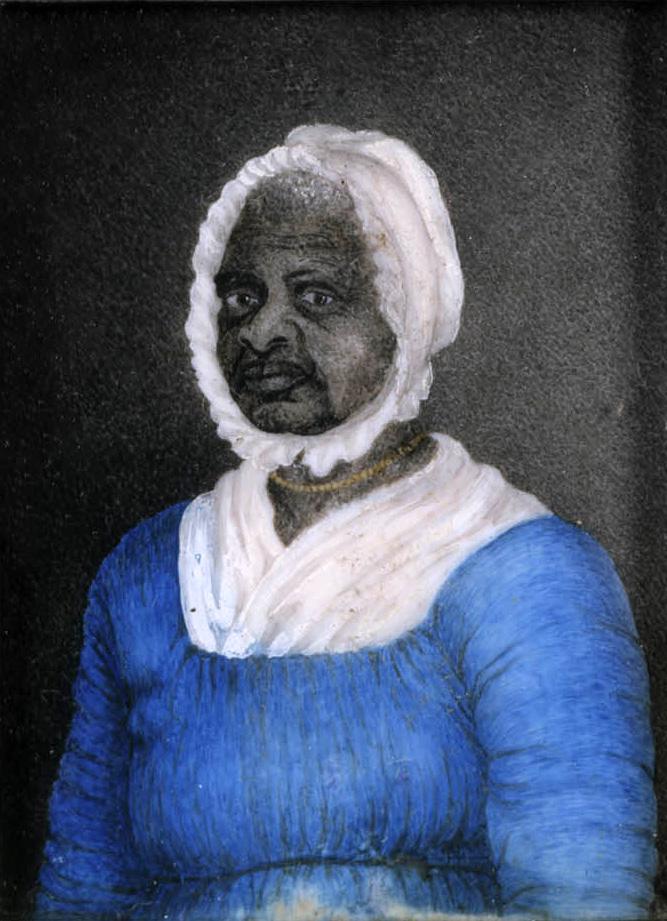
They look similar because both Mum Bett and Dred Scott used lawsuits to claim freedom from slavery. But they came from different worlds, used different legal tools, and changed history in very different ways. By the end, you will see how one case quietly helped end slavery in a state, while the other helped push the nation toward civil war.
Mum Bett’s case, Brom & Bett v. Ashley (1781), helped make slavery unenforceable in Massachusetts. Dred Scott v. Sandford (1857) tried to make slavery safer across the United States. Comparing them shows how law can either narrow or widen the path to freedom.
Why did Mum Bett and Dred Scott sue for freedom in the first place?
Start with the basics: who they were and what pushed them into court.
Mum Bett was born into slavery in colonial New York, then sold into the household of John Ashley, a powerful landowner and politician in Sheffield, Massachusetts. She could not read or write, but she listened. In 1780, she heard the Massachusetts Constitution read aloud in Ashley’s home. The first article said, “All men are born free and equal, and have certain natural, essential, and unalienable rights.”
According to later accounts, that sentence lodged in her mind. Around the same time, Ashley’s wife reportedly struck Bett’s sister with a hot shovel. Bett stepped between them and took the blow, leaving a scar on her arm. She later showed that scar to visitors as proof of what she had endured.
So when she heard that the law of Massachusetts now said all men were born free and equal, she drew a simple conclusion: if the law said that, then her enslavement had to be illegal. She went to a local lawyer, Theodore Sedgwick, and asked him to sue for her freedom. He did, filing a case in 1781 against John Ashley on behalf of “Brom & Bett,” two enslaved people in Ashley’s household.
Dred Scott’s path was longer and more tangled. He was born enslaved in Virginia around 1799, then taken by his owner, an army surgeon named John Emerson, to posts in Illinois and what is now Minnesota. Both places were free under federal law. Illinois was a free state. The Wisconsin Territory, where Fort Snelling sat, was covered by the Missouri Compromise, which banned slavery north of a certain line.
There was a long tradition of enslaved people suing for freedom on the argument “once free, always free.” If you lived on free soil with your owner’s consent, you could claim that you became free and could not be re-enslaved when you returned to a slave state. Scott knew of such cases. His wife Harriet had similar claims. With help from antislavery lawyers, the Scotts sued in Missouri courts in the 1840s.
So at the origin point, both cases start from the same human impulse: people trapped in a system of legal bondage using the system’s own rules to escape it. But they emerge in different moments. Mum Bett acts at the birth of a new state constitution that talks about equality. Dred Scott acts in a fractured republic where slavery is protected by the federal Constitution and fiercely defended by Southern politicians.
That difference in timing set the stage for how far each lawsuit could go.
How did their legal strategies compare?
Both cases used the same basic method, a freedom suit, but the legal arguments and courts involved were very different.
Mum Bett’s case was simple and bold. Her lawyers argued that the new Massachusetts Constitution of 1780 and slavery could not both be valid. Article I said all men are born free and equal. Article VI rejected hereditary titles and privileges. If the constitution was the supreme law of the state, then any earlier laws or customs that allowed slavery were now void.
Her case, Brom & Bett v. Ashley, went to the Berkshire County Court of Common Pleas in 1781. The jury agreed. They found that Brom and Bett were not the legal property of John Ashley. They were free. The court awarded Bett 30 shillings in damages for her years of unpaid labor. Ashley did not appeal.
Within a few years, the Massachusetts Supreme Judicial Court heard a related case, Commonwealth v. Jennison (1783), involving another enslaved man, Quock Walker. That court leaned on the same constitutional language and essentially said slavery was incompatible with the new state constitution. There was no single statute outlawing slavery, but after these cases, Massachusetts authorities stopped enforcing it. By the 1790 federal census, the state reported no slaves.
Dred Scott’s legal path was longer and more public. His lawyers first used the “once free, always free” doctrine in Missouri state courts. In 1850, a Missouri trial court agreed and granted Dred and Harriet Scott their freedom. But the Missouri Supreme Court reversed that decision in 1852, openly rejecting its own past precedents in the growing climate of sectional tension.
Scott’s lawyers then tried a different route. They filed a new suit in federal court, arguing that Scott was a citizen of Missouri suing a New York citizen (his owner’s brother-in-law, John F. A. Sandford) and that the federal courts had jurisdiction. This opened the door for the U.S. Supreme Court to weigh in on two huge questions: whether Black people could be citizens and whether Congress could ban slavery in the territories.
In 1857, Chief Justice Roger B. Taney wrote the majority opinion. He ruled that African Americans, free or enslaved, could not be citizens of the United States under the Constitution. Because Scott was not a citizen, he could not sue in federal court. Taney went further and declared the Missouri Compromise unconstitutional, claiming Congress had no power to ban slavery in the territories.
So in method, both cases used the courts and constitutional language. But Mum Bett’s lawyers used a brand-new state constitution to attack slavery itself. Dred Scott’s case got pulled up to the highest federal court, where pro-slavery justices used it to protect slavery and deny Black citizenship nationwide.
The methods show how the same tool, a freedom suit, can be used by the oppressed to seek liberty or by those in power to lock a system in place.
What were the outcomes for Mum Bett and Dred Scott personally?
On paper, both people were at the center of famous cases. In real life, they were trying to survive.
After winning her case in 1781, Mum Bett chose a new name: Elizabeth Freeman. The name itself was a declaration. She went to work as a paid domestic servant in the Sedgwick household, the family that had represented her in court. She raised her daughter, earned wages, and eventually bought a small house of her own in Stockbridge, Massachusetts.
Freeman became a respected figure in her community. When she died in 1829, she was buried in the Sedgwick family plot, a rare honor for a Black woman and former slave in that era. Her gravestone still calls her “Elizabeth Freeman” and notes that she “could neither read nor write, yet in her own sphere she had no superior nor equal.”
Dred Scott’s personal story ended much more harshly. After the Supreme Court’s 1857 decision, he remained enslaved. Public reaction in the North was fierce. The case became a symbol of the so-called “Slave Power” dominating the federal government. Within months, Scott’s legal owner, Irene Emerson, transferred him to an abolitionist-minded man, who then formally freed Dred and Harriet Scott.
Dred Scott tasted legal freedom only briefly. He died in 1858 in St. Louis, reportedly of tuberculosis. Harriet lived until 1876. Their daughters survived into the Reconstruction era, when the laws that had defined their parents’ lives were rewritten.
So in personal terms, both cases ended with the plaintiffs free. But Freeman won her freedom through a court that affirmed her rights, while Scott gained his only after the highest court in the land denied that he had any rights at all.
The contrast shows how legal victory and moral victory do not always line up, and how the same courthouse can be a doorway or a wall depending on who holds power.
How did these cases change the law on slavery?
This is where the comparison gets sharp. One case quietly helped end slavery in a state. The other tried to protect slavery everywhere.
In Massachusetts, Brom & Bett v. Ashley and the related Quock Walker cases pushed judges to read the 1780 constitution as incompatible with slavery. There was no dramatic abolition statute passed by the legislature. Instead, courts refused to enforce slaveholders’ claims.
Legal historians often describe Massachusetts slavery as ending “by judicial interpretation.” After 1783, slaveholders found they could not successfully sue to recover escaped slaves. Town officials stopped listing people as slaves in tax and census records. The institution withered because the legal system withdrew its support.
In clear terms: Mum Bett’s case helped establish that the phrase “all men are born free and equal” in the Massachusetts Constitution meant slavery could not be enforced in that state.
Dred Scott’s case did the opposite on a national scale. The Supreme Court’s 1857 ruling said two key things. First, Black people could not be citizens of the United States, so they had no right to sue in federal court. Second, Congress could not ban slavery in federal territories, which meant the Missouri Compromise of 1820 was unconstitutional.
This was a gift to slaveholders. It suggested that slavery could spread into western territories regardless of what Congress or local settlers wanted. It also threatened to invalidate efforts to keep new states free. Abraham Lincoln and other Republicans saw it as a warning that the Court might next try to block states from excluding slavery within their own borders.
In crisp terms: The Dred Scott decision tried to nationalize slavery by denying Black citizenship and stripping Congress of power to restrict slavery in the territories.
So while Mum Bett’s case narrowed slavery’s legal reach in one state, Dred Scott’s case tried to expand and protect it across the entire country.
The legal outcomes show how courts can either read equality language broadly to dismantle oppression or read the Constitution in a way that hardens it.
What was the wider political impact of each case?
Neither Mum Bett nor Dred Scott set out to reshape national politics. Yet their cases landed in very different political climates.
In 1781, when Mum Bett sued, the American Revolution was still underway. Massachusetts patriots had just written a constitution full of Enlightenment language about natural rights. The hypocrisy of slavery in a state that preached liberty was obvious, but the institution was relatively small there compared to the South.
Her case did not spark riots or legislative showdowns. It fit into a broader Northern trend where slavery was shrinking and gradual emancipation laws were being passed. Pennsylvania had adopted gradual abolition in 1780. Other Northern states would follow.
So Brom & Bett v. Ashley was part of a quiet legal revolution in the North, where slavery faded without a civil war. It mattered, but it did not blow up the political order.
Dred Scott’s case landed in a powder keg. By the 1850s, the United States was locked in a bitter fight over whether slavery could expand into western territories. The Compromise of 1850, the Kansas-Nebraska Act, and bloody conflict in “Bleeding Kansas” had already raised tensions.
When the Supreme Court issued its decision in 1857, it did not calm things. It enraged Northern public opinion. Many white Northerners who were not abolitionists still bristled at the idea that slaveholders could carry slavery into any territory and that Black people had no rights at all.
The decision badly damaged the Court’s reputation in the North. It helped Abraham Lincoln frame the Republican Party as a defender of free soil against a pro-slavery court and Democratic Party. Lincoln’s famous debates with Stephen Douglas in 1858 revolved heavily around Dred Scott and the future of slavery in the territories.
Within four years of the decision, the country was at war. Within a decade, the Civil War and the Reconstruction amendments had wiped out the legal logic of Dred Scott.
So politically, Mum Bett’s case helped normalize the idea that a free state constitution could quietly suffocate slavery. Dred Scott’s case helped convince many Americans that slavery and freedom could no longer share the same union.
What is the legacy of Mum Bett and Dred Scott today?
Both names still appear in history books and court opinions, but they carry different lessons.
Elizabeth Freeman’s story is often used to show how enslaved people were not passive victims. She could not read the constitution, but she could hear it and reason from it. She recognized that the ideals white revolutionaries claimed for themselves applied to her too, and she forced the courts to confront that fact.
Her case also shows how state constitutions can be powerful tools for rights. Long before the federal Supreme Court began using the U.S. Constitution to strike down racial discrimination, a state jury in western Massachusetts used a state bill of rights to free an enslaved woman.
Dred Scott’s name is usually invoked as a warning. The decision is widely regarded as one of the worst in Supreme Court history. It reminds lawyers and judges how courts can entrench injustice when they read the Constitution through the prejudices of their time.
The 14th Amendment, adopted in 1868, directly overturned Dred Scott by declaring that all persons born or naturalized in the United States are citizens. The Civil War amendments also gave Congress power to enforce civil rights, a power Taney had tried to deny.
Yet the logic of exclusion in Dred Scott, the idea that some groups can be written out of the political community, has echoed in later fights over citizenship, immigration, and voting rights. The case is still cited as a symbol of what happens when courts side with property rights over human rights.
So when you put the two together, Mum Bett and Dred Scott are not just parallel stories of enslaved people who sued. They are bookends on a long argument about who “all men are born free and equal” actually includes, and whether courts will narrow or expand that promise.
They look similar because both turned a courtroom into a battlefield over slavery. They matter because one helped law move toward freedom, and the other showed how far the law could be twisted to deny it.
How did these two cases shape the path from slavery to citizenship?
There is one more comparison worth drawing: how each case fits into the longer story that runs from slavery to citizenship and civil rights.
Mum Bett’s victory in Massachusetts helped create an early example of a state without legal slavery. That mattered when people later argued that a multiracial republic was possible. Northern states could point to decades of experience living without slavery and, in some cases, with limited Black citizenship rights.
Her case also fed a legal tradition in which state courts read equality clauses broadly. That tradition would resurface in the 19th and 20th centuries when state courts used their own constitutions to strike down school segregation, bans on interracial marriage, and other forms of discrimination, sometimes before the U.S. Supreme Court did.
Dred Scott, by contrast, forced the country to answer a brutal question: could a nation that defined citizenship in racial terms survive? The Civil War amendments, especially the 14th, were written with Dred Scott in mind. They wrote birthright citizenship, equal protection, and due process into the Constitution so that no future court could repeat Taney’s logic.
Modern civil rights law, from Brown v. Board of Education to voting rights cases, rests on those amendments. In that sense, Dred Scott’s case helped provoke the very constitutional changes that destroyed its own reasoning.
So the long arc runs like this: Elizabeth Freeman used a state constitution’s equality clause to win freedom in 1781. Dred Scott’s loss in 1857 exposed how fragile and limited that equality was at the national level. The Civil War and Reconstruction tried to close that gap by turning the promise of “born free and equal” into a federal guarantee.
That shared arc is why these two lawsuits, separated by seventy-six years and very different outcomes, still sit next to each other in the story of American freedom.
Frequently Asked Questions
Who was Mum Bett and what did she do?
Mum Bett, later known as Elizabeth Freeman, was an enslaved woman in Massachusetts who sued her owner in 1781 after hearing the new state constitution declare that “all men are born free and equal.” In the case Brom & Bett v. Ashley, a jury ruled she was not property and awarded her freedom and 30 shillings in damages. Her case helped make slavery unenforceable in Massachusetts.
What was the Dred Scott decision in simple terms?
In 1857, the U.S. Supreme Court ruled in Dred Scott v. Sandford that African Americans, free or enslaved, could not be citizens of the United States and that Congress had no power to ban slavery in federal territories. The decision denied Dred Scott’s claim to freedom and tried to protect the expansion of slavery, helping push the country toward the Civil War.
How did Mum Bett’s case affect slavery in Massachusetts?
Mum Bett’s lawsuit, along with related cases like Commonwealth v. Jennison (the Quock Walker case), led Massachusetts courts to interpret the 1780 state constitution as incompatible with slavery. After these decisions, slaveholders could no longer successfully enforce claims to human property, and slavery effectively disappeared from the state by the early 1790s without a single abolition statute.
How are Mum Bett and Dred Scott’s cases similar and different?
Both were enslaved people who used the courts to seek freedom, and both cases turned on constitutional language. Mum Bett relied on the Massachusetts Constitution’s promise that “all men are born free and equal” and won, helping end slavery in that state. Dred Scott’s case reached the U.S. Supreme Court, which ruled against him, denied Black citizenship, and tried to protect slavery nationwide. One case narrowed slavery’s reach, the other tried to expand it.