December 1989. In Bucharest, Nicolae Ceaușescu steps onto a balcony to give yet another scripted speech to a crowd he assumes is loyal. For a few minutes, it sounds like the usual choreographed cheering. Then the noise shifts. Boos. Shouts. Confusion. The dictator freezes, his face flickering from annoyance to fear on live television. Within days, he is dead.
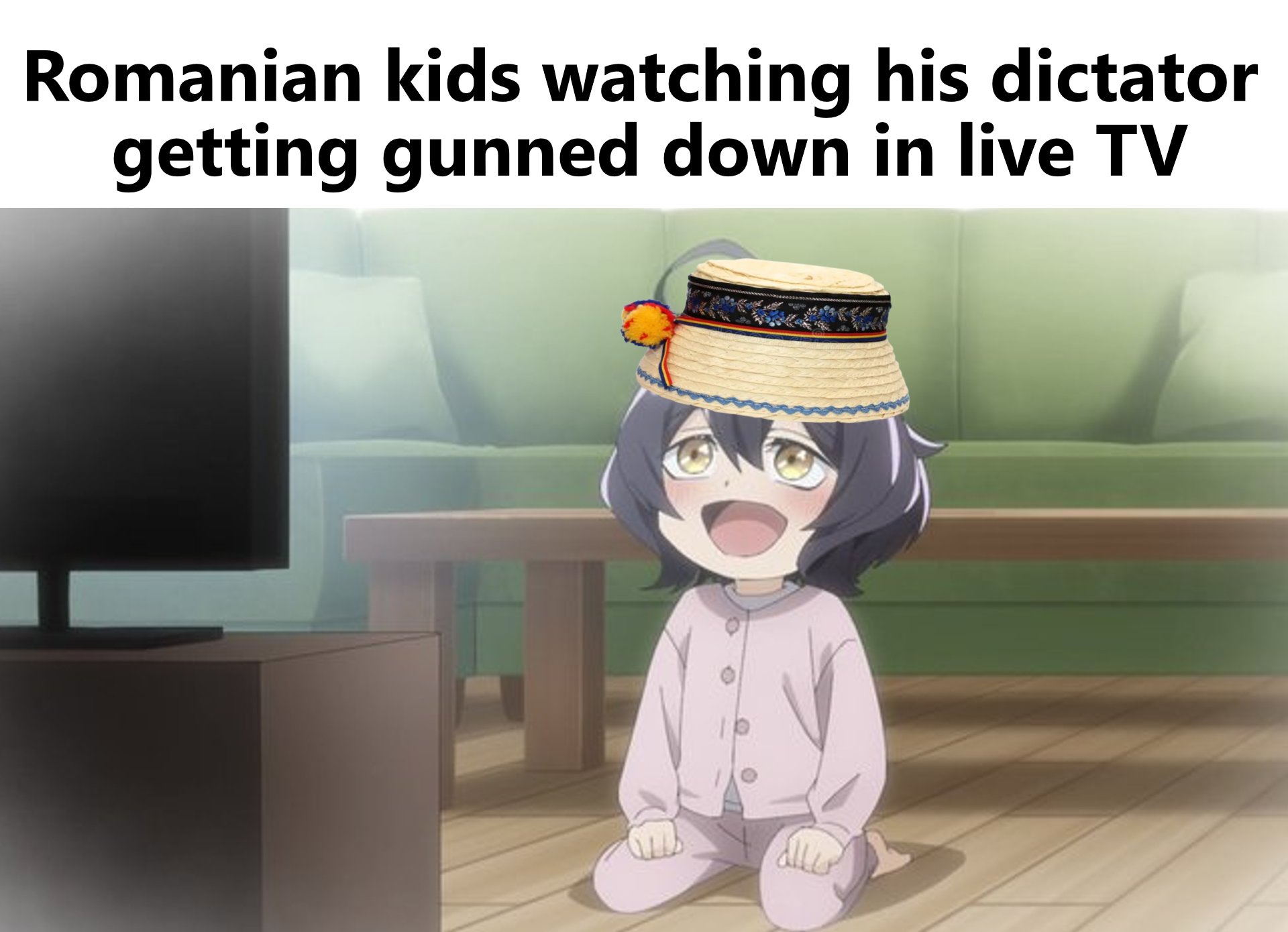
If you have ever seen a meme about the “most sane Romanian reaction,” it is usually poking fun at how Romanians respond to chaos with a mix of dark humor, suspicion of authority, and a very old habit of surviving empires. That reaction did not come out of nowhere. It was built over centuries of invasions, bargains, betrayals, and uprisings.
Here are five moments that help explain why Romanian history feels like a long-running joke told under siege, and why modern Romanians react the way they do to power, borders, and big promises.
1. Vlad the Impaler: The Real Politics Behind “Dracula”
What it is: Vlad III of Wallachia, known as Vlad Țepeș (the Impaler), ruled in the mid‑1400s and became the raw material for Bram Stoker’s Dracula. The real man was less vampire and more brutal frontier warlord trying to keep a tiny principality alive between hungry empires.
Concrete example: In 1462, during a conflict with the Ottoman Empire, Vlad reportedly ordered thousands of captured Ottoman soldiers and local collaborators impaled on stakes near Târgoviște. When Sultan Mehmed II advanced and saw the “forest of the impaled,” he withdrew rather than press deeper into Wallachia.
Vlad was not impaling people for fun. He was sending a message. Wallachia sat between the expanding Ottoman Empire and the Kingdom of Hungary. It was a buffer zone, expected to pay tribute to the sultan while also staying useful to Christian neighbors. Vlad tried to break Ottoman control by refusing tribute and raiding across the Danube. Terror was his foreign policy tool.
His cruelty was exaggerated by enemies, especially Saxon merchants who printed lurid pamphlets in German lands. But even allowing for propaganda, he used spectacular violence as a deterrent. For peasants and boyars (nobles) in Wallachia, the lesson was simple: rulers could be both defenders and predators, and survival meant adapting to whichever version showed up.
Why it mattered: Vlad’s legend taught later Romanians two things. First, small states on big fault lines survive by making themselves too costly to conquer outright. Second, rulers might defend the country while brutalizing their own people, so loyalty is always conditional. That mix of pride in a feared defender and skepticism toward authority still shapes Romanian reactions to strongmen and to how foreigners talk about “Dracula’s country.”
2. The Phanariote Princes: When the Bosses Came from Istanbul
What it is: From the early 1700s to the 1820s, the Ottoman Empire appointed Greek-speaking elites from the Phanar district of Constantinople as rulers (hospodars) of Wallachia and Moldavia. These Phanariote princes turned the principalities into tax farms for Istanbul and for their own families.
Concrete example: Prince Nicholas Mavrocordatos, who ruled Moldavia and then Wallachia in the early 18th century, arrived with an entourage of Greek officials and loyalists. He expanded taxes, sold offices, and rotated local boyars in and out of favor. Loyalty to him and to the Ottoman court mattered more than local legitimacy.
Under the Phanariotes, the idea of the ruler as a remote, foreign-backed figure hardened. Many princes did not speak Romanian well. They often stayed only a few years before being replaced, exiled, or executed. Their goal was to squeeze as much wealth as possible before the political wind shifted in Istanbul.
For villagers, this meant new taxes, corrupt intermediaries, and the sense that power came from far away and could not be trusted. For local elites, it meant learning to flatter and manipulate foreign-appointed rulers while quietly building their own networks. Resistance took the form of passive noncompliance, local revolts, and a growing interest in national identity as a counterweight to foreign rule.
Why it mattered: The Phanariote era taught Romanians that rulers could be parachuted in by a distant empire, milk the country, then vanish. That experience fed a long memory of suspicion toward outsiders who claim to “manage” Romania and toward local elites seen as serving someone else’s agenda. It helped create the modern Romanian reflex of asking: “Who is this politician really working for?”
3. 1859 & 1918: Making Romania by Joining the Pieces
What it is: Modern Romania did not appear overnight. It was stitched together in stages, first by uniting Moldavia and Wallachia in 1859, then by adding Transylvania, Bukovina and Bessarabia in 1918 after World War I. Each step involved local calculation and great power politics.
Concrete example: In 1859, Moldavian and Wallachian political elites pulled a quiet stunt. European powers had allowed each principality to elect its own prince. Romanian leaders in both capitals chose the same man, Alexandru Ioan Cuza, effectively uniting the two under one ruler without formally breaking the rules. The great powers grumbled, then accepted the fait accompli.
That union created the core of modern Romania. It was not a romantic uprising so much as a clever legal hack. Cuza then pushed land reform and secularization, which angered both big landowners and the Orthodox Church. He was forced to abdicate in 1866, and a foreign prince, Carol of Hohenzollern-Sigmaringen, was brought in as a more acceptable monarch to Europe.
In 1918, the map expanded again. As Austria-Hungary and the Russian Empire collapsed, local assemblies in Transylvania (at Alba Iulia), Bukovina, and Bessarabia voted to unite with the Romanian kingdom. The new “Greater Romania” roughly doubled the country’s territory and population. It also brought in large Hungarian, German, Jewish, Ukrainian and Russian minorities.
Why it mattered: These unifications taught Romanians that borders are negotiable when big empires fall apart and that timing is everything. They also created a national story of “gathering the lands,” which fuels pride but also nostalgia for lost territories like Bessarabia (most of which is now Moldova). That history feeds a modern sensitivity about borders, minorities, and any hint that foreign powers might redraw the map again.
4. Antonescu, the Holocaust, and Switching Sides in WWII
What it is: During World War II, Romania under Marshal Ion Antonescu allied with Nazi Germany, participated in the Holocaust, then switched sides in 1944 when the war turned. It is one of the darkest and most contested chapters in Romanian memory.
Concrete example: In June 1941, after joining Hitler’s invasion of the Soviet Union, Romanian authorities carried out a massacre in Iași. Thousands of Jews were killed in the city and in death trains. In territories under Romanian control, especially Transnistria (between the Dniester and Bug rivers), hundreds of thousands of Jews and Roma were deported, starved, or shot. Historians estimate that between 280,000 and 380,000 Jews and over 10,000 Roma were killed as a result of Romanian policies.
Antonescu justified this as “cleansing” and reclaiming lost territories like Bessarabia and northern Bukovina from the USSR. He was not a puppet. He pursued his own agenda while aligning with Hitler. When the war turned against Germany, King Michael I and anti-Antonescu politicians staged a coup on 23 August 1944. Romania switched to the Allied side, and its army then fought against German forces.
After the war, Antonescu was tried and executed. Communist authorities used his crimes to discredit the old elite, but for decades the full extent of Romanian involvement in the Holocaust was downplayed or blamed entirely on the Germans. Only in the early 2000s did an official commission, led by historian Elie Wiesel, clearly state Romania’s responsibility.
Why it mattered: The Antonescu era shows how a small country can be both victim and perpetrator. It shaped a lasting discomfort with facing hard truths about national heroes and wartime choices. The 1944 switch of sides also fed a stereotype, sometimes used by Romanians themselves, that their leaders “change jackets” when the wind shifts. That history fuels modern cynicism about alliances, great powers, and politicians who wrap themselves in patriotic language.
5. Ceaușescu, Ration Cards, and the 1989 Revolution
What it is: Nicolae Ceaușescu ruled Romania from 1965 to 1989. His early image as an independent communist leader gave way to a personality cult and severe austerity. The 1989 revolution that toppled him was one of the bloodiest in Eastern Europe and left a deep mark on how Romanians view power and protest.
Concrete example: In the 1980s, Ceaușescu insisted on paying off Romania’s foreign debt at high speed. To do this, he slashed imports and forced massive exports of food and fuel. Ordinary people lived with rationed bread, sugar, oil, and meat. Heating and electricity were cut. People queued for hours for basic goods. Meanwhile, propaganda showed Ceaușescu and his wife Elena as near-saintly figures, their portraits hanging in every office and classroom.
By December 1989, anger was boiling. In Timișoara, protests over the attempted eviction of a dissident pastor, László Tőkés, turned into a broader uprising. Security forces fired on demonstrators. The unrest spread. On 21 December, Ceaușescu tried to rally support with a mass rally in Bucharest. When the crowd began booing, the live broadcast cut away, but the damage was done. The image of a dictator losing control in real time traveled fast.
Within days, parts of the army joined the protesters. Fighting broke out in several cities. Ceaușescu and his wife fled by helicopter, were captured, given a rushed trial, and executed on 25 December 1989. The new leadership emerged from within the communist elite, which led many to suspect that the revolution was partly hijacked from above.
Why it mattered: The Ceaușescu years and the violent, confusing revolution left Romanians with a deep allergy to personality cults and grand ideological promises. They also left a habit of dark humor about hardship and a reflex to doubt official stories, including about 1989 itself. When you see Romanians online reacting to politics with sarcasm and references to “the system,” they are drawing on memories of ration cards, secret police, and a dictator who thought the crowd would cheer forever.
Romanian history is not just Dracula and dictators. It is centuries of negotiating with larger powers, improvising under pressure, and learning that rulers can change masks overnight. From Vlad’s terror tactics to Ceaușescu’s balcony moment, each episode taught a version of the same lesson: trust is earned slowly and lost fast.
That is why the “most sane Romanian reaction” in memes often looks like a shrug, a joke, and a sharp side-eye at whoever claims to be in charge. It is not apathy. It is a survival strategy honed in a country that has spent a long time living between empires, watching the powerful come and go while ordinary people figure out how to get through the winter.
Frequently Asked Questions
Who was Vlad the Impaler and how accurate is the Dracula story?
Vlad the Impaler, or Vlad III of Wallachia, ruled in the mid‑1400s and was known for using mass impalement to terrorize enemies and collaborators. Bram Stoker borrowed his name and some details for the fictional Count Dracula, but the vampire story is fantasy. The real Vlad was a brutal local ruler trying to keep Wallachia independent between the Ottoman Empire and Hungary.
Why did Romania switch sides in World War II?
Romania under Marshal Ion Antonescu initially joined Nazi Germany to regain territories lost to the Soviet Union, like Bessarabia and northern Bukovina. As the war turned against Germany and Soviet forces advanced, King Michael I and anti-Antonescu politicians staged a coup on 23 August 1944. Romania then joined the Allies, hoping to limit postwar losses, though it still ended up in the Soviet sphere.
What caused the Romanian Revolution in 1989?
The Romanian Revolution was triggered by protests in Timișoara in December 1989 after authorities tried to evict a dissident pastor. Years of austerity, food shortages, and Ceaușescu’s personality cult had created deep resentment. When security forces fired on demonstrators and Ceaușescu’s attempt at a mass rally in Bucharest backfired on live TV, protests spread. Parts of the army joined the uprising, and Ceaușescu was overthrown and executed.
How did modern Romania form as a country?
Modern Romania formed in stages. In 1859, Moldavia and Wallachia united under Alexandru Ioan Cuza, creating the core Romanian state. After World War I, as the Austro‑Hungarian and Russian empires collapsed, Transylvania, Bukovina, and Bessarabia voted to unite with the Romanian kingdom. This created “Greater Romania,” which roughly doubled the country’s territory and population compared to the prewar kingdom.