On a March morning in 1926, a newspaper reader might have glanced past a small headline and smirked: “The Difficulty of Securing a Plain Girl.” It sounds like a joke, or a bad dating-advice column. But it was dead serious. It was about marriage, money, and the strange new power of beauty in the modern city.
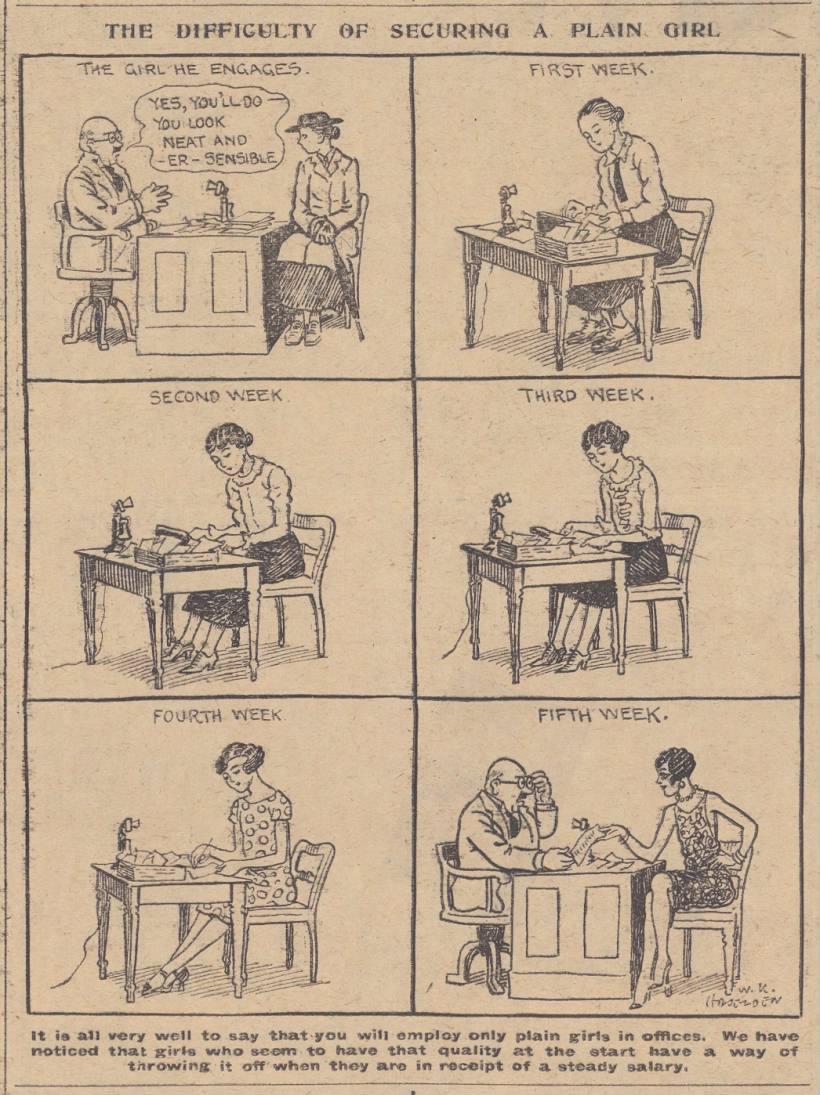
The phrase shows up in the mid‑1920s in American and British press as a kind of social problem: respectable young men, writers claimed, could no longer find “plain” girls to marry. Everyone wanted a pretty wife. Plain girls were “improving” themselves with cosmetics and fashion. The whole mating market, they said, had gone sideways.
So what was really going on in 1926 when people worried about “securing a plain girl”? Here are five things that phrase reveals about gender, beauty, and anxiety in the Jazz Age.
1. Beauty had become a measurable commodity
When writers in 1926 talked about the “difficulty of securing a plain girl,” they were treating beauty like a scarce resource you could shop for. The idea was that men used to marry for character and thrift, but now they were all chasing the same pool of “pretty” women, leaving no one willing to marry the supposedly plain ones.
This was not just bar‑room talk. Newspapers and magazines ran beauty contests, printed “scientific” beauty charts, and quoted doctors and psychologists on the value of a symmetrical face. In 1921, Atlantic City launched the Inter-City Beauty Contest that became Miss America. By the mid‑1920s, small-town papers from Iowa to Yorkshire were running local “prettiest girl” competitions. The language of these contests seeped into advice columns and editorials about marriage.
One typical example: a 1920s British advice piece (versions ran in several papers) warned that “plain girls” used to be prized for their domestic skills, but now men were “deceived” by cosmetics and short skirts. The writer complained that a man could no longer tell if he was marrying a naturally pretty woman or a “made-up” one, and that “plain” girls were disguising themselves as beauties. The problem, in his eyes, was not that plain girls were ignored. It was that they were refusing to stay visibly plain.
Beauty in the 1920s was treated as a kind of currency. A pretty face could mean a better marriage, a job as a shop assistant, or a chance at the stage. A “plain” girl who learned to use lipstick and a Marcel wave could, in theory, move up the social ladder. That made some men feel that the rules had changed without their consent.
So what? By turning beauty into a measurable commodity, the 1920s helped create the modern dating “market,” where looks, status, and style are openly treated as things to be weighed and traded.
2. Cosmetics and fashion blurred the line between “plain” and “pretty”
The complaint hidden inside “the difficulty of securing a plain girl” was really about technology. New cosmetics, hairstyles, and clothes made it harder for men who thought they could “read” a woman’s looks at a glance.
Before World War I, heavy makeup in the West was still widely associated with actresses and sex workers. By the mid‑1920s, that had changed. Companies like Helena Rubinstein and Elizabeth Arden were selling rouge, powder, and lipstick to middle‑class women. Department stores had beauty counters. Magazines printed before‑and‑after photos. A girl who might have been dismissed as “plain” in 1900 could, by 1926, darken her lashes, shape her brows, and bob her hair into a fashionable cut.
Hollywood poured gasoline on this shift. Film stars like Clara Bow and Colleen Moore turned the flapper look into an international template. Young women in places like Des Moines or Glasgow copied their hair, their cupid’s-bow lips, their thin eyebrows. The complaint in editorials was often the same: a man could no longer tell which girls were “naturally” pretty and which were “artificially” enhanced.
One American newspaper story from the mid‑1920s quoted a man grumbling that “a fellow has to take a girl swimming to find out what she really looks like.” Variants of that joke appeared again and again. The humor rested on a real anxiety: if makeup could erase the visual line between plain and pretty, then men who thought they were “trading up” might feel tricked.
So what? The spread of mass‑market cosmetics and fashion in the 1920s scrambled old categories of plain and pretty, which in turn fed moral panics about authenticity, deception, and what kind of wife a man might be getting.
3. The marriage market was colliding with women’s new independence
On the surface, “difficulty of securing a plain girl” sounds like a supply problem. Underneath, it was about demand. Many women in 1926 were less interested in being “secured” at all.
World War I had shaken gender roles. Millions of women had worked in factories, offices, and farms. Some kept those jobs. In the United States, women had won the vote in 1920. In Britain, women over 30 had voting rights since 1918, and younger women would get them in 1928. Urban women were earning wages as typists, shop assistants, telephone operators. A woman who could support herself had more leverage in deciding if, when, and whom to marry.
Writers of the time noticed. A 1926 piece in the American magazine The Forum complained that “modern girls” were turning down “good offers” because they wanted excitement, not just security. British newspapers published letters from men who said that girls preferred “jazz and joy rides” to steady husbands. The “plain girl,” who in older fiction might have been grateful for any proposal, was now portrayed as picky or distracted by city life.
Consider the case of office workers in New York or London. Clerical work exploded in the 1920s. A young woman with a high school education could earn her own money, ride the subway, go to movies, and share a flat with friends. Sociologists of the era recorded that many such women delayed marriage into their late twenties, something that would have been rare a generation earlier. To men raised on the idea that women were waiting to be “chosen,” this felt like rejection.
The phrase “securing a plain girl” carried an older assumption: that women, especially plain ones, were prizes to be locked down quickly. In 1926, some of those women were simply not playing along.
So what? The complaint about not being able to “secure” a plain girl reflected a deeper shift: women’s growing economic and social independence was weakening the old bargain of marriage as a woman’s only respectable future.
4. Advice writers used “plain girls” to police women’s behavior
The “plain girl” in 1920s columns was often not a real person. She was a device. Advice writers used her as a moral yardstick to scold modern women about vanity, spending, and sex.
In many English‑language papers around 1926, you can find short essays or letters with titles like “The Plain Girl’s Chance” or “Why Men Marry Plain Women.” The pattern is familiar. The writer claims that men secretly prefer plain girls because they are loyal, thrifty, and domestic. Then he or she criticizes “pretty” girls for being spoiled, extravagant, or flirtatious. The supposed problem, by 1926, was that even plain girls were imitating the flapper.
One common example: a syndicated piece that ran in several American papers argued that men were having a hard time finding “sensible” wives because “even the plain girl now powders her nose and demands her fun.” The writer warned that such girls would price themselves out of the marriage market. The message was clear. If you are not a beauty, you should compensate with modesty and service, not lipstick and dancing.
These articles rarely quoted actual women. They quoted male “experts,” anonymous bachelors, or fictionalized letters. The “plain girl” became a stick to beat modern femininity. If she stayed plain, she was praised for her virtue. If she tried to look glamorous, she was mocked as delusional.
So what? By turning the “plain girl” into a morality tale, 1920s media helped enforce narrow expectations: women were told to manage their looks and desires in ways that kept male comfort and control at the center.
5. The joke hid real anxiety about class and status
On Reddit a century later, people see a headline like “The Difficulty of Securing a Plain Girl” and assume it is just period sexism or a weird joke. It was sexist, but it was not just a joke. It was also about class fear.
In older village life, everyone knew roughly where they stood. Marriages were arranged or at least strongly guided by family, religion, and local reputation. A “plain” girl from a respectable family might marry a solid farmer or shopkeeper because that was what people expected. By the 1920s, cities, cinemas, and cheap transport had scrambled those expectations.
Middle‑class men worried that they might accidentally marry “beneath” them if they judged only by looks. Working‑class men worried that pretty girls from their streets were being lured away by richer suitors. Advice writers fretted that girls were chasing “movie ideals” and would reject steady but unglamorous men. Underneath all of this was a fear that beauty and charm, not birth and thrift, were becoming the main tickets to a better life.
You can see this clearly in the way some writers talked about servants and shopgirls. A 1920s British commentary complained that maids were bobbing their hair and wearing silk stockings, making it hard to tell them from their employers’ daughters when they were out in public. American pieces griped that “stenographers” dressed above their pay grade. The “plain girl” who refused to stay visually plain threatened to blur class lines.
Even the word “securing” carried a class flavor. It implied that a man was acquiring a stable, predictable asset, like a house or a bond. A plain, modest wife from a known background was supposed to be a safe investment. If she could remake herself with cosmetics and clothes, or if she felt entitled to choose among suitors, that safety vanished.
So what? The fuss about securing a plain girl was partly a way for anxious men to talk about class mobility and social change without admitting that the old hierarchies were slipping.
The odd little phrase “the difficulty of securing a plain girl” has aged badly, which is exactly why it is useful. It captures a moment when beauty became mass‑produced, women’s independence grew, and old marriage scripts started to wobble.
For readers today, it helps answer a few nagging questions that pop up whenever this 1926 headline resurfaces online. No, men in the 1920s were not literally unable to find women to marry. Birth and marriage rates stayed high. What they were losing was a sense of automatic entitlement, especially over women they assumed would be grateful for any offer.
The headline also shows how quickly technology and media can rewrite what seems “natural.” In 1900, a made‑up face marked a woman as outside respectability. By 1926, the same powders and paints were blamed for making respectable women too attractive, too confident, too hard to pin down. A century later, arguments about filters, cosmetic surgery, and “authenticity” follow a similar script.
So when you see that 1926 phrase on r/100yearsago, you are not just looking at an antique insult. You are catching a glimpse of the moment when modern beauty culture, modern dating, and modern gender anxiety all met in one uneasy joke about a “plain girl” who refused to stay plain.
Frequently Asked Questions
What did “plain girl” mean in the 1920s?
In 1920s newspapers and advice columns, a “plain girl” usually meant a woman who was not considered especially pretty by the day’s standards. Writers often linked her with virtues like thrift, modesty, and domestic skill. The term was less about an exact level of attractiveness and more about a type of woman who was expected to be grateful, sensible, and not very glamorous.
Was there really a shortage of marriageable women in 1926?
No. Demographic data from the 1920s in the US and UK does not show a sudden shortage of women or a collapse in marriage rates. The phrase “difficulty of securing a plain girl” reflected male anxiety about changing gender roles, beauty standards, and women’s independence, not an actual numeric shortage of potential brides.
Why were men in the 1920s worried about makeup and beauty?
Mass‑market cosmetics, Hollywood films, and new fashions made it easier for women to change their appearance. Some men complained that makeup blurred the line between “plain” and “pretty,” so they felt they could no longer judge a woman’s “real” looks at a glance. These complaints often hid deeper worries about class, status, and losing control over the marriage market.
How does the 1926 idea of a “plain girl” relate to dating today?
The 1926 talk about “securing a plain girl” foreshadows modern debates about looks, filters, cosmetic procedures, and dating “markets.” Then as now, people argued about authenticity, complained about being misled by appearances, and worried that changing beauty norms were upsetting old expectations about who should marry whom and on what terms.