On a March day in 1925, a 66‑year‑old Black woman in a plain dark dress walked into the Sorbonne in Paris to defend her doctoral thesis. Her name was Anna Julia Cooper. She had been born enslaved in North Carolina before the Civil War. Now she was about to earn a doctorate from one of Europe’s oldest universities.
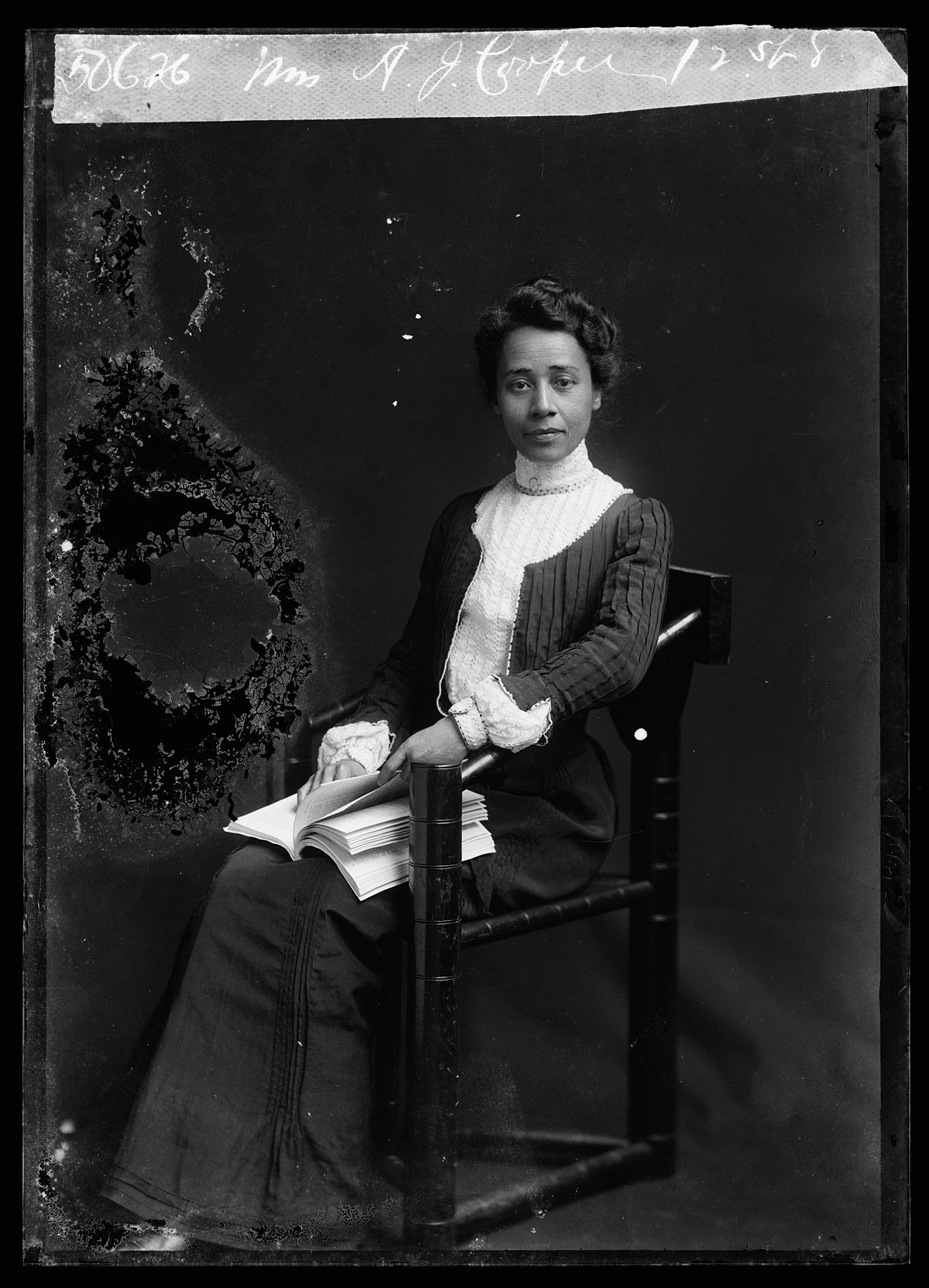
By the time she finished, Cooper had become the fourth African American woman to receive a doctorate recognized in the United States. Her degree was more than a personal victory. It was a quiet rebuke to a world that had spent six decades telling her people, and women like her, to know their place.
Anna Julia Cooper was a Black feminist educator and scholar who argued that the progress of Black women was the key to the progress of the race and the nation. Her Sorbonne doctorate in 1925 capped a lifetime of teaching, writing, and arguing that Black women’s minds were not just capable but indispensable.
Who was Anna Julia Cooper and why did her doctorate matter?
Anna Julia Cooper was born Anna Julia Haywood in Raleigh, North Carolina, in 1858 or 1859. The exact year is uncertain, but it was before the Civil War. Her mother, Hannah Stanley Haywood, was an enslaved woman. Her father was almost certainly her mother’s white enslaver, Dr. Fabius J. Haywood, though the record is indirect, as it usually is in such cases.
So Cooper’s life began in the most unequal corner of American society: an enslaved Black girl, likely the unacknowledged daughter of a white owner. By the time she was a teenager, slavery had ended, Reconstruction had begun, and she had slipped into one of the rare openings that era briefly offered.
In 1868 she entered St. Augustine’s Normal School and Collegiate Institute in Raleigh, an Episcopal school for freedpeople. She was about 9 or 10. St. Augustine’s was supposed to train Black boys to be priests and professionals, and Black girls to be teachers and “helpmeets.” Cooper had other ideas.
She pushed to take the same classical curriculum as the boys: Greek, Latin, higher mathematics. When a teacher told her that girls did not need Greek, she argued back. She won. That small classroom fight set the pattern for her life: she refused to accept that gender or race set a ceiling on her education.
By the time she left St. Augustine’s as a teacher, she had already married (to George Cooper, a fellow teacher) and been widowed by her mid‑20s. She kept his last name, but she never remarried. Instead, she married herself to education.
She moved to Washington, D.C., enrolled at Oberlin College in Ohio, and again chose the “gentlemen’s course” in the classical curriculum when advisors nudged women toward the “ladies’ course.” She earned a B.A. in 1884 and an M.A. in 1887. In an era when most Black Americans were denied basic schooling, she had a master’s degree from one of the few integrated colleges in the country.
So when Cooper walked into the Sorbonne four decades later, she was not a late bloomer. She was finishing a project she had been fighting for since she was a teenager: proving that a Black woman’s intellect could meet any standard, anywhere.
So what? Cooper’s doctorate mattered because it made visible what her life had already argued for decades: that a Black woman born into slavery could reach the highest levels of academic achievement, and that the barriers were political, not biological.
How did a Black woman born enslaved become a leading intellectual?
Cooper’s name first reached a wider public in the 1890s, long before Paris. She had moved to Washington and joined the faculty of the M Street High School, the city’s flagship Black public high school. M Street was unusual. It offered a demanding college‑prep curriculum to Black students at a time when many white reformers insisted that Black education should be industrial and manual.
At M Street, Cooper taught Latin, math, and science. She pushed students toward college, including historically Black colleges and occasionally elite white institutions that would take them. Some of her students went on to become prominent professionals. That record would later make her a target.
In 1892 she published the book that secured her place in Black intellectual history: A Voice from the South by a Black Woman of the South. It is often described as one of the first major works of Black feminist thought in the United States.
In that book she argued three clean, bold claims.
First, she said that the condition of Black women was the truest measure of American democracy. If a society could respect and educate those at the “bottom” of its hierarchy, it might be serious about equality. If not, all its talk about freedom was hollow.
Second, she insisted that Black women were not simply victims or dependents. They were thinkers, organizers, and moral leaders whose perspective the race and the nation needed. “Only the Black woman,” she wrote, “can say ‘when and where I enter’… there the whole Negro race enters with me.”
Third, she argued that education was the non‑negotiable foundation for that leadership. Not just basic literacy, but the same rigorous liberal education white men claimed for themselves.
These were not abstract points. They were aimed at real debates. Booker T. Washington was arguing for industrial education and political accommodation. White suffragists often ignored or sidelined Black women. White social scientists were publishing “studies” that framed Black people as a problem to be managed.
Cooper answered all of them: with data, with history, and with a sharp pen. She did not have the platform of a Booker T. Washington or a W.E.B. Du Bois, but within Black women’s clubs, churches, and schools, her ideas traveled.
So what? By the time she pursued her doctorate, Cooper was already a major Black feminist voice, and the PhD would not create that status so much as give formal academic weight to arguments she had been making since the 1890s.
Why did she go to the Sorbonne instead of an American university?
Here is where modern readers often get confused. If Cooper earned her doctorate in Paris, why is she counted among the first African American women to get doctorates “in the United States”?
The short answer is that historians usually count any doctorate earned by an African American woman, regardless of country, as part of that early cohort. The list is small. The first three are generally given as:
• Georgiana Rose Simpson, PhD in German, University of Chicago, 1921
• Sadie Tanner Mossell (later Alexander), PhD in economics, University of Pennsylvania, 1921
• Eva Beatrice Dykes, PhD in English, Radcliffe College, 1921
Cooper’s Sorbonne doctorate in 1925 comes next, making her the fourth African American woman to receive a doctorate recognized in American academic circles. She was older than the others by decades. When Simpson, Mossell, and Dykes were defending their dissertations, Cooper was in her early 60s, still teaching high school and raising children.
Why France? Partly because American universities were hostile ground. Even the three women who earned PhDs in 1921 faced heavy racism and sexism. Simpson, for example, was forced out of campus housing at the University of Chicago because white students objected to living with a Black woman.
Cooper had already tangled with Washington, D.C.’s white school authorities. Around 1906 she had been forced out as principal of M Street High School after conflicts over her insistence on a classical, college‑prep curriculum for Black students. White officials and some Black leaders preferred industrial training. Her success at sending students to elite colleges made her suspect.
France, by contrast, had a reputation among Black intellectuals as more open, or at least less obsessed with American racial codes. Black American artists and writers would flock to Paris in the 1920s for similar reasons. The Sorbonne also had prestige. A doctorate from there could not be brushed aside as parochial.
So Cooper enrolled at the University of Paris and began the long process of doctoral study while still working in Washington. She wrote in French, traveled when she could, and chipped away at a project that would take years to complete.
So what? Cooper’s choice of the Sorbonne shows how racism and sexism in American universities pushed some Black scholars abroad, and it explains why her French degree is still counted in the story of early African American women PhDs.
What was her Sorbonne dissertation about?
Cooper’s dissertation had a long, very French title. In English it is usually rendered as: “The Attitude of France on the Question of Slavery Between 1789 and 1848.” She examined how French thinkers and politicians argued about slavery from the French Revolution through the final abolition of slavery in French colonies in 1848.
In other words, she wrote a history of how one European power talked itself into and out of human bondage. She tracked debates in the National Assembly, writings by abolitionists, and the arguments of those who defended slavery on economic or racial grounds.
It was not a neutral topic for her. Cooper was a Black woman born enslaved in a country that had fought its own civil war over slavery. She was now dissecting another nation’s moral and political struggle over the same institution. Her work connected Atlantic histories of slavery and abolition at a time when that kind of comparative study was rare.
Her dissertation was accepted in 1925, and she received the degree of docteur ès lettres, a high‑level humanities doctorate. She later published an expanded version in French. The work did not become a bestseller, but it placed her squarely in the world of professional historical scholarship.
One clean way to put it: Anna Julia Cooper was one of the first Black women to produce a doctoral‑level historical study of slavery and abolition in a European context.
That matters for another reason. Cooper is often remembered for A Voice from the South and for her role in Black women’s club movements. Her Sorbonne work reminds us that she was also doing what we would now call Atlantic history and critical race analysis, long before those terms existed.
So what? By writing a rigorous, French‑language dissertation on slavery debates, Cooper inserted a Black woman’s mind into a scholarly conversation that had been almost entirely white and male, and she did it with the highest academic credential Europe could offer.
How did she earn a PhD while raising children and running a school?
The image of Cooper as a serene Parisian scholar misses the grind of her daily life. She did not move to France for several quiet years of study. She was, for most of this period, a working educator and a guardian to children.
In 1915, when she was in her mid‑50s, Cooper took in the five children of her half‑brother after their mother died. She raised them as her own in Washington, D.C. She was already teaching at the M Street High School (by then renamed Dunbar High School) and deeply involved in community work.
So picture the schedule. During the day she taught Latin and other subjects to high school students. At home she cared for five children. In the cracks of time she read French political history, wrote in French, and prepared for examinations and a dissertation defense an ocean away.
She made at least some trips to Paris for research and formal requirements, but much of the work was done at a distance. This was not a sabbatical. It was a second full‑time job layered on top of the first two.
Her age mattered too. When she received her doctorate in 1925, she was about 66 or 67. Today that would be unusual. In the 1920s, for a Black woman who had started life enslaved, it was astonishing.
That late timing sometimes confuses people. They assume she must have been a young scholar like Simpson or Dykes. Instead, she was finishing an academic marathon that had started in Reconstruction classrooms and stretched across half a century.
So what? The way Cooper earned her doctorate, juggling teaching, caregiving, and scholarship in her 50s and 60s, shows that her PhD was not just a credential but the capstone of a lifetime of stubborn, sustained intellectual work against long odds.
What did she do after 1925, and how did her ideas spread?
Cooper did not retire into quiet study after Paris. In 1930, in her early 70s, she became president of Frelinghuysen University in Washington, D.C. Frelinghuysen was an unusual institution: a night school and extension program created to bring higher education to working‑class Black adults who could not attend traditional colleges.
She ran Frelinghuysen out of her own home for a time. Classes met in churches, lodges, and living rooms. The school never had the resources or stability of a traditional university, but it gave hundreds of Black Washingtonians access to college‑level courses. Cooper saw it as a continuation of the work she had been doing since St. Augustine’s: opening doors that had been locked.
She also kept writing and speaking. She contributed essays on race, gender, and education. She remained active in Black women’s clubs and church groups. Younger scholars and activists, including those of the Harlem Renaissance and later civil rights era, would rediscover her work and quote her lines about Black women’s central role in liberation.
Cooper lived long enough to see Brown v. Board of Education in 1954. She died in 1964 at about 105 years old, just as the Civil Rights Act was passed. She had been born before the Emancipation Proclamation and died in the year that federal law finally outlawed most forms of legal segregation.
Her ideas did not become mainstream overnight. For decades, A Voice from the South was hard to find outside specialist circles. It was in the 1970s and 1980s, as Black feminist scholars like bell hooks and others looked for earlier voices, that Cooper’s work was reprinted and taught more widely.
Today, historians often describe her as a founding figure of Black feminist thought. She argued that race, gender, and class oppression were linked, and that you could not understand one without the others. That is very close to what later scholars would call intersectionality.
So what? Cooper’s post‑1925 career and the later rediscovery of her writings show that the Sorbonne doctorate was not an isolated achievement but part of a long arc that fed directly into adult education, civil rights debates, and modern Black feminist theory.
Why does Anna Julia Cooper’s 1925 doctorate still matter?
On paper, the fact is simple: in March 1925, Anna Julia Cooper earned a doctorate from the University of Paris, Sorbonne, becoming the fourth African American woman to receive a doctorate recognized in the United States.
But the paper fact hides the human story. A girl born enslaved in the American South fought her way into Reconstruction schools, argued for access to Greek and Latin, taught generations of Black students, wrote one of the first major works of Black feminist thought, raised five children who were not biologically her own, and then, in her 60s, crossed the Atlantic to defend a dissertation in French on the history of slavery debates.
Her life answers a few common misconceptions at once. No, Black women were not absent from early academic and intellectual life. They were there, often in segregated schools and club networks, sometimes forced abroad to find universities that would take them seriously. No, the history of feminism is not only white and middle‑class. Cooper’s Voice from the South predates many better‑known white feminist texts and talks directly about race and class.
Her doctorate also reminds us that “firsts” are not just about individual ambition. They reflect structures. The fact that only four African American women had doctorates by 1925, and that one of them had to go to Paris to get hers, tells you more about American institutions than about Black women’s abilities.
Today, when people quote Cooper’s line about Black women’s entrance marking the entrance of the whole race, they are usually thinking about politics or culture. The Sorbonne degree adds another layer. When she entered that examination room in 1925, she carried a whole set of histories with her: slavery and Reconstruction, Jim Crow and Parisian salons, Black classrooms in Washington and debates in the French National Assembly.
She walked out with a doctorate. The world did not change overnight. But the range of what a Black woman born enslaved could do had just been publicly, unmistakably expanded.
So what? Cooper’s 1925 Sorbonne doctorate matters because it ties together the long fight for Black education, the emergence of Black feminist thought, and the slow, uneven opening of elite academic institutions to people they were built to exclude.
Frequently Asked Questions
Who was Anna Julia Cooper in simple terms?
Anna Julia Cooper was an African American educator, writer, and scholar born into slavery in North Carolina around 1858–59. She became a leading Black feminist thinker, taught for decades in Washington, D.C., and in 1925 earned a doctorate from the Sorbonne in Paris, making her one of the first African American women with a PhD.
What did Anna Julia Cooper get her PhD in at the Sorbonne?
Anna Julia Cooper earned a doctorate in the humanities (docteur ès lettres) from the University of Paris, Sorbonne, in 1925. Her dissertation examined France’s debates over slavery between 1789 and 1848, focusing on how French politicians and thinkers argued about abolishing slavery in the colonies.
Why is Anna Julia Cooper called a Black feminist?
Cooper is called a Black feminist because she argued that the condition and advancement of Black women were central to the progress of both Black communities and American democracy. In her 1892 book, “A Voice from the South,” she wrote about race, gender, and class together, insisting that Black women were thinkers and leaders whose perspectives were essential.
Why did Anna Julia Cooper study in France instead of the United States?
Cooper studied at the Sorbonne partly because American universities were deeply hostile to Black women in the early 1900s. Even the few who were admitted faced housing bans and open discrimination. France had a reputation for being somewhat more open to Black intellectuals, and a Sorbonne doctorate carried high prestige that American institutions could not easily dismiss.