She is small enough that the schoolbag looks like it might tip her over. It is 1965, she is on her way to kindergarten, and someone has paused long enough on the front step or sidewalk to click the shutter.
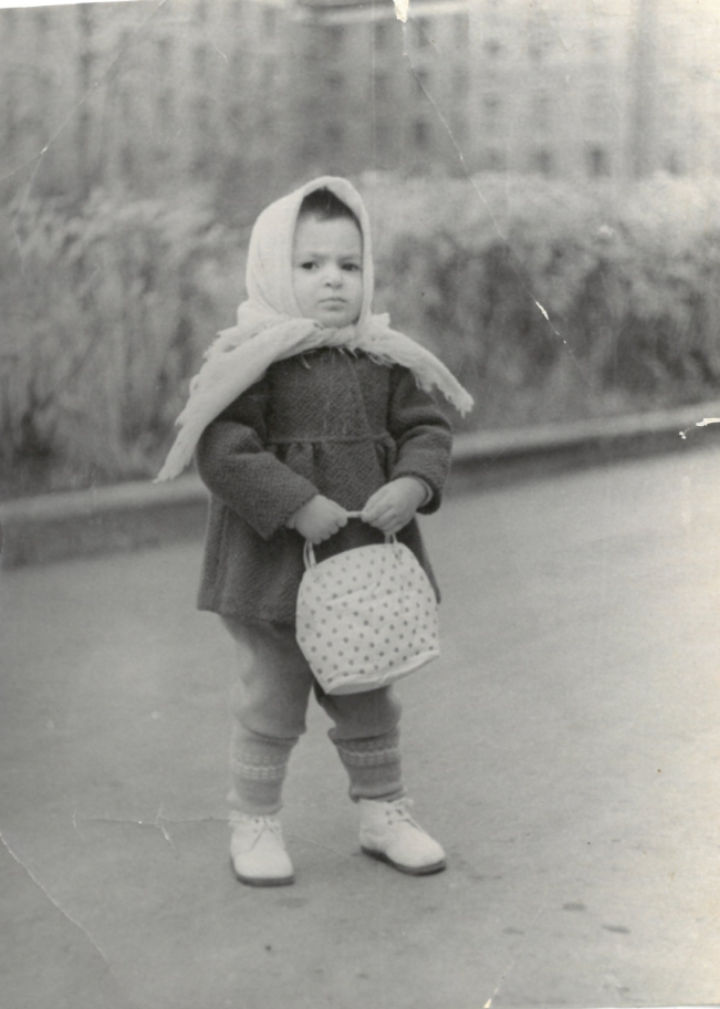
To a Reddit user today, it is just “My mom on her way to the kindergarten. 1965.” To a historian, that same image is packed with clues: how parents dressed their kids, what they feared, what they expected from girls, and what kind of world they thought they were sending their children into.
A single kindergarten photo from 1965 can tell you a lot about mid‑1960s life: Cold War anxiety, gender rules, parenting styles, and even how kids got to school. Here are five things that kind of picture is really showing you, and why they mattered.
1. The Clothes: What a 1965 Outfit Says About Class and Gender
What it is: The first thing people notice in a 1965 kindergarten photo is the outfit. A little girl in a dress or skirt, maybe a cardigan, knee socks, polished shoes, a bow or headband. It looks “cute” to us. To her parents, it was a statement about respectability and their place in society.
In 1965, most American and Western European kindergartners did not dress themselves for school. Mothers usually chose the clothes, and they chose them with care. Dresses for girls were standard, even for play. Pants on girls were still controversial in many schools. In some districts, girls were not allowed to wear trousers to class until the early 1970s.
Think of photos of First Lady Jacqueline Kennedy’s daughter, Caroline, in the early 1960s. She appears in simple dresses and coats, never jeans. That was the ideal many parents copied, even if they were solidly middle or working class. A neat dress, tidy hair, and clean shoes said: we are respectable, we are trying, our child belongs here.
Class shows up in the details. A wool coat instead of a thin one. Leather shoes instead of canvas. A store‑bought satchel instead of a hand‑me‑down paper bag. In a 1965 West German kindergarten photo, for instance, you might see a child holding a Schultüte, the big cone of sweets and school supplies given on the first day of school. That cone was both a tradition and a small display of prosperity.
Gender shows up too. Boys in 1965 kindergarten photos are more likely to wear shorts with suspenders or short trousers, even in cool weather, with sturdy shoes. Girls are more likely to be in skirts, even if they are about to climb on playground equipment. The message was simple: boys are active, girls are neat.
Why it mattered: Clothing in 1965 kindergarten photos was a quiet script about class and gender. It told teachers and neighbors how a family wanted to be seen, and it taught children very early what was expected of boys and girls.
2. The Bag and Books: School as a Serious, Early Project
What it is: The second thing your eye goes to is the bag. In many 1965 photos, the kindergarten child has a satchel or small briefcase‑style schoolbag, sometimes almost as big as their torso. It looks formal for a 5‑year‑old, and that is the point.
In the United States, kindergarten had spread widely by the 1960s, but it was still not universal everywhere. In some rural areas, children might start school directly in first grade. Where kindergarten did exist, it was already treated as the first step of a serious academic path, not just playtime.
Cold War competition sharpened that attitude. After the Soviet Union launched Sputnik in 1957, American politicians and parents worried that U.S. children were falling behind. The 1958 National Defense Education Act poured money into science and math education. That debate filtered down to early childhood. Educators began talking about “school readiness” and “enrichment” for 4‑ and 5‑year‑olds.
Look at Head Start, launched in 1965 as part of Lyndon Johnson’s War on Poverty. It was designed for low‑income preschoolers, not kindergarteners, but the idea was the same: get children into structured learning earlier so they would not be left behind. A Head Start classroom in Mississippi in 1965 might look different from a suburban kindergarten in Ohio, but both were part of a new belief that early schooling mattered.
That satchel in the photo is a symbol of that belief. Inside might be a reader like “Fun with Dick and Jane,” a small notebook, maybe crayons. Even if the child could not yet read, the bag said: you are a student now.
Why it mattered: The serious little schoolbag in a 1965 kindergarten photo marks a shift toward earlier and more formal education. It shows how Cold War pressures and new social programs turned early childhood into the starting line of a long academic race.
3. The Street: How Kids Got to School Before Helicopter Parenting
What it is: Many 1960s “first day” photos are taken outside. A child on the sidewalk, at the curb, in front of a row house or apartment block. Sometimes you can see there is no adult right next to them. To modern eyes, that raises a question: were 5‑year‑olds really walking to school alone?
In many places, yes. In 1965, it was normal for young children to walk a few blocks to school, often with older siblings or neighborhood kids, sometimes alone. Car ownership was widespread in the United States by then, but the idea of driving a child a short distance to school every day had not yet become standard. School drop‑off lines and car‑centric campuses grew later, as suburbs spread and traffic increased.
In cities like Chicago or Philadelphia, photos from the mid‑1960s show clusters of children, some as young as kindergarten age, walking together with bookbags, no parents in sight. In small towns, a child might cut through backyards or fields. In rural areas, yellow school buses were common, but kids still walked to the bus stop.
Parents were not careless. They just had a different sense of risk. Stranger‑danger panics and 24‑hour news cycles were still in the future. Crime rates in many places were lower than they would be in the 1970s and 1980s. Children were expected to learn street smarts early: look both ways, stay with the group, come straight home.
Public policy backed that expectation. Zoning and school planning assumed that neighborhood schools would be within walking distance for most kids. The 1966 Coleman Report on education, for instance, described schools very much as neighborhood institutions, not distant destinations reached by car.
So when you see a 1965 kindergarten photo on a sidewalk, you are looking at a world where children’s daily independence started early and was unremarkable.
Why it mattered: The street setting in a 1965 kindergarten photo captures a lost norm of child independence. It shows how urban design, school planning, and parenting expectations once encouraged 5‑year‑olds to move through their neighborhoods on their own two feet.
4. The Hair and Posture: Training Girls for a Narrow Future
What it is: Look closely at a 1965 kindergarten girl in a photo. Her hair is usually brushed and styled, sometimes in braids or a bob with a ribbon. She is often standing straight, maybe holding her bag with both hands, looking at the camera instead of making a face. That is not just personality. It is training.
Mid‑1960s gender expectations were tight. The second wave of feminism was just gathering steam. Betty Friedan’s “The Feminine Mystique” had come out in 1963, but in 1965 the dominant image of a woman’s future was still marriage, children, and maybe a job as a teacher, nurse, or secretary.
Girls were taught to be neat, polite, and pleasing from a very young age. Children’s etiquette books from the era, like “Amy Vanderbilt’s Etiquette for Young People,” stressed posture, clean nails, and modest dress. Kindergarten teachers often praised girls for being “quiet” and “helpful,” while boys were more likely to be excused as “energetic.”
You can see that in class photos from the time. In a 1965 kindergarten group shot from Des Moines or Düsseldorf, the girls are usually in the front row, sitting with hands folded or knees together. Boys are in the back row, sometimes fidgeting, sometimes with shirts untucked. The camera captured the roles adults were already rehearsing with them.
Hair was part of that script. Short, practical haircuts on girls existed, but long hair with ribbons or barrettes was common. Mothers spent time on it before school. It was a small daily lesson: your appearance matters, and someone is watching.
That posture in the photo, the way a little girl holds herself on the way to kindergarten, is her first performance of a role that the culture expected her to play for decades.
Why it mattered: The hair and posture in a 1965 kindergarten photo reveal how early girls were steered toward being neat, compliant, and appearance‑conscious. Those small daily lessons shaped the women who would later push back against those limits in the 1970s and beyond.
5. The Background: A Snapshot of the Mid‑1960s World
What it is: Finally, look past the child to the background of a 1965 kindergarten photo. The car parked at the curb, the style of the house, the street sign, even the other people half‑caught at the edge of the frame. Together they freeze a specific moment in a rapidly changing decade.
Maybe there is a big, rounded 1950s sedan behind her, or a boxier early‑1960s compact like a Ford Falcon. That hints at a family that had joined the postwar consumer boom. Maybe the house has aluminum siding and a small lawn, a sign of the new suburbs that ringed cities across the United States, Canada, and Western Europe.
If the photo was taken in 1965 in the American South, the kindergarten itself might still have been segregated, depending on the district. Brown v. Board of Education had outlawed school segregation in 1954, but many systems dragged their feet. A Black child in a 1965 kindergarten photo in Mississippi might be attending an all‑Black school underfunded compared to the white one across town. That difference would shape her education for years.
In Eastern Europe, a 1965 kindergarten photo might show a concrete apartment block, a state‑run preschool, and children in simpler, uniform‑like clothes. Socialist governments invested heavily in early childhood care to get mothers into the workforce. A 5‑year‑old walking to a state kindergarten in Warsaw or Prague was part of a very different political project than her counterpart in suburban Ohio, even if the photos look similar at first glance.
Globally, 1965 was a year of tension and change. The Vietnam War was escalating. The civil rights movement in the United States was passing from marches to riots. Immigration laws were being rewritten. Yet in these photos, a child is just going to kindergarten, unaware of the larger storms.
That contrast is the quiet power of these images. They show ordinary families trying to create stability for their children in a decade that was anything but stable.
Why it mattered: The background details in a 1965 kindergarten photo anchor that child in a specific political and social world. They remind us that every ordinary school morning unfolded inside larger fights over race, class, ideology, and the future.
Put all of this together, and “My mom on her way to the kindergarten. 1965” stops being just a cute family snapshot. It becomes a document of how people dressed their hopes and fears on a 5‑year‑old, how they imagined childhood, and what kind of adults they were trying to raise in the middle of the Cold War.
Today, when parents debate preschool curricula, worry about kids walking alone, or argue over dress codes and gender norms, they are still wrestling with questions that were already visible in that 1965 photo. The setting has changed. The stakes feel different. But the walk to kindergarten is still about much more than getting from the front door to the classroom.
Frequently Asked Questions
What did kids wear to kindergarten in the 1960s?
In the 1960s, most kindergarteners wore what adults considered “school clothes.” Girls usually wore dresses or skirts with cardigans and knee socks. Boys wore short or long trousers with shirts, sometimes with suspenders. Jeans and T‑shirts were less common for the first day of school. Parents saw neat clothing as a sign of respectability and good manners.
Did children really walk to kindergarten alone in the 1960s?
In many places, yes. In 1965 it was normal for young children to walk a few blocks to school, often with siblings or neighborhood kids, and sometimes alone. Car drop‑offs were less common, and neighborhoods were planned with nearby schools in mind. Parents expected children to learn basic street safety early, and fears about abduction were not as prominent as they became later.
Was kindergarten common in 1965?
By 1965, kindergarten was common in many American cities and suburbs, though not universal everywhere, especially in some rural areas. In Western Europe, similar early childhood classes existed under different names. The Cold War and new social programs like Head Start encouraged earlier schooling, and kindergarten was increasingly seen as the first formal step in a child’s education.
How did gender roles affect kindergarten kids in the 1960s?
Gender roles shaped everything from clothing to classroom expectations. Girls were dressed in skirts or dresses and praised for being neat and quiet. Boys were allowed more physical roughness and were often described as energetic. These norms showed up in posture, hair styling, and even where children sat in class photos, and they reflected a culture that still expected most girls to grow into wives and mothers.