They look similar because they all ended up in the same basement with guns in their hands. Same night, same victims, same crime. But Yakov Yurovsky and the rank-and-file men who helped kill and dispose of the Romanov family in July 1918 were not the same kind of killers.
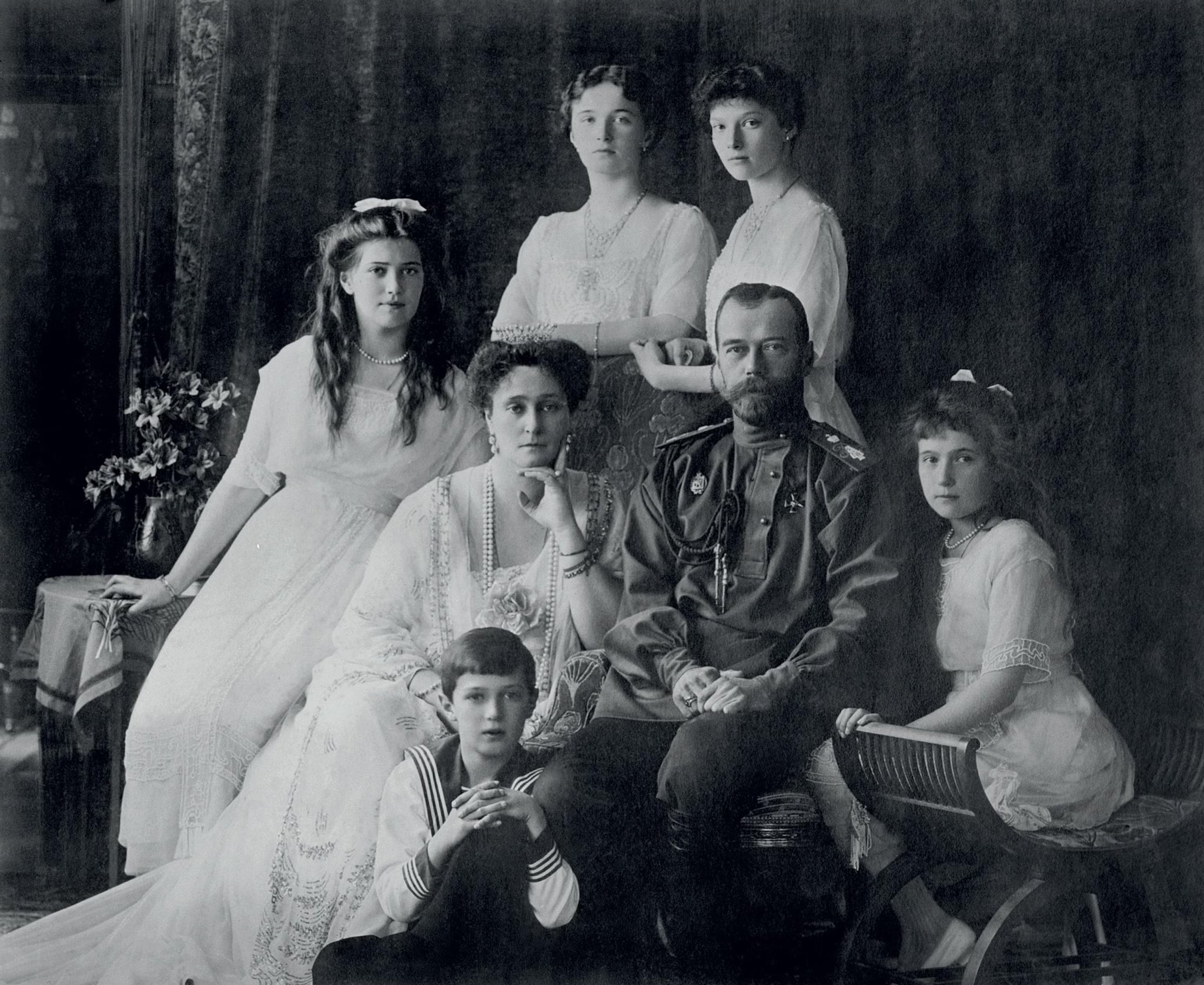
One moment from the aftermath makes that brutally clear. As the bodies of Tsar Nicholas II, his wife Alexandra, their five children, and four loyal servants were being stripped and prepared for disposal in a forest outside Ekaterinburg, two of the men got drunk and began to sexually molest Alexandra’s corpse. Their commander, Yakov Yurovsky, pulled a gun on his own men and forced them to stop.
That scene has circulated online because it is so jarring. How could a man who had just overseen the murder of an entire family suddenly draw a moral line at necrophilia and sexual abuse of a corpse? Were these Bolsheviks fanatics, sadists, or something stranger in between?
This is a story about comparison. The execution of the Romanovs was not carried out by a single type of person. It was a mix of ideologue, bureaucrat, thug, and opportunist. To understand what happened that night and why it still haunts people, you have to compare Yurovsky and his men across four things: where they came from, how they did the killing, what happened to them after, and how history remembers them.
The execution of the Romanovs in July 1918 was a planned political killing by the Bolsheviks, not a spontaneous mob attack. Yet it was carried out by men whose behavior ranged from disciplined to drunkenly depraved. That tension is the key to the story.
Who were these men? Origins of Yurovsky vs his shooters
Yakov Mikhailovich Yurovsky did not grow up anywhere near a throne. He was born in 1878 in Tomsk, Siberia, to a poor Jewish family. He trained as a watchmaker and photographer, bounced through low-paying jobs, and joined the revolutionary movement in the early 1900s. He was arrested several times under the Tsar.
By 1917 he was a committed Bolshevik, loyal to Lenin’s faction. After the October Revolution, he entered the Cheka, the new Soviet secret police. In Ekaterinburg he became commandant of the Ipatiev House, the building where the Romanovs were held. He was not a random guard. He was the trusted local representative of a violent new regime.
Many of the men under him were very different. They were local Red Guards, Cheka auxiliaries, or soldiers from the Latvian Riflemen units. Their backgrounds ranged from factory workers to peasants to former Imperial Army soldiers who had switched sides in the chaos of 1917–1918.
Some were ideological Bolsheviks. Others were simply armed men who had found a place in the new order. Several accounts describe them as rough, heavy drinkers, with a streak of casual brutality that had been sharpened by years of war and civil conflict.
One key point: Yurovsky was promoted into the job of commandant precisely because the previous guard commander, Alexander Avdeev, had allowed his men to drink, steal from the Romanovs, and behave like thugs. The Bolshevik leadership in Ekaterinburg wanted someone more disciplined and politically reliable. They chose Yurovsky.
So from the start, there was a divide. Yurovsky was an ideologue and organizer, a man whose loyalty was to the party and its decisions. Many of his men were muscle, products of social collapse and civil war, whose loyalty was more to their unit, their pay, or the thrill of power.
That difference in origins mattered because it shaped how each side understood what they were about to do: Yurovsky saw a political execution. Some of his men saw a chance to humiliate and loot a hated royal family.
How did they kill? Methods, orders, and loss of control
The basic outline is clear. On the night of 16–17 July 1918, Yurovsky received authorization from the local Bolshevik leadership to execute the Romanovs. Whether Lenin and the central government in Moscow directly ordered it is still debated by historians, but the decision in Ekaterinburg was political and deliberate, not a spur-of-the-moment massacre.
Yurovsky planned the operation like a grim piece of paperwork. He picked a basement room in the Ipatiev House, arranged for a truck, gathered a firing squad of about a dozen men, and prepared weapons and ammunition. He even tried to swap out some of the more undisciplined guards for Latvian Riflemen, who had a reputation for discipline and reliability.
Shortly after midnight he woke the family, told them they were being moved because of unrest in the city, and had them brought to the basement. Nicholas carried his son Alexei. The daughters and Alexandra followed. Their doctor and three servants came too.
Yurovsky read a short statement that the Ural Soviet had decided to execute them. Nicholas barely had time to say “What?” or something similar before the shooting started.
Here the contrast between method and reality explodes. Yurovsky wanted a quick, controlled execution by a firing squad. What happened was a chaotic, smoky, bloody mess. The room filled with gunpowder smoke. Bullets ricocheted off the walls and off the jewels sewn into the Romanov women’s corsets. Some of the shooters were drunk or panicked. Several accounts say they closed their eyes or fired wildly.
It took long minutes, not seconds. Some victims had to be finished off with bayonets or close-range shots. Yurovsky later complained about the incompetence and lack of discipline of his men. He had to step in and personally shoot some of the wounded to end it.
So you have two layers of method. At the top, Yurovsky’s cold, bureaucratic approach: obtain authorization, assemble a team, execute, dispose of bodies, write a report. At the bottom, the shooters’ reality: fear, alcohol, hatred, confusion, and in some cases, sadistic excitement.
That gap between planned political killing and chaotic bloodbath matters because it shows how even a tightly controlled revolutionary act can slump into something closer to a drunken firing squad. The Bolsheviks wanted to project discipline and purpose. The way the killing actually unfolded exposed how fragile that control really was.
What happened to the bodies? Discipline vs depravity in the forest
The Reddit anecdote about the molestation of Alexandra’s corpse comes from this second phase: the disposal of the bodies. Here the contrast between Yurovsky and his men becomes even sharper.
After the shooting, Yurovsky removed jewelry and valuables from the corpses. He was looking for items the Romanovs had hidden. The daughters in particular had sewn diamonds and other gems into their clothes. Those jewels had just saved their lives for a few minutes by deflecting bullets. Now they were being cut out and bagged.
By early morning, the bodies were loaded onto a truck and driven out of Ekaterinburg toward the Koptyaki forest. The plan was to hide and destroy the remains so that no martyr’s grave could become a rallying point for monarchists or foreign interventionists.
Here the sources describe an ugly scene. Some of the men had been drinking. They were tired, filthy, and riding a wave of adrenaline and looted power. During the stripping of the bodies, two of them began to molest Alexandra’s corpse, groping and making sexual comments. She had been the Empress of Russia. Now her dead body was being treated like a prop in a drunken barracks joke.
Yurovsky reacted with fury. He pulled his gun and threatened to shoot them if they did not stop. He later wrote about the incident with disgust, framing it as a violation of discipline and revolutionary ethics.
On one level, this is staggering hypocrisy. Yurovsky had just overseen the murder of Alexandra and her children. Drawing a moral line at necrophilia seems almost absurd. On another level, it tells you exactly how he saw himself. He believed he was carrying out a political sentence, not participating in a gang rape or a looting spree. Sexual violence and drunken humiliation did not fit his idea of a “proper” revolutionary execution.
For his men, the line was blurrier. Some probably hated the Romanovs as symbols of a hated regime. Others may have simply seen them as helpless bodies to be used and mocked. The war and revolution had eroded normal restraints. In that context, molesting a corpse was just one more violation in a world full of them.
After this, the disposal continued. The first burial site, an abandoned mine shaft, did not work as planned. The truck had gotten stuck. The bodies were moved, doused with acid and burned in places, and finally buried in a shallow grave near a forest road. Two bodies, generally believed to be Alexei and one of his sisters, were buried separately. The whole process was messy and improvised.
The molestation incident matters because it exposes the moral fault line inside the killing squad. Yurovsky saw himself as the hard but principled executor of a political decision. Some of his men behaved like common criminals. The Romanovs’ last hours were shaped by both.
Who paid what price? Outcomes for Yurovsky and the shooters
In the short term, Yurovsky was rewarded. He reported back to the Ural Soviet that the execution had been carried out. He handed over the Romanovs’ jewels and valuables. He stayed in the Cheka and then in other Soviet roles. He worked in various administrative positions, including in the film industry and education.
He did not become a top Soviet celebrity, but he was not punished. He lived until 1938, dying of natural causes in Moscow. He was buried in the Novodevichy Cemetery, a prestigious resting place. Inside the Soviet system, he was treated as a loyal functionary who had done a grim but necessary job.
His shooters had very different fates. Some died in the Russian Civil War that followed. Others faded into obscurity. A few later spoke or wrote about their role, sometimes with pride, sometimes with unease. The Soviet state did not build a cult around them. They were expendable muscle, not heroes.
There is no record of the men who molested Alexandra’s corpse facing specific punishment for that act. Yurovsky’s threat at gunpoint was the only immediate consequence. In a regime that was about to unleash mass terror and famine, the sexual abuse of a corpse in a forest was not going to become a major disciplinary case.
Yet the contrast in outcomes is telling. Yurovsky’s bureaucratic loyalty and relative discipline allowed him to survive and even be honored. The shooters, especially the more brutal and undisciplined, were swallowed by the chaos they had helped create.
This matters because it shows how revolutionary regimes often treat violence. The planners and organizers, who frame killing as policy, tend to be protected, at least for a time. The men who pull the triggers are more disposable. Their personal brutality is both used and disavowed.
How are they remembered? Legacy of a commander vs his men
Today, when people search for “who killed the Romanovs,” one name comes up: Yakov Yurovsky. He is the face of the execution, the man whose reports and later recollections give us much of what we know about that night.
In Soviet times, the story was suppressed, then carefully managed. The regime admitted that the Tsar had been executed but was vague about the family. Yurovsky’s role was known inside the party, but not loudly advertised to the public. After the Soviet Union collapsed, archives opened and his reports became widely available. Historians used them to reconstruct the events in detail.
Yurovsky’s own writings are cold and bureaucratic. He describes the shooting, the disposal, the stripping of bodies, and his anger at the undisciplined behavior of his men. He presents himself as a man who did what had to be done, with as much order as possible.
That self-portrait has shaped his legacy. Some see him as a fanatical ideologue, a symbol of Bolshevik ruthlessness. Others see him as a functionary, a mid-level manager of terror. Either way, he is remembered as the architect of the Romanovs’ deaths.
His men, by contrast, mostly survive in fragments. A few names appear in documents. Some later interviews or memoirs surface. But they are not widely known. They are remembered less as individuals and more as a type: the drunken, violent enforcers of a new regime.
The molestation anecdote has become popular online because it cuts through the abstraction. It shows, in one ugly moment, the difference between ideological violence and personal depravity. People are struck by the idea that a man who could kill children in the name of revolution would still be outraged by sexual abuse of a corpse.
That tension matters because it forces us to think about how people compartmentalize morality. Yurovsky could justify murder as politics, but he still had a sense of “proper” and “improper” behavior. His men, in that moment, did not. The Romanovs were not just killed by a system. They were also degraded by individuals who enjoyed their power over helpless bodies.
So what does this comparison actually tell us?
The execution of the Romanovs was both a political act and a crime scene. Comparing Yurovsky with his men helps keep both parts in view.
On one side you have the organizer. Poor, radicalized, and loyal to the Bolshevik project, Yurovsky saw the Romanovs as a threat to the revolution. Killing them was, in his mind, a harsh necessity. He tried to do it “efficiently,” without spectacle, and he reacted with anger when his men turned it into a drunken humiliation of the dead.
On the other side you have the shooters. Some were ideologues, others opportunists, all shaped by years of war and collapse. For them, the line between political violence and personal cruelty was thin. The molestation of Alexandra’s corpse was not an accident. It was a symptom of what happens when you give damaged men absolute power over helpless victims.
They look similar because they all pulled triggers and handled bodies. Yet their origins, methods, outcomes, and legacies diverge. Yurovsky is remembered by name, buried with honors, and studied as a symbol of revolutionary terror. His men are mostly anonymous, remembered only when their worst impulses leak into the record.
The story still matters because it reminds us that state violence is never just “the state.” It is carried out by specific people, with their own beliefs, limits, and appetites. In that basement and in that forest in 1918, the Russian Revolution revealed both its cold political logic and its ugliest human face.
Frequently Asked Questions
Who actually ordered the execution of the Romanov family?
The local Bolshevik leadership in Ekaterinburg, the Ural Regional Soviet, formally authorized the execution of the Romanovs in July 1918. Whether Lenin and the central Soviet government in Moscow directly ordered or explicitly approved killing the entire family is still debated among historians. There is no surviving written order from Lenin, but many scholars believe he at least knew and did not object.
Who was Yakov Yurovsky and what was his role in the Romanov murders?
Yakov Yurovsky was a Bolshevik revolutionary and Cheka officer who served as commandant of the Ipatiev House in Ekaterinburg, where the Romanov family was held. He organized and directed the execution on the night of 16–17 July 1918, read the death sentence, gave the order to fire, and then oversaw the removal, stripping, and secret burial of the bodies. His later reports are a key source for reconstructing what happened.
Did the Bolsheviks really molest Alexandra Romanova’s corpse?
Several accounts from within the execution squad report that during the stripping and disposal of the bodies in the Koptyaki forest, two of the men, who had been drinking, began to sexually molest the corpse of Empress Alexandra. Yakov Yurovsky, their commander, reportedly drew his pistol and threatened to shoot them if they did not stop. While details vary between sources, the incident is widely accepted by historians as credible.
What happened to Yakov Yurovsky and the executioners after 1918?
Yakov Yurovsky remained in Soviet service after 1918, working in the Cheka and later in various administrative roles, including in education and the film industry. He died of natural causes in Moscow in 1938 and was buried in Novodevichy Cemetery. The rank-and-file executioners had mixed fates: some died in the Civil War, others disappeared into ordinary Soviet life. They did not receive lasting public recognition, and many are known today only by name in archival documents.