In December 1812, French soldiers staggered out of Russia, half-starved, frostbitten, leaving a trail of dead comrades in the snow. In February 1943, German soldiers marched into Soviet captivity at Stalingrad, hollow-eyed and beaten. Different flags, different ideologies, different centuries. Same direction of travel. Same ending.
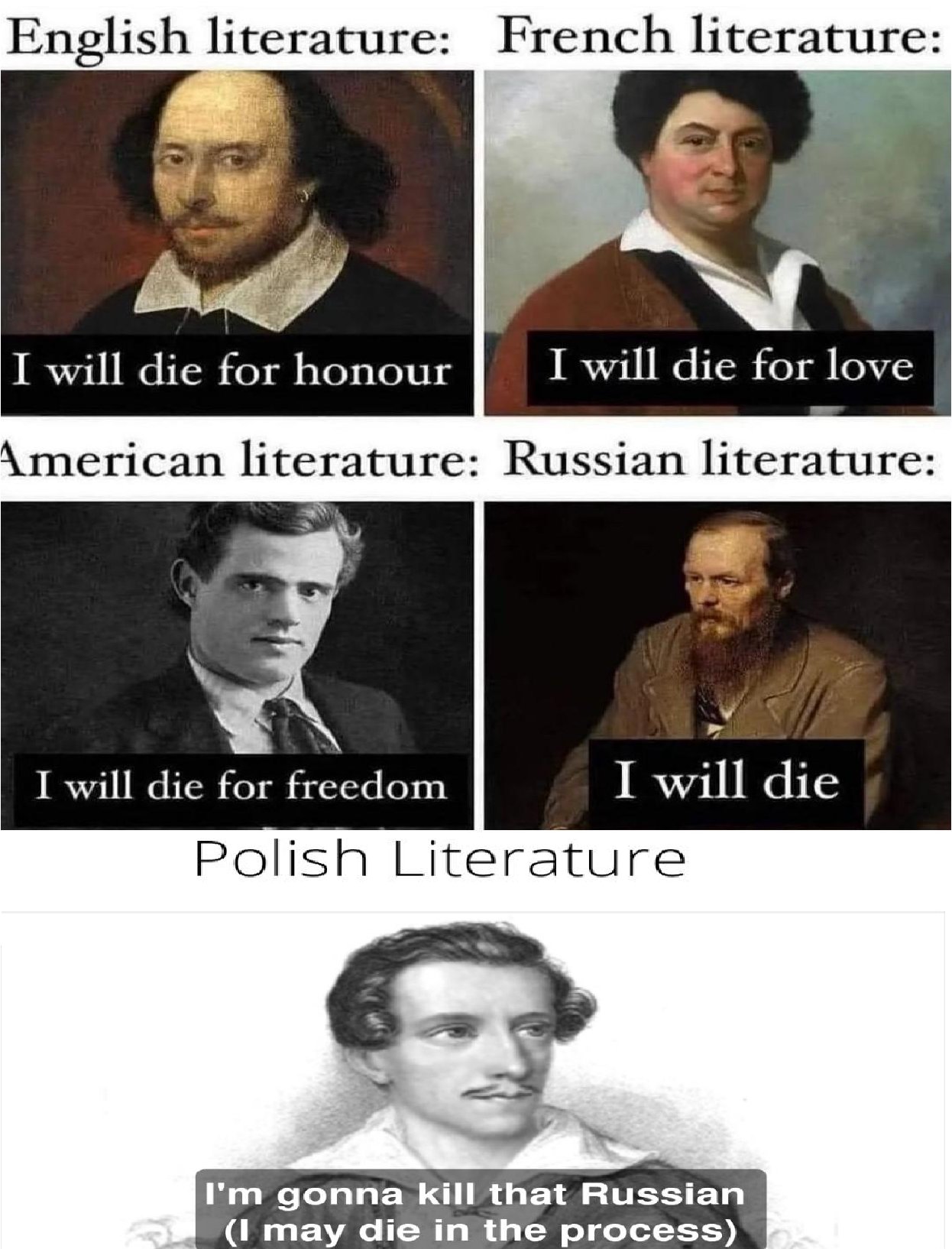
The Reddit meme title “Different motives, same ending” is a neat summary of a long pattern. From Napoleon to Hitler, from the Teutonic Knights to Charles XII of Sweden, powerful outsiders have convinced themselves that conquering Russia would be quick, profitable, maybe even easy. It rarely was.
This is an explainer on why so many empires tried to invade Russia, what they thought they were doing, how it went wrong, and what actually changed because of these failures.
What it was: the recurring dream of conquering Russia
Conquering Russia has been a recurring project in European history. It is the repeated attempt by outside powers to break, occupy, or remake the Russian state, usually by rapid military invasion.
From the early modern period onward, three invasions dominate popular memory:
• The Swedish invasion under Charles XII during the Great Northern War (1708–1709).
• Napoleon’s invasion in 1812.
• Hitler’s invasion, Operation Barbarossa, in 1941.
There are others. The Teutonic Knights marched east in the 13th century. The Polish–Lithuanian Commonwealth intervened in Russia’s Time of Troubles around 1605–1618. Britain and France landed troops in Crimea in the 1850s. Germany invaded in World War I. Japan fought Russia in the Far East in 1904–1905.
Each case had its own logic. Religion, balance of power, ideology, resources. But the meme hits on a pattern: very different motives, very similar outcome. The invader underestimates distance, climate, logistics, and Russian political resilience, then bleeds out in a long war of attrition.
In plain terms: “Invasion of Russia” is shorthand for a recurring strategic miscalculation, where powerful states think they can win fast and discover they have walked into a grinder. That pattern shaped European politics for three centuries, so it is more than just a meme punchline.
What set it off: why outsiders kept marching east
So why did so many leaders, from medieval crusaders to modern dictators, look at Russia and think, “Yes, that is a good idea”?
First, geography and resources. Russia is huge and rich. Timber, furs, grain, later oil and minerals. Control of Russian territory could mean access to ports on the Baltic or Black Sea, trade routes to Asia, and a buffer against rivals. For neighbors, Russia was both a threat and a prize.
Second, ideology and prestige. In the Middle Ages, the Teutonic Knights framed their eastward expansion as a Christian crusade against pagans and schismatics. In the early 1700s, Sweden’s Charles XII wanted to keep Sweden as the dominant Baltic power and saw Russia as an upstart. Napoleon, ruling a French-dominated Europe, wanted to enforce his Continental System against Britain and punish Russia for backing out. Hitler cast his invasion as a racial and ideological war for “Lebensraum” in the east and the destruction of “Judeo-Bolshevism.”
Third, misreading Russian weakness. Outsiders repeatedly saw internal Russian problems and assumed the state would collapse under pressure. During the Time of Troubles in the early 1600s, Polish leaders backed pretenders to the Russian throne. In 1812, Napoleon believed that a swift march on Moscow would force Tsar Alexander I to negotiate. In 1941, Hitler and his generals expected the Soviet Union, shaken by Stalin’s purges and the Winter War with Finland, to fall in a few months.
Finally, there was the lure of the quick, decisive campaign. European military culture, especially from the 17th to 19th centuries, prized short wars decided by a few big battles. Russia’s size and poor infrastructure made that fantasy dangerous, but from Stockholm, Paris, or Berlin, the map could look conquerable.
Different motives, same pattern: resources, ideology, prestige, and wishful thinking combined to make Russia look like a tempting target. Those motives set in motion wars that would reshape Europe when they failed.
The turning points: when the invasions broke
Most people know the clichés: “General Winter,” “never invade Russia,” frozen soldiers. The reality is more specific. Each major invasion hit a turning point where the attacker’s plan snapped.
Charles XII and Poltava (1709)
Sweden’s Charles XII invaded during the Great Northern War, aiming to knock Russia out and keep Swedish dominance in the Baltic. After early victories, he pushed deep into Russia in 1708. The Russians, under Peter the Great, burned supplies and retreated. Charles’s army struggled with distance and lack of food.
In June 1709, at Poltava in modern Ukraine, Charles attacked a larger Russian army. The Swedes were exhausted and under-supplied. The Russians had fortified positions and more artillery. The Swedish army was crushed. Charles fled to the Ottoman Empire. Sweden’s age as a great power ended there.
Poltava mattered because it marked Russia’s arrival as a major European power and showed that a smaller, elite army could be ground down by Russian depth and persistence.
Napoleon and the retreat from Moscow (1812)
Napoleon invaded Russia in June 1812 with the Grande Armée, perhaps 450,000–600,000 men at the start, drawn from across his empire. His goal was to force Tsar Alexander I back into alliance and obedience by a rapid campaign.
The Russians retreated, using scorched earth tactics, avoiding decisive battle until they chose the ground at Borodino in September. That battle was bloody and indecisive. Napoleon entered Moscow later that month, expecting a surrender. Instead, much of the city burned and the Tsar refused to negotiate.
With winter approaching and supplies short, Napoleon ordered a retreat in October. The army had to retrace its path through devastated territory. Hunger, disease, desertion, and Russian attacks shredded the force. By the time the remnants staggered out of Russia, only a fraction of the original army was left combat-ready.
Napoleon’s failure in Russia shattered his aura of invincibility, encouraged his enemies, and led to the coalition that defeated him in 1814. The turning point was not just the cold. It was his inability to turn occupation of Moscow into political victory.
Hitler, Moscow, and Stalingrad (1941–1943)
Hitler launched Operation Barbarossa on 22 June 1941 with about 3 million German and allied troops. The goal was annihilation, not just conquest. Nazi planners expected to destroy the Red Army near the border and reach a line from Archangel to Astrakhan within months.
Early on, the Wehrmacht inflicted huge losses. Millions of Soviet soldiers were killed or captured in 1941. Yet the Soviet state did not collapse. Factories moved east. New armies formed. The Germans reached the outskirts of Moscow but stalled in the winter of 1941–42. Soviet counterattacks pushed them back.
In 1942, Hitler shifted focus to the south and the oil fields of the Caucasus. The battle of Stalingrad, from mid-1942 to early 1943, turned into a brutal urban fight. In November 1942, the Red Army encircled the German Sixth Army. Hitler refused to allow a breakout. In early 1943, the starving, frozen survivors surrendered.
Stalingrad broke the myth of German invincibility, bled the Wehrmacht white, and marked the strategic shift on the Eastern Front. From then on, Germany was mostly on the defensive.
In each case, the turning point came when the invader discovered that destroying Russian armies or occupying cities was not enough. The Russian state could absorb terrible losses and keep fighting. That resilience turned ambitious offensives into long, losing wars.
Who drove it: the leaders and their blind spots
These invasions were not accidents. They were choices made by specific people with specific beliefs.
Peter the Great vs. Charles XII
Charles XII of Sweden was young, aggressive, and had a record of early victories. He believed in bold offensives and decisive battles. Peter I of Russia, later called Peter the Great, was modernizing his army and state, willing to trade space for time.
Charles underestimated how far he could push his army into Russia without secure supply lines. Peter accepted short-term defeats to win long-term. That difference in patience and logistics shaped the outcome at Poltava and the war.
Napoleon and Alexander I
Napoleon Bonaparte trusted in speed, concentration of force, and his own genius. He had beaten coalitions of European powers before. He saw Russia as another campaign to be managed by maneuver and battle.
Tsar Alexander I was stubborn and religious. He decided not to give Napoleon the quick political victory he wanted. Russian generals like Mikhail Kutuzov argued for retreat and attrition. Napoleon believed that taking Moscow would break Alexander’s will. He misread his opponent’s political and psychological limits.
Hitler and Stalin
Adolf Hitler’s decision-making was driven by ideology and contempt. He saw Slavic peoples as inferior and the Soviet state as rotten. He ignored logistical warnings and overruled his generals. The invasion plan assumed that the Red Army would collapse in a few months, so German industry did not fully mobilize for a long war at first.
Joseph Stalin, for his part, had weakened his own officer corps with purges in the late 1930s and initially ignored warnings about a German attack. The Soviet Union suffered catastrophes in 1941. Yet Stalin adapted. He allowed generals like Zhukov more freedom, moved industry east of the Urals, and used brutal methods to keep the country fighting.
Both dictators were ruthless. The difference was that Hitler’s ideological certainty made him double down on bad bets, like holding Stalingrad at all costs. Stalin was willing to retreat, regroup, and trade territory for time.
These leaders’ personalities and blind spots mattered. Overconfidence, contempt for the enemy, and faith in quick victory kept repeating. Those human flaws, not just snow and mud, helped turn ambitious invasions into disasters.
What it changed: consequences of failed invasions
Each failed invasion of Russia did more than ruin one army. It rearranged power in Europe.
After Poltava, Sweden’s era as a great power faded. Russia gained influence in the Baltic and moved closer to the European center stage. The balance of power in Northern Europe shifted toward St Petersburg.
After Napoleon’s retreat, the French Empire unraveled. Former allies turned against him. By 1814, allied armies entered Paris. The Congress of Vienna in 1814–1815 rebuilt Europe with Russia as one of the key arbiters. Tsar Alexander I helped redraw borders from Poland to Italy.
After Hitler’s defeat, the Soviet Union emerged as a superpower. The Red Army occupied much of Eastern and Central Europe. Countries like Poland, Hungary, East Germany, and others ended up in the Soviet sphere. The Cold War map, with a divided Europe and NATO facing the Warsaw Pact, grew directly out of the Soviet victory against Nazi Germany.
Inside Russia and then the Soviet Union, these invasions fed a strong narrative of victimhood and resilience. The “Patriotic War” of 1812 and the “Great Patriotic War” of 1941–1945 became central to national identity. Military sacrifice, scorched earth, and endurance in the face of foreign invaders turned into political capital for rulers.
Failed invasions also left scars. Huge death tolls, destroyed cities, displaced populations. The Eastern Front in World War II alone cost tens of millions of lives, military and civilian. That scale of loss shaped Russian and European memory for generations.
So the meme’s “same ending” is not just about invaders freezing in the snow. It is about how their failure repeatedly boosted Russian power and hardened a sense of encirclement and siege.
Why it still matters: myths, memes, and modern strategy
“Never invade Russia” has become a kind of internet proverb. It is catchy, but it can be misleading if taken too literally.
For one thing, Russia has lost wars and territory too. It lost to Japan in 1905. It collapsed internally in 1917. It lost the Cold War competition in economic and political terms. The story is not one of automatic Russian victory.
What history does show is that conquering and holding large parts of Russia by land, against a mobilized Russian state, is extremely hard. Distance, climate, poor infrastructure, and a willingness to absorb casualties all work against an invader who wants a quick win.
Modern Russian leaders still lean on the memory of 1812 and 1941–1945. The idea that Russia is surrounded by hostile powers, always at risk of invasion, is used to justify military spending, domestic repression, and influence over neighboring countries. The past is not just remembered. It is used.
For outside powers, the long history of failed invasions is a warning about wishful thinking. Geography, logistics, and political culture do not vanish because a leader believes in a fast campaign or a clever plan. Napoleon and Hitler both believed that their motives and methods made them different. They were wrong.
That is why the Reddit meme hits a nerve. Different motives, same ending is not just a joke about snow and hubris. It is a pattern that shaped who ruled Europe, where borders fell, and how Russians and their neighbors still think about war and security today.
Frequently Asked Questions
Why did Napoleon invade Russia in 1812?
Napoleon invaded Russia in 1812 to force Tsar Alexander I back into alliance and obedience after Russia pulled away from the Continental System against Britain. He believed a rapid campaign and the capture of Moscow would compel Russia to negotiate, but Russian retreat and scorched earth tactics turned it into a disastrous war of attrition.
Why did Hitler think he could conquer the Soviet Union quickly?
Hitler believed the Soviet Union was weak because of Stalin’s purges and poor performance in the Winter War with Finland. Nazi ideology also portrayed Slavs as inferior and the Soviet state as rotten. German planners expected to destroy the Red Army near the border and win within months, underestimating Soviet industrial capacity, manpower, and political resilience.
Is it really impossible to invade Russia successfully?
It is not literally impossible, but history shows it is extremely difficult to conquer and hold large parts of Russia against a mobilized Russian state. The country’s size, harsh climate, limited infrastructure, and willingness to absorb heavy losses make quick victories unlikely. Several invasions have failed because leaders underestimated these factors.
How did failed invasions of Russia change European history?
Failed invasions of Russia repeatedly shifted the balance of power in Europe. Sweden’s defeat at Poltava ended its great power era and boosted Russia. Napoleon’s failure in 1812 led to his downfall and gave Russia a major role at the Congress of Vienna. Hitler’s defeat on the Eastern Front left the Soviet Union in control of Eastern Europe and helped create the Cold War order.