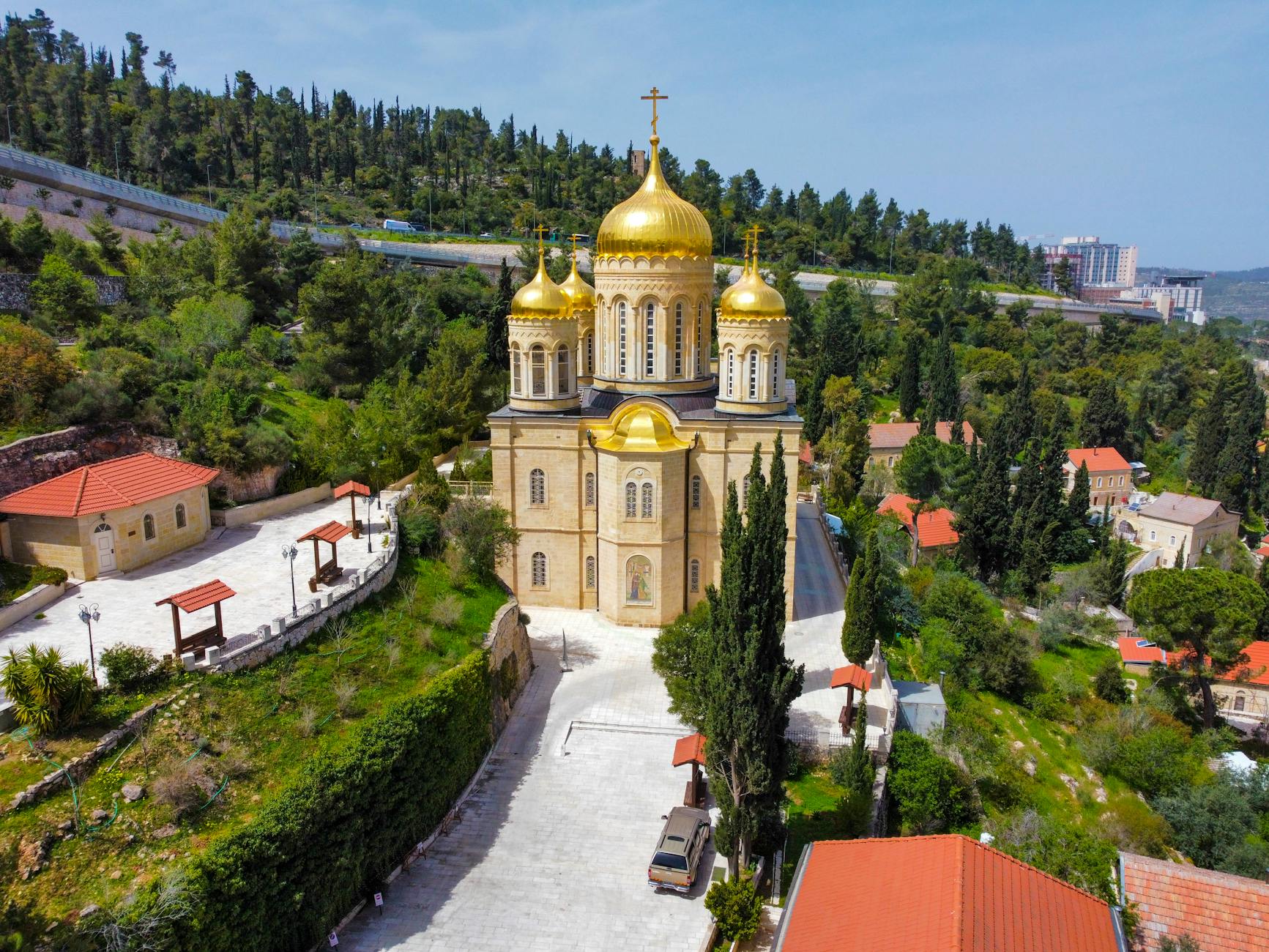
In a small church in Jerusalem, not far from where the Temple once stood, there is an old tradition: this is where James, “the brother of the Lord,” led the first Christian community. In some early Christian writings, James is not a side character. He is the bishop of Jerusalem, the man whose judgment Paul respects, the one called “the Just” for his strict piety.
Fast forward to a modern Christmas pageant. You will see Mary, Joseph, shepherds, wise men, maybe a grumpy innkeeper. What you will not see is Mary trying to keep a toddler James from poking the baby in the manger. Jesus’ siblings have vanished from the story.
The New Testament mentions Jesus’ brothers and sisters by name. Yet in most modern Christian imagination, they are either unknown or the subject of quiet confusion. Jesus’ siblings are mentioned in the Bible, but later theology, devotion to Mary, and church politics pushed them into the background.
This is the story of why that happened, and why it still matters for how Christians think about Jesus, Mary, and family.
What does the Bible actually say about Jesus’ brothers and sisters?
The starting point is simple and awkward: the Gospels talk about Jesus’ siblings in a very matter-of-fact way.
In Mark 6:3, people in Nazareth react to Jesus’ preaching:
“Is not this the carpenter, the son of Mary and brother of James and Joses and Judas and Simon, and are not his sisters here with us?”
Matthew 13:55–56 has almost the same list. Paul, writing earlier than the Gospels, mentions meeting “James, the Lord’s brother” in Galatians 1:19. The Greek word used for brother is adelphos, the normal word for a male sibling.
So at the level of the text, the situation looks straightforward. Jesus had brothers named James, Joses (or Joseph), Judas (often called Jude), and Simon, and at least two sisters whose names are not given. They are portrayed as skeptical during his ministry (John 7:5 says his brothers did not believe in him), then some of them emerge as leaders in the early church after the resurrection.
In the earliest Christian writings, James in particular is a major figure. Acts 15 shows him giving the final judgment at the Council of Jerusalem on how Gentile converts should live. Early church historian Eusebius, writing in the early 4th century, quotes older sources that describe James as the first bishop of Jerusalem and a revered martyr.
So at the very beginning, Jesus’ family is not invisible. They are part of the story, and in James’ case, right at the center of the earliest Christian community. The fact that the Bible names Jesus’ brothers and sisters created a problem only later, when Christians started to talk differently about Mary and about what kind of family Jesus “should” have had.
So what? The plain biblical references to Jesus’ siblings forced later Christians to either accept that Mary had more children or reinterpret those words, and that tension shaped centuries of theology and devotion.
Why did early Christians start arguing about who these “brothers” were?
The argument begins when devotion to Mary changes.
By the 2nd and 3rd centuries, Christians are not just talking about Mary as the woman who gave birth to Jesus. They are calling her the “new Eve,” the obedient counterpart to Adam’s partner. Her virginity becomes a sign of her total dedication to God. Christian writers like Athanasius and Jerome praise virginity as a higher spiritual state than marriage.
Once Mary is held up as the model of perpetual virginity, those verses about Jesus’ brothers become awkward. If Mary had more children, then she did not remain a virgin after Jesus’ birth. So theologians start to offer different explanations.
By the late 4th century, three main views are in circulation:
1. Biological children of Mary and Joseph
Some early writers, like Helvidius in the 4th century, argued that the obvious reading is correct. Mary and Joseph had a normal marriage after Jesus was born. The “brothers” and “sisters” are Jesus’ younger siblings. This view is still held in most modern Protestant churches.
2. Children of Joseph from a previous marriage
Other Christians, especially in the East, argued that Joseph was an older widower who already had children. This idea appears in early non-biblical texts like the Protoevangelium of James (2nd century). In this reading, Jesus’ “brothers” are his stepbrothers. Mary remains ever-virgin.
3. Cousins or other relatives
Jerome, one of the most influential Latin theologians, pushed a third option around 383. He argued that “brothers” here means cousins or close kin. He pointed out that in Hebrew and Aramaic, the same word can cover a range of relatives, and he tried to link these brothers to other named figures in the Gospels. This became the standard view in the Western (Catholic) church for centuries.
There is a simple definition that helps here: In Catholic and Orthodox theology, Jesus’ “brothers” are usually interpreted as stepbrothers or cousins, not children of Mary. That interpretive move protects the doctrine of Mary’s perpetual virginity.
So what? As devotion to Mary grew, the need to protect her perpetual virginity pushed Jesus’ siblings out of the category of “normal brothers,” which made them less central to ordinary Christian imagination.
How Marian devotion turned parents into icons and siblings into extras
By the Middle Ages, Mary and Joseph had become more than historical figures. They were symbols.
Mary is not just the mother of Jesus. She is “Mother of God” (Theotokos), a title defended at the Council of Ephesus in 431. She is the perfect disciple, the model of obedience, the intercessor who can plead with her son. In Catholic and Orthodox piety she is prayed to, painted, crowned, and woven into national identities. Think of Our Lady of Guadalupe in Mexico or Our Lady of Czestochowa in Poland.
Joseph, who is barely quoted in the New Testament, becomes the model of humble fatherhood and labor. By the late Middle Ages he is patron of workers, families, and a “happy death.” Art and preaching fill in the gaps the Gospels leave.
Parents fit easily into Christian storytelling. They frame the nativity scene. They give Jesus a human home. They are safe devotional figures: honoring them does not raise tricky questions about Jesus’ own authority.
Jesus’ siblings are more complicated. If you make too much of them, you raise questions like:
• Did Mary really remain a virgin?
• Did Jesus grow up in a crowded, noisy house with older stepbrothers?
• Why did his brothers not believe in him at first?
• Why does he hand Mary over to the beloved disciple at the cross if she has other sons?
These are interesting historical questions, but they are awkward for devotional art and simple preaching. So artists and preachers gravitated toward the Holy Family as a triangle: Jesus, Mary, Joseph. The brothers and sisters are technically there in the text, but they are not needed for the icon.
There is a clear causal line here: As Mary’s role in Christian devotion expanded, the Holy Family was visually and theologically simplified to Jesus, Mary, and Joseph, which left his siblings offstage.
So what? By turning Mary and Joseph into idealized symbols, medieval Christianity created a standard “family picture” of Jesus that had no space for ordinary siblings, and that picture still shapes popular imagination today.
Why don’t Christians pray to James and the others like they do to Mary?
There is another piece to the puzzle: hierarchy among saints.
In Catholic and Orthodox practice, Christians do pray to James. There are churches named after “Saint James the Just” or “Saint James the Brother of the Lord,” especially in Eastern traditions. He has a feast day. He appears in liturgies. But he does not rival Mary in attention, and he is much less visible than Peter or Paul in the West.
Several factors explain that.
1. Mary has a unique theological role
Mary is tied directly to doctrines about Jesus: his incarnation, his sinlessness, his humanity. When Christians argued about whether Jesus was fully God and fully human, they argued about Mary’s title “Mother of God.” That gave her a dogmatic role that no other saint has. James, by contrast, is important historically, but he is not central to any major doctrine.
2. Peter and Paul overshadow James in Western memory
The Book of Acts starts in Jerusalem, but it ends in Rome with Paul. Western Christianity, centered on Rome, remembered Peter and Paul as the twin founders of the Roman church. James, who led the Jerusalem community and was martyred there (probably in the 60s CE), faded from Western focus once Jerusalem lost political and ecclesial power.
3. Siblings raise awkward questions about authority
In the Gospels, Jesus’ brothers are not his early supporters. Mark 3:21 suggests his family thought he was out of his mind. John 7:5 says they did not believe in him. Later, some of them become leaders, but that arc is messy. Mary, by contrast, is present at the beginning and at the cross. She is easier to present as the unwavering believer.
In Protestant traditions, where people do not pray to Mary or other saints, the question is different. Protestants read the references to Jesus’ brothers more straightforwardly, but they also downplay saints in general. So James the Just is important for historians and Bible scholars, but he is not a focus of popular devotion.
So what? Because Mary is tied to core doctrines and Peter and Paul are tied to Rome, James and the other siblings never became central devotional figures, even in churches that honor saints.
Did church politics help erase Jesus’ siblings from the spotlight?
Church politics did not erase Jesus’ siblings from the Bible, but it did shape who got remembered.
In the first generation after Jesus, his relatives were influential. Eusebius reports that the “desposynoi,” a Greek word meaning “those belonging to the Lord,” were known as Jesus’ family members. He says some of them were questioned by Roman authorities as potential political threats. Hegesippus, a 2nd-century writer quoted by Eusebius, claims that grandsons of Jude, the Lord’s brother, were leaders in some communities.
Over time, though, authority shifted away from biological ties to apostolic succession based on office. Bishops traced their authority back to apostles like Peter and John, not to Jesus’ cousins. Once Jerusalem was destroyed in 70 CE and again in 135 CE, the original Jewish-Christian community that revered James lost its base. Gentile-led churches in cities like Rome, Antioch, and Alexandria took center stage.
That had consequences for memory.
Western Christians read Paul’s letters constantly. They read Acts, which moves the story from Jerusalem to Rome. They did not read Hegesippus or other early traditions about Jesus’ relatives as often. James remained in the New Testament, but the stories that made him a towering figure in early Jerusalem were less known.
By the Middle Ages in the Latin West, “Saint James” usually meant James the son of Zebedee, the apostle whose supposed relics drew pilgrims to Santiago de Compostela in Spain. James “the brother of the Lord” was a more shadowy figure, mostly remembered in scholarly circles.
So what? As church authority and memory shifted from Jerusalem to Rome and from family ties to apostolic office, the blood relatives of Jesus lost institutional backing, which made it easier for them to fade from popular awareness.
How do different Christian traditions treat Jesus’ siblings today?
Modern Christians do not agree on who Jesus’ siblings were, and that disagreement affects how much attention they get.
Catholic Church
The Catholic Church teaches that Mary remained a virgin before, during, and after Jesus’ birth. Official documents avoid saying that the “brothers” are Mary’s children. The Catechism leans on the traditional interpretations of cousins or stepbrothers. Catholics honor James, Jude, and others as saints, but ordinary Catholics often do not connect them emotionally to Jesus as “his brothers.” Mary is the family member they know.
Eastern Orthodox Churches
Orthodox tradition usually follows the “stepbrothers” view. Icons of the Holy Family sometimes include Joseph’s older sons from a previous marriage. James “the Brother of God” (a common Orthodox title) is more visible in Eastern liturgy than in the West. Yet even there, he does not rival Mary in devotion.
Protestant Churches
Most Protestants accept that Mary and Joseph had a normal marriage and more children. For them, Jesus’ brothers are exactly that. But Protestantism generally rejects praying to saints, so even though they may talk more openly about Jesus’ siblings, they do not develop devotions to James or Joses. In popular Protestant culture, the same Christmas-pageant triangle dominates: Jesus, Mary, Joseph.
Modern scholarship
Most historians and New Testament scholars, including many who are Catholic, think the simplest reading is that these were Jesus’ actual younger siblings. They point out that the Gospels do not hint at Joseph having earlier children, and that Greek had other words for cousin. But historians describe what the texts likely meant in their original setting. Churches decide how those texts fit their doctrines.
So what? Because modern Christians inherit different theological commitments about Mary and about saints, they handle Jesus’ siblings in different ways, which keeps them either as quiet background figures or as ordinary relatives without much devotional weight.
Why this quiet family argument still matters
On the surface, this looks like a niche question. Who cares whether James was a half-brother, stepbrother, or cousin?
Underneath, the debate touches big themes: how human Christians think Jesus really was, how they imagine Mary’s life, and how they balance the Bible’s plain words with later doctrines.
If Jesus grew up in a noisy house with brothers and sisters, that sharpens his humanity. He knew sibling rivalry, family skepticism, the tension between loyalty to kin and loyalty to his mission. The Gospels hint at that when his family tries to restrain him or when he says that whoever does God’s will is his true brother and sister.
If Mary had other children, she becomes less of a distant icon and more of a first-century Jewish mother who navigated childbirth, household work, and complex family loyalties. If she did not, then her singleness of focus on her son takes on a different kind of intensity. Either way, the question pushes Christians to think about what they expect holiness to look like in ordinary family life.
There is also a quieter lesson about how religious memory works. The Bible put Jesus’ siblings on the page. History, theology, and art decided how much to zoom in on them. Parents became symbols. Brothers and sisters became footnotes.
So what? The near-invisibility of Jesus’ siblings in modern Christianity is a case study in how doctrine, devotion, and institutional power can reshape a family story that started out much messier and more crowded than most nativity scenes admit.
Frequently Asked Questions
Did Jesus really have brothers and sisters?
The New Testament mentions Jesus’ brothers and sisters several times, naming James, Joses (or Joseph), Jude, and Simon, and referring to unnamed sisters. Most historians and many Protestants take these as biological siblings of Jesus, children of Mary and Joseph. Catholic and Orthodox traditions, which teach Mary’s perpetual virginity, usually interpret them as stepbrothers (children of Joseph from a previous marriage) or cousins.
Who was James, the brother of Jesus?
James, often called James the Just or James the Brother of the Lord, was a leading figure in the earliest Jerusalem church. Paul mentions meeting him in Galatians, and the Book of Acts shows him giving the final judgment at the Council of Jerusalem on how Gentile Christians should live. Early sources describe him as the first bishop of Jerusalem and a martyr, probably killed in the 60s CE.
Why don’t Christians talk more about Jesus’ siblings?
Several forces pushed Jesus’ siblings out of the spotlight. As devotion to Mary grew, especially the belief in her perpetual virginity, theologians reinterpreted the “brothers” to avoid making them Mary’s children. Medieval art and preaching focused on a simplified Holy Family of Jesus, Mary, and Joseph. In the West, Peter and Paul became the main remembered leaders, so James and other relatives faded from popular awareness.
Do Catholics and Orthodox believe Mary had other children?
No. Both Catholic and Orthodox churches teach that Mary remained a virgin before, during, and after Jesus’ birth. To reconcile this with the Gospel references to Jesus’ brothers and sisters, they usually say these relatives were either Joseph’s children from a previous marriage (common in Eastern tradition) or cousins/close kin (common in Western Catholic tradition).