Picture this. A town square in some conquered city, any century you like. The same market stalls. The same baker. The same well. But the banner over the gate has changed, the coins look different, and a man with a new accent reads out the law.
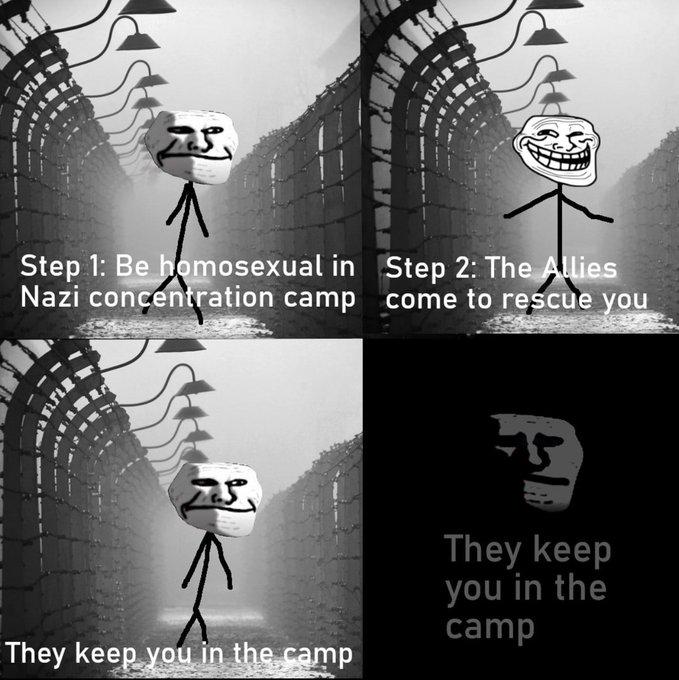
To the people in that square, history’s big turning points often felt like a corporate takeover. New logo. New boss. Same job. That is the joke behind the meme: conquest as “just a new management.”
So what actually happens when one empire replaces another? Was it really just a change of uniforms, or did it tear up people’s lives? By the end of this explainer we will have walked through what “new management” meant in practice, why some changes felt minor and others explosive, and why this meme lands so hard with people trying to make sense of empire today.
What “just new management” really means in history
When people joke that a conquest was “just new management,” they are talking about regime change: one ruling power replacing another over the same territory and population.
In historical terms, this is what happened when, for example, the Romans took over Greek cities, the Ottomans took Constantinople in 1453, or the British Raj replaced the Mughal Empire in India. The fields did not move. The cities did not teleport. The people mostly stayed where they were. What changed was who collected taxes, who enforced law, and who claimed ultimate authority.
Regime change is when sovereignty over a region passes from one ruler or state to another, often by conquest, sometimes by dynastic marriage, treaty, or colonial transfer. To ordinary people, it could look like a new logo on the coin and a different face on the tax collector.
That is the kernel of truth in the meme. For many subjects, especially in premodern agrarian societies, daily routines did not transform overnight. You still planted wheat in October. You still paid something to someone. You still tried not to get noticed by soldiers.
But “just new management” hides a lot. New rulers could bring new laws about religion, land ownership, or military service. They could deport populations, import colonists, or redraw borders. They could shift the language of power and education. Those were not cosmetic changes. They rewired societies.
The meme works because it captures how both things can be true at once: daily life can look familiar while the rules beneath it have been quietly rewritten. That tension is the starting point for understanding why regime change mattered.
What set it off: why empires kept changing hands
Empires do not swap owners for fun. There are patterns in why “new management” arrives.
One big driver was simple geography and resources. Fertile river valleys, trade crossroads, and mining regions attracted conquerors the way profitable companies attract buyers. Mesopotamia, the Nile Delta, the Ganges plain, the Low Countries in Europe: these places saw repeated conquests because they generated wealth.
Another driver was imperial overreach. States that grew too fast or too wide struggled to control distant provinces. The Roman Empire in the 3rd and 4th centuries, the Abbasid Caliphate after the 9th century, or the Spanish Empire in the 17th century all faced the same math problem: it cost more to hold the edges than the edges brought in. Weakness at the center invited challengers at the borders.
Internal fractures mattered too. Succession crises, civil wars, and elite feuds often opened the door to outside powers. The late Mughal Empire in India was not toppled by a single British campaign. It was hollowed out by regional rebellions and court intrigue, which made British expansion possible. The same pattern played out in late Qing China and in the breakup of the Ottoman Empire.
Then there were ideological and religious motives. The Arab conquests of the 7th century rode on the energy of a new religious community. The Crusades were explicitly framed as holy wars. The Spanish conquest of the Americas mixed gold fever with Christian missionary zeal. Ideas gave conquerors a story about why they deserved to be the new management.
Finally, technology shifted the odds. Gunpowder, oceangoing ships, railways, and modern rifles all changed who could project power and how far. The arrival of European gunboats in Asian harbors in the 19th century was not just a new flag on the fort. It was a new kind of coercion.
Every time these forces lined up, another “takeover” became possible. So what? Because without these pressures, most people would have kept the same rulers for much longer. New management was not inevitable. It was the product of specific weaknesses and ambitions colliding.
The turning point: when a flag changes and what actually shifts
History memes often freeze the moment of conquest: a city falls, a treaty is signed, a king surrenders his crown. But the real turning point for ordinary people came in the months and years after, when the new rulers decided what to change and what to leave alone.
Take Constantinople in 1453. When Mehmed II and the Ottomans captured the city from the Byzantine Empire, it could have been a bloodbath followed by mass expulsion. There was violence, and many inhabitants fled or were enslaved. Yet Mehmed also repopulated the city, invited back Greek Orthodox Christians, and made the Patriarch of Constantinople a recognized leader within the empire’s system of religious communities, or millets.
Daily life for a Greek merchant in the city changed. The emperor was now a sultan. Islamic law shaped parts of the legal system. New taxes applied. But he could still worship in his church, trade in familiar markets, and speak Greek at home. The turning point was not simply the fall of the walls. It was the Ottoman decision to integrate rather than erase.
Contrast that with the Spanish conquest of the Aztec Empire in the early 16th century. There, “new management” meant catastrophic demographic collapse from disease, forced labor systems like the encomienda, aggressive Christianization, and the destruction or repurposing of temples. The city of Tenochtitlan became Mexico City. The language of power shifted to Spanish. Indigenous elites were sometimes coopted, but the social order was upended.
Or look at British rule in India after 1858, when the British Crown took direct control from the East India Company. For many peasants, the man collecting land revenue might have looked similar. But the legal framework changed, English law codes spread, railways cut across the subcontinent, and a new class of English-educated Indians emerged. The turning point was administrative and cultural as much as military.
So what? Because the meme’s joke hides the fact that “new management” could mean anything from light-touch supervision to cultural revolution. The key question is not just who took over, but what they decided to remake.
Who drove it: conquerors, collaborators, and the people in the middle
History memes tend to focus on the conqueror: Alexander, Caesar, Napoleon, Genghis Khan. They make it look like one brilliant or ruthless individual personally rebranded half the map.
Those figures mattered. Alexander the Great’s campaigns in the 330s BCE spread Macedonian rule from Greece to Egypt and deep into Asia. Genghis Khan and his successors created the Mongol Empire in the 13th century, which stretched from China to Eastern Europe. Napoleon’s armies redrew Europe’s borders in the early 1800s. Their decisions shaped how hard they pushed, which cities they spared, and what kind of administration they tried to set up.
But “new management” was never a one-man show. It depended on administrators, soldiers, merchants, priests, and local elites who chose to cooperate or resist.
When the Romans took over Greek territories, they often left local city councils in place and worked through existing elites. Greek notables collected taxes and enforced Roman decisions. In return, they kept status and some autonomy. The same pattern appeared when the British ruled through Indian princes in princely states, or when the Ottomans allowed Armenian and Greek merchant communities to run much of the empire’s trade.
There were also intermediaries and translators who made empire function. Dragomans in the Ottoman Empire, interpreters and Indian clerks in the British Raj, local scribes in Spanish America. They were the human software that let new rulers plug into old societies.
Then there were the people who refused to play along. Resistance leaders like Túpac Amaru II in 18th-century Peru, the Indian rebels of 1857, or Algerian fighters against French rule in the 1950s pushed back against “new management” with violence. Others resisted more quietly, by keeping banned languages alive, practicing outlawed religions in secret, or sabotaging imperial projects.
So what? Because who cooperated and who resisted shaped how deep the new regime’s changes went. Without local collaborators, empires were thin. With them, “new management” could reach into every village and courtroom.
What it changed: taxes, language, identity, and the map
So what actually changed when an empire swapped hands? A few patterns show up again and again.
First, taxes and land. New rulers almost always rethought who paid what to whom. The Norman Conquest of England in 1066 led to the Domesday Book, a massive survey of land and resources that let William the Conqueror and his successors tax more effectively. In many conquests, land was confiscated from old elites and granted to new ones, as with Norman barons in England or Spanish encomenderos in the Americas.
Second, law and justice. Conquerors imported their own legal ideas. The spread of Roman law across Europe, Islamic law in the Middle East and North Africa, and English common law in parts of the British Empire all left deep marks. For a villager, this could mean new rules about inheritance, marriage, property, or crime. Sometimes this brought more predictable courts. Sometimes it stripped people of old rights.
Third, language and culture. New management often meant a new language of power. Latin in the Roman Empire, Arabic under the caliphates, Spanish in colonial Latin America, French in West Africa. These languages became the medium of administration, education, and social climbing. Local languages survived, but their status shifted.
Fourth, religion. Some empires were relatively tolerant, others not. The Ottomans allowed Christian and Jewish communities to manage many of their own affairs, as long as they paid taxes and accepted Muslim political supremacy. The Spanish in the Americas pushed aggressive conversion to Catholicism and destroyed many indigenous temples and idols. For ordinary people, this could mean anything from paying a special tax as a non-Muslim to seeing their gods outlawed.
Fifth, identity. Over time, people began to think of themselves in new categories. Roman subjects became “Romans” even if they were born in Gaul or Syria. In French West Africa, people navigated between being “French subjects” and members of specific ethnic groups. New management could create hybrid identities, like Anglo-Indians in British India or métis communities in Canada.
Finally, the map itself changed. Borders were redrawn, often with little regard for local realities. The partition of Africa in the late 19th century carved up ethnic groups and trade networks. The partition of India in 1947, as British rule ended, created India and Pakistan and triggered one of the largest and bloodiest population movements in history.
So what? Because these changes did not vanish when the conquerors left. They shaped legal systems, languages, borders, and identities that still define politics today.
Why “just new management” still matters now
The meme gets laughs because it compresses centuries of conquest into a familiar modern experience: the company got bought, the logo changed, your job description did not. But it also speaks to something deeper about how people live through big historical shifts.
Many of the world’s current conflicts and debates sit on top of old “management changes.” Arguments over borders in Eastern Europe, the Middle East, and Africa often trace back to imperial partitions and redrawings. Legal systems in former colonies still carry the stamp of French civil law, British common law, or Spanish colonial codes.
Debates about language and education policy, from Quebec to India to parts of Africa, are really arguments about whose empire set the rules. Should schools teach in the old colonial language, which often opens doors in global markets, or in local languages, which carry culture and identity?
Even corporate metaphors are not accidental. Modern multinational companies grew out of imperial trading firms like the Dutch East India Company or the British East India Company. They were literally “new management” for large chunks of the globe, with private armies and their own legal systems.
Understanding that “new management” was never just a flag swap helps explain why people still care so fiercely about events that happened centuries ago. For many communities, those takeovers meant land lost, gods banned, names changed, or ancestors killed. For others, they brought new opportunities, new identities, or relative stability.
So what? Because when we joke about conquest as a management change, we are really asking a serious question: who gets to write the rules, and how long do those rules outlive the rulers who wrote them?
Frequently Asked Questions
What does “just new management” mean in a history meme?
In history memes, “just new management” jokes that when one empire conquers another, ordinary people experience it like a corporate takeover: the rulers change, but daily life often looks similar at first. The phrase points to regime change, where sovereignty shifts to a new power that may keep many local structures while quietly rewriting the rules.
Did people’s daily lives really stay the same after a conquest?
Sometimes daily routines changed slowly, especially for peasants far from political centers. They still farmed the same fields and paid some kind of tax. But over time, new rulers often changed taxes, land ownership, law, religion, and language of administration. So life could feel familiar on the surface while the deeper rules of society shifted a lot.
Why did empires so often change hands in the same regions?
Certain regions, like fertile river valleys or trade crossroads, generated wealth and attracted repeated conquests. Empires also changed hands when big states overextended, suffered internal conflicts, or fell behind in technology. Weakness at the center and valuable resources on the periphery made “new management” more likely.
How do old imperial takeovers still affect politics today?
Many modern borders, legal systems, and language policies were set during imperial rule. Colonial partitions in Africa and Asia, for example, created states that cut across older ethnic and cultural lines. Former colonies often still use the legal codes and official languages of their old rulers, which shapes everything from court cases to education and national identity.