They look similar because, from a distance, both 1941 and 1943 can be described as the years “Germany lost World War II.” In both years, the Nazi war machine smashed into hard limits, and Allied leaders began to think about victory instead of mere survival. But they are not the same moment, and who you were in the war shaped which one felt like the real turning point.
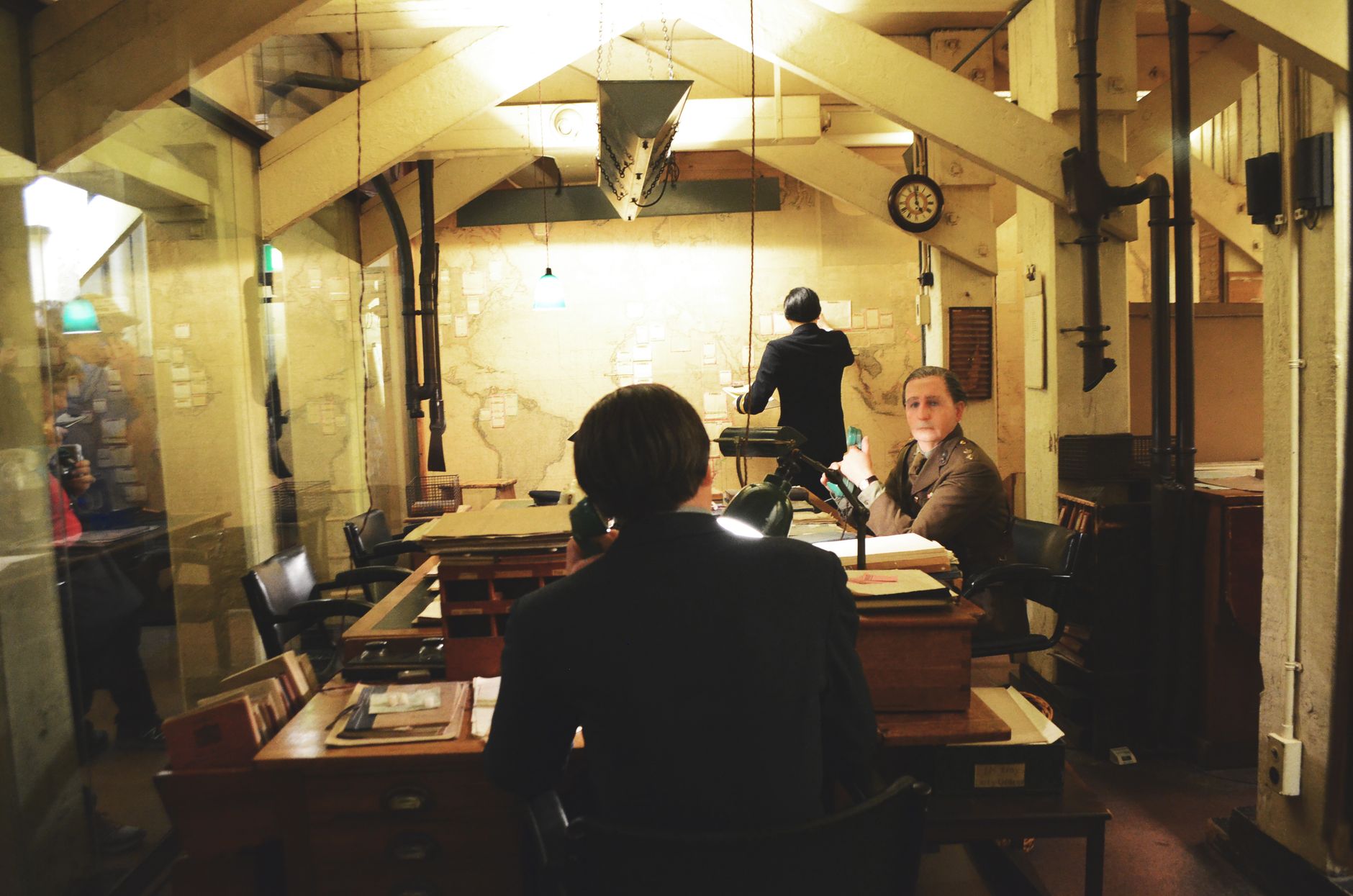
Picture two different rooms.
In December 1941, Winston Churchill is on a battleship in the Atlantic, heading to meet Franklin Roosevelt. News comes in: Japan has attacked Pearl Harbor, and Hitler has declared war on the United States. Churchill later wrote that he “slept the sleep of the saved and thankful,” convinced that with America in, Nazi Germany could not win in the long run.
In May 1943, in Moscow, Joseph Stalin receives confirmation that the last German troops in North Africa have surrendered. The Red Army has just won at Stalingrad. Anglo‑American forces are ashore in North Africa. The Battle of the Atlantic is turning. For the first time, the Allies can start planning how to carve up Hitler’s Europe, not whether they can survive it.
So when did it become clear that Germany would lose World War II? For Western leaders like Churchill, the answer often points to late 1941. For Stalin and many generals, the safer answer is 1943. To see why, you have to compare these two “Germany has lost” moments side by side: their origins, the methods that made them meaningful, the outcomes they produced, and the legacy they left in how we remember the war.
Why 1941 looked like the beginning of the end
Start with the big strategic picture. Before December 1941, Nazi Germany had crushed Poland, France, the Low Countries, Yugoslavia, and Greece. It had driven Britain off the continent and was deep inside the Soviet Union. On paper, the Axis looked terrifyingly strong.
Then two things happened in quick succession:
1) Hitler invaded the Soviet Union in June 1941.
2) Hitler declared war on the United States in December 1941, after Japan attacked Pearl Harbor.
Those two decisions created what many historians call Germany’s basic losing position: a land war against the Soviet Union while also fighting the world’s largest industrial power, the United States, and the British Empire at sea and in the air.
Churchill grasped this immediately. Britain alone could not beat Germany. Britain plus the Soviet Union plus the United States almost certainly could, given time. From his point of view, once those coalitions solidified, the question shifted from “Can we survive?” to “How long will it take?”
So why did 1941 not feel like the end of the world to Hitler? Because in the short term, German arms were still winning. By late 1941, German forces were near Moscow. They had overrun Ukraine and much of European Russia. Japan was rampaging across Southeast Asia. German U‑boats were sinking Allied shipping faster than it could be replaced. Inside the Nazi leadership, the belief that a quick victory in the East would knock the Soviets out of the war remained strong.
From a high‑level strategic view, though, the math had shifted. Germany had committed itself to a long war against enemies with more people, more oil, more steel, and more factories. The Axis could still win battles, but it was now very unlikely they could win the war against all three major Allies at once.
So what? In 1941, the structure of the war changed. Germany moved from a position where outright victory was possible to one where, barring major Allied collapse, it was fighting a war it was not built to win.
How 1943 turned a probable loss into an obvious one
Strategic potential is one thing. Making it real is another. Between 1941 and 1943, there was still a non‑trivial chance that Germany might knock the Soviet Union out, force Britain into a compromise, or at least drag the war into a stalemate.
That is where 1943 comes in. It is the year when the war’s balance of power stopped being theoretical and became visible in the field.
Start with the Eastern Front. The German 6th Army surrendered at Stalingrad in February 1943. Around 90,000 German soldiers went into captivity. The psychological shock inside Germany was enormous. For the first time, the Nazi regime had to admit a major defeat. For the Red Army and Soviet leadership, it proved that the Wehrmacht could not only be stopped, but destroyed.
Then came the Battle of Kursk in July 1943, the largest tank battle in history. The Germans tried one last big offensive in the East. They failed. From that point on, the Eastern Front was mostly a German retreat, with short, bloody counterattacks that never regained the strategic initiative.
On other fronts, 1943 told the same story. In May, Axis forces in North Africa surrendered, losing over 200,000 men. That opened the door to the Allied invasion of Sicily in July and Italy in September. Mussolini was overthrown. Italy switched sides. Germany had to occupy and defend yet another country, stretching its manpower even thinner.
At sea, the Battle of the Atlantic turned in spring 1943. Allied codebreaking, radar, long‑range aircraft, and more escorts started to beat back the U‑boats. Shipping losses dropped. American industrial output could now cross the ocean in safety. The material weight of the United States could actually reach the war fronts in full.
By the end of 1943, Allied leaders were not just hoping Germany would lose. They were planning what to do after it lost. The Tehran Conference in late 1943 saw Roosevelt, Churchill, and Stalin discussing postwar borders and the timing of a cross‑Channel invasion. That kind of talk only happens when victory feels secure.
So what? In 1943, the war moved from “Germany is probably doomed on paper” to “Germany is visibly losing on every major front,” which is when most high‑ranking leaders could finally relax about the basic question of survival.
Origins: different paths to the same losing war
If you compare 1941 and 1943 on origins, you see two different kinds of turning point.
1941 is about structural overreach. Hitler’s decision to attack the Soviet Union, and then to declare war on the United States, created a war Germany could not sustain. The origins here are political and ideological. Hitler wanted Lebensraum in the East and believed in a racial war against “Judeo‑Bolshevism.” He also underestimated American will and capacity. The result was a three‑front war against superior industrial coalitions.
1943 is about accumulated damage. Its origins lie in the grinding attrition of 1942. The failed German drive to the Caucasus, the siege of Stalingrad, the brutal fighting in North Africa, and the steady expansion of Allied bombing all set the stage. By 1943, German manpower was strained, fuel was tight, and the Luftwaffe was bleeding pilots faster than it could train them.
So, 1941 created the conditions for defeat. 1943 revealed the consequences of those conditions. One is the origin of a losing position. The other is the origin of visible collapse.
So what? Understanding these different origins shows why some leaders felt safe calling the war for the Allies in 1941, while others waited until 1943, when the cost of Hitler’s earlier choices became impossible to ignore.
Methods: from strategic arithmetic to battlefield proof
How did leaders in 1941 and 1943 actually judge that Germany was on a losing track? They used different methods.
In 1941, the method was mostly strategic arithmetic. Churchill and Roosevelt looked at tonnage of steel, oil production, shipbuilding capacity, and population. The United States alone produced nearly half the world’s manufactured goods. Once it was fully mobilized, its output would dwarf Germany’s. Combined with the Soviet Union’s massive manpower and Britain’s navy, the numbers pointed one way.
Intelligence also mattered. British codebreakers at Bletchley Park were already reading some German communications. They could see U‑boat deployments and get a sense of German strain. But this was still a war of projections and estimates. The Red Army’s staying power was not yet proven. American public opinion was an unknown. Japan’s rampage in Asia could complicate everything.
In 1943, the method shifted to battlefield proof and hard statistics. Casualty reports, surrender figures, and territory lost told their own story. German divisions destroyed at Stalingrad, Panzer units mauled at Kursk, entire armies captured in Tunisia. Allied bombing surveys showed German cities burning and aircraft production increasingly disrupted. U‑boat losses spiked to unsustainable levels.
By then, Allied leaders did not have to rely on theoretical industrial curves. They could see German decline in daily intelligence summaries. Even some German generals, like Heinz Guderian and Erich von Manstein, wrote after the war that by 1943 they knew victory was out of reach, even if they still hoped for some kind of negotiated end.
So what? The shift from abstract calculations in 1941 to concrete battlefield evidence in 1943 explains why hindsight makes 1941 look like the real turning point, while people living through the war often only felt safe calling it in 1943.
Outcomes: what changed for Churchill, Stalin, and Hitler?
For Churchill, the outcome of 1941 was psychological. He no longer feared a Nazi invasion of Britain as the end of the story. With the Soviet Union in the fight and America entering the war, he believed that even if Britain were battered, Nazism would be destroyed in time. That shaped his refusal to consider any peace feelers and his willingness to fight on through disasters like Singapore and early North Africa.
For Stalin, 1941 was a nightmare. German armies were deep inside his country. Millions were dead or captured. Entire industrial regions were lost. He did not have the luxury of Churchill’s long‑term optimism. His regime’s survival was in question. Even in 1942, during the German summer offensive, there was a real danger of catastrophic defeat.
By 1943, Stalin’s position had changed. The Red Army had proven it could not only hold but counterattack. Soviet industry, relocated east of the Urals, was hitting its stride. He could start thinking about pushing Germany back and shaping postwar Eastern Europe. That confidence fed into his tough negotiating posture with Churchill and Roosevelt.
For Hitler, the outcomes were the mirror image. In 1941, he still believed in quick victory. The early successes in the Soviet Union seemed to confirm his instincts. By 1943, he was increasingly trapped in a defensive mindset, issuing “no retreat” orders, sacking generals, and relying on wonder‑weapon fantasies. His political power at home remained strong, but his strategic options narrowed sharply.
So what? The different outcomes for Churchill and Stalin show why the answer to “when could they relax about losing to the Nazis?” is not a single date. Churchill could breathe easier in 1941. Stalin only got there in 1943, once his armies had broken the back of the German offensive power.
Legacy: why historians still argue about the date
Ask historians today, “When did it become clear Germany would lose World War II?” and you will hear both 1941 and 1943, sometimes 1942, occasionally even 1944. The disagreement comes from what people mean by “clear” and from whose perspective they are answering.
From a long‑term structural view, many argue that Germany lost the war the moment it attacked the Soviet Union while Britain was still fighting, or at the latest when it declared war on the United States. In that sense, 1941 is the key year. Germany created an unwinnable set of enemies.
From an operational and emotional view, others point to 1943. That is when Allied leaders could, with some justification, stop worrying about the basic question of survival and start arguing over postwar borders. It is also when ordinary people in occupied Europe and inside Germany began to sense that the tide had turned, as defeats mounted and Allied bombing became a daily reality.
There is also a human factor. People living through wars rarely feel that defeat or victory is “clear” until very late. German civilians in 1943 still hoped for a miracle. Many Soviet citizens in 1942 feared another disaster. Churchill’s confidence in 1941 was unusual, based on his reading of industrial numbers and his faith in American engagement.
So what? The legacy of this debate is a reminder that wars are not lost at a single moment, but through a chain of decisions and battles. 1941 and 1943 are both right answers, depending on whether you are looking at the war on a strategist’s map, or through the eyes of people who had to survive it day by day.
Frequently Asked Questions
When did Allied leaders first think Germany would probably lose WWII?
Many Western leaders, especially Winston Churchill, believed by late 1941 that Germany would probably lose, once Hitler attacked the Soviet Union and declared war on the United States. That combination created a coalition with far greater industrial and manpower resources than the Axis could match in a long war.
Why do some historians say 1943 was the real turning point in WWII?
Historians who favor 1943 point to concrete battlefield events: the German defeat at Stalingrad, failure at Kursk, the loss of North Africa, Italy’s surrender, and the turning of the Battle of the Atlantic. By the end of 1943, Germany was retreating on most fronts, and Allied leaders were planning postwar arrangements, not just survival.
Did Hitler know Germany was going to lose the war?
Hitler never publicly admitted that Germany would lose, but many accounts suggest that by 1943–1944 he understood that outright victory was unlikely. He shifted to hoping for splits among the Allies, new weapons, or a negotiated peace, while issuing increasingly rigid orders that reflected a defensive, desperate position.
Could Germany have won WWII if it had not attacked the Soviet Union?
Most historians argue that avoiding war with the Soviet Union would have improved Germany’s chances but not guaranteed victory. Britain was still in the war, the United States was likely to confront Germany at sea, and German economic weaknesses remained. The attack on the USSR in 1941, however, made defeat far more likely by creating a multi‑front war Germany could not sustain.