Picture this: Stockholm, a gray afternoon in the 1950s. A school group files into the Natural History Museum. The teacher points not to a painting or a fossil, but to the gaping jaws of a 25‑meter blue whale. “We’re going inside,” she says. The kids vanish into the whale’s mouth, climbing a staircase into its hollowed‑out interior.
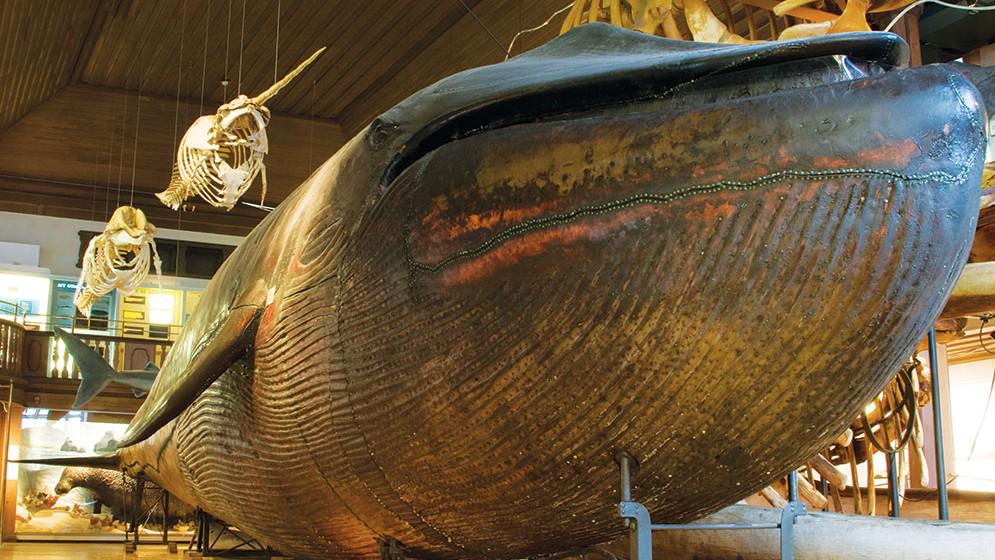
For decades, that was real. Sweden’s Naturhistoriska riksmuseet had one of the strangest museum experiences on Earth: you could walk inside a taxidermied blue whale. Then came the story that now circulates on Reddit and in pub trivia. A couple was caught having sex inside the whale. After that, the jaws were closed to the general public. Today they open only on rare occasions, like Swedish election days.
The taxidermied blue whale in Stockholm is the only one of its kind in the world. It was built around a real whale that washed ashore in 1865 and turned into a hybrid of preserved skin and artificial structure. A walk‑in blue whale is both a Victorian curiosity and a modern ethical headache.
So what if the scandal had never happened, or the museum had decided to keep it fully open anyway? What would that have meant for Swedish science education, museum culture, and even debates about animal ethics?
How the Swedish blue whale became a walk‑in attraction
The story starts in 1865 near Askim, on Sweden’s west coast. A young blue whale, roughly 16–17 meters long, washed ashore. Local authorities and scientists saw an opportunity. Blue whales were already rare to see up close. Preserving one was expensive and technically hard, but it promised prestige for Swedish science.
Taxidermists flensed the carcass, kept the skin, and built an internal frame. The result was not a pure mount of bone and tissue. It was a 19th‑century engineering project: wood, metal, and filler, wrapped in real whale skin. Over time, the mount was enlarged and modified so that visitors could enter through the mouth and stand inside a small exhibition space carved into the body.
By the early 20th century, “going inside the whale” was a Stockholm rite of passage. It was part anatomy lesson, part funfair. Kids remembered the smell. Adults remembered the odd mix of awe and claustrophobia. In an era before IMAX nature films and high‑resolution documentaries, this was as close as most people would ever get to a blue whale.
Then came the incident. The exact date and details are fuzzy, and the museum has not published a blow‑by‑blow account. But staff have confirmed the broad outline: a couple was discovered having sex inside the whale. That was enough. Access was restricted. The jaws were no longer left open for anyone to wander in. Today, the museum opens the whale only on special days, often tied to elections, when it becomes a kind of national in‑joke and nostalgic throwback.
That decision turned the whale from a daily interactive exhibit into a controlled relic. So what?
Because once you close the jaws, you change what the whale is. It stops being a walk‑in object and becomes something you look at from the outside. The whole idea of “learning from the inside” is replaced by a more distant, respectful gaze.
Scenario 1: The whale stays fully open as a mass attraction
First scenario: the scandal either never happens, or the museum shrugs and keeps the whale open anyway. No special permissions. No election‑day gimmick. Just a permanent, walk‑in blue whale in Stockholm.
Practically, that means costs. A 19th‑century taxidermy mount is fragile. Constant foot traffic brings humidity, vibration, and dirt. To keep the whale open daily, the museum would have had to treat it less like a static specimen and more like a ride. Think structural inspections, air‑quality control, and regular repairs to the interior.
That is not cheap. Swedish museums are largely state funded. In the late 20th century, budgets were tight and priorities shifted toward research collections and digital cataloguing. Keeping a Victorian oddity in walk‑in condition would have required a line item in the budget and a political choice to fund spectacle alongside science.
Then there is the social side. If the whale had stayed open, it would probably have become one of Stockholm’s signature attractions, on par with the Vasa warship or Skansen. Tourist brochures would feature kids peeking out between baleen plates. School groups would keep coming. International visitors would post photos long before Instagram existed.
That kind of fame has consequences. The whale might have shaped how Swedes thought about whales and the sea. A constant stream of visitors walking through a whale could have supported more public campaigns about ocean conservation. The museum could have used the interior for changing exhibits on whaling history, climate change, or marine biology, updating the content as science advanced.
But there is a darker angle. As the 20th century wore on, attitudes toward animals changed. By the 1970s and 1980s, environmentalism and animal rights were mainstream. A walk‑in whale, built from a real carcass, could easily have become a target for criticism. Was this educational, or was it turning a dead animal into a theme‑park prop?
If the whale had stayed open, the museum might have faced pressure to reinterpret it. Signs would stress that the whale died naturally, that no animals were killed for display, that the exhibit was a historical artifact. The interior might shift from “cool, we’re inside a whale” to a more somber narrative about industrial whaling and extinction risk.
So what?
Keeping the whale fully open would have pushed the museum into a long, expensive balancing act between spectacle and ethics. The blue whale would not just be a curiosity. It would be a constant test of how far a science museum can go in turning dead animals into immersive experiences.
Scenario 2: The whale is closed entirely and never reopens
Second scenario: the scandal happens, and the museum reacts in the strictest way. The jaws close and never open again. No election days. No special tours. The interior is sealed for conservation. The whale becomes a look‑but‑do‑not‑touch monument.
This is not far‑fetched. Many natural history museums did exactly that with older, fragile exhibits. In London, the famous blue whale skeleton “Hope” hangs above the Hintze Hall. Visitors can walk under it, but not on it. In New York, the life‑size blue whale model floats above the Hall of Ocean Life, but you cannot get inside it. The trend in the late 20th century was to keep people near big animals, not inside them.
With a fully closed Swedish whale, the museum would likely have invested more in external interpretation. Better labels. Maybe a small side exhibit with photos of the interior and a cutaway model. The story of people once walking inside might have become a kind of urban legend, half believed by each new generation of schoolchildren.
From a conservation standpoint, this scenario is attractive. Less humidity and vibration means the mount survives longer. The original skin and structure, already over a century old, would be under less stress. Curators would sleep better.
But something would be lost. The whale’s status in Swedish popular culture would shrink. Without the ritual of going inside on election day or the memory of childhood visits, the mount would be one more large object in a hall full of large objects. Impressive, yes, but not uniquely strange.
There is also a political angle. The current practice of opening the whale on election days is not random. It ties a national democratic ritual to a shared cultural memory. Parents who once went inside as kids bring their own children. The whale becomes a quiet symbol of continuity in a changing society.
If the jaws had stayed shut forever, that link would not exist. The Swedish election day experience would be a bit more ordinary. The whale would be a static artifact, not a living part of civic ritual.
So what?
Closing the whale entirely would have maximized preservation but minimized its social life. The blue whale would survive longer in physical form, but its role in Swedish memory and identity would be smaller and more distant.
Scenario 3: The whale is rebuilt as a modern immersive exhibit
Third scenario: the scandal happens, the old interior is closed, but instead of keeping the whale as a fragile relic, the museum uses it as the shell for a modern, high‑tech exhibit.
Imagine this in the 1990s or 2000s. The museum partners with engineers and designers. They reinforce the internal structure with modern materials. They install controlled lighting, sound, and ventilation. Visitors still enter through the mouth, but inside they find projections of a living ocean, recordings of whale song, and interactive screens explaining baleen, migration, and climate threats.
In this version, the original taxidermy is partly sacrificed. Some of the old interior would have to be removed or altered to meet safety codes and accessibility standards. Fire regulations, disability access, and emergency exits all cost space. The museum would have to decide how much historical fabric to keep and how much to replace.
Economically, this is the most ambitious path. A full rebuild could easily run into millions of Swedish kronor. That kind of money usually demands external funding: EU cultural grants, corporate sponsorship, or national science‑education budgets. Sweden has invested in large science centers before, like Universeum in Gothenburg. A “Whale Experience” in Stockholm could fit that pattern.
The payoff would be visibility. A reimagined whale could become a flagship for marine education in northern Europe. School curricula could plug directly into it. International visitors would come not just to see an old mount, but to experience a carefully designed journey through whale biology and ocean science.
There would also be a chance to confront the exhibit’s own history. The new interior could include a section on 19th‑century taxidermy, Victorian attitudes to nature, and the ethics of displaying dead animals. The sex scandal itself could be mentioned, carefully, as part of the whale’s strange social life.
So what?
Rebuilding the whale as a modern immersive exhibit would turn it into a flagship for science communication, but at the cost of some authenticity. The blue whale would shift from being a mostly original 19th‑century artifact to a hybrid of old skin and new technology, a curated experience rather than a preserved object.
Which scenario is most plausible, and what does it tell us?
Of these three futures, the one we actually got is a kind of compromise between scenario 1 and scenario 2. The whale is mostly closed, to protect it, but it still opens on rare, symbolic days. The scandal did not kill the tradition outright. It just pushed it into a more controlled, ritualized form.
Looking back, full daily access (scenario 1) seems unlikely to have survived unchanged into the 21st century, even without the sex incident. Conservation science has moved on. Museums now know how fast humidity, body heat, and vibration can damage old mounts. Insurance companies and safety inspectors are less forgiving than their predecessors in 1900. At some point, curators would have had to limit access or risk losing the object entirely.
On the other hand, total closure (scenario 2) does not quite fit Swedish museum culture either. There is a strong tradition of public access and playful learning. The fact that the museum still opens the whale on election days suggests a deliberate choice to keep some of the old magic alive, even if it is logistically annoying.
The high‑tech rebuild (scenario 3) is tempting to imagine, but it runs into money and authenticity. Turning the whale into a full modern attraction would require heavy investment and would change the object so much that it might no longer count as a 19th‑century specimen in any meaningful sense. For a national natural history museum, that trade‑off is not trivial.
So the path we have makes a certain sense. The scandal provided a clear excuse to tighten control. Conservation concerns gave curators a scientific reason. Public nostalgia kept the idea of going inside alive, but only on rare days when staff can supervise and numbers can be limited.
In that light, the sex story is less a wild anecdote than a tipping point. It arrived at a moment when museums everywhere were rethinking access and preservation. Without it, the jaws might have stayed open a few more years. With it, the museum could say: enough, we are changing the rules.
So what?
The way Sweden handled its blue whale shows how a single scandal can accelerate changes that were already coming. It also shows how museums walk a tightrope between letting the public touch history and keeping that history intact for the future. The closed jaws are not just about prudishness. They are about what we want a dead whale to be: a playground, a memorial, a classroom, or, in this case, a bit of all three, but only on special days.
Today, the taxidermied blue whale in Stockholm is still the only one of its kind. It is both an artifact of 19th‑century science and a mirror for our own attitudes to nature, spectacle, and respect. The fact that people on Reddit are still fascinated by the story tells you something. We are still arguing, quietly, about how close we should get to the giants we have pulled from the sea.
Frequently Asked Questions
Is there really a taxidermied blue whale you can walk inside in Sweden?
Yes. The Swedish Museum of Natural History in Stockholm has a 19th‑century taxidermied blue whale whose mouth can be opened so visitors can enter the interior. Today this is only allowed on rare occasions, such as Swedish election days, for conservation and supervision reasons.
Did a couple actually get caught having sex inside the Swedish blue whale?
Museum staff and Swedish media have repeated the story that a couple was found having sex inside the whale, after which access was restricted. Exact dates and details are not well documented in public sources, but the incident is widely cited as the trigger for closing the exhibit to everyday walk‑in visits.
Why is the Swedish blue whale considered unique?
It is the only known full‑size taxidermied blue whale in the world. Created from a whale that washed ashore in 1865, it combines real skin with an internal frame. Other museums display skeletons or life‑size models, but not preserved mounts of this type and scale.
Why don’t more museums let visitors go inside large animal exhibits?
Letting people walk inside large mounts creates serious conservation and safety problems. Humidity, vibration, and wear can damage old specimens, and modern fire and building codes demand clear exits and structural reinforcement. Most museums now favor close viewing and digital interactivity over physically entering preserved animals.