In the bottom corner of a 14th‑century manuscript, a tiny creature hangs off a line of Latin text. It has a human face, a lizard tail, and is doing something that would have made the local priest blush. For centuries, readers mostly ignored these “little guys” in the margins. The real business, people assumed, lived in the solemn black letters at the center of the page.
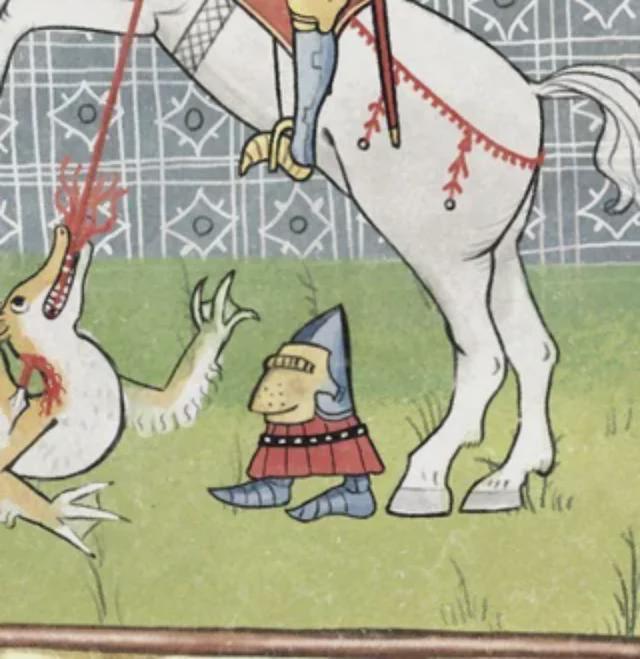
Then the internet arrived. Suddenly, screenshots of medieval marginalia flooded Reddit and Twitter: knights fighting snails, rabbits executing humans, nuns picking phallic flowers, and endless, baffling hybrids. One recurring question: what exactly are these little guys doing down there, and did they mean something deeper than a bored scribe’s joke?
Medieval marginalia are the strange drawings, jokes, and creatures that scribes and illuminators added to the edges of manuscripts. They can be serious, obscene, or just weird. Historians usually see them as a mix of humor, moral commentary, and visual play, not as secret codes.
But what if that assumption is wrong, or at least incomplete? What if those creatures were used in more systematic, hidden ways? Here are three grounded what‑if scenarios that stay within medieval economic, political, and religious realities, then a look at which version of the “little guy” is actually most plausible.
Were marginal creatures a hidden safety valve for censorship?
Picture a scriptorium in Paris around 1300. Outside, preachers thunder against heresy and royal officials watch for sedition. Inside, a scribe copies a respectable sermon by a Dominican theologian. The text is safe. The margins are not.
He sketches a man with a donkey’s head preaching to a crowd. The donkey’s ears are long, exaggerated. The crowd looks bored. To a casual viewer, it is just another animal joke. To anyone who has sat through endless sermons, the meaning is obvious: some preachers are asses.
We know medieval authorities cared deeply about controlling words. The University of Paris condemned certain theological propositions in 1277. The Inquisition hunted heretical texts. Kings and bishops issued bans on specific books. Yet visual satire was harder to police, especially when it lived in the margins of otherwise orthodox works.
So what if marginalia functioned as a semi‑safe outlet for criticism that could not be written plainly in Latin prose?
There is some real support for this. Scholars have already linked marginal images to topical anxieties. Snail‑knights, for example, may mock cowardice or refer to Lombard moneylenders, who were stereotyped as slow and slimy. Monkeys dressed as clerics often parody churchmen. Hybrid beasts attacking monks show up in books owned by lay patrons who were not always thrilled with clerical power.
In a world where criticizing a bishop in writing could get you hauled before an ecclesiastical court, a donkey‑headed preacher in the corner of a page is safer. It is deniable. “It is just a beast, my lord. A common allegory of sin.” The same goes for obscene marginalia that mock sexual hypocrisy among clergy. Everyone knew priests broke celibacy rules. No one wanted that written in Latin in the main text. A rabbit with a sword chasing a frightened hunter gets the point across without a single dangerous sentence.
Economics helped this along. Illuminated manuscripts were expensive. A wealthy patron paying for gold leaf and lapis lazuli often wanted entertainment as well as edification. If a book was made for a lay noble who resented taxes or tithes, an artist could slip in visual digs at officials or friars. The patron might even request it. The Church did not have the manpower to inspect every image in every private book, especially when the main text was orthodox.
So in this scenario, the “little guy down here” is a pressure valve. He lets scribes, artists, and patrons vent about power, sex, and money without writing anything indictable in Latin. The joke is visible but deniable, which keeps criticism alive in a censored culture.
So what? If marginalia worked as a safety valve, then those weird creatures were part of how medieval people managed dissent and frustration without open rebellion, shaping the emotional climate inside a tightly controlled religious world.
Could marginalia have been a teaching code for insiders?
Now shift the scene to a monastic school in England, maybe around 1250. A young monk stares at a page of Gregory the Great’s Moralia in Job, dense with allegory. His teacher taps the margin, where a fox in a cowl steals a goose from a farmyard.
“Remember,” the teacher says, “the fox is the false teacher. The goose is the simple soul.”
We know medieval education leaned heavily on visual memory aids. The “memory palace” technique, where you imagine images in a building, was taught by figures like Thomas Aquinas. Bestiaries, which explained animals as moral symbols, were common. A lion might mean Christ, a pelican self‑sacrifice, a fox deception.
So what if marginal creatures were not just jokes, but part of a semi‑standardized visual code used to teach and recall ideas?
This would not be a spy code in the modern sense. It would be more like a shared symbolic vocabulary. A student trained in one monastery could see a fox in a margin and instantly recall sermons about false preachers. A knight fighting a snail might recall a homily about the proud being humbled. A man literally weighed down by a sack of coins in the margin of a legal charter could remind a reader of the sin of avarice.
There is some evidence that marginalia clustered around thematically linked passages. Moralizing Bibles, like the Bible moralisée made in 13th‑century France, use paired images and text to drive home lessons. Later, in the 15th century, blockbooks like the Ars moriendi used images to teach laypeople how to die a good death. Visual pedagogy was not fringe. It was mainstream.
Economics again matter. Books were rare and expensive, but they were used intensively. A single volume might serve as a teaching tool for generations. Marginal images that helped students remember complex theology made the investment more valuable. In a largely illiterate society, even semi‑literate readers could “read” the margins better than the Latin core.
This scenario also fits with the fact that many marginal figures repeat across manuscripts: the same animals, the same hybrid forms, the same visual gags. Some of that is artistic fashion. Some may be shared teaching shorthand. The code would not be secret in the sense of “hidden from all,” but it would be legible mainly to those trained in that symbolic world.
So what? If marginalia worked as a teaching code, then those little creatures were part of how complex theology and moral ideas were transmitted to people who could not, or would not, parse dense Latin prose, shaping how medieval Europeans learned to think about sin, virtue, and authority.
Were the margins a quiet record of social anxiety?
One more scene. A lay artist in Bruges around 1470 is decorating a Book of Hours for a wealthy merchant’s wife. The text is standard: prayers to the Virgin, the Hours of the Cross, the Office of the Dead. In the margins, he paints a woman beating a man with a distaff while a crowd of animals watches.
It is funny. It is also about fear.
From the 13th century on, Europe saw major social shifts. Towns grew. Merchant wealth challenged noble privilege. The Black Death in the 14th century killed a large share of the population, which shook labor relations and family structures. The Church faced criticism from reformers. Gender roles were policed harder as women gained some economic agency in towns and guilds.
Art responds to that kind of stress. Marginalia often flip hierarchies: rabbits hunt humans, women beat men, laypeople mock clergy, monsters invade sacred space. These images can be read as jokes, but also as fantasies and fears. What if the world turned upside down? What if servants ruled masters, wives ruled husbands, sinners ruled priests?
So what if the margins were a running visual commentary on social anxiety, a place where people played out forbidden scenarios?
We see related themes in other late medieval art. The “world turned upside down” appears in carnival traditions, where peasants dressed as lords and mocked authority for a day. The Feast of Fools let lower clergy parody their superiors. In literature, works like the Roman de Renart use animal fables to poke at nobility and clergy.
Marginalia fit this pattern. They are carnival on parchment. A priest might own a Book of Hours where, during the Office of the Dead, a skeleton chases a fat monk in the margin. A noble might pray over a page where a peasant rides a lord like a horse. The text tells you the world is ordered and stable. The margins whisper that everyone knows it is not.
Economically, this kind of humor sold. Patrons wanted books that were not just pious but entertaining. Artists competed in visual inventiveness. The more outrageous the marginal joke, the more memorable the book. That fed a market for images that played with taboo topics: sex, death, power, gender.
So what? If marginalia tracked social anxiety, then those little figures are some of our best evidence for how ordinary fears about class, gender, and authority seeped into private devotion and reading, shaping how people processed a rapidly changing world.
So which what‑if is most plausible?
Back to the original Reddit‑style question: “What exactly is this little guy down here?” The honest historical answer is usually: a mix of joke, symbol, and visual flair. But if we weigh the three scenarios, some are more grounded than others.
The “secret code against censorship” idea is attractive, especially online. People like the thought of rebellious scribes hiding messages under the Church’s nose. There is some truth here. Satirical and obscene marginalia do poke at authority. Yet we lack clear proof of a coordinated, conspiratorial code. There are no surviving manuals that say “draw a donkey‑headed preacher if you want to insult Father Bernard.” The risk of real heresy was high enough that most scribes stayed within safe allegorical bounds.
The teaching code scenario has stronger support. We know medieval educators used animals and images as moral symbols. We know bestiaries and moralized Bibles circulated widely. We can trace some symbols across regions and decades. A fox in a cowl is not random. A snail facing a knight is not pure nonsense. They plug into a shared mental library of meanings, even if not every viewer read them the same way.
The social anxiety reading is also well grounded. It fits with carnival culture, with the “world turned upside down” theme, and with the timing of many of the wildest marginal images in the later Middle Ages. It also explains why so many marginal scenes are about power reversals and taboo behavior. Those are exactly the things people joke about when they are nervous.
So the most plausible blend is this: medieval marginalia were not a single secret code, but a flexible visual language. Artists drew on shared symbols, moral lessons, and social jokes. Sometimes they used that language to teach. Sometimes to vent about authority. Sometimes to play with fears about a changing society. The same little creature could carry all three functions at once, depending on who was looking.
That has a quiet but real consequence for how we read the Middle Ages. If we treat the margins as serious evidence, not just comic relief, we get a more complicated picture of medieval minds. These were not people crushed into silent obedience by Latin text. They were readers who could pray over a solemn psalm while smirking at a rude rabbit in the corner.
So what? Taking marginalia seriously changes the story of medieval culture from one of pure solemnity to one of tension, humor, and coded commentary, which brings us closer to how people actually lived with their books and their beliefs.
Frequently Asked Questions
What are medieval marginalia and why are they so weird?
Medieval marginalia are the drawings and doodles in the margins of manuscripts, often showing animals, hybrids, or obscene jokes. They are weird because artists mixed religious themes with humor, satire, and fantasy, using the margins as a freer space than the main text.
Did medieval scribes hide secret messages in manuscript margins?
There is no strong evidence for a coordinated secret code, but marginal images sometimes carried veiled criticism of clergy or social norms. They were deniable jokes and symbols rather than a strict spy code, which let artists and patrons express risky ideas more safely.
Were marginal creatures used to teach people in the Middle Ages?
Yes, in many cases. Medieval educators used animal symbolism and images as memory aids. Creatures like foxes, snails, and monkeys in the margins often echoed moral lessons from sermons and bestiaries, helping readers remember ideas without long explanations in Latin.
Why do so many medieval marginalia show the world upside down?
Scenes of rabbits hunting humans or women beating men reflect a wider late medieval fascination with role reversal. They echo carnival traditions and social anxiety about changing power, gender, and class relations. The margins were a safe place to joke about the world turning upside down.