Thunder cracked over the Saxon road as a young law student threw himself to the ground. “Help me, St. Anne, I will become a monk!” Martin Luther kept that vow in 1505. Ten years later he was nailing 95 theses to a church door and tearing Western Christendom in half.
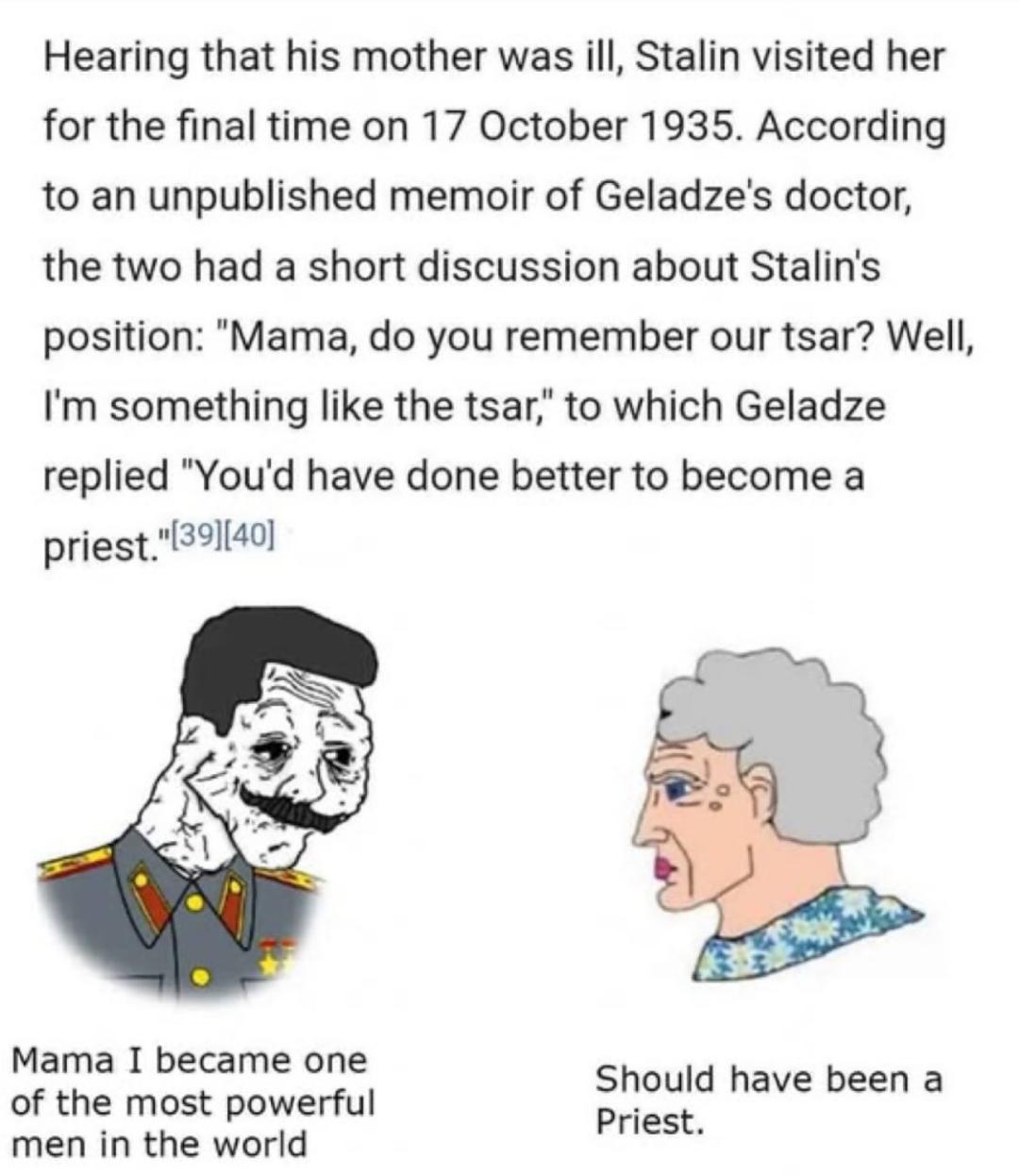
The meme joke is simple: “Tbh he should’ve become a priest.” The history is not. Luther did become a priest. He just refused to stay a quiet one. The real what-if is sharper: what if Luther had remained a loyal, obedient priest and never sparked the Protestant Reformation?
The Protestant Reformation was a 16th‑century religious movement that broke Western Christianity into Catholic and Protestant branches. It began in 1517 when Martin Luther challenged the sale of indulgences and papal authority. Without Luther’s rebellion, the timing, shape, and violence of Europe’s religious split would have been very different.
To answer the meme seriously, we have to ground the fantasy in real constraints: German politics, church finances, printing presses, and other reformers waiting in the wings. Below are three plausible worlds where Luther stays inside the system, and one hard look at which is most likely.
Why Luther rebelled in the first place
Start with the man before you rewrite his choices.
Martin Luther was born in 1483 in Eisleben, in what is now Germany. His father wanted him to be a lawyer, a solid path into the rising middle class of mining entrepreneurs. The thunderstorm vow in 1505 sent him into the Augustinian monastery in Erfurt instead.
He was not a casual monk. Luther was obsessive. He fasted, confessed constantly, and drove his confessors mad with anxiety over the state of his soul. When he was ordained a priest and later sent to teach at the new University of Wittenberg, he brought that intensity with him.
The trigger came in 1517. A Dominican friar, Johann Tetzel, was selling indulgences near Saxony to raise money for St. Peter’s Basilica and to pay off debts tied to Archbishop Albrecht of Mainz. Luther saw poor parishioners spending money they did not have on promises of time off purgatory. He doubted the theology and hated the marketing.
On 31 October 1517 he sent his 95 Theses to Albrecht and, according to later tradition, posted them on the Wittenberg church door. They were written in Latin, intended for academic debate. Within weeks printers had translated and spread them across German lands.
The deeper break came later. By 1520 Luther was denying papal supremacy and questioning the sacramental system. By 1521 he was excommunicated and declared an outlaw at the Diet of Worms. He survived only because Frederick the Wise of Saxony hid him at Wartburg Castle.
So what changed history was not that Luther became a priest, but that he refused to accept Rome’s authority when challenged. Any counterfactual has to ask: could that personality, in that system, have stayed loyal? The answer shapes everything that follows.
So what? Understanding why Luther actually rebelled sets the boundaries for how far we can plausibly bend his path without breaking the man or the era.
Scenario 1: Luther as a loyal Catholic reformer
In this world, Luther still enters the monastery, still becomes a priest, still obsesses over sin. He still studies Paul’s letters and reaches his famous insight about justification by faith. The difference comes in 1518–1520, when Rome reacts.
Historically, the papacy treated Luther as a threat to be crushed. The 1518 Augsburg hearing, the 1519 Leipzig Debate, and the 1520 bull Exsurge Domine all pushed him toward open defiance. Now imagine a slightly different script.
Picture a Rome that has learned from earlier reformers like Jan Hus and Savonarola. Instead of sending Cardinal Cajetan to browbeat Luther in Augsburg, the Curia sends a skilled theologian who speaks German and listens. Luther is told: your concerns about indulgence abuses are valid. The pope quietly reins in Tetzel and tightens rules on preaching and fundraising.
Luther is given a role: stay in Wittenberg, keep teaching, and help draft a reform of preaching and pastoral care. His writings are vetted, some are censored, but he is not excommunicated. His core idea, that salvation is by God’s grace received through faith, is folded into Catholic debates without being allowed to explode papal authority.
This is not as wild as it sounds. The Catholic Church did later adopt some of Luther’s complaints. The Council of Trent (1545–1563) condemned the worst indulgence abuses and pushed for better training of priests. In this scenario, that process starts earlier and with Luther inside the tent.
There are limits. Rome in 1520 was not inclined to give up on papal supremacy or the sacramental system. So Luther’s more radical conclusions would either be softened by him or quietly buried by his superiors. He becomes one voice in a long Catholic reform tradition, closer to Erasmus than to a Protestant founder.
What changes? The Reformation still happens, but slower and more fragmented. Humanist critics like Erasmus and reform-minded bishops push for change. Some German princes still resent Rome’s taxes and legal reach. But without a single, excommunicated firebrand to rally around, there is no clean Lutheran camp.
Religious wars might be fewer and later. The Peasants’ War of 1524–1525, which partly fed off Reformation rhetoric, might be smaller or framed more as a social revolt than a religious one. The hard Protestant/Catholic line across Germany might blur into a patchwork of local Catholic reforms instead.
So what? Luther as a loyal priest keeps the pressure for reform inside the Catholic Church, which likely delays or softens the Protestant break and reduces the early shock waves of religious violence.
Scenario 2: No Luther, but a different Reformation anyway
Another path is simpler: Luther never becomes a monk at all. In the thunderstorm he panics, then gets up and goes back to law school. Or his father talks him out of the monastery. The meme wish is granted. He is a lawyer, not a priest.
Does that save Western unity? Probably not.
By 1500, the late medieval church was under strain. Popes were entangled in Italian wars. Many bishops were absentee nobles. Parish priests were often poorly educated. Indulgence campaigns were frequent, because Rome and local rulers needed cash. At the same time, literacy was rising and printing presses were everywhere.
There were already reform currents. In Bohemia, Hussites had fought Rome a century earlier. In Switzerland, Ulrich Zwingli was preaching against indulgences by 1519, independently of Luther. In France and the Low Countries, humanists and Bible scholars were quietly questioning abuses.
Without Luther, someone else likely becomes the face of revolt, but with different timing and theology.
One plausible candidate is Zwingli. He criticized indulgences, questioned fasting rules, and pushed for a return to scripture. Without Luther’s early explosion, Zwingli’s reforms in Zurich might become the first major break with Rome. His version of reform was more radical on the Eucharist and on church images. That could mean an even sharper cultural break, with more icon-smashing and less continuity in worship.
Another path runs through the German princes. Many resented money flowing to Rome and wanted more control over church lands. Even without a Luther, a local theologian or bishop could give them a doctrinal excuse to seize monasteries and bishoprics. Economic and political incentives were strong. The Holy Roman Empire was fragmented, and the emperor could not easily enforce religious uniformity.
In this world, the Reformation is more regional and less coherent. Instead of a relatively unified “Lutheran” theology spreading across northern Germany and Scandinavia, you get a patchwork of local reforms. Some areas might follow a Swiss-style model. Others might keep Catholic doctrine but nationalize church property.
The English Reformation could still happen, but with a different tone. Henry VIII wanted a divorce and more control over the English church. Without Luther’s writings to lean on, his break might look more like a political schism than a doctrinal one, at least at first.
So what? Removing Luther does not remove the pressures for reform. It mostly removes the early, relatively coherent Lutheran model and replaces it with a messier, more regional set of revolts against Rome.
Scenario 3: Luther the priest sparks reform, but Rome crushes it
There is a darker option. Luther still becomes a monk and priest. He still writes the 95 Theses. He still questions indulgences. But instead of surviving to build a movement, he is silenced quickly and brutally.
Jan Hus offers the template. Hus, a Czech reformer, was burned at the stake in 1415 after criticizing indulgences and papal authority. His death triggered decades of Hussite wars in Bohemia. The memory of Hus haunted Luther’s time. Luther himself knew the risk.
Imagine that in 1518–1519, Frederick the Wise decides Luther is not worth the trouble. He hands him over to imperial or papal authorities. Or imagine Charles V, the young Holy Roman Emperor, is more decisive at the Diet of Worms in 1521 and has Luther arrested on the spot, before he can escape.
Luther is tried, condemned, and executed as a heretic. His writings are banned. Printers who spread them are fined or jailed. University professors are warned off his ideas. Rome and the emperor make an example of him.
Short term, this works. Fear chills open dissent. Some German princes, who historically used Lutheranism to justify seizing church lands, think twice. The 1520s look quieter. There is no official Lutheran church in Saxony, no quick spread to Scandinavia.
But repression has side effects. Underground networks circulate banned texts. Luther’s death gives him martyr status, especially among those already angry at Rome. In places like Bohemia, where Hussite memory is strong, his execution feeds a narrative of German and Czech grievances against foreign clerics and distant popes.
When religious conflict does erupt, it may be more violent and less controlled. Without a living Luther to condemn peasant violence, the Peasants’ War or similar uprisings might be more radical. Without established Lutheran state churches to negotiate with, imperial authorities face scattered, secretive groups that are harder to co-opt.
The Council of Trent might still be called, but under even more defensive conditions. Catholic reform becomes more about stamping out heresy than about cleaning up abuses. The Counter-Reformation is harsher, with less room for compromise.
So what? Killing Luther early might delay open Protestant churches, but it risks turning reform into a martyr-driven underground movement that erupts later in more chaotic and violent ways.
Which scenario is most plausible, and what really changes?
So which world fits the real 16th century best?
The least likely is the fantasy that a quiet Luther means no Reformation. Economic, political, and religious pressures were already pushing Europe toward a break. Indulgence campaigns, papal politics, rising literacy, and local grievances were all in place before 1517. The printing press made it hard to contain new ideas once they found a voice.
Between the three grounded scenarios, the most plausible is some version of Scenario 2: no Luther, but a different Reformation anyway. History is full of near-miss reformers. Hus in Bohemia, Wycliffe in England, Savonarola in Florence. Each shook the system but did not shatter it across Europe. By 1500, the pressures were stronger and the technology for spreading dissent was better.
Scenario 1, Luther as a loyal Catholic reformer, runs hardest into personality. Everything we know about Luther suggests he was not built to compromise on what he saw as core gospel truths. He could be tactically flexible, but when pressed on authority and salvation he dug in. For him to stay inside the Catholic system, Rome would have had to bend more than it was ready to in 1520.
Scenario 3, Luther crushed early, is plausible in terms of power politics. Charles V and the papacy had the muscle to kill one monk. What saved Luther historically was a mix of Frederick the Wise’s protection, imperial politics, and the speed of the printing press. Change any of those, and Luther dies. But killing him does not erase the grievances he voiced. It just changes how and when they explode.
So what actually changes across these worlds is not “Reformation or no Reformation,” but timing, geography, and bloodshed. With a loyal Luther, reform might be slower and more Catholic. With no Luther, it might be more regional and doctrinally scattered. With a martyred Luther, it might be later and nastier.
The meme line, “he should’ve become a priest,” hides a harder truth: he did, and the system he entered left very little room for a conscience like his to stay quiet. The question is less about one man’s career choice and more about a church and a continent that were already primed for fracture.
So what? Asking what would happen if Luther had “just been a priest” forces us to see the Reformation not as a one-man accident, but as a collision between a volatile personality and a Europe already stacked with dry kindling.
Frequently Asked Questions
Did Martin Luther actually become a priest?
Yes. Martin Luther became an Augustinian monk in 1505 and was ordained a Catholic priest in 1507. He taught theology at the University of Wittenberg before his conflict with Rome. The Reformation began when a Catholic priest, not an outsider, challenged church practices.
Would the Protestant Reformation have happened without Martin Luther?
Most historians think some kind of major reform or break with Rome was likely even without Luther. Longstanding abuses, financial pressures, political tensions in the Holy Roman Empire, and the spread of printing all pushed in that direction. Luther shaped the timing and theology of the Reformation, but he did not create the underlying problems.
Could the Catholic Church have kept Luther as an internal reformer?
In theory, yes. If Rome had moved faster to curb indulgence abuses and had been more willing to tolerate debate on some doctrines, Luther might have stayed within the church. In practice, his rejection of papal authority and his views on justification clashed with core Catholic positions, making a long-term compromise unlikely.
What if Martin Luther had been executed early like Jan Hus?
If Luther had been executed around 1520–1521, it might have delayed the open formation of Lutheran churches. Fear would have discouraged some princes and theologians. But his death could have turned him into a martyr, driven his ideas underground, and led to more chaotic and violent uprisings later, similar to the Hussite wars in Bohemia.