Two small hands, dipped in ink, drag a reed pen across papyrus. The words are formal, almost legalistic, but the voice behind them is very young.
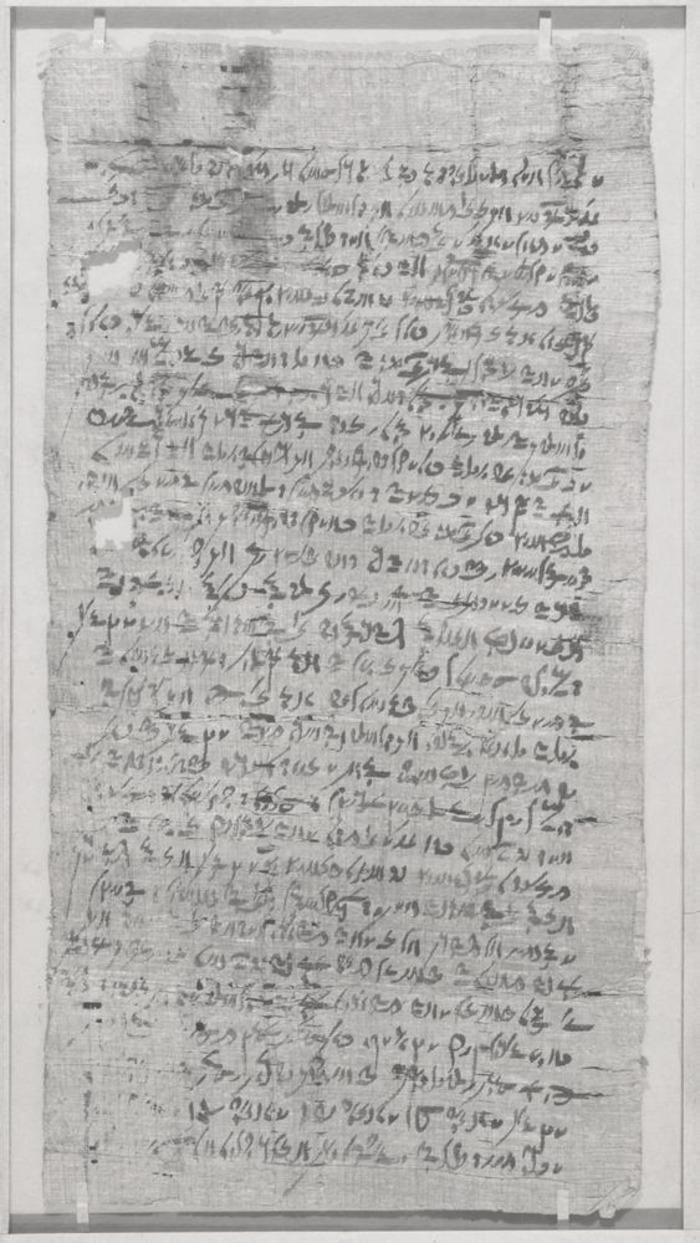
“We, Psenthotes and Naneferho…”
It is the 1st century BC, somewhere in Ptolemaic Egypt. Their mother is dead. Their father, they say, beats them and steals their property. So the children do the one thing they can. They write a petition to the gods Horus and Thoth, asking the divine bureaucracy to intervene where the human one has failed.
The real papyrus is heartbreaking because it is ordinary. Petitions like this sat in temple archives and legal offices across Egypt. They show that even children knew the system, and knew that in theory, law and religion could restrain a bad parent.
So what if that system had actually changed because of them? What if this one scrap of papyrus had helped push Egypt toward something like a legal concept of child protection?
This is a counterfactual, so we are leaving the record and stepping into careful speculation. But we can still ground it in what we know about Ptolemaic Egypt: its courts, its temples, its politics, and its money. Here are three ways that petition might have mattered, and one judgment on which is most plausible.
Child petitions in Ptolemaic Egypt were formal legal complaints written on papyrus and addressed to officials or gods, asking for protection or redress. They show that even minors could participate in the legal culture of the time.
Why were two Egyptian children writing to Horus and Thoth?
First, the real context. Psenthotes and Naneferho were not unique. Dozens of surviving papyri from Ptolemaic and Roman Egypt show women, soldiers, farmers, and sometimes children, petitioning officials or gods about abuse, theft, or unfair taxes.
In this case, they appeal to Horus and Thoth. That choice is not random. Horus, the avenging son, is the divine child who fought to avenge his murdered father Osiris and defeat the usurper Seth. Thoth is the god of writing and law, the divine scribe who records judgments. If you are two children claiming that a father has become a kind of domestic tyrant, these are exactly the gods you would pick.
Egyptian religion and law were deeply entangled. Temples were not just cult centers. They were economic hubs, landowners, and, in many regions, local legal authorities. Priests wrote contracts, witnessed sales, and stored records. A petition to a god was often also a petition to the temple staff who managed his cult and archives.
By the 1st century BC, Egypt was ruled by the Ptolemaic dynasty, a Greek-speaking royal house that had grafted itself onto older Egyptian institutions. Greek courts and officials existed alongside Egyptian ones. Greek law and Egyptian law ran in parallel, sometimes overlapping, sometimes colliding. Children like Psenthotes and Naneferho were navigating that hybrid world.
So when they wrote to Horus and Thoth, they were doing something very practical. They were trying to trigger a process: get the priests to notice, get the local authorities involved, and force their father to answer accusations in a setting where divine justice and human law met.
The fact that two minors could use that system at all shows how far legal literacy and religious bureaucracy had spread in late pharaonic society, so any change to how their petition was handled could ripple through that whole network.
Scenario 1: The petition sparks a temple-led rule on abusive fathers
Imagine that this particular papyrus did not just get filed away. Imagine it landed on the desk of a senior priest in a major temple, perhaps at Edfu or Dendera, where Horus and Thoth were both important.
Priests in Ptolemaic Egypt were not powerless. Temples owned land, controlled workers, and had their own internal regulations. They produced written law codes for their personnel, mixing moral instruction with practical rules. They could not rewrite royal decrees, but they could shape how law was applied in their orbit.
In this scenario, the priesthood treats the petition as a public scandal. A father, abusing his children after the death of their mother, offends not just social norms but the mythic model of the family. Horus himself is the archetype of the son who defends family order. To ignore the complaint would make the temple look hypocritical.
So the priests investigate. They summon the father. They hear witnesses. Maybe they find that the children’s claims are mostly true: beatings, misappropriation of property left by the mother, perhaps an attempt to marry off a daughter against her interests to gain a dowry.
Temples already handled disputes about inheritance and property. What they had less of, at least in surviving law, is explicit language about physical abuse of children. So the priests draft a new internal rule, framed as a divine instruction from Horus and Thoth: fathers who beat their children severely, or seize property that is legally theirs, can be stripped of guardianship and replaced by another male relative or a temple-appointed guardian.
They might couch it in familiar Egyptian terms. The abusive father has violated ma’at, the ideal of order and justice. The temple, as guardian of ma’at, steps in. The new rule is read aloud at festivals, copied into temple manuals, and cited in later disputes.
This would not create a modern child protection system. It would be narrow, tied to property and to the honor of the gods. But it would do two things. It would give priests a clearer legal hook to intervene in family violence, and it would tell the community that children could be recognized as victims in their own right, not just as extensions of their father.
If that happened in several major temples, the practice could spread. Local scribes and notaries might start adding clauses to contracts about guardianship, specifying what happens if a father is found to be abusive. Over a generation or two, this could harden into a recognizable rule: fatherhood is powerful, but not absolute.
If Psenthotes and Naneferho’s case had pushed temples to formalize rules about abusive fathers, it could have shifted everyday expectations of what a father could legally do, so the power of paternal authority would have gained a new, if limited, boundary.
Scenario 2: The case reaches the Ptolemaic bureaucracy and shapes guardianship law
Now widen the lens. The Ptolemies were obsessed with paperwork. Their kingdom ran on tax registers, land surveys, and archives. Greek officials in cities like Alexandria and Memphis handled a flood of petitions every year, many of which survive on papyrus.
There are documented cases where local disputes, if they touched on sensitive issues like tax farming or military settlers, climbed the chain of command and triggered new regulations. The crown wanted order and revenue. Anything that threatened either could get attention.
In this second scenario, the children’s petition, perhaps translated or summarized by a bilingual scribe, ends up in the Greek administrative system. Maybe the father is not just a random villager. Maybe he is a minor tax collector, a temple employee, or someone with obligations to the state. His abuse of his children spills over into a property dispute that affects tax assessments on inherited land.
Under both Egyptian and Greek law, orphans and minors had guardians. Guardianship was about property as much as care. If a father died, or was absent, someone had to manage the child’s share of land or dowry. Abuse that involved seizing a child’s property was therefore a legal and fiscal problem, not just a moral one.
Suppose the investigation shows a pattern. Not just one father, but several, are exploiting the gray area between paternal authority and guardianship. They beat children into surrendering claims, or they misreport inheritance to tax officials. That costs the state money and undermines legal predictability.
The Ptolemaic administration had a tool for this: circular letters and edicts sent to local officials. A royal official could issue instructions clarifying how guardianship should work. For example: if credible complaints of severe abuse or fraudulent seizure of a minor’s property are made, local officials must hold a hearing, and if the charges are confirmed, they must appoint a new guardian from among the relatives or trusted local notables.
This would not be motivated by compassion alone. It would be about stabilizing property rights and tax flows. But the effect would be real. It would give children, or adults speaking for them, a legal route to challenge an abusive father in the name of economic order.
Over time, such a rule could be cited in Greek and Egyptian contracts. Greek-style wills might include backup guardians if the father is removed. Egyptian marriage contracts might add lines about the treatment of children and the handling of their inheritance.
Child protection in this scenario is a side effect of bureaucratic self-interest. The state wants clean records and reliable taxpayers, so it quietly creates a mechanism that lets abused minors escape the worst fathers.
If Psenthotes and Naneferho’s complaint had fed into a guardianship reform, it could have made the Ptolemaic state a reluctant ally of abused children, so the need to protect tax revenue might have created an early, limited form of legal child protection.
Scenario 3: The petition becomes a moral story that shapes later religious attitudes
Not every text changes law. Some change stories.
Egyptian temples loved narrative. Myths about Horus and Seth, tales of wise scribes, and moralizing stories about good and bad officials were copied for centuries. They taught scribes how to write and priests how to think about justice.
In this third scenario, the petition of Psenthotes and Naneferho is preserved in a temple archive. A generation or two later, a priest or scribe comes across it while compiling teaching texts. The raw petition is too specific, too mundane, but the emotional core is powerful: children, abandoned and abused, crying out to Horus and Thoth.
The scribe turns it into a didactic tale. Perhaps it becomes a story told during festivals, or a narrative used in scribal schools. A cruel father, who beats his children and steals their inheritance, is brought before the gods. Horus, as the divine son, speaks for the children. Thoth records the judgment. The father is punished, the children’s property restored, and the community warned.
We know that late Egyptian and early Christian literature in Egypt loved this kind of moral story. Later Coptic texts, written in the same region centuries on, often feature abused widows, orphans, and harsh judges taught a lesson by divine intervention. The cultural soil was ready.
If this petition helped seed such a story, its influence would not be legal but cultural. Priests preaching about family duty might refer to “the case of the cruel father.” Parents might hear it and think twice about how far they could go. Children might whisper it to each other as proof that the gods do, at least sometimes, take their side.
Fast forward a few centuries, into Roman Egypt and then Christian Egypt. Stories about divine concern for orphans and abused children fit neatly into Christian preaching. The idea that God hears the cry of the oppressed child is a natural bridge from Horus and Thoth to Christ and the saints.
In that sense, the papyrus could be a tiny thread in a longer shift: from seeing children as primarily economic assets and heirs, to seeing them as moral subjects whose suffering matters in religious narratives.
If Psenthotes and Naneferho’s plea had been woven into temple teaching or later Christian storytelling, it could have helped normalize the idea that divine justice includes concern for abused children, so religious culture would slowly push against the harshest forms of paternal power.
Which scenario is most plausible, and why does it matter?
So which of these counterfactuals fits best with what we know about late Egyptian society?
The least plausible is probably the first, in its strongest form. Temples did issue internal rules, but surviving material suggests they were more focused on ritual purity, priestly conduct, and economic management than on intervening deeply in private family life. Priests could and did mediate disputes, yet there is little sign that one case would trigger a formal, widely broadcast rule on abusive fathers.
The second scenario, bureaucratic guardianship reform, is more grounded. We have real examples from Ptolemaic and Roman Egypt where patterns of abuse or exploitation led to clarifications in guardianship and inheritance practice. The state cared about minors’ property because that property was taxable. There were already mechanisms to remove or bypass guardians who mismanaged estates. Extending that logic to fathers in extreme cases would not be a huge conceptual leap.
Still, the idea that one petition from two children would directly cause a new royal edict is a stretch. More likely, their case would be one of many that, over time, nudged scribes and officials toward tighter rules.
The third scenario, the moral story, is the easiest to imagine in a soft way. We know that petitions and legal cases sometimes seeped into narrative tradition. We know that Egyptian and later Coptic literature fixated on themes of injustice, orphans, and divine judgment. A specific line from Psenthotes and Naneferho’s papyrus might never be traceable, but the type of story it tells fits very well with what later Egyptian religious culture valued.
If we had to rank them, the most plausible influence is diffuse: their petition, along with many similar ones, reinforces a long-term trend. Legal culture in Egypt, under Greek and then Roman rule, slowly refines guardianship and inheritance law to give minors more protection in property matters. Religious culture, in parallel, keeps telling stories in which gods and later saints care about abused children and orphans.
The papyrus we see on Reddit is a single surviving example of that process. It did not revolutionize anything. But it is a window into the pressures that pushed Egyptian society, bit by bit, toward recognizing that children could appeal over the heads of their fathers, to gods, to priests, and to bureaucrats.
That is why this scrap of papyrus matters today. It complicates the easy story that “ancient people did not care about children.” They did, but within strict limits set by property, patriarchy, and divine order. The counterfactuals above are really questions about those limits. How far could a child push back? How much could law and religion bend before they broke the father’s authority?
We cannot know what happened to Psenthotes and Naneferho. We can say that their act of writing was itself a small rebellion. They used the tools of their world, ink and myth and bureaucracy, to say: our suffering counts. Whether or not the gods answered, the papyrus did. It survives, and it forces us to see ancient Egypt not as a static monument, but as a place where even children tried to negotiate with power.
In that sense, the most realistic “what if” is simple. What if their petition is not an exception, but a representative voice of thousands of children whose complaints did shape how scribes, priests, and officials thought about family, law, and justice? That is less dramatic than a single world-changing case, but it is far more human, and far more likely.
Child petitions in ancient Egypt did not create modern child rights, but they helped carve out small legal and moral spaces where abused minors could sometimes find allies against their own fathers.
Frequently Asked Questions
What is the papyrus of Psenthotes and Naneferho?
It is a 1st‑century BC Egyptian papyrus written in the names of two children, Psenthotes and Naneferho, petitioning the gods Horus and Thoth for help against their abusive father after their mother’s death. The text uses formal petition language, showing that even minors could participate in the legal-religious system of Ptolemaic Egypt.
Could children in ancient Egypt really file legal complaints?
Yes, though usually through scribes or adult helpers. Surviving papyri show that minors could be named as petitioners in complaints about inheritance, guardianship, and abuse. These petitions were often addressed to officials or to gods, via temples, and could trigger investigations or hearings, especially when property or tax revenue was involved.
Did ancient Egyptian law protect children from abusive parents?
There was no modern child protection system, and paternal authority was strong, but there were limits. Guardianship and inheritance rules allowed for the removal or bypassing of guardians who mismanaged a minor’s property, and extreme violence could be treated as a legal offense. Temples and local officials sometimes intervened when abuse affected property rights or public order.
How did petitions like this influence later Egyptian and Christian ideas?
Petitions about abused children and orphans fit into a broader Egyptian concern with ma’at, or justice, and with divine judgment. Over time, similar themes appear in later Coptic Christian texts from Egypt, where God and saints defend orphans and the oppressed. While we cannot trace a direct line from this specific papyrus, it reflects a narrative pattern that later religious literature in Egypt embraced.