Picture this: the floor ripples like water.
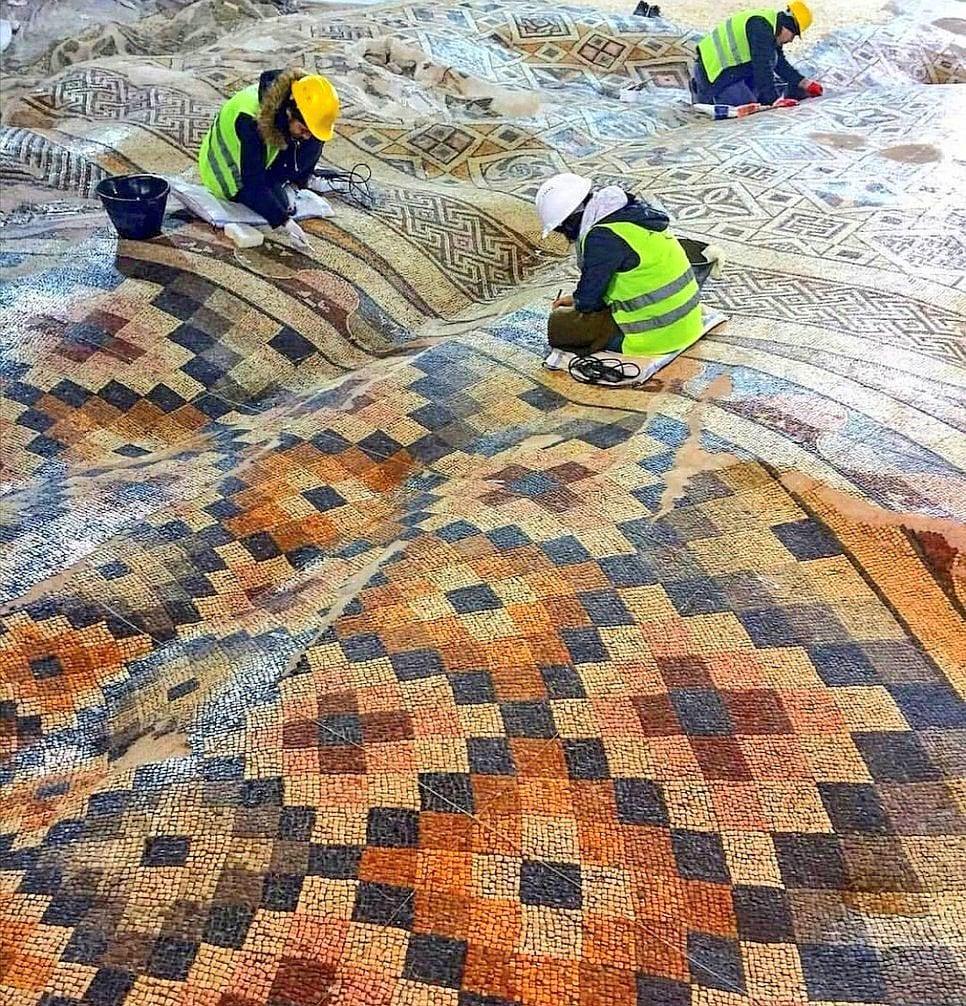
Not today, but about 1,700 years ago. An earthquake hits a Roman-era house in what is now southern Turkey. The ground shifts. Walls crack. Yet on the floor, a mosaic made of thousands of tiny stones flexes with the wave. The pattern bends, but the design holds. When archaeologists uncover it centuries later, they can literally see the frozen motion of the quake in the floor.
That viral image from Turkey is not just a cool Reddit post. It is a crash course in how Roman mosaics worked, what they were made to endure, and how much information is locked into those tiny cubes of stone and glass.
Roman mosaics were durable art set into floors and walls, made from small pieces called tesserae. They could survive earthquakes, fires, and centuries of trampling. They also recorded fashion, religion, jokes, and even building failures in a way few other sources did.
Here are five things Roman mosaics can do, starting with that earthquake wave, and why each one changed how we read the ancient world.
1. They Can Bend With Earthquakes Without Shattering
What it is: Roman floor mosaics were flexible systems, not rigid slabs. They were laid over multiple layers of mortar and rubble that could move slightly during ground shifts, so the tesserae pattern could warp without exploding into fragments.
The famous example that keeps circulating online comes from the ancient city of Antioch or its suburbs (modern Antakya region in Turkey and parts of Syria). Archaeologists working in the 20th century and again in the 21st uncovered mosaics where the geometric patterns do something odd: they bend in a smooth wave, as if someone pushed a hand under a rug.
One particularly striking panel shows a regular pattern of squares and diamonds that suddenly curves in a graceful arc. The tesserae are still tightly packed. The design is continuous. Yet the whole thing looks like a snapshot of a ripple passing through solid stone.
What happened is structural rather than mystical. A Roman mosaic floor was usually built in layers. At the bottom, there was often compacted earth or rubble. Above that came a rough concrete-like layer (statumen), then a finer layer (rudus), then an even finer mortar layer (nucleus). The tesserae were pressed into the top while it was still wet. If the ground shifted in a slow or plastic way, those layers could deform together. The result: a warped but intact picture.
Archaeologists and engineers use these warped mosaics as seismographs in stone. By mapping the direction and degree of the bend, they can infer how the building moved during past earthquakes. In some cases, they can match these deformations to known historical quakes recorded by late Roman or Byzantine writers.
So what? These earthquake-warped mosaics give physical evidence of ancient seismic events and show how Roman construction techniques allowed decorative floors to survive disasters that toppled walls.
2. They Turned Ordinary Houses Into History Books
What it is: Roman domestic mosaics were detailed visual records of daily life, fashion, food, and social status. They turned private homes into archives that archaeologists can still read.
Take the House of the Faun in Pompeii, buried by the eruption of Vesuvius in 79 CE. Its famous Alexander Mosaic, showing Alexander the Great fighting Darius III, gets most of the attention. But the house also had floor mosaics with fish, theatrical masks, and decorative patterns that told guests exactly what kind of household they had entered.
In another Pompeian house, the so-called House of the Triclinium, a mosaic shows a banquet scene with diners reclining on couches, servants bringing food, and musicians playing. The details are small but sharp: hairstyles, tableware, even the way the couches are arranged.
These are not random decorations. They are coded messages about identity. A floor with hunting scenes suggested a landowning, elite lifestyle. A mosaic showing theatrical masks hinted at cultural sophistication. Geometric black-and-white floors in baths and corridors were practical and stylish, a kind of Roman minimalism.
Because mosaics were expensive and permanent, they froze a moment in a family’s self-presentation. Unlike clothing or furniture, they were not easily swapped out. When archaeologists excavate a house with intact floors, they can reconstruct the social ambitions of the owners: what gods they favored, what myths they admired, whether they wanted to be seen as Greek, Roman, or local.
So what? Domestic mosaics turned private taste into durable evidence, which lets modern historians read social class, cultural identity, and everyday habits straight from ancient living rooms.
3. They Captured Local Myths, Gods, and Even Dark Humor
What it is: Roman mosaics were a major medium for storytelling. They preserved regional myths, religious beliefs, and jokes that written sources often skipped.
In the city of Zeugma on the Euphrates (modern Gaziantep province, Turkey), mosaics from the 2nd and 3rd centuries CE show Greek myths with a local twist. One of the most famous is the so-called “Gypsy Girl” mosaic, a fragmentary female face with intense eyes and tousled hair. She is probably part of a larger mythological scene, perhaps representing a personification or a minor figure, but she has become an icon in her own right.
Other Zeugma mosaics show the god Oceanus, sea nymphs, and river gods, which made sense for a city living off a major waterway. In North Africa, mosaics often feature local deities like Tanit or scenes of African wildlife, from leopards to exotic birds. In Britain, at places like Lullingstone Villa in Kent, mosaics blend Roman imagery with Christian symbols as the empire’s religion shifts in the 4th century.
Then there is the humor. At Pompeii’s House of the Tragic Poet, the famous “Cave Canem” mosaic shows a chained dog with the warning “Beware of the dog” written in Latin. It is both practical and a bit of a wink. In Antioch, some mosaics show skeletons at banquets with captions like “Know thyself” or “Enjoy life,” a darkly comic reminder of mortality.
Written sources from the Roman world are heavily tilted toward elite male authors. Mosaics widen the lens. They show what provincial elites in Syria, Tunisia, Britain, or Spain wanted on their floors, which is often not what Roman senators in Rome were writing about.
So what? Storytelling mosaics preserve regional religion, humor, and myth that written texts barely mention, giving a more varied and local view of Roman culture across the empire.
4. They Reveal How the Roman Economy and Trade Worked
What it is: The materials and styles of mosaics are hard evidence for trade routes, resource extraction, and the movement of skilled labor across the Roman Empire.
A mosaic is not just a picture. It is a map of where stone, glass, and craftsmen came from. Tesserae could be made from local limestone, imported marble, colored glass, or even recycled pottery. By analyzing the stone types and glass composition, archaeologists can trace supply chains.
For example, the famous North African mosaics from Roman Tunisia, especially around Carthage and El Jem, often use local limestone and marble, but also imported colored stones. Workshops in cities like Utica and Thysdrus developed recognizable styles: elongated figures, busy hunting scenes, and detailed plant motifs. When a similar style appears in Sicily or southern Italy, it suggests that craftsmen or pattern books traveled across the Mediterranean.
In the eastern provinces, like Antioch and Daphne, certain color palettes and border patterns recur. The presence of expensive purple porphyry or green serpentine in a floor in a provincial town tells you that someone had access to imperial quarries in Egypt or Greece, and the money to pay for it.
There are also mosaics that literally depict trade. At Ostia, the port of Rome, warehouse floors show ships, grain measures, and dolphins, advertising the business of the companies that used them. In North Africa, some mosaics show olive presses and agricultural scenes that match what we know from inscriptions about export crops.
By mapping where certain techniques and motifs appear, historians can see the spread of workshops and the movement of artisans. A villa in Britain with a mosaic in a style common in Gaul suggests a craftsman or team brought in from across the Channel. That is economic integration in stone.
So what? Mosaic materials and styles act like barcodes for ancient trade and labor, letting historians reconstruct how goods, money, and craftsmen moved through the Roman economy.
5. They Help Date Buildings, Quakes, and Even Cultural Shifts
What it is: Because mosaic styles changed over time, and because they sometimes record physical damage, archaeologists use them as dating tools for buildings, earthquakes, and religious change.
Art historians have built a rough timeline of mosaic fashions. In the late Republic and early Empire (1st century BCE to 1st century CE), black-and-white geometric floors were popular in Italy. By the 2nd and 3rd centuries CE, colorful figurative mosaics with mythological scenes spread through the provinces. In the 4th and 5th centuries, Christian symbols and more abstract designs become common.
So if you walk into a ruined villa in Syria and see a Dionysus drinking party in a very specific style of border and shading, an expert can usually say, “This is probably late 2nd or early 3rd century CE,” even without a written inscription. That helps date the building and any other finds in the same layer.
Back to the earthquake mosaics. When a floor pattern is warped, cracked, or repaired in a visible way, it can be matched to known disaster dates. Antioch, for example, suffered major earthquakes in 115 CE, 340 CE, and 526 CE, among others. If a mosaic was laid in a style dated to the early 2nd century and later shows a repair that cuts through the pattern, that repair might be linked to the 115 CE quake described by the historian Cassius Dio.
Religious change is written into floors too. In places like Lullingstone in Britain or the Great Palace of Constantinople, you can see layers: an older mosaic with pagan imagery, then a later Christian mosaic on top or nearby. That physical overlap shows how and when Christianity replaced older cults in a given region.
Sometimes mosaics even carry inscriptions naming the patron or the reigning emperor, which nails down the date more tightly. A floor in a church at Madaba in Jordan, for example, includes a map of the Holy Land with Greek inscriptions that mention contemporary place names, helping date the church to the 6th century.
So what? Mosaic styles, damage, and repairs are dating tools that help archaeologists pin down when buildings were used, when disasters hit, and how religious and cultural shifts unfolded on the ground.
The viral Roman mosaic from Turkey that “preserved the wave of an earthquake” is not a magic trick. It is the visible result of a building technique that let art ride out a disaster. That warped pattern is a frozen moment in a long conversation between ground, mortar, and stone.
Across the Roman world, mosaics did far more than decorate rich people’s floors. They recorded how houses were used, what people believed, how they joked, where their materials came from, and when their lives were shaken by quakes or new gods.
When archaeologists brush dirt off a mosaic today, they are not just revealing a pretty picture. They are opening a file: on trade routes, on local identity, on seismic history. Those tiny tesserae have held their data for nearly two thousand years. We are only just catching up to everything they can tell us.
Frequently Asked Questions
How did Roman mosaics survive earthquakes without breaking?
Roman mosaics were laid over multiple layers of mortar and rubble that could flex slightly during ground movement. Instead of acting like a rigid tile, the whole floor system could deform, so the tesserae pattern sometimes warped in a smooth wave without shattering.
What were Roman mosaics made of?
Roman mosaics were made from small pieces called tesserae, usually cut from stone, marble, terracotta, or colored glass. These were pressed into a wet mortar layer on top of several prepared layers of concrete-like material and compacted rubble.
Why did Romans put mosaics on their floors?
Romans used floor mosaics to decorate their homes, baths, and public buildings, but also to send messages about wealth, education, religion, and identity. Scenes of myths, hunting, trade, or Christian symbols told visitors who the owners were and what they valued.
How do archaeologists use Roman mosaics to study history?
Archaeologists study mosaic styles, materials, and damage patterns to date buildings, track trade routes, and identify past earthquakes. The imagery itself reveals local myths, religious practices, fashion, and daily life that written sources often ignore.