They look similar because a baby’s foot has not changed in 2,000 years. Chubby toes, flat arch, that awkward little splay. The Roman infant who stepped in wet clay at Vaison-la-Romaine left a mark that could pass for something from a 21st-century baby book.
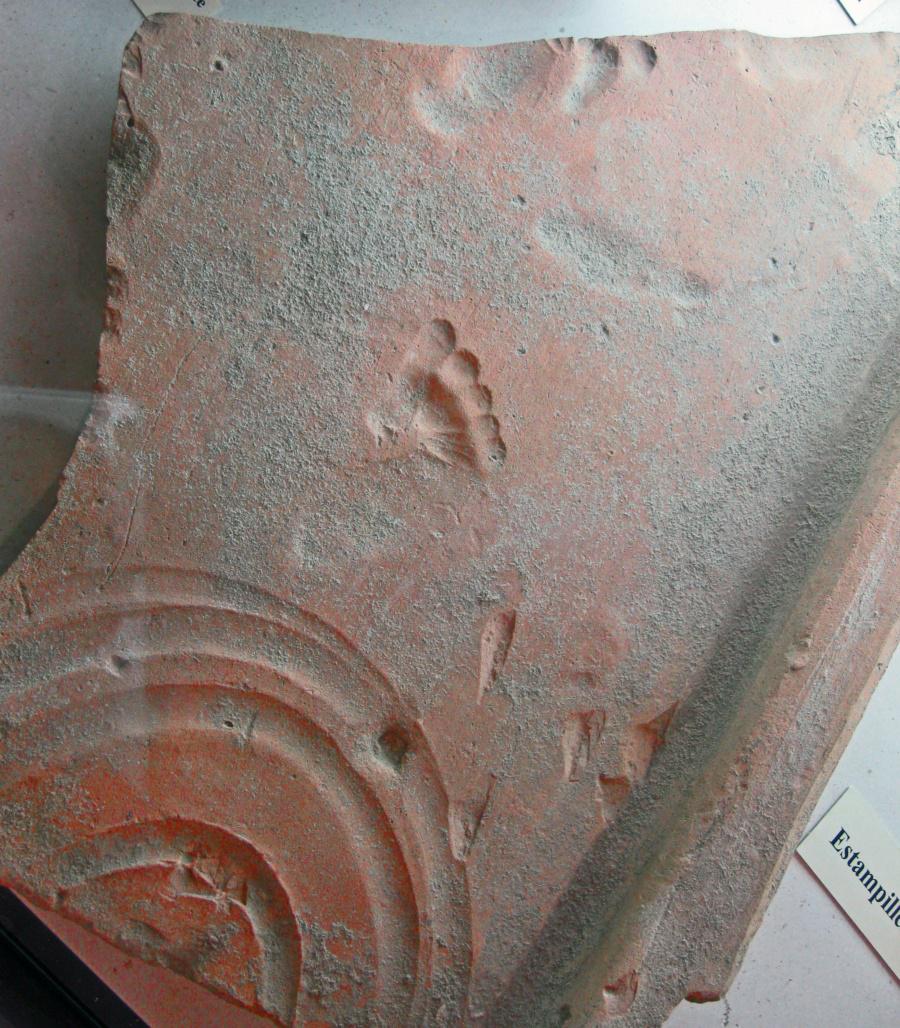
What has changed is what we do with those prints. The Roman footprint in red clay was an accident in a worksite. Today, we press tiny feet into ink pads and plaster on purpose, as keepsakes and medical records. The marks look alike, but the worlds that produced them could not be more different.
A Roman baby footprint in clay is an accidental time capsule of daily life. A modern baby footprint is a deliberate record of identity, memory, and sometimes health. Comparing them shows how humans have moved from chance traces to intentional documentation.
Origins: How a Roman baby footprint happened vs how we make them now
Start in southern Gaul, around the 1st or 2nd century CE. Vaison-la-Romaine, in today’s Provence, was then Vasio, a prosperous Roman town with baths, villas, and workshops. Somewhere in that town, a craftsman laid out wet clay tiles or bricks to dry.
At some point, a baby or very small child walked or was carried across the soft surface. One foot pressed down firmly enough to leave a clear impression. No one smoothed it out. The tile dried, was fired, and went into a wall, floor, or roof. The footprint survived because it became part of a building.
Archaeologists have found similar prints across the Roman world. Not just baby feet, but dog paws, adult sandals, even chicken tracks. They appear on roof tiles from Britain to Italy. They were not art. They were workplace accidents that no one thought worth correcting.
The Vaison-la-Romaine print is one of those accidents. A baby, probably naked or barefoot as most children were in warm weather, stepped where they should not. The clay recorded a moment of minor annoyance for a Roman tile-maker, then held it for two millennia.
Now jump to a modern hospital. In many countries, newborns have their feet inked and pressed onto paper within hours of birth. In the United States, this became common in the mid-20th century. It was partly sentimental, partly a way to help identify infants before wristbands and barcodes took over.
Outside hospitals, parents buy kits: soft clay, plaster, or non-toxic ink pads. They press a baby’s foot down carefully, sometimes redoing it several times to get the toes just right. The goal is not to build a roof. It is to freeze a moment in a child’s life.
So the Roman footprint began as a mistake in a production process. The modern footprint begins as a planned act of documentation or memory. That shift from accident to intention is the first big difference in origin.
So what? Because the Roman print tells us about work and daily movement in an ancient town, while the modern print tells us about how we think about identity, family, and childhood.
Methods: Clay tiles and workshops vs ink pads and medical charts
Roman building materials were mass-produced. In places like Vaison-la-Romaine, workshops pressed clay into molds to form tiles and bricks. Workers left them in rows to dry before firing. The clay had to be soft enough to shape, but firm enough to hold that shape.
That is the perfect condition for capturing footprints. A baby’s foot, with its broad contact area and soft weight, leaves a surprisingly clean impression. You can see toe spacing, heel width, even the hint of skin folds if the clay was fine enough.
Archaeologists use these impressions to estimate age. Infant feet are short, with a wide forefoot and almost no arch. The Vaison-la-Romaine print fits that pattern. It is not a toddler sprinting. It is a very small child, probably under two years old, who either toddled or was briefly put down.
There was no ritual around this. No one washed the foot first or tried to improve the print. The method was simply: wet clay, wandering child, inattentive adult.
Modern methods are almost the opposite. Hospitals use ink or digital scanners. The baby’s foot is cleaned, pressed, and sometimes rolled to capture the whole surface. Nurses are trained to get a clear impression. In some countries, these prints go into the medical record.
At home, parents use kits with soft clay discs or plaster molds. Instructions warn you to press gently, avoid smearing, and keep the baby calm. The process is careful and often repeated until the result looks “perfect.”
There is also a medical side. Pediatricians sometimes use footprints or foot measurements to track growth or identify developmental issues. Premature babies, for example, have noticeably smaller and narrower feet. The print becomes data, not just decoration.
So the Roman method was unplanned, rough, and embedded in an industrial routine. The modern method is controlled, hygienic, and often standardized.
So what? Because the way the prints are made reflects what each society values: Romans prioritized efficient building, so prints are byproducts, while modern societies prioritize documentation and sentiment, so prints are the product.
Outcomes: What each footprint recorded and what it meant at the time
To the Roman tile-maker, the baby footprint was probably a nuisance. A smudge in the product. Yet it did not ruin the tile enough to discard it. So the tile dried, was fired in a kiln, and went into a structure.
For the people living in that building, the footprint meant nothing. It might be hidden in a roof, invisible from the street. Or it might be in a floor, where it blended with wear and dirt. No one wrote a note about it. No one framed it on a wall.
That is why archaeologists love finds like this. They are pure accidents, untouched by propaganda or self-consciousness. A baby stepped on clay. The clay remembered what no one else did.
The outcome for us is different. We can read that print as evidence. It tells us that infants were present in or near workshops. It hints at family life overlapping with labor. It suggests that workplaces were not sealed off from children the way many are now.
Modern baby footprints have very different outcomes. In a hospital, the print can be used to confirm that the baby leaving with the parents is the same one that arrived. In rare cases of mix-ups or disasters, such records have helped identify infants.
At home, the outcome is emotional. The print goes in a frame, a scrapbook, or a memory box. Parents compare it with later handprints or school photos. It becomes part of a personal archive, not a public building material.
There is also a legal and forensic angle. While fingerprints are unique and widely used in law enforcement, footprints can also be distinctive. In some investigations, especially involving infants or crime scenes with bare footprints, these prints can matter.
So the Roman footprint recorded a moment no one cared about at the time, which became valuable centuries later. The modern footprint records a moment people care about right now, which may or may not matter to anyone in 2,000 years.
So what? Because the Roman print’s meaning has grown with time, while the modern print’s meaning is front-loaded, showing how value can shift as objects move from private life to archaeological context.
Legacy: What a Roman baby print tells history vs what modern prints might tell the future
Archaeologists use footprints like the one from Vaison-la-Romaine to reconstruct ancient demographics and behavior. A baby footprint on a tile means there were families nearby. Combined with other finds, it helps show that Roman towns were full of children, not just marble statues and soldiers.
These prints also humanize the past. Roman history often arrives in the form of emperors, battles, and laws. A tiny foot in clay cuts through that. It says: there was a real child here, wriggling, curious, probably getting in the way.
On a technical level, such prints help date layers and structures. If a tile with a baby footprint can be tied to a known workshop or style, it can anchor a building to a rough time frame. That matters when archaeologists are trying to piece together how a town grew or rebuilt after disasters.
There is a broader legacy too. Finds like this push back against the idea that ancient people were fundamentally different from us. The footprint looks like any modern baby’s. The clay captured the same anatomy, the same developmental stages, that pediatricians watch today.
Modern baby footprints have a quieter legacy, but they may become data for future historians. If thousands of families keep prints, and if some survive house fires, moves, and spring cleanings, they could form a record of average foot size, birth weight correlations, or even environmental effects on growth.
Digital records are even more likely to survive in bulk. Hospitals that scan newborn feet or hands are building databases. Today they are used for identification and health. In 500 years, they might be used to study long-term trends in human development.
There is also a cultural legacy. The fact that we cherish baby prints says something about our focus on childhood as a protected, sentimental phase of life. Romans loved their children, but they did not build a commercial industry around baby keepsakes the way we do.
So what? Because the Roman footprint has become a historical source, while modern prints are raw material for future historians, showing how ordinary traces can turn into evidence over time.
Why they look the same: biology vs culture
When people see the Vaison-la-Romaine footprint online, one reaction is amazement that it looks so modern. That reaction says more about us than about the Romans.
Biologically, nothing surprising is happening. Human infants 2,000 years ago had the same foot structure as today: soft bones, undeveloped arches, wide toes. Evolution does not work on the timescale of a couple of millennia for traits like this.
What has changed is context. Today, we expect ancient artifacts to look “old” in a stylized way: eroded statues, worn coins, faded mosaics. A crisp baby footprint in clay short-circuits that expectation. It looks like something that could have been made yesterday.
Modern baby prints, especially in clay or plaster, often mimic the same conditions that preserved the Roman one: soft material, quick impression, then drying or hardening. That is why the resemblance is so strong. We are unintentionally using the same basic technology.
There is a misconception that such ancient prints must have been intentional keepsakes, like a Roman version of a baby book. There is no evidence for that. The context of most finds, including the Vaison-la-Romaine tile, points to workspaces, not nurseries.
On the other side, some people assume modern baby prints are just cute crafts with no deeper meaning. Yet they can carry serious information about identity, health, and family structure. Future researchers could learn as much from a box of 21st-century baby prints as we learn from a crate of Roman tiles.
So what? Because the visual similarity hides very different cultural stories, reminding us that identical marks can carry completely different meanings depending on when and why they were made.
From accident to artifact: why this one footprint matters
The Roman baby footprint from Vaison-la-Romaine is not famous in the way a statue or a gold hoard is. It is a small, almost throwaway object. That is exactly why it matters.
It shows a child moving through a working Roman town, close enough to industry to step on a drying tile. It hints at families living and working in the same spaces. It gives archaeologists one more data point for how ordinary people used urban space.
When we set it next to a modern baby footprint, the comparison does something else. It collapses 2,000 years of history into a single, familiar shape. You can put your own child’s footprint next to the Roman one and see almost no difference.
That is the quiet power of this kind of artifact. It does not tell us about emperors or wars. It tells us that a baby’s foot, and the urge to leave or keep its mark, bridges the gap between ancient and modern worlds.
So what? Because this one accidental print lets us compare how two very different societies record the same human body, revealing both our continuity as a species and the changing ways we treat memory, work, and childhood.
Frequently Asked Questions
What is the Roman baby footprint from Vaison-la-Romaine?
It is an impression of an infant’s bare foot left in wet clay on a Roman tile or brick, found at Vaison-la-Romaine in southern France. The print is about 2,000 years old and was made accidentally when a baby stepped on a drying building material.
Was the Roman baby footprint made on purpose as a keepsake?
No. The footprint appears on a construction tile, not a decorative object. Archaeologists interpret it as an accidental impression left during production, similar to other animal and human prints found on Roman building materials across the empire.
How are modern baby footprints different from ancient ones?
Modern baby footprints are usually made intentionally using ink, plaster, or soft clay in hospitals or at home. They are used for identification, medical records, or keepsakes. Ancient prints like the one from Vaison-la-Romaine were unplanned byproducts of work in clay workshops.
Why do ancient and modern baby footprints look so similar?
Human infant anatomy has not changed in 2,000 years. Babies then and now have flat arches, wide toes, and soft feet. When pressed into soft material that then hardens, the resulting impressions are almost indistinguishable in shape and detail.