Night in São Paulo. An Xbox Series X hums to life. A tired Call of Duty player, burned out on Black Ops 6, scrolls past the jetpacks and laser sights and clicks on something older: Call of Duty: WWII.
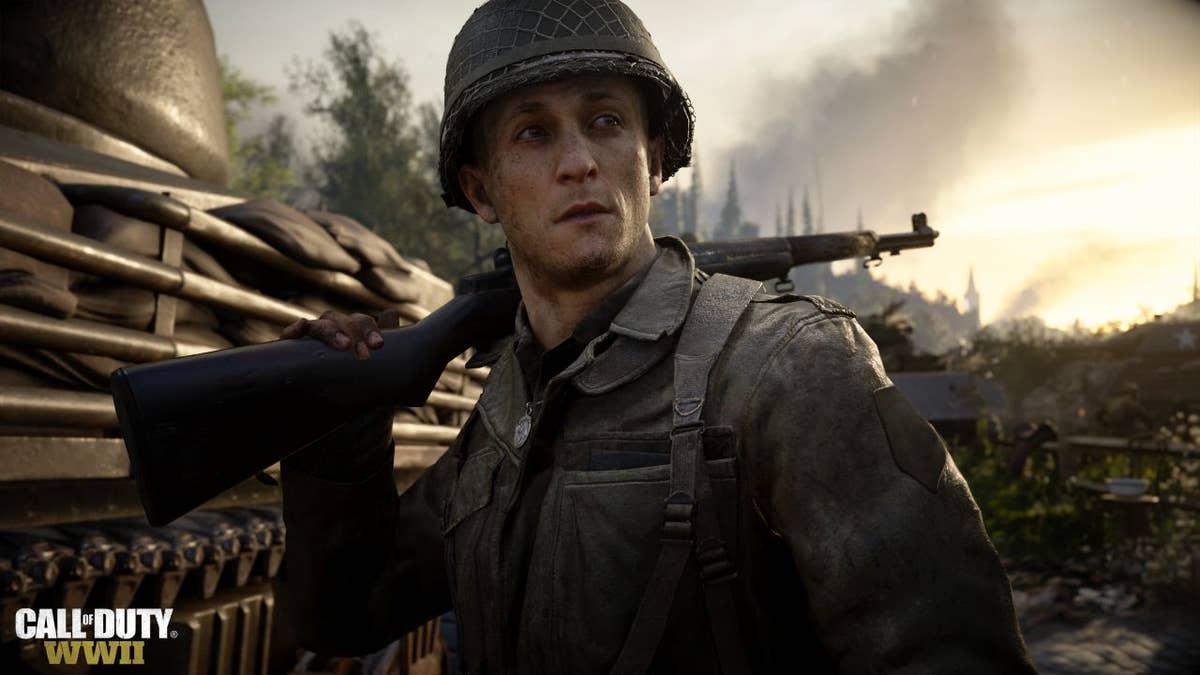
He expects a ghost town. Instead, he gets instant matches. Team Deathmatch. Domination. War. Full lobbies, most of them on East US servers, and for the first time in years the game feels like the old days: boots on the ground, iron sights, and a war that actually happened.
Call of Duty: WWII is one of the last big-budget shooters to plant itself in a real conflict and try, however imperfectly, to tell a story about it. Under the scorestreaks and cosmetics, it is still trading on actual history: D-Day, the Western Front, the Holocaust, occupied Europe.
So what was real, what was Hollywood, and why does any of this matter to people still keeping this game alive in 2026? Here are five pieces of real World War II history behind Call of Duty: WWII, each with what happened, a concrete example, and why it changed the war.
1. D-Day Was Bloodier and Messier Than Any Mission Briefing
What it is: D-Day, 6 June 1944, was the Allied amphibious invasion of Nazi-occupied France. Call of Duty: WWII opens on Omaha Beach, trying to drop you into those first terrifying minutes.
In the game, you are Private Ronald “Red” Daniels, 1st Infantry Division, charging off a landing craft into machine-gun fire. The scene borrows heavily from Saving Private Ryan: ramp drops, men die instantly, water turns red, and you sprint for the shingle under a storm of MG-42 fire.
The real Omaha Beach was even more chaotic. The U.S. 1st and 29th Infantry Divisions hit a 7-kilometer stretch of coast defended by elements of the German 352nd Infantry Division. Many landing craft drifted off course. Some tanks sank before they even fired a shot. Naval bombardment had largely missed the German defenses on the bluffs.
On Dog Green sector, where Company A of the 116th Infantry Regiment landed, the first wave was almost wiped out within minutes. Survivors crawled behind Czech hedgehogs and piles of dead bodies. Officers were killed so quickly that sergeants and privates started making the decisions that would decide whether the invasion failed or not.
The game compresses this into a playable sequence. You drag a wounded comrade. You blow a gap in the wire. You clear a bunker. It is scripted, but the core truth is there: young men with almost no combat experience, under intense fire, had to improvise and keep moving or the whole operation risked collapse.
Why it mattered: If D-Day had failed, the Western Allies would have needed months, maybe longer, to regroup for another invasion. That would have given Nazi Germany more time to reinforce the Atlantic Wall and to fight the Soviets in the east. The success at Omaha and the other beaches opened a direct route into France and made the collapse of Hitler’s regime a matter of time rather than possibility.
So when you load into that first mission or into a War mode beach map, you are playing a stylized version of the day that made a German defeat in Western Europe unavoidable.
2. The Western Front Was a Grind of Mud, Towns, and Small-Unit Fights
What it is: After D-Day, the war in Western Europe was not a nonstop parade of heroic charges. It was a long, grinding push through hedgerows, towns, forests, and rivers. Call of Duty: WWII’s campaign and multiplayer maps pull heavily from that slog.
Take the real Battle of Hürtgen Forest, which the game nods to with its dark, wooded maps and attritional firefights. From September 1944 to February 1945, American forces fought through dense forest along the German border. Visibility was poor. Artillery turned trees into exploding shrapnel. Units got lost a few hundred meters from their objectives.
In-game, you get a taste of this in missions like “Death Factory” and in maps that trap you in close quarters with limited sightlines. You are not sweeping across open plains. You are trading lives and grenades for a farmhouse, a crossroads, or a bunker line.
Another example is the liberation of French towns like Saint-Lô and Carentan in summer 1944. The U.S. 29th and 30th Infantry Divisions fought street by street, house by house, against German paratroopers and regular infantry. Artillery and air strikes turned entire neighborhoods into rubble. Civilians were caught in the middle.
Multiplayer maps such as Sainte Marie du Mont or Aachen echo that kind of fighting. Narrow streets. Blown-out buildings. Fights over church towers and courtyards. The game is not simulating the full horror, but the geography and tempo are drawn from real battles.
Why it mattered: These small-unit fights decided whether the Allies could keep their momentum after Normandy. Every town taken opened roads for supply and armor. Every delay gave the Germans time to regroup. The Western Front was won not just by big offensives, but by hundreds of platoon-level actions like the ones the game turns into 10-minute matches.
When you grind Domination on a bombed-out French town at 2 a.m., you are reenacting the kind of tactical struggle that, multiplied across the map of Europe, determined how fast the Allies could close in on Germany.
3. The Battle of the Bulge Was a Desperate German Gamble
What it is: In December 1944, Hitler launched a surprise offensive through the Ardennes forest. The goal was to split the Allied armies, capture Antwerp, and force a negotiated peace in the West. Call of Duty: WWII spends a chunk of its campaign in the snow and fog of this battle.
The real Battle of the Bulge began on 16 December 1944. German panzer and infantry divisions smashed into thinly held American lines in Belgium and Luxembourg. Units like the U.S. 106th Infantry Division were overrun. The German advance created a “bulge” in the front line, which gave the battle its name.
One of the most famous episodes was the defense of Bastogne. The U.S. 101st Airborne Division, elements of the 10th Armored Division, and other units were surrounded by German forces and subjected to artillery, armor attacks, and demands to surrender. They held out until General George Patton’s Third Army broke through on 26 December.
In the game, you experience the Bulge through missions like “Battle of the Bulge,” where you fight in frozen forests, defend positions, and watch German armor appear out of the mist. The snow, the surprise, and the sense of being hit hard while exhausted are all grounded in what American soldiers actually went through.
Even the game’s emphasis on supply lines and fuel has a real basis. The German offensive was critically short on fuel. Capturing Allied fuel dumps was part of the plan. When they failed to secure enough, powerful units like Kampfgruppe Peiper stalled and were forced to abandon vehicles.
Why it mattered: The failure of the Ardennes offensive burned through Germany’s last reserves of armor, fuel, and trained troops on the Western Front. After the Bulge, the Wehrmacht could no longer mount a major offensive in the west. From January 1945 on, the Allies were grinding their way into Germany with the strategic initiative firmly in their hands.
So when the game throws you into snowy forests and asks you to hold the line, it is echoing the moment when Hitler’s last big gamble in the west collapsed and the road to the Rhine opened.
4. The Holocaust and Occupation Were More Than Background Lore
What it is: Call of Duty: WWII touches, cautiously, on the Holocaust and Nazi occupation. It shows forced labor, persecution of Jews, and the liberation of a concentration camp. This is one of the few times a mainstream shooter has tried to put that part of the war on screen at all.
The real Holocaust was the systematic murder of around six million Jews by Nazi Germany and its collaborators between 1941 and 1945, along with millions of other victims, including Roma, disabled people, and political prisoners. It involved ghettos, mass shootings, gas chambers, and forced labor camps spread across occupied Europe.
In the game’s campaign, you meet Rousseau, a member of the French Resistance, and Zussman, a Jewish American soldier. You see occupied Paris, collaborators, and Gestapo agents. Late in the story, you take part in the liberation of a labor camp and see emaciated prisoners and mass graves.
The specifics are fictionalized. The camp is not a 1:1 recreation of a real place like Dachau or Buchenwald. The timeline and unit assignments are simplified. But the core facts are not invented: American units did liberate camps in 1945, including Ohrdruf, Buchenwald, and Dachau, and many soldiers wrote later about the shock of what they found.
Occupation and resistance are also rooted in real history. In France, groups like the Francs-tireurs et partisans (FTP) and Gaullist networks carried out sabotage, assassinations, and intelligence gathering. The Gestapo and SS responded with torture, deportations, and reprisals against civilians.
Why it mattered: The Holocaust and occupation policies were not side effects of the war. They were central to what Nazi Germany was trying to do in Europe. Any attempt to depict World War II that ignores them risks turning the conflict into a generic good-guys-vs-bad-guys action movie.
By at least acknowledging camps, Jewish soldiers, and resistance fighters, Call of Duty: WWII reminds players that the war was about more than territory. It was about the survival of whole communities and the defeat of a regime built on racial extermination.
5. “Boots on the Ground” Reflects How WWII Was Actually Fought
What it is: Fans still playing Call of Duty: WWII talk about it as a return to “boots on the ground” multiplayer. No jetpacks, no wall-running, no laser rifles. That design choice lines up with the reality of how World War II was fought at the tactical level.
Infantry squads in WWII moved on foot, used cover, and relied on a mix of bolt-action rifles, semi-automatic rifles, submachine guns, machine guns, and grenades. Fire and movement, suppression, and flanking were the core of small-unit tactics on both sides.
Look at a real unit like the U.S. Army’s 1st Infantry Division in 1944. A rifle squad might be built around M1 Garand rifles, with a Browning Automatic Rifle (BAR) for automatic fire and maybe a Thompson or M3 submachine gun for close combat. On the German side, squads centered on the MG 34 or MG 42 machine gun, with riflemen supporting.
Call of Duty: WWII’s multiplayer, for all its arcade speed, is still structured around that kind of gunplay. You are not flying over the map. You are fighting for control of lanes, using period weapons like the M1 Garand, STG 44, Kar98k, and MP40. The War mode, where teams attack and defend objectives in phases, borrows from real offensive and defensive operations.
Even the laggy experience of a player in São Paulo connecting to East US servers has an odd historical echo. In WWII, Allied operations depended on long, fragile lines of communication and supply across oceans and continents. Today’s global player base is linked by fiber instead of convoys, but the idea of a worldwide effort connecting distant places is not entirely out of place.
Why it mattered: The way a game feels shapes how millions of people imagine the past. A jetpack shooter set in 1944 would be fun, but it would teach nothing about how soldiers actually moved and fought. By keeping its feet on the ground and its guns roughly era-appropriate, Call of Duty: WWII gives players at least a faint sense of the tempo and constraints of real World War II combat.
That is one reason a “classic” CoD community has clung to this title. It is not just nostalgia. It is the appeal of a war that, unlike sci-fi settings, actually happened and still echoes in family stories, national politics, and the map of Europe.
Call of Duty: WWII is not a documentary. It compresses timelines, simplifies battles, and turns trauma into entertainment. But it also introduces millions of players to D-Day, the Western Front, the Battle of the Bulge, occupation, and the Holocaust, even if only in outline.
For some, that first Omaha Beach mission is the moment they go to Google and type “what really happened on D-Day.” For others, a late-game camp liberation scene is the first time they realize American troops actually opened the gates of real camps in 1945.
So when a player in Brazil logs on in 2026 and thanks strangers for “keeping this game alive,” they are not just keeping a favorite multiplayer meta going. They are keeping one of the last big-budget, boots-on-the-ground World War II shooters in circulation, and with it, a messy, imperfect but still valuable way into the history of the biggest war humanity has ever fought.
Frequently Asked Questions
How accurate is Call of Duty: WWII to real World War II events?
Call of Duty: WWII gets the broad strokes of World War II roughly right, especially major events like D-Day, the Western Front grind, and the Battle of the Bulge. It is far less accurate on details like unit composition, timelines, and casualty figures, which are simplified or altered to fit a cinematic story and fast-paced gameplay.
Did American soldiers really liberate concentration camps in WWII?
Yes. U.S. forces liberated several camps in 1945, including Ohrdruf, Buchenwald, and Dachau. Soldiers reported being shocked by mass graves, starving prisoners, and evidence of systematic murder. Call of Duty: WWII uses a fictional camp, but it is based on real liberations carried out by American units as they advanced into Germany.
Was the Battle of the Bulge really Germany’s last major offensive in the West?
The Battle of the Bulge, launched in December 1944, was Nazi Germany’s last major offensive on the Western Front. After it failed, the Wehrmacht no longer had the fuel, armor, or trained manpower to mount another large-scale attack in the west. From early 1945 onward, the Allies kept the initiative as they crossed the Rhine and entered Germany.
Why do people still play Call of Duty: WWII instead of newer CoD games?
Many players stick with Call of Duty: WWII because they prefer its “boots on the ground” gameplay and its historical setting. Compared to newer titles with futuristic movement and weapons, WWII offers a more grounded experience with period guns and maps based on real battles. For some, it also feels closer to the classic Call of Duty games released between 2007 and 2012.