The bride and groom are frozen in stone, hands joined, guests gathered, the priest mid-blessing. It looks like a quiet medieval wedding scene. Then you read the caption: they were murdered at their wedding, along with everyone present.
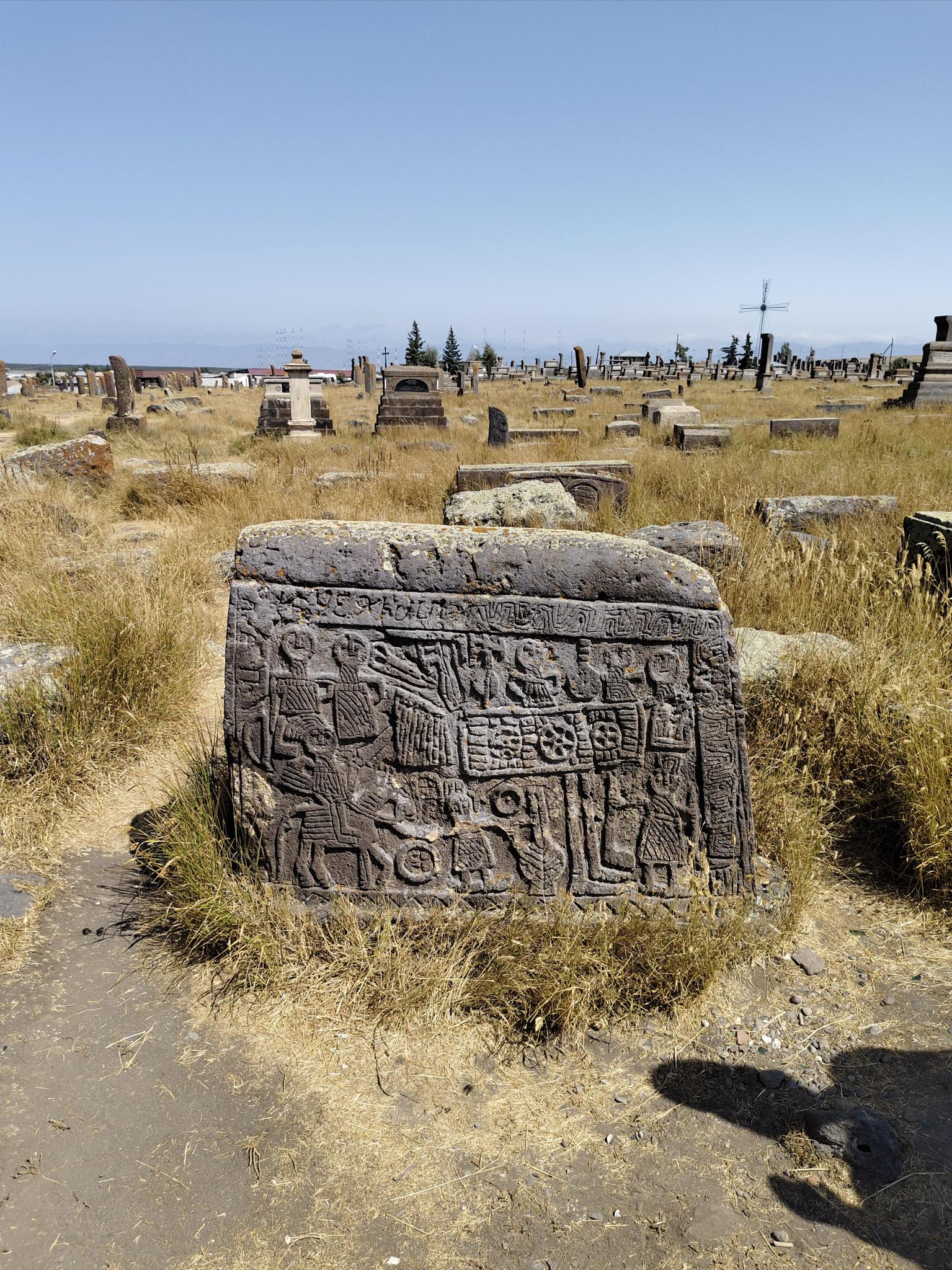
The tombstone comes from Noratus Cemetery in Armenia, often dated to around the 10th century, and shared widely online as “the medieval tombstone of a bride and groom murdered at their wedding.” The carving shows a wedding feast, yet the story attached to it is one of massacre and grief.
So what actually is this stone? What can we really say about it, and what are people getting wrong? By the end of this, you will know what the stone is, what we know about Noratus, how Armenians used carved stones to tell stories, and why this particular wedding scene has captured so much attention.
1. It is a khachkar, not a random gravestone
First, the basics. The Noratus wedding stone is a khachkar, an Armenian carved stone slab, usually with a cross and rich ornament. Khachkars were used as memorials, grave markers, and public monuments from around the 9th century onward.
A khachkar is a carved stone cross-slab used in medieval Armenia as a memorial and religious monument. It usually combines a cross with rosettes, knotwork, and sometimes narrative scenes.
Noratus Cemetery, near Lake Sevan in modern Armenia, has the largest surviving field of khachkars in the world. Many date from the 9th to 17th centuries. The wedding stone is one of the more eye-catching examples because it includes a detailed scene of people at a table, which viewers interpret as a wedding banquet.
Khachkars were not just tombstones with names and dates. They were prayers in stone. A patron might commission one for the soul of a dead relative, to thank God for survival in war, or to mark the building of a church or bridge. Inscriptions often say things like “Pray for the soul of…” or “This cross was raised for the salvation of…”
A concrete example: the famous khachkars of Goshavank monastery, carved in the 13th century by the master carver Poghos, mix crosses, lace-like patterns, and small scenes. They commemorate benefactors of the monastery and ask passersby to pray for them. The Noratus stone fits into this same tradition, even if its subject is a wedding.
This matters because it changes how we read the image. The stone is not a documentary snapshot of a crime scene. It is a religious memorial, probably asking for prayers for specific people. The wedding scene is part of a spiritual message, not just a medieval news report.
2. The massacre story is modern, the carving is medieval
Online, the Noratus stone is usually described as “the tombstone of a bride and groom murdered at their wedding along with all their guests.” That story is powerful. It is also not backed by medieval written sources.
What we actually have is a carved stone with a cross, decorative patterns, and a banquet scene. In some versions of the stone, you can see a priest, a couple, and seated figures at a table. Local guides and some modern writers tell a story that the wedding party was attacked and killed, and that the stone commemorates them.
Here is the key point: there is no surviving 10th‑century chronicle that clearly describes this specific wedding massacre and links it to this specific stone. The massacre story appears to be a later oral tradition or modern interpretation layered onto an older carving.
Armenian history does have plenty of real massacres. The 10th and 11th centuries were full of raids by Arab emirs, Byzantine armies, and later Seljuk Turks. Villages were burned, nobles killed, churches looted. So a wedding massacre is not implausible in context. It is just not directly documented for this stone.
A concrete parallel: in many European churches, there are medieval wall paintings of feasts or hunting scenes that later generations reinterpreted as specific legends or tragedies. The art came first. The detailed story came later. The Noratus stone likely went through a similar process.
This matters because it reminds us to separate what the stone shows from the story we want it to tell. The carving is genuinely medieval. The viral caption about the murdered wedding party is a modern narrative built on top of it.
3. Noratus Cemetery shows how Armenians remembered the dead
Noratus is not a single tragic grave. It is a whole field of memory. The cemetery holds hundreds of khachkars spread over several hectares, with stones from different centuries jumbled together.
Noratus Cemetery, near the village of Noratus in Gegharkunik Province, is often dated back to the 9th or 10th century. Many stones are later, from the 13th to 17th centuries, when carving reached a high level of skill. The wedding stone is usually dated to around the 10th century, though exact dating can be debated.
Walk through Noratus and you see patterns. Some stones are simple crosses. Others show riders on horseback, warriors with swords, or people at tables. A few show scenes that look like weddings or communal meals. Inscriptions, when legible, mention names, family ties, and sometimes the reason the stone was raised.
A concrete example beyond the wedding stone: there are khachkars at Noratus that show armed men and shields. Scholars link some of these to the Zakarian period in the 13th century, when Armenian nobles fought under Georgian kings against Seljuk and Persian forces. Those stones remember warriors and campaigns long after the battles ended.
Noratus matters because it shows that medieval Armenians did not remember the dead only as isolated individuals. They remembered them as parts of families, feasts, battles, and communities. The wedding stone fits that pattern. It shows the dead as part of a social moment, not alone in a grave.
4. Wedding scenes on tombstones were about identity, not just romance
To a modern viewer, a wedding scene on a tombstone screams “tragic love story.” In a medieval Armenian context, it also shouted status, alliances, and family continuity.
Marriage in 10th‑century Armenia was a social contract as much as a personal bond. Noble families arranged marriages to secure land, military support, and church patronage. Even among peasants, weddings were public events that tied families together in front of God and neighbors.
So when a khachkar shows a couple at a table with guests, it is not just a romantic moment. It is a statement: these people belonged to this network, this feast, this community. The stone says, “Remember them as bride and groom, as hosts, as part of this house.”
A concrete example from Armenian art: in some 13th‑century manuscripts, donors are shown presenting a book or a church model to a saint or to Christ. They are often depicted with their spouse and children. The image is about family identity and patronage, not just individual piety. The Noratus wedding scene likely carries a similar message in stone.
If the massacre story has any historical root, the wedding scene would sharpen the loss. A whole network of people, gathered for a moment of joy, wiped out. Even without that story, the scene tells us how the dead wanted to be remembered: not as isolated souls, but as part of a shared celebration.
This matters because it shifts the focus from “tragic couple” to “social memory.” The stone records not just two victims, but a web of relationships and expectations that death cut short.
5. The stone shows how Armenians mixed faith, art, and trauma
Strip away the viral caption, and you still have something striking: a Christian cross, a carved feast, and a grave marker in a region that saw repeated invasions. That combination tells you how Armenians processed violence and loss.
Armenia adopted Christianity early, traditionally dated to the early 4th century. By the 10th century, the Armenian Apostolic Church was central to identity. Khachkars were physical prayers. They linked the suffering of ordinary people to the cross of Christ carved above them.
In a region where raids, earthquakes, and political upheavals were common, people used these stones to make sense of trauma. A family that lost relatives in an attack might commission a khachkar that showed them at a feast, under the cross, as if to say: their story is not just about violence, it is about their place in God’s story.
A concrete historical backdrop: the Bagratid Armenian kingdom, which controlled much of Armenia in the 10th and early 11th centuries, faced pressure from both the Byzantine Empire and Muslim powers. Cities like Ani flourished, but they also endured sieges and sackings. After the fall of Ani in 1064 to the Seljuks, Armenian communities scattered, yet they kept carving khachkars wherever they went.
The Noratus wedding stone belongs to that world of faith under pressure. Whether or not a massacre happened at that specific wedding, the stone shows how Armenians used art to bind joy and grief together under the sign of the cross.
This matters because it explains why a single carved wedding scene in a remote cemetery can resonate so widely today. It is not just a curiosity. It is a fragment of how a small Christian nation on a contested frontier remembered its dead and tried to give meaning to disaster.
The Noratus wedding tombstone has become internet-famous because it seems to tell a complete story at a glance: love, celebration, sudden violence. The real history is messier. The stone is a khachkar, part of a long Armenian tradition of carved memorials. The massacre story is probably later, yet it reflects a very real history of raids and loss.
What endures is the choice to carve a wedding, not a battlefield. In a cemetery full of crosses, someone wanted these dead remembered at their table, with their hands joined, in the middle of life. That decision, made a thousand years ago, is why people are still staring at their stone faces on a screen today.
Frequently Asked Questions
What is the Noratus wedding tombstone in Armenia?
The Noratus wedding tombstone is a medieval Armenian khachkar, or carved cross-stone, in Noratus Cemetery near Lake Sevan. It shows a banquet or wedding scene beneath a cross and is widely shared online with the story that the bride, groom, and guests were murdered at their wedding, though that specific massacre story is not confirmed by contemporary written sources.
Were the bride and groom on the Noratus tombstone really murdered at their wedding?
There is no surviving 10th‑century document that clearly confirms a specific wedding massacre linked to this exact stone. The carving itself is genuinely medieval and shows a wedding or feast, but the detailed story that the entire wedding party was murdered appears to be a later oral or modern interpretation layered onto the image.
What is a khachkar and how was it used in medieval Armenia?
A khachkar is a carved stone slab with a cross, used in medieval Armenia as a religious monument and memorial. People commissioned khachkars to remember the dead, thank God for protection, or mark donations to churches, and they often included inscriptions asking passersby to pray for the named individuals.
Why are there wedding or feast scenes on Armenian tombstones?
Wedding or feast scenes on Armenian tombstones expressed social identity and memory. They showed the dead as part of families and communities, not just as isolated individuals. In a Christian context, placing such scenes under a carved cross linked everyday joys and sorrows to faith and offered a way to remember lives cut short by disease, violence, or old age.