Picture a knight in mail and steel, but his helmet is wrapped in thick folds of cloth, almost like a turban. You have probably seen it in game art, fantasy illustrations, or even on museum posters. It looks half-European, half-Middle Eastern, and it raises the same question that popped up on Reddit: what is this thing supposed to be?
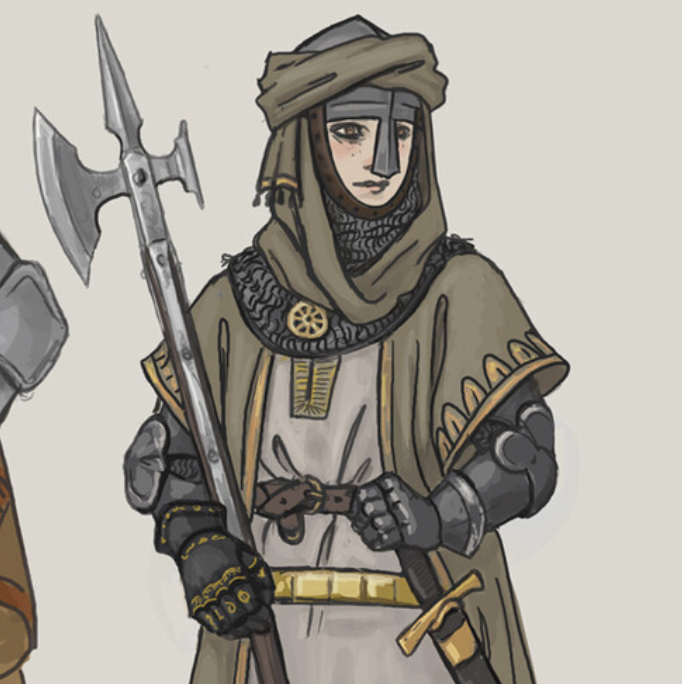
Is it an early chaperon? A real battlefield style? Or just a fantasy designer having fun with fabric? The short answer: there were real helmet-wraps and turban-like headgear in the Middle Ages, but a lot of what you see in modern art is a mashup of several different traditions.
A “turban over a helmet” in medieval imagery can mean at least three different things: a practical cloth wrap on a European helm, a genuine Islamic or steppe turban-helmet, or a later artistic shorthand for “exotic warrior.” By the end of this explainer, you will be able to tell which is which and why it mattered to people at the time.
What was this turban-over-helmet style, really?
First, a clean definition. When people talk about a “turban wrapped over a helmet” in a medieval context, they usually mean one of two things:
1) A European steel helmet with a padded or cloth covering wrapped around it, sometimes looking vaguely turban-like.
2) A Middle Eastern or Central Asian helmet designed to be worn with, or built to resemble, a turban.
These are not the same object, even if they look similar in modern art.
European side: Western knights and soldiers often wore a padded arming cap under their mail coif and helmet. On top of that, they might add a cloth cover to keep the sun off, soften the outline, or show colors and heraldry. In some images, that cloth is wrapped or bunched so heavily that it can resemble a turban to modern eyes.
This is not the same as a chaperon. The chaperon was a civilian hood that evolved into a fashionable hat in the 14th and 15th centuries, with the long tail (liripipe) and rolled-up face opening worn as a padded ring on the head. It could look turban-like, but it was usually worn on its own, not over a steel war helm.
Islamic and steppe side: In the Islamic world, especially from the 12th century onward, we see real turban-helmets. These were conical or bulbous steel helmets with a broad band or flaring brim, often inscribed with Quranic verses. A cloth turban could be wrapped around them, or the metal itself was shaped to mimic turban folds.
Turban helmets were used by Mamluk, Ottoman, and other Muslim warriors from roughly the 13th to 16th centuries. They had religious, social, and practical functions. They are not fantasy. They are well-documented objects in museum collections in Istanbul, Vienna, and elsewhere.
So when you see a “turban over a helmet,” you might be looking at a padded cover on a European helm, a genuine Islamic turban-helmet, or a modern fantasy hybrid. Sorting those out is the first step. That matters because each version tells a different story about who the warrior was and what they were fighting for.
What set it off: why wrap cloth around a helmet at all?
Cloth on helmets did not start as a fashion statement. It started as problem-solving.
Heat and comfort. Metal helmets get hot in the sun and cold in winter. A thick arming cap under the helmet absorbed sweat and softened blows. A cloth cover over the helmet could keep the sun off the metal and reduce glare. In the Mediterranean or Near East, that mattered.
Armor protection and maintenance. Mail and plate rust. A textile cover helped protect the metal from rain and dirt. It could also keep sand and grit from working into the links or plates. Some surviving mail coifs and aventails show evidence of being lined or edged with cloth for this reason.
Identity and heraldry. By the 13th century, European knights were obsessed with visual identity. Shields, surcoats, and horse trappers carried heraldic colors. Helmets got in on this too. A bright cloth cover on a helm made it easier to spot a lord in battle and to show allegiance.
In Islamic contexts, the motivations overlapped with religious and social meaning.
Religious symbolism. For many Muslim warriors, the turban had religious significance. It was associated with piety and status. Wrapping a turban around a helmet, or shaping the helmet like a turban, let a warrior carry that identity into battle. Quranic inscriptions on turban-helmets were not just decoration. They were meant as protection and a visible sign of faith.
Social status. Turban size and style could signal rank or group identity. A helmet that accommodated or imitated a turban helped translate that social code into military gear.
So the root causes were practical (comfort, protection), visual (identity), and in some regions, religious. The cloth was not there just to look exotic. It solved real problems and communicated real messages. That matters because it reminds us that what looks like “fantasy flair” often began as a very down-to-earth solution.
The turning point: crusades, contact, and cross-pollination
The reason Redditors and gamers get confused about turban-helmets is that by the later Middle Ages, European and Islamic visual cultures had been rubbing up against each other for centuries.
Crusades and border wars. From the late 11th century onward, Latin Christians fought Muslims in the Levant, Iberia, Sicily, and the Balkans. They saw each other’s armor up close. Chroniclers mention “Saracen” turbans and exotic headgear. Artists back home tried to draw what they heard about or saw.
In European manuscripts, Muslim warriors are often shown with bulbous or wrapped headgear that looks vaguely like turbans, sometimes over helmets, sometimes not. These images are not technical armor diagrams. They are visual shorthand for “non-Christian warrior from the East.”
Artistic stereotypes. By the 13th and 14th centuries, Western artists had settled on a set of cues to mark someone as foreign: darker skin, different shields, curved swords, and yes, turban-like headgear. The details were often wrong, but the silhouette did the job.
Real adoption and imitation. There was also real borrowing. Some crusaders and mercenaries adopted pieces of Eastern armor. Some Islamic warriors used European mail and helmets. In border zones like the Kingdom of Cyprus or the Crusader states, mixed styles were normal.
On the Islamic side, the 14th and 15th centuries saw the rise of the classic Ottoman turban-helmet. These had tall, sometimes fluted or ridged skulls with a wide band around the base. Some scholars argue that the ridges and flares were meant to echo the wrapped folds of a turban. Others see it as mostly structural and decorative. Either way, the visual link between helmet and turban was deliberate.
So by the late Middle Ages, you had European artists drawing exotic turbaned enemies, real Islamic turban-helmets in use, and frontier warriors who mixed gear from both worlds. That historical tangle is why a single game concept art piece can spark a 70-comment thread. The turning point was centuries of contact that blurred visual categories, and that matters because it is the root of our modern confusion.
Who drove this style: knights, Mamluks, Ottomans, and artists
No single person invented the “turban over a helmet,” but we can point to groups and contexts that shaped how it looked.
European knights and men-at-arms. In the 13th and 14th centuries, Western knights wore great helms and bascinets often covered in cloth or painted. Heraldic crests sat on top. Some effigies and manuscripts show thickly padded or wrapped covers that can read as turban-like to modern viewers. These men drove the European side of the style: cloth for comfort and identity on top of steel.
Mamluk warriors. In Egypt and Syria, the Mamluk Sultanate (1250–1517) fielded elite slave-soldiers who rose to become a military caste. They wore conical helmets, often with mail aventails and sometimes with turban wraps. Surviving Mamluk helmets with inscriptions and decorative bands show the early stages of what would later become more turban-like forms.
Ottoman sipahis and janissaries. From the 14th to 16th centuries, the Ottoman Empire refined the turban-helmet. High-ranking cavalry (sipahis) and some infantry wore helmets with broad, inscribed bands and tall skulls. The famous “turban helmets” in museums today are often Ottoman or Ottoman-influenced pieces from this period.
These helmets were not costume pieces. They were serious armor, often of high-quality steel, with religious inscriptions and sometimes gold or silver inlay. The people who wore them helped fix the association between Islamic warriors and turban-like helmets in the minds of both their own artists and their European enemies.
Artists and armorers. Medieval and early modern artists did as much as soldiers to shape the visual style. European painters who had never seen a real Ottoman helmet still painted “Turks” with exaggerated turbans and strange headgear. Islamic miniaturists did the same in reverse, giving European crusaders a stock look.
Armorers also played with form. Some late 15th and early 16th century helmets from Italy and Germany were made in “Turkish” or “Eastern” style for parades or masquerades. These could include turban-like metal folds or engraved cloth patterns. They were fashion statements, not battlefield gear, but they kept the hybrid image alive.
So the style was driven by practical soldiers, elite military castes, and image-makers on both sides of the Mediterranean. That matters because it reminds us that what we now see as a single “turban-helmet” trope was actually shaped by different communities with different goals.
What it changed: from real armor to fantasy shorthand
So what did this turban-over-helmet look actually change in the long run?
A new visual category of the warrior. By the early modern period, European viewers had a mental file labeled “Eastern warrior” that included turbans, curved swords, and ornate helmets. Turban-helmets fed that file. They made it easy for artists to code a figure as Muslim, Ottoman, or exotic at a glance.
Armor design and decoration. In the Islamic world, the idea that a helmet could echo a turban encouraged more elaborate shapes and inscriptions. Turban-helmets are among the most visually distinctive pieces of armor from the late medieval and early modern Islamic world. They blur the line between clothing and armor in a way that European gear rarely does.
Cross-cultural imitation. European princes collected Eastern armor. Some had their own armorers make helmets in “Turkish” style for parades or tournaments. This did not transform battlefield armor in the West, but it did expand the range of what a helmet could look like and how it could be used to signal identity.
Modern fantasy and gaming tropes. Fast forward to the 20th and 21st centuries. Fantasy artists, game designers, and illustrators raid museum catalogues and Orientalist paintings for inspiration. The turban-helmet becomes a ready-made visual trope for “Saracen knight,” “desert warrior,” or “mysterious foreign mercenary.”
In that process, details get scrambled. A European bascinet might get a Middle Eastern turban wrap. An Ottoman turban-helmet might be put on a generic fantasy knight. The result is the kind of image that triggered the Reddit question: a helmet-wrapped-in-cloth that looks historical but is hard to place.
So the style helped create a lasting visual category of the “Eastern” or “Islamic” warrior, influenced armor design in the Islamic world, and then fed directly into modern fantasy aesthetics. That matters because it shapes how millions of people imagine the medieval world, often without realizing where those images came from.
Why it still matters: accuracy, identity, and how we picture the past
So why should anyone care whether that turban-wrapped helmet in a game or painting is an early chaperon, a real turban-helmet, or pure invention?
Because it affects how we imagine who was where. If you put a full Ottoman-style turban-helmet on a 12th-century French crusader, you are quietly rewriting history. You are suggesting a level of cultural mixing or technology that did not exist yet. That may not ruin a fantasy story, but it does blur the lines for people trying to learn.
Because it shapes our sense of “East” and “West.” Turbans and turban-helmets have long been used in Western art to mark people as foreign, other, or threatening. When modern media casually slaps a turban on any generic enemy, it is drawing on that same visual habit. Knowing the real history helps separate genuine armor traditions from lazy stereotyping.
Because the real objects are more interesting than the tropes. A 15th-century Ottoman turban-helmet with Quranic inscriptions and careful steelwork tells a story about faith, craftsmanship, and warfare. A 13th-century knight’s padded helm cover tells a story about heat, sweat, and battlefield visibility. Those stories are richer than “cool fantasy hat.”
For people in the Reddit thread and beyond, the confusion usually comes down to three questions:
• Is this an early chaperon? Usually no. The chaperon was a civilian hood-turned-hat, not a standard helmet wrap.
• Is this a real historical style? Sometimes yes, especially if it resembles known Ottoman or Mamluk turban-helmets, or a padded cover on a European helm.
• Is this just fictional design? Often it is a stylized blend, taking cues from several periods and cultures.
Knowing that there were real turban-helmets, real cloth-wrapped helms, and a long tradition of artists exaggerating both helps cut through the confusion. That matters because every time we argue about a helmet on Reddit, we are really arguing about how to picture the medieval world, who belonged in it, and how much we owe the past in our modern stories.
Frequently Asked Questions
Did medieval European knights actually wear turbans over their helmets?
Not in the way modern art often shows. European knights did wear padded caps under helmets and sometimes cloth covers over them, which can look turban-like in images. But the classic wrapped turban-helmet is mainly an Islamic and Ottoman development, not standard Western knightly gear.
What is a turban helmet in Islamic and Ottoman armor?
A turban helmet is a steel helmet, common from the 14th to 16th centuries in the Islamic world, especially under the Ottomans. It often has a tall skull and a wide band around the base, sometimes shaped or decorated to echo the folds of a turban and inscribed with Quranic verses. It could be worn with an actual cloth turban or on its own.
Is the turban-wrapped helmet an early form of the chaperon?
No. The chaperon began as a hood and evolved into a civilian hat with a rolled ring and long tail in 14th–15th century Europe. It could look turban-like, but it was usually worn on its own, not as a wrap over a steel war helmet. Confusion comes from modern artists blending chaperon shapes with armor designs.
How accurate are turban-helmets in video games and fantasy art?
They are often loosely inspired by real Ottoman and Mamluk turban-helmets or by cloth-covered European helms, but details are frequently mixed across centuries and cultures. Many designs are hybrids created for visual impact rather than strict historical accuracy.