Picture two warriors.
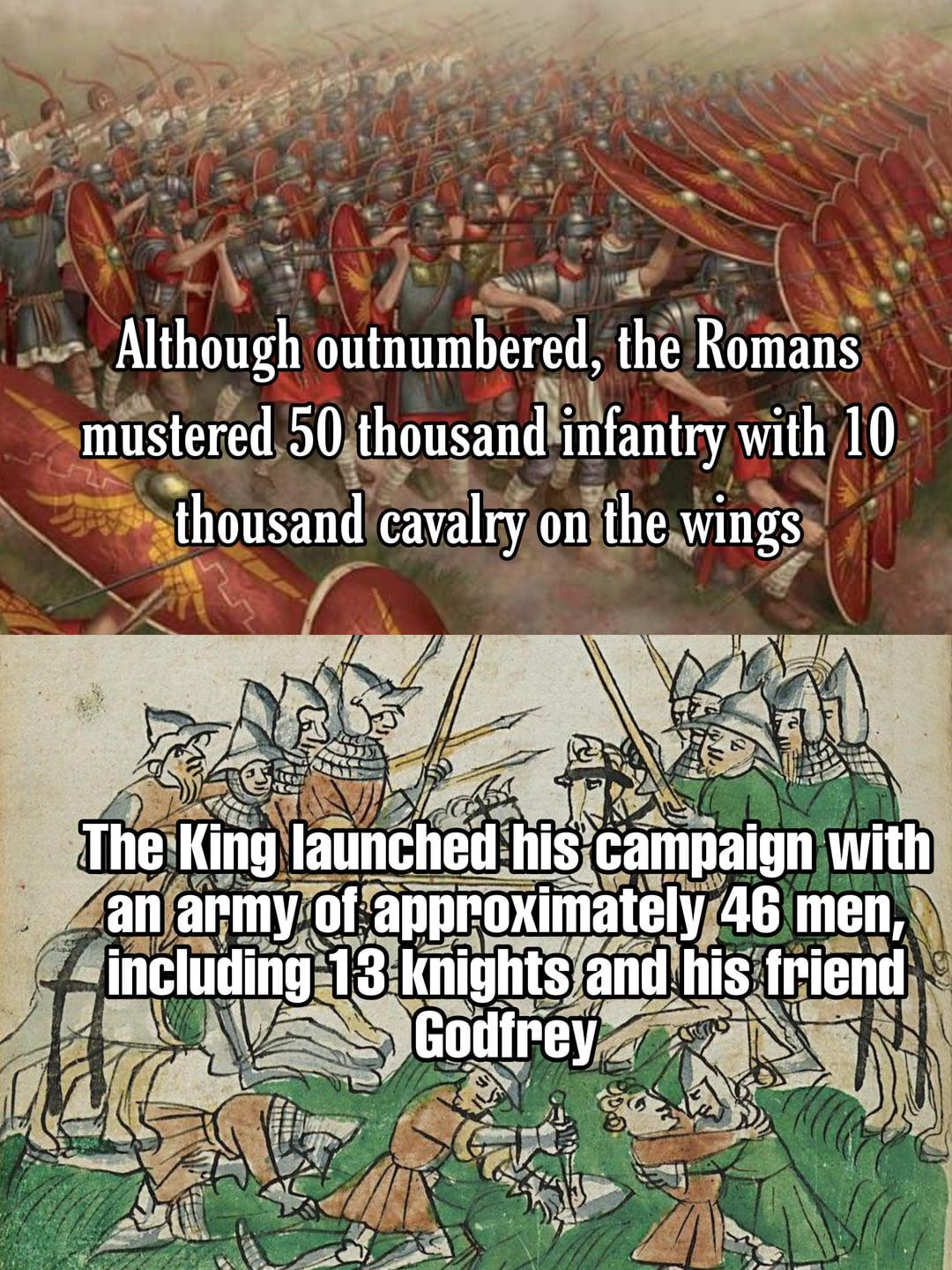
On one side, a Roman legionary around 100 CE. Iron helmet with cheek guards. Rectangular shield. Short sword at his hip. He fights in a wall of men, drilled to move like a machine that belongs to an empire of perhaps 60 million people.
On the other, a 14th‑century knight. Plate armor that glints in the sun. Heraldic colors on his surcoat. A warhorse under him, snorting and armored too. He belongs not to a continent‑spanning empire, but to a patchwork of quarrelling kingdoms, dukedoms, and city‑states.
Same continent. Very different stories. The Reddit post you came from puts it bluntly: medieval Europe feels cooler. The armor. The chaos. The lack of a giant slave‑powered empire. So why do these two eras feel so different, and what actually changed between them?
By the end of this, you will see why medieval Europe looked the way it did, why it was so fragmented, how it really compared to Rome on slavery and power, and why a knight on horseback feels so different from a Roman legionary.
Why Rome feels like one giant boss level
Ancient Rome, at its height in the 2nd century CE, is the closest Europe ever got to a single political system from Scotland to Syria. The Roman Empire was not just big. It was organized.
At its peak, the empire likely ruled around 60 to 70 million people. It had a professional army of about 300,000 to 400,000 soldiers. It ran on roads, tax records, and a bureaucracy that could move grain from Egypt to feed Rome’s urban poor.
Roman power was centralized in a way medieval Europe never matched. The emperor, the Senate (in earlier centuries), the provincial governors, and a standardized legal system created a sense that there was one Roman world. A person in Spain, North Africa, or Anatolia could be a Roman citizen. Latin and Greek bound elites together.
That centralization shaped everything. Warfare was large‑scale and state‑driven. The Roman legionary was a salaried professional, supplied by the state, trained in formation fighting, backed by a tax system and a logistics network. When Rome fought, it mobilized entire provinces.
Rome was an empire that created a single political and cultural frame for much of Europe and the Mediterranean, so later Europeans always had a giant reference point to react against or imitate.
How Rome’s slave economy really worked
The Reddit post hits a nerve: “I don’t think medieval kingdoms had a slave economy. At least not on the scale of the Romans.” That is basically right, and the difference matters.
Rome was a slave society. That phrase has a specific meaning for historians. In a slave society, slavery is central to the economy and social order, not just one labor system among many.
In the late Republic and early Empire, slaves were everywhere. They worked in households, on farms, in mines, in workshops, in administration. In Italy, especially, the proportion of enslaved people was very high. Estimates vary, but in some regions slaves may have made up a third or more of the population.
Mass enslavement followed conquest. Defeated peoples were sold off in bulk. The Roman economy depended on this flow. Plantation‑style estates worked by slaves produced grain, wine, and olive oil. Slaves could be beaten, branded, sexually abused, and killed with limited legal consequence. Some gained freedom and rose socially, but the system as a whole treated humans as property on a vast scale.
Slavery existed in many ancient societies, but Rome integrated it into its identity. Elite Romans boasted about the number of slaves they owned. The empire’s military success and its slave economy reinforced each other.
Rome’s reliance on slavery shaped its social hierarchy and economic choices, so when that system weakened, the whole structure of society had to change.
Why medieval Europe shattered into smaller worlds
Jump ahead several centuries. The Western Roman Empire in Europe formally collapses in 476 CE, when the last western emperor is deposed. The eastern half, based in Constantinople, continues as the Byzantine Empire, but western Europe becomes something else.
There is no single date when “medieval Europe” begins, but between the 5th and 8th centuries, the western provinces fragment into successor kingdoms: the Franks in Gaul, the Visigoths in Spain, the Lombards in Italy, the Anglo‑Saxons in England, and others.
Why the fragmentation?
First, the Roman tax and administrative system eroded. Without that machinery, no one could field huge, permanent armies or maintain imperial‑scale infrastructure. Power became local. Kings relied on personal bonds and land grants, not salaried bureaucrats.
Second, population and urban life shrank in many regions. Archaeology shows smaller, poorer towns in much of western Europe compared to the high empire period. Less surplus meant less capacity for large centralized states.
Third, Christianity changed how rulers imagined their power. Instead of one emperor claiming to rule the known world, you got multiple Christian kings, each claiming divine favor, each competing for status. The pope in Rome and the emperor in Constantinople added extra layers of rivalry.
The result is the world the Reddit poster likes: a map full of small and medium‑sized polities, constantly jostling, forming and breaking alliances, fighting localized wars. There were attempts at reunification, like Charlemagne’s empire around 800, but they never lasted long in the west.
Medieval Europe’s political fragmentation created the environment where knights, castles, and local lordship became the normal units of power, so the scale of conflict and identity felt more personal and regional than imperial.
From legions to knights: why the armor looks so different
The visual contrast that hooks so many people is real. Roman soldiers and medieval knights did not just dress differently. They embodied different military systems.
The classic high‑empire Roman legionary wore segmented armor (lorica segmentata) or mail, carried a large shield, and fought in dense formations. His main weapon was the gladius, a short sword, used after throwing javelins (pilum). He was part of a state‑run machine that valued discipline and uniformity.
By the high Middle Ages, around the 12th to 14th centuries, the knight was a heavily armored cavalryman. Early on, he wore mail (chainmail) hauberks, with a conical helmet and kite shield. Later, plate armor spread, covering more of the body, with visored helmets and full harnesses of steel. The warhorse became a weapon in itself.
Why the change?
First, the political scale. Medieval rulers rarely had the tax base to maintain huge professional infantry forces like Rome’s legions. Instead, they relied on a warrior elite who held land in exchange for military service. These elites fought as mounted heavy cavalry because, in many contexts, a well‑trained knight on horseback could dominate poorly trained infantry.
Second, technology and tactics. Stirrups and better saddles made shock cavalry more effective. Armor evolved in response to new weapons, like the crossbow and later the longbow. Plate armor was expensive and individualized, which fit a society where status and display mattered.
Third, culture. The knight was not just a soldier. He was wrapped in ideals of chivalry, courtly love, and aristocratic honor. His gear was a costume of class identity as much as battlefield equipment.
Roman legions expressed the power of a centralized state. Medieval knights expressed the power of a warrior aristocracy in a fractured political world, so the armor we romanticize is a visual summary of a different kind of society.
Did medieval Europe really move beyond slavery?
The Reddit instinct is half right: medieval western Europe did not have a slave economy on the Roman scale. But it did not become a free‑labor paradise either.
In the early Middle Ages, slavery persisted. The word “slave” in English comes from “Slav,” because so many Slavic people were captured and sold. Viking raiders trafficked slaves. Christian and Muslim traders bought and sold humans across the Mediterranean.
What changed over time was the structure. In much of western Europe, especially by the High Middle Ages (roughly 1000–1300), outright chattel slavery declined and serfdom became more common. Serfs were peasants bound to the land and to a lord. They owed labor and dues and could not freely leave, but they had some recognized rights and were not legally movable property in the same way as Roman slaves.
That is a moral gray zone, not a clean break. Serfs could be exploited harshly. Yet from an economic historian’s perspective, medieval western Europe is usually called a “society with slaves,” not a “slave society.” Slavery existed, but it was no longer the central engine of the economy.
There are exceptions. Mediterranean cities like Venice and Genoa traded slaves. In parts of Iberia, frontier warfare with Muslim states produced enslaved captives. In the broader Christian and Muslim worlds, different forms of unfree labor coexisted.
Medieval Europe did not abolish slavery, but it shifted toward other forms of dependency, so the comparison with Rome is fair: the Roman economy was more systematically built on large‑scale slavery than most medieval European economies.
Why medieval chaos feels more relatable than Roman order
So why does the medieval period “hit different” for so many modern people, especially online? A few reasons line up with the Reddit post’s instincts.
First, scale. Medieval Europe’s smaller kingdoms and city‑states feel more human‑sized. You can imagine a single castle, a baron, a feud between neighbors. Rome’s scale can feel abstract, like a strategy map. Medieval politics reads more like a series of messy dramas than a single imperial story.
Second, aesthetics. Plate armor, heraldry, gothic cathedrals, illuminated manuscripts, and castles on hills are visually striking. They match fantasy genres, video games, and films. Roman aesthetics are powerful too, but they are plainer: tunics, sandals, straight roads, big stone buildings. The knight on horseback simply fits the modern heroic image more neatly.
Third, narrative. Rome is often told as a rise‑and‑fall story. Medieval Europe is told as a world in flux: invasions, plagues, crusades, reform movements, new technologies, new kingdoms. That chaos gives writers and audiences more entry points.
Fourth, morality. Knowing Rome was a massive slave society makes it harder for some people to romanticize. Medieval Europe has its own horrors, from pogroms to crusades to famines, but the economic dependence on slavery is less central. That makes it easier, emotionally, to enjoy the armor without constantly thinking of plantation‑style estates.
The medieval period feels closer to modern people because its fractured politics, messy identities, and moral contradictions look more like our own world than a single conquering superstate does.
How Rome and the Middle Ages still shape our imagination
Rome and medieval Europe are not just two eras on a timeline. They are two different models of what power and society can look like, and we still argue in their shadow.
Modern states borrow Roman ideas: written law codes, citizenship, centralized administration, even the dream of unifying Europe. The European Union’s founders knew their Roman history. So did Mussolini, who tried to wrap his regime in Roman imagery.
At the same time, our fantasy worlds, from Tolkien to video games, lean heavily medieval: kings, knights, castles, guilds, wandering mercenaries. That is the world the Reddit poster is reacting to. It feels more like a stage where individuals and small groups can matter.
There is a risk in both fascinations. Romanticizing Rome can slide into admiring empire and conquest. Romanticizing the Middle Ages can flatten a thousand years of change into a single aesthetic of knights and peasants and ignore the violence, inequality, and religious persecution that were very real.
Yet the comparison is useful. It reminds us that Europe has not always been centralized or fragmented, slave‑based or serf‑based, professional‑army or knight‑based. These were choices, accidents, and evolutions, not destiny.
When someone says they prefer medieval Europe to ancient Rome, they are really saying something about what kind of world feels interesting or bearable: one giant empire with legions and slaves, or a patchwork of smaller powers with knights and castles. Both were real. Neither was simple. And both still haunt the stories we tell about power, freedom, and what looks cool on a battlefield.
Frequently Asked Questions
Was medieval Europe less violent than ancient Rome?
Not really. Both eras were violent, just in different ways. Rome fought large imperial wars and used mass enslavement. Medieval Europe saw frequent smaller wars, raids, feuds, and religious conflicts like the Crusades. The scale and organization of violence changed, but brutality existed in both periods.
Did medieval Europe have slavery like ancient Rome?
Medieval Europe had slavery, especially in the early Middle Ages and in Mediterranean trade, but it was usually less central to the economy than in Rome. Over time, serfdom replaced much chattel slavery in western Europe. Rome is considered a slave society, while medieval western Europe is usually called a society with slaves.
Why did knights replace Roman legions in Europe?
After the Western Roman Empire collapsed, the tax and administrative systems that supported large professional armies broke down. Power became local, and rulers relied on landholding warriors who fought as heavy cavalry. Technological changes like stirrups and cultural ideals of chivalry reinforced the knight as the key elite fighter.
Why was medieval Europe so fragmented compared to Rome?
Rome had a strong central government, tax system, and bureaucracy that held a vast empire together. After its western collapse, those institutions weakened or vanished. Population decline, local power structures, and competing Christian kingdoms led to a patchwork of smaller states instead of one unified empire.