Night. A castle on a rock. Torches flicker along the gatehouse while most of the garrison sleeps. Down in the dark, a small group of men feel for handholds on a cliff face, climbing toward a narrow window. If they make it inside and reach the gate controls, the siege could end before dawn. If they slip, they die anonymously on the rocks.
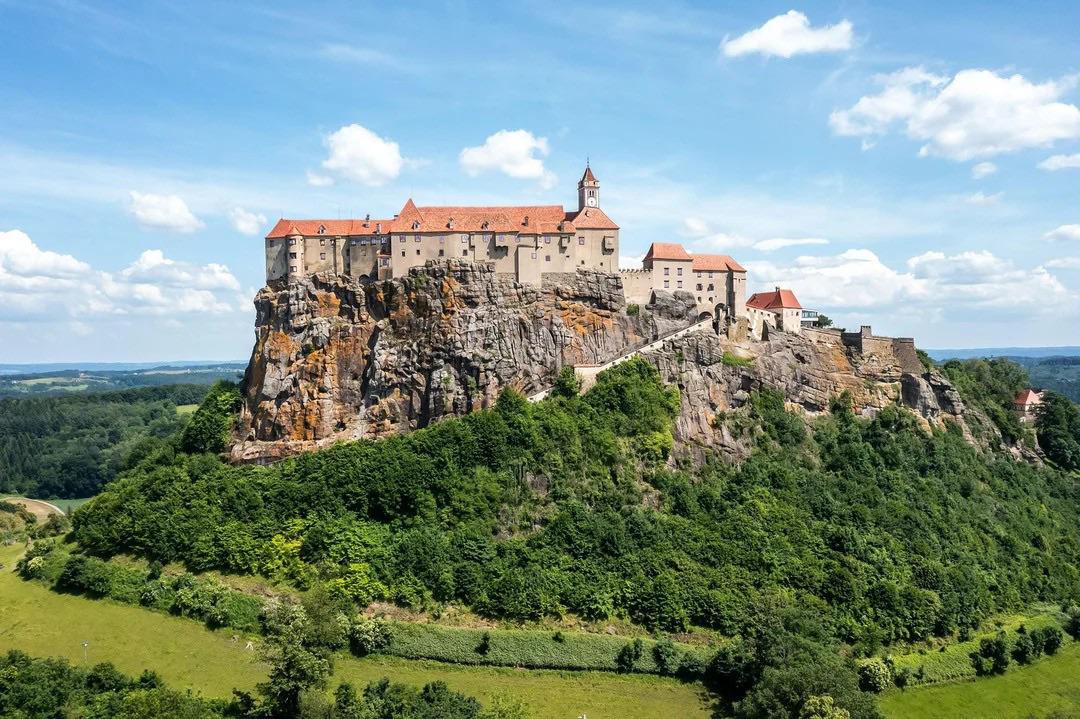
This is the kind of scenario Reddit imagines when it asks: did medieval armies have special forces? Not just elite knights in shiny armor, but small, trained groups sent on risky missions: scaling cliffs, opening gates, assassinating leaders, sabotaging supplies.
The short answer: medieval armies did not have modern-style “special forces” units with permanent training pipelines and commando doctrine. But they absolutely used specialized troops and small groups for high-risk, high-payoff tasks. Medieval commanders thought in terms of function, not formal labels: scouts, raiders, sappers, shock troops, infiltrators.
To understand how this worked, you have to start with how medieval warfare actually operated: slow logistics, fragile discipline, and a constant fear that one night raid could undo months of siege work.
What did a medieval army actually look like?
Before we talk about special operations, we need to clear up a common misconception. Medieval armies were not giant, uniform blocks of knights and peasants charging in straight lines. They were messy coalitions of different kinds of fighters with different skills and jobs.
A typical European army in, say, the 12th–14th centuries might include:
• Heavy cavalry (knights and their retinues).
• Infantry with spears, shields, or later pikes.
• Missile troops: archers, crossbowmen, javelin throwers.
• Engineers and sappers for siege work.
• Local guides and scouts who knew the terrain.
• Mercenaries hired for specific skills, from crossbowmen to climbers.
Most of these men were not professional soldiers in the modern sense. They fought seasonally or when called, then went home. That made sustained, highly technical training rare. There was no medieval equivalent of a Navy SEAL selection course.
What commanders did have was a mix of experience, money, and desperation. Need someone to climb a cliff at night? You do not create a permanent “Cliff Assault Regiment.” You find men used to climbing, pay them well, promise loot or pardon, and hope they survive.
So the structure of medieval armies pushed “special operations” into ad hoc groups and functional roles, not standing elite units. That shaped what was possible and what was too risky to try.
Did anyone actually climb cliffs and open gates?
Yes. The Reddit scenario of scaling rock faces to open a gate is not just fantasy. It happened, though not every week.
Medieval commanders knew that taking a strong fortress by frontal assault was expensive and often suicidal. So they looked for weak points: a badly guarded postern gate, a watercourse, a cliff that defenders thought was unclimbable.
One famous example comes from the First Crusade. In 1098, during the siege of Antioch, a local tower commander named Firuz made a deal with the crusaders. Under cover of darkness, a small group climbed up to a tower he controlled and let them in. This was not a Hollywood rope-climbing team with matching uniforms. It was a handpicked group using stealth, local knowledge, and betrayal to do what a whole army could not: crack the gate from the inside.
In 1204, during the Fourth Crusade’s attack on Constantinople, Venetian and crusader troops used siege towers and ships’ masts to scale the sea walls. Contemporary accounts describe small groups of attackers swarming up ladders and precarious gangways, trying to establish a foothold while defenders hacked at them from above. These were not random mobs. They were chosen for nerve and skill, then thrown at the most dangerous point.
We also see more literal cliff work. In mountain warfare, such as in the Alps or the Pyrenees, local troops familiar with goat paths and crags were used to outflank positions that seemed secure. Chroniclers do not always give us the blow-by-blow, but references to “paths known only to shepherds” and “unexpected attacks from the heights” show the pattern.
So the idea of a small group slipping in by an improbable route was very real. What was missing was a permanent, named “special forces” unit. Instead, commanders built one-off teams from climbers, locals, or volunteers for each mission. That improvisational approach shaped how often such missions were tried and how risky they were.
Who did the sneaky work: scouts, raiders, and spies
If there was anything close to a medieval “special operations” community, it lived in three roles: scouts, raiders, and spies.
Scouts and skirmishers were the eyes and ears of an army. Light cavalry, mounted archers, or nimble infantry moved ahead of the main force, probing for enemy positions, testing routes, and sometimes ambushing small parties. In the 14th century, English armies in France used mounted archers and hobelars (light horsemen) for this work. They needed men who could ride fast, fight in loose order, and make quick decisions without a commander breathing down their neck.
Raiders carried out what we would now call “deep raids” or “disruption operations.” During the Hundred Years’ War, English chevauchées were large-scale raids, but within them, smaller detachments slipped off to burn mills, seize bridges, or capture important prisoners. Mongol armies were even more adept at this. They sent fast detachments far ahead to terrorize, confuse, and fragment resistance. These were not random looters. They were selected for speed, initiative, and the ability to operate independently.
Spies and informants were the quietest “special operators” of all. Medieval rulers paid merchants, clerics, and disgruntled insiders for information. Sometimes they paid them to open gates. The capture of many towns and castles came not from heroic ladder assaults but from bribed guards, secret sympathizers, or local collaborators. Chroniclers often compress this into a line or two, but behind that line is a whole shadow world of negotiation and risk.
These roles mattered because they attacked the most fragile parts of medieval warfare: information and morale. A well-timed raid on supplies or a rumor spread by spies could make a commander abandon a siege that was militarily winnable.
So while there were no named “Special Reconnaissance Regiments,” there were men whose whole job was to move ahead of the army, operate in small groups, and take risks that regular line troops did not.
Siege specialists: sappers, miners, and storming parties
When you picture medieval war, you probably see open-field battles. Medieval commanders, though, spent a lot of time staring at walls. Castles and fortified towns were the real problem. That is where you see the most technical and specialized work.
Sappers and miners were the engineers of the age. They dug tunnels under walls to collapse them, built siege towers and rams, and tried to protect their own works from counterattacks. Mining under a wall was a miserable, dangerous job: cramped, smoky, and prone to sudden death if the defenders found your tunnel and set it on fire or collapsed it.
These men were specialists. They might be recruited from professional builders, miners, or engineers in peacetime. Some rulers, like the kings of France and England in the 13th and 14th centuries, kept royal engineers on retainer. They were not “special forces” in the commando sense, but they were highly trained technical personnel who made certain kinds of operations possible.
Then there were storming parties. When a breach was finally made in a wall, someone had to go through it first. That was often a small, handpicked group of the best infantry, sometimes with extra pay or promises of loot. They carried shields, axes, and short weapons for close work. Their job was to survive the initial storm of missiles and establish a foothold so the rest of the army could pour in.
In some Italian city-states, the most experienced mercenaries or household troops of a lord would be used for these first assaults. In the Byzantine Empire, elite guard units like the Varangian Guard sometimes took on especially dangerous assault roles. Again, the pattern is familiar: select the toughest, best-equipped men, give them a specific high-risk task, and accept that casualties will be heavy.
These siege specialists mattered because they turned static, grinding sieges into decisive moments. A single successful mine, a single breach held by a storming party, could flip months of stalemate into victory in a day.
Assassins, night attacks, and the myth of the medieval ninja
What about the darker side of the Reddit fantasy: assassinating leaders, poisoning wells, silent killers in the night?
Targeted killing did exist. The most famous medieval group associated with this is the Nizari Ismailis, often called the “Assassins” in Western sources. From their mountain fortresses in Persia and Syria in the 11th–13th centuries, they used trained devotees to kill political and military figures. These men infiltrated courts, waited for the right moment, and struck at close range, often with daggers.
They were not a general-purpose special forces unit. They were a religious-political movement using assassination as a strategic tool. But they show that medieval societies could and did train small groups for highly specialized, high-risk missions.
In Christian Europe, assassination was more ad hoc. Enemies were poisoned at banquets, stabbed in churches, or ambushed on the road. Sometimes hired killers were used. Sometimes it was a disgruntled vassal. Chroniclers rarely give us the kind of operational detail that would let us reconstruct “assassination teams,” but the pattern is there: remove the leader, hope the army or faction collapses.
Night attacks were another favorite. In 1192, during the Third Crusade, Saladin’s forces attempted night raids on Richard the Lionheart’s camp. In the 14th century, during the Scottish Wars of Independence, Robert the Bruce and his followers used small night raids to harass English garrisons, burn supplies, and keep larger forces off balance. These raids required men who could move quietly, navigate at night, and keep their nerve when things went wrong.
Poisoning wells or food stores appears in some sources, but far less often than modern fiction suggests. Medieval people understood disease poorly, but they did understand that foul water was dangerous. Poisoning a town’s water supply was hard to do effectively and carried a spiritual and reputational stain that many Christian and Muslim leaders wanted to avoid.
The myth of a medieval “ninja” unit, trained from youth to do all of this on command, does not match the evidence. What we see instead are occasional, targeted uses of assassination and night raids, carried out by men chosen for loyalty, nerve, or desperation, not by a permanent black-clad corps.
These darker operations mattered because they attacked the command structure and psychological stability of medieval polities. Kill the right man at the right time and you might prevent a battle from happening at all.
Why no permanent special forces? Limits of medieval states
Given all this, why did medieval rulers not create permanent, named special forces units? The answer lies in state capacity and military culture.
Medieval states, especially in Europe, were relatively poor and decentralized. Kings and princes struggled just to maintain small cores of household troops or guards. Most of their armies were raised temporarily from vassals and towns. Keeping a year-round, highly trained commando unit was expensive and hard to justify when you might only need them a few times in a reign.
There was also a cultural issue. Elite status in many societies came from visible, honorable combat, not secret work. Knights gained prestige by charging in the open, not by sneaking through a postern gate at night. That did not stop commanders from using stealth when it was useful, but it did shape which roles were formalized and celebrated.
Where states were stronger and more centralized, you do start to see something closer to permanent elite units with specialized roles. The Byzantine Empire had professional guard regiments and specialized cavalry. The Mamluk Sultanate in Egypt fielded a warrior caste trained from youth. Mongol armies trained riders for complex maneuvers and long-range raids. But even in these cases, the same men who could carry out “special” tasks were also used in regular battles. There was no clean institutional separation.
So the absence of medieval “special forces” as a formal category tells you less about imagination and more about money, administration, and honor culture. States that cannot reliably pay a regular infantry force are not going to fund a permanent commando school.
From ad hoc raiders to modern commandos: what changed?
Modern special forces are defined by permanent organization, intensive selection and training, and a clear doctrinal role: small, highly skilled units that do what regular troops cannot. Medieval armies had the missions, but not the institutional framework.
What changed, starting in the early modern period, was the rise of stronger states and standing armies. By the 17th century, European powers could maintain permanent guard units, grenadiers, and light infantry trained for skirmishing and raids. In the 18th and 19th centuries, units like British light companies, Prussian jägers, and various ranger corps took on roles that would have been ad hoc in the 13th century.
By the 20th century, with industrial war and global empires, the logic for specialized, permanent commando units became overwhelming. You see the birth of British Commandos, US Rangers, German Brandenburger units, and later modern special operations forces.
The thread that connects them back to the Middle Ages is not the uniform or the technology, but the problem: how to use small groups of skilled, motivated people to achieve outsized effects. Medieval commanders solved that problem case by case, with climbers, miners, raiders, and bribed gatekeepers. Modern states solved it with institutions.
So when you look at that Austrian cliff castle and imagine a night assault by “special operatives,” you are thinking like a medieval commander, just with modern vocabulary. The missions are familiar. The difference is that today, there would be a unit whose whole identity is built around doing exactly that.
Frequently Asked Questions
Did medieval armies have special forces like modern commandos?
No. Medieval armies did not have permanent special forces units with formal selection and training like modern commandos. They did, however, use small groups of selected men for high-risk missions such as night raids, gate-opening attempts, cliff climbs, and targeted killings. These were ad hoc teams built from existing troops, not standing commando regiments.
Did medieval soldiers really climb walls or cliffs to capture castles?
Yes. Sources describe attackers using ladders, siege towers, ships’ masts, and sometimes steep paths or cliffs to reach walls and towers that defenders thought were secure. These assaults were usually carried out by handpicked, motivated men because the work was extremely dangerous. Success could end a siege in a single night by opening a gate or seizing a key tower.
Were there medieval assassins or spy organizations?
There were. The Nizari Ismailis, often called the Assassins, used trained devotees to kill political and military leaders in the 11th–13th centuries. In Europe and the Middle East, rulers used informants, bribed insiders, and occasional hired killers, though not as part of a single, permanent spy agency. Intelligence and targeted killing were tools, but they were organized informally rather than through modern-style services.
What roles in medieval armies were closest to special operations?
The closest equivalents were scouts and skirmishers who operated ahead of the main army, raiders who struck deep to burn supplies or seize bridges, sappers and miners who attacked fortifications, and small storming parties used in assaults on breaches or gates. These roles required above-average skill, nerve, and initiative, but the men who filled them were not part of a separate, permanent special forces branch.