One minute he was on stage, fake-shredding an air guitar for a free drink. The next clear memory he had, he was alone in the dark Gulf of Mexico, no ship in sight, treading water and wondering if he was already dead.
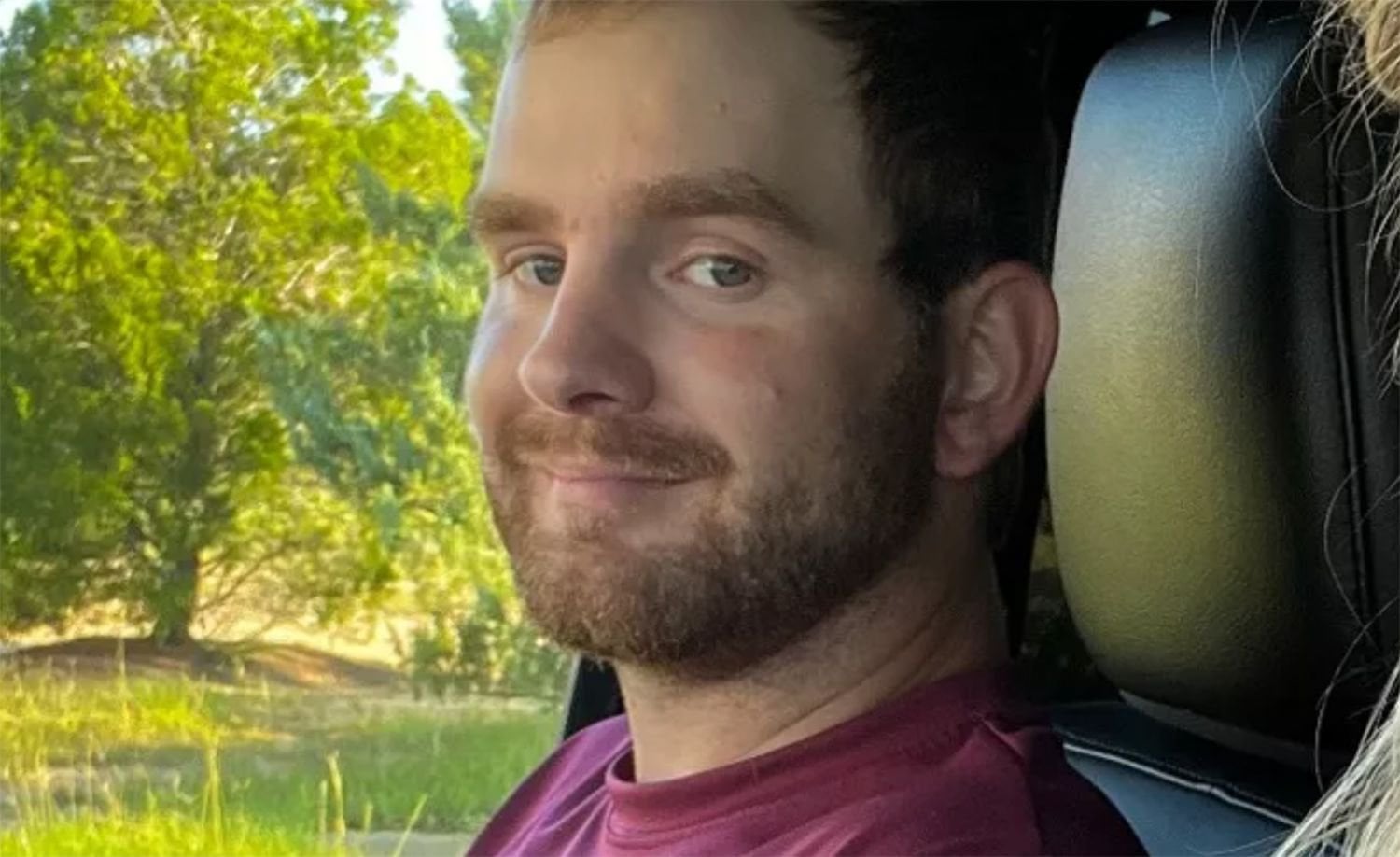
In November 2022, 28-year-old James Michael Grimes vanished from a Carnival cruise ship in the Gulf. Hours later, a Coast Guard helicopter found him in open water, exhausted, stung by jellyfish, and somehow still alive after as long as 18 hours in the sea. The story went viral because it sounded impossible. People asked the same questions: How do you fall off a modern cruise ship? How do you survive that long in the ocean? And what does this say about cruise safety?
This is the story of how Grimes went from winning an air guitar contest to becoming one of the rare people to survive a fall from a cruise ship. It is also a story about alcohol, missing hours, search-and-rescue math, and the uncomfortable gap between how safe cruises feel and how safe they actually are.
Who was the man who fell off the Carnival Valor?
The man at the center of the story was James Michael Grimes, a 28-year-old from Alabama. In late November 2022, he boarded the Carnival Valor in New Orleans with more than a dozen family members for a Thanksgiving cruise to Cozumel, Mexico.
By his own account in later interviews, Grimes was excited. It was his first cruise. He had recently started a new job and saw the trip as a break. On November 23, the day before Thanksgiving, the ship left New Orleans and headed into the Gulf of Mexico.
That evening, Grimes joined a shipboard air guitar competition in one of the bars. He remembered winning a free drink. He remembered having fun. He remembered, as he put it, that he had been drinking but did not feel out of control. Then his memory cut out.
Grimes would later say he did not remember going back to his cabin, did not remember being on any deck, and did not remember falling. His next clear memory was waking up in the ocean, at night, with no ship in sight and no idea how he had gotten there.
The basic facts of who he was and what he remembered matter because they frame the central mystery: a young, relatively healthy man, not known for self-harm, vanishes from a ship without witnesses or video of the fall.
How did he end up overboard, and why is that so hard to answer?
On a modern cruise ship, going overboard is not supposed to be easy. Railings are high. There are cameras everywhere. The industry insists that people do not simply “fall” off ships, that going overboard usually involves climbing, sitting on rails, or severe impairment.
In Grimes’s case, the timeline is fuzzy. Carnival has not released full surveillance footage, and the Coast Guard has given only broad details. What is known is that Grimes was last seen around 11 p.m. on November 23. His sister reported him missing the next day, Thanksgiving, when he did not meet the family for lunch.
Cruise staff searched the ship and made announcements. When they could not find him, they contacted the Coast Guard around 2:30 p.m. on November 24. By then, the Valor had already sailed many miles from where it had been the previous night.
Some reports suggest partial camera footage showed a figure that might have been Grimes in a restricted area or near a railing, but nothing publicly released has confirmed the exact moment or manner of his fall. Grimes himself has said he does not know how he went overboard, only that he woke up in the water.
There are three broad possibilities that experts usually consider in such cases: a deliberate jump, an accident involving risky behavior near the railings, or an impaired person losing balance. Grimes and his family reject the idea of a suicide attempt. He has described himself as not depressed and said he was looking forward to the trip and his new job.
That leaves accident plus alcohol as the most likely explanation, though the lack of clear video keeps it in the realm of inference rather than certainty. Cruise lines are not eager to publicize details that might raise questions about security gaps or overserving guests.
The uncertainty about how he went overboard matters because it feeds public confusion about cruise safety and because it shapes how regulators and the industry think about prevention.
What happened during his 18 hours in the Gulf of Mexico?
When Grimes woke up, it was dark. The Gulf of Mexico was choppy. He could not see the ship. He had no life jacket, no flotation device, and no clear sense of direction. He later described thinking he might be hallucinating or dead.
Survival in open water is a race between exhaustion, hypothermia, drowning, and whatever the sea throws at you. In late November, the Gulf is not freezing, but it is not warm enough to be safe for long either. Water temperatures in that region are often in the low to mid 70s Fahrenheit (around 22–24°C) at that time of year. That is survivable for many hours, but the body still loses heat faster than in air.
Grimes said he tried to keep moving, alternating between treading water and floating on his back to conserve energy. At some point, he saw what he thought was a log and tried to climb on it. It turned out to be something alive. He described being headbutted by what might have been a shark or a large fish, though this detail cannot be independently confirmed.
He was definitely not alone in one sense. Twice, he said, he was surrounded by jellyfish and stung all over his arms and legs. Jellyfish stings are painful and can trigger panic, but in his case they did not appear to cause life-threatening reactions. They did, however, add to the physical stress and confusion.
He also had to manage his own mind. People lost at sea often report waves of despair, hallucinations, or an overwhelming urge to give up. Grimes later said he kept thinking about his family and told himself he had to keep going. He sang songs to stay awake and alert.
Survival experts often say that in open water, the first hours are about staying afloat, and the later hours are about staying mentally present. Grimes had to do both, without training, in darkness and then in the heat of the following day.
His long night in the Gulf matters because it shows how thin the line is between life and death at sea, and how much survival can hinge on a mix of physical condition, water temperature, and mental stubbornness.
How did the Coast Guard find one man in the open ocean?
When the Carnival Valor reported a missing passenger on Thanksgiving afternoon, the U.S. Coast Guard faced a classic search-and-rescue problem: a moving ship, a missing man with an unknown fall time, and a huge search area.
The Coast Guard launched aircraft and boats from New Orleans and nearby stations. They used the ship’s route, speed, and last known position of Grimes to estimate where he might be. This involves drift models that account for currents, wind, and the way a human body tends to move in water.
At one point, a tanker ship, the Crinis, reported seeing something in the water. That sighting helped narrow the search area. A Coast Guard MH-60 Jayhawk helicopter flew to the spot. From the air, a person in the water is almost invisible, especially in choppy seas. Search crews look for contrast, movement, and any flash of color.
As dusk approached on November 24, a crew member on the helicopter spotted a small head and arms in the waves. Video released later by the Coast Guard shows a man struggling to stay above water, waving weakly. He had been in the Gulf for what the Coast Guard estimated could have been up to 18 hours.
A rescue swimmer jumped in, swam to Grimes, and secured him in a basket. They hoisted him into the helicopter. He was conscious but exhausted, dehydrated, and showing signs of hypothermia. He was flown to New Orleans for medical care.
Finding one person in the open ocean is like trying to spot a basketball from a helicopter over a field of moving grass. The fact that they found him at all, before nightfall, was a combination of quick reporting, drift modeling, and plain luck.
The search and rescue operation matters because it shows how dependent cruise passengers are on outside agencies when something goes wrong, and how narrow the window for survival can be.
How rare is it to survive a cruise ship fall?
People do go overboard from cruise ships more often than most passengers realize. Various studies and industry reports suggest that from the mid-1990s to the early 2020s, hundreds of people fell or jumped from cruise ships and large ferries worldwide. One widely cited figure is roughly 20 to 25 overboard incidents per year across the global cruise industry, though exact numbers vary by source.
Survival is the exception. Analyses of past cases suggest that only about 20 to 25 percent of people who go overboard are recovered alive. The odds are worse if the fall is not witnessed, if it is at night, or if the person is not wearing a life jacket.
Several factors worked in Grimes’s favor. He was relatively young and fit. The Gulf water was cool but not icy. The Coast Guard was notified within hours of his disappearance, not days. There was at least one reported sighting that helped narrow the search. And he managed to stay afloat and conscious long enough to be seen from the air.
By contrast, many overboard cases involve older passengers, intentional jumps, or severe intoxication. Some falls are never noticed until the ship reaches the next port. Without a clear fall time and location, search areas become enormous, and the odds of finding a single person drop sharply.
There is also the question of technology. Some advocates have pushed for automatic man-overboard detection systems that use cameras and sensors to alert crew the moment someone goes over a rail. The cruise industry has been slow to adopt them widely, citing cost, technical challenges, and false alarms.
The rarity of survival in such cases matters because it turns Grimes’s story from a freak accident into a lens on how thin the safety margins can be and why prevention is far more reliable than rescue.
What did this incident reveal about cruise safety and alcohol?
After the rescue, Grimes appeared on national television. He described his ordeal and said he did not remember falling. He acknowledged drinking but did not think he was extremely drunk. Viewers and readers were split. Some saw him as incredibly lucky. Others saw a cautionary tale about alcohol on cruises.
Cruise ships are floating resorts. Bars are everywhere. Drink packages encourage heavy consumption. Staff are trained to stop serving people who are visibly intoxicated, but enforcement can be uneven, especially in busy venues late at night.
In many overboard cases, alcohol is a factor. Intoxication affects balance, judgment, and risk-taking. People climb on railings for photos, lean too far over, or wander into restricted areas. The industry often frames such incidents as the result of passenger behavior rather than systemic issues.
Grimes’s case also raised questions about how quickly ships react when someone is missing. His family did not realize he was gone until the next day. The ship did not know when he had last been seen on board. Without automatic detection or constant headcounts, a person can vanish for hours before anyone notices.
Regulators and safety advocates argue that better technology, stricter alcohol policies, and clearer reporting rules could reduce both the number of falls and the time it takes to start a search. The cruise industry counters that overboard incidents are rare compared to the millions of passengers carried each year.
The way this incident exposed the tension between personal responsibility and corporate safety measures matters because it shapes future rules, lawsuits, and passenger expectations.
What is the legacy of the Gulf of Mexico survival story?
Grimes’s survival story spread quickly online and in traditional media. The details were cinematic: the air guitar contest, the blackout, the jellyfish, the long night in the water, the last-minute helicopter rescue. It had the shape of a miracle story, and it was often told that way.
But beyond the drama, the case fed into ongoing debates about cruise safety. Advocates for man-overboard detection systems pointed to it as another example of how hours can pass before anyone notices a missing passenger. Commenters on social media asked why ships do not have better barriers or stricter alcohol controls.
For the Coast Guard, it was a rare public win. Most search-and-rescue missions at sea do not end with a live recovery after so many hours. The video of Grimes being hoisted from the water became a kind of recruitment reel for the service’s capabilities.
For Grimes himself, the experience was life-altering. He has said he sees his survival as a second chance and has tried to use the attention to tell people not to give up in hard situations. At the same time, the unanswered questions about how he went overboard linger.
In the wider story of cruise travel, his night in the Gulf matters as a vivid reminder that a cruise ship is not a bubble outside of risk. It is a hotel surrounded by open water, where one bad decision, one misstep, or one missed alarm can turn a vacation into a survival story.
Frequently Asked Questions
How did the man fall off the Carnival Valor cruise ship?
The exact way James Grimes fell off the Carnival Valor in November 2022 is still unclear. He was last seen late at night after winning an air guitar contest and drinking, but he has no memory of going overboard, and no full surveillance video of the fall has been released publicly. The most likely explanation is an alcohol-related accident near a railing or restricted area, but this has not been definitively proven.
How long did he survive in the Gulf of Mexico after falling overboard?
The U.S. Coast Guard estimated that James Grimes was in the water for as long as 18 hours. He fell overboard sometime late on November 23, 2022, and was rescued at dusk on November 24. During that time he treaded water, floated to conserve energy, endured jellyfish stings, and fought exhaustion and hypothermia until a Coast Guard helicopter crew spotted him.
How did the Coast Guard find one person in the open ocean?
After the Carnival Valor reported Grimes missing on November 24, the Coast Guard used the ship’s route, speed, and last known position to estimate a search area. They launched aircraft and boats and used drift models to predict where a person in the water might be carried by currents and wind. A commercial ship reported a possible sighting, which helped narrow the area, and a helicopter crew eventually spotted Grimes in the waves and hoisted him to safety.
How common is it for people to fall off cruise ships, and do they usually survive?
Overboard incidents on cruise ships are rare compared to the total number of passengers, but they do happen every year. Various reports suggest roughly 20 to 25 people go overboard annually worldwide from cruise ships and large ferries. Survival is uncommon. Only about one in four overboard cases result in a live recovery, and the odds drop sharply if the fall is unwitnessed, happens at night, or if the person is not wearing a life jacket.