She only wanted a few cheap tickets.
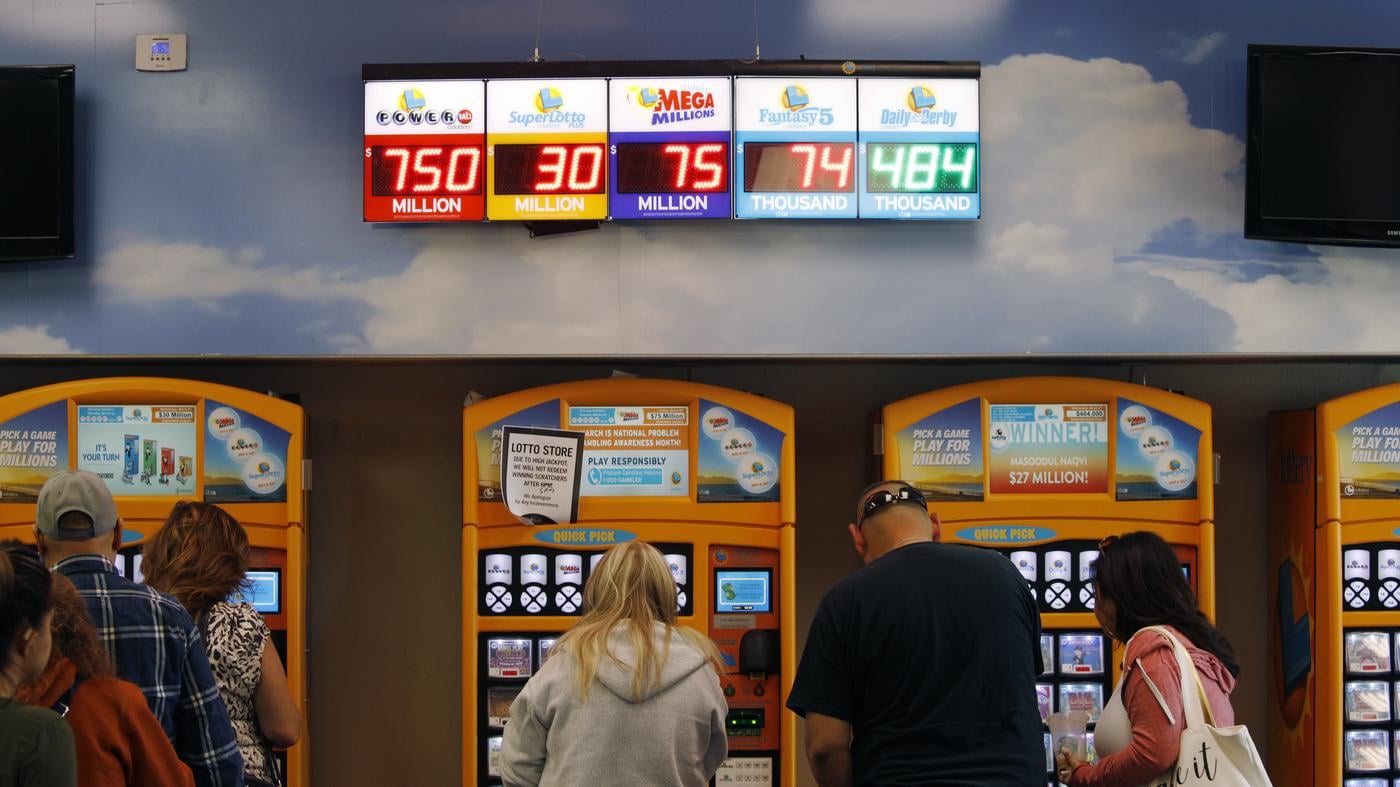
Forty dollars into a California lottery vending machine, finger hovering over the lower-priced options, when someone bumped her shoulder. Her hand slipped. She hit a $30 scratch-off she never meant to buy.
She was angry. Thirty out of forty dollars gone in one clumsy jab. Then she scratched the card and saw it: a $10 million jackpot.
Stories like this go viral because they feel like a glitch in the universe. One rude stranger, one wrong button, and a life flips. They look similar to other success stories we tell ourselves, because in both cases someone ends up rich. But the engine underneath is very different.
Lottery wins and skill-based success both produce money and headlines. They run on different rules: one is pure probability, the other is effort stacked on smaller chances. By the end of this, you will see why that bumped-into jackpot is not just rare, but almost the opposite of how most real-world success is built.
Why lottery wins and success stories look the same at first
On the surface, a $10 million lottery winner and a $10 million entrepreneur look like the same species. Big house. No more night shifts. Family debts paid off. The before-and-after photos are identical.
That is why the Reddit story hits so hard. It compresses the fantasy: you do something ordinary, the universe taps you on the shoulder, and your bank account explodes. No years of grinding. No boss. Just a vending machine and a bump.
Success through skill has its own mythology. The garage startup. The kid who practiced piano eight hours a day and now plays sold-out halls. The athlete who “made it” after years of 5 a.m. workouts. Different path, same destination: money, status, freedom.
Both narratives feed the same hope: that life can change quickly and permanently. Both are told as turning points. Both are edited down to a moment. She scratched the ticket. He got the promotion. She went viral on TikTok. He sold the company.
Lottery wins and earned success look similar because we usually see only the final snapshot, not the process or the probabilities behind it. So what? Because if you confuse the two, you can start making lottery-style bets in places where you actually need skill, patience, and boring math.
Origins: where lottery jackpots and earned success come from
Modern state lotteries in the United States took off in the 1960s and 1970s. New Hampshire launched the first modern state lottery in 1964. Others followed, pitching it as “voluntary” tax money for schools and public projects. Scratch-off tickets appeared in the 1970s, designed to give instant results instead of waiting for a weekly draw.
The basic model is simple. The state prints a fixed number of tickets. A tiny fraction are big winners. The rest are losses or small prizes. The odds are printed on the back in tiny type: often something like 1 in 3 million or worse for a top prize. The California Lottery has confirmed multiple $10 million scratcher wins, but each one sits on top of millions of losing tickets.
Skill-based success has a different origin story. It comes out of older ideas: craft, apprenticeship, education, trade. You learn something that is hard to do. You get better. You use that skill in a market where people pay for it.
Think of a surgeon, a software engineer, a plumber, or a small business owner. None of them are guaranteed riches. But their odds of earning a good income are not 1 in 3 million. They are more like “if you do the work and make decent decisions, your chances are reasonable.”
In statistics terms, the lottery is pure random chance with fixed odds. Skill-based success is probabilistic, but the probabilities move with your actions, your environment, and time. So what? Because the origin of the lottery is built on extracting money from many to pay a few, while the origin of skill-based success is built on creating value that others willingly pay for.
Methods: how lottery tickets and skills actually work
Buying a lottery ticket is simple. You exchange money for a tiny chance at a big payout. The expected value of a lottery ticket is negative. That means if you bought the same kind of ticket over and over for years, your average return would be less than what you spent.
For example, suppose a scratch-off ticket costs $30 and the top prize is $10 million. The lottery might sell several million of those tickets. Only a handful will pay the top prize. Many will pay nothing. Some will pay small amounts like $30 or $50 to keep players hooked. When you average all outcomes, the player loses and the lottery keeps a cut for the state.
Skill building works differently. You invest time and effort instead of (or alongside) money. You study, practice, fail, repeat. You take on projects that stretch you. You build a network. None of this guarantees success, but it changes your odds.
A person who spends 10 years learning software development, marketing, or welding has a far higher chance of earning a solid income than someone who does not. The expected value of skill-building is usually positive. Not every degree or trade pays off equally, but as a category, skills raise lifetime earnings.
There is also compounding. A lottery ticket does not get more valuable because you bought one yesterday. Each ticket is a fresh, independent bet. Skills compound. The more you know, the faster you can learn related things, and the more valuable your time becomes.
Lottery methods are about isolated bets against fixed odds. Skill methods are about repeated actions that change the odds in your favor over time. So what? Because if you treat your career or finances like a scratch-off, you are fighting math that is rigged against you, instead of using math that can quietly work for you.
Outcomes: what actually happens to lottery winners vs earners
Here is the part people argue about in comment sections: what happens after the big win.
There is a popular claim that “most lottery winners go broke.” The data is messy. Some studies of large American lottery winners suggest many keep working and avoid bankruptcy. Others, especially those looking at smaller windfalls or different countries, find higher rates of financial trouble, addiction, or strained relationships.
What is clear is that sudden wealth is a shock. People who win large jackpots report being overwhelmed by requests for money. Some quit their jobs and lose structure. Others spend heavily on houses, cars, and gifts without a plan for taxes, maintenance, or long-term investing.
One often-cited study from 2010 looked at Florida lottery winners and bankruptcy filings. It found that people who won between $50,000 and $150,000 were more likely to file for bankruptcy within a few years than similar people who did not win. The problem was not just the money. It was behavior that did not change, now supercharged with cash.
Skill-based high earners have their own risks. Entrepreneurs can blow fortunes on bad expansions. Athletes can lose everything after injuries. Professionals can get complacent. But there is a key difference: they usually have at least some understanding of how the money came in, and some ability to earn again if they lose it.
A surgeon who mismanages money can go broke, but she still has a skill that pays. A lottery winner who never built marketable skills may have no way to replace a blown fortune.
There is also the psychological side. People who built wealth over years often adjust gradually. Their social circles, habits, and expectations shift step by step. Lottery winners go from one life to another in a week. That shock can strain marriages, friendships, and mental health.
Lottery outcomes are lumpy and fragile. Skill-based outcomes tend to be steadier and more repairable. So what? Because the way money arrives shapes how well you can keep it, and windfalls without preparation can be as dangerous as they are dramatic.
Legacy: how lottery culture and skill culture shape society
State lotteries sell more than tickets. They sell a story: anyone can win. The marketing is full of everyday people suddenly free. For governments, lotteries are a way to raise billions without raising taxes. In the United States, lottery sales exceed $90 billion a year.
The burden is not evenly spread. Research in multiple states has found that lower-income people spend a larger share of their income on lottery tickets. For some, it is entertainment. For others, it is a desperate plan B in a world where wages feel stuck and housing is out of reach.
That is where the Reddit story fits. It feeds the fantasy that a single lucky break can fix everything. When work feels like a dead end, the vending machine looks like a portal.
Skill culture tells a different story: your best bet is to get better at something useful. That can sound boring compared to a $10 million scratcher, but across a population it adds up to higher productivity, better services, and more stable families.
Countries that invest heavily in education, vocational training, and apprenticeships tend to have stronger middle classes and less dependence on pure luck. Their “jackpots” are more likely to be patents, thriving small businesses, or long careers, not instant windfalls.
Lotteries are not just games. They are a symptom of how people feel about their chances in the regular economy. When people stop believing that skill and work can move them up, they buy more tickets.
Lottery culture normalizes the idea that your best hope is a miracle. Skill culture normalizes the idea that your best hope is slow, compounding effort. So what? Because whichever story a society believes more deeply will shape how it educates its kids, taxes its citizens, and explains who “deserves” to be rich.
So what does that $10 million bump really mean?
The woman at the vending machine did nothing wrong. She bought a legal product and got a life-changing result. She is not a moral lesson. She is a statistical outlier.
Her story is real, but it is not a plan. For every person who gets bumped into a jackpot, millions of others get bumped into nothing. The odds do not care how much you “need” the money or how long you have been playing.
Skill-based success is not fair either. People start from different places. Some have better schools, safer neighborhoods, and richer parents. Luck still matters. Illness, accidents, and timing can wreck the best-laid plans.
The difference is that skill, effort, and good decisions move the needle in a way lottery tickets never will. You can influence your odds of getting a promotion, landing a client, or building a side business. You cannot influence the odds printed on a scratch-off, no matter how carefully you pick the card.
Lottery wins and earned success look similar because both end with someone holding a big check. Underneath, one is a rare lightning strike. The other is a long, messy construction project.
The $10 million bump is a great story. The quieter story that rarely goes viral is the person who never buys a ticket, keeps stacking skills, and ends up with a life that is less dramatic, but far more repeatable.
So what? Because if you understand the difference, you can enjoy the lottery story as a curiosity without mistaking it for a strategy.
Frequently Asked Questions
What are the real odds of winning a $10 million lottery jackpot?
For scratch-off games with $10 million top prizes, the odds are usually in the millions to one, often around 1 in 3–5 million for the top prize. Exact odds depend on the specific game and are printed on the back of the ticket or on the lottery’s website.
Do most lottery winners really go broke?
The claim that “most” lottery winners go broke is exaggerated, but sudden wealth does create risk. Some studies show higher bankruptcy rates among medium-size winners compared to non-winners, while large jackpot winners often keep working and avoid bankruptcy. Outcomes vary widely based on financial behavior and support.
Is it smarter to invest in skills than buy lottery tickets?
From a financial perspective, yes. Lottery tickets have negative expected value, meaning you lose money on average over time. Investing in skills, education, or a trade usually raises your lifetime earning potential and gives you more control over your financial future.
Why do low-income people spend more on lottery tickets?
Research shows that lower-income people often spend a higher share of their income on lotteries. Reasons include using the lottery as cheap entertainment, feeling shut out of other paths to wealth, and believing a big win is the only realistic way to escape debt or low wages.