In a quiet Dutch church, under centuries of dust and plaster, workers recently uncovered a jumble of old bones. On their own, they were just human remains. But the location, the period, and a few scraps of context raised a startling possibility: these might be the lost remains of Charles de Batz de Castelmore, better known to the world as d’Artagnan, the most famous French musketeer of them all.
The real d’Artagnan died in 1673 during the siege of Maastricht, fighting for Louis XIV. His body was never clearly identified, and his grave was lost to time. The report that his bones may have turned up in a Dutch church has people asking the same questions: Who was the real d’Artagnan, what actually happened at Maastricht, and how do you even begin to identify a 17th‑century celebrity soldier from a pile of bones?
By the end of this story, d’Artagnan looks less like a swashbuckling cartoon and more like what he was: a hard‑driving officer in a very real, very bloody war, whose legend outgrew his lost grave.
What was found in the Dutch church, and what does it mean?
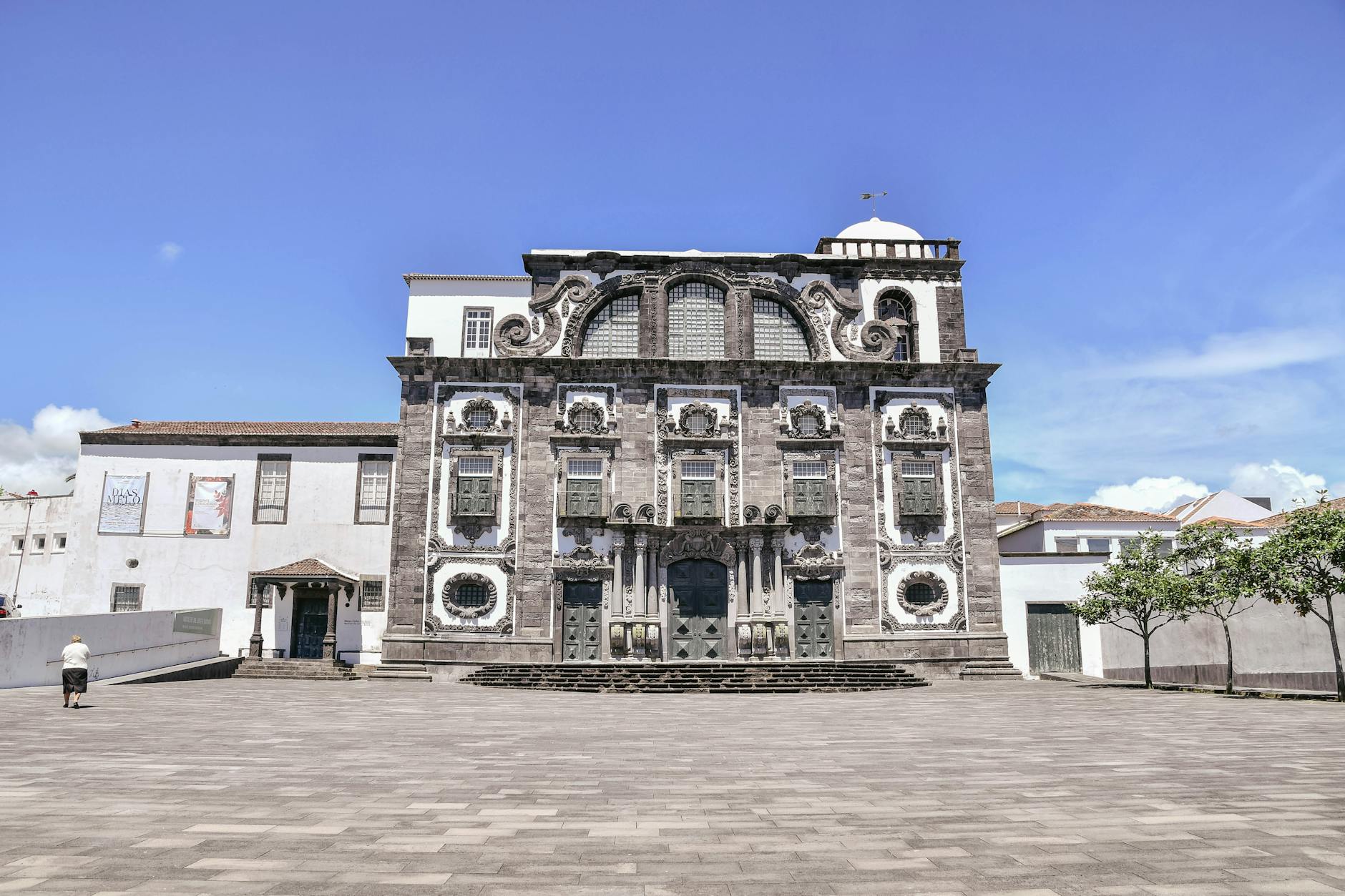
The headline news is simple enough. During restoration work at the Basilica of Saint Servatius in Maastricht, archaeologists uncovered human remains in an area linked by tradition and some historical hints to the French assault on the city in 1673. Local researchers and French historians quickly floated the idea: this could be d’Artagnan.
In plain terms, the claim is this: archaeologists may have located the burial place of the real d’Artagnan, the historical musketeer who died during the French siege of Maastricht in 1673. It is not confirmed. It is a hypothesis based on location, context, and written sources.
Here is what we know with some confidence. D’Artagnan died near the Tongersepoort (Tongeren Gate) of Maastricht on 25 June 1673, during a French assault. Contemporary accounts say his body was recovered by the French and buried in the city. Later traditions, especially from the 19th century onward, placed his grave in or near Saint Servatius, a major church in Maastricht.
So when bones from the right period turn up in the right place, people get excited. But bones do not come with name tags. Without DNA that can be matched to known descendants, or some very specific artifact, all anyone can say right now is that these remains could belong to a French officer killed in 1673, possibly even d’Artagnan.
So what? Even the possibility of finding d’Artagnan’s remains matters because it connects a global literary icon to a specific patch of ground and a specific battle, reminding us that the musketeers were not just characters but men who bled and died in very real wars.
What set it off: the real d’Artagnan and the war that killed him
Before he was a myth, Charles de Batz de Castelmore d’Artagnan was a younger son of minor Gascon nobility, born around 1611 in Lupiac in southwestern France. Like many poor gentlemen from that region, he went north to make his fortune with a sword. By the late 1630s or early 1640s, he had joined the king’s Musketeers, an elite mounted infantry and bodyguard unit.
He was not a dueling playboy. He was a career officer. D’Artagnan rose through the ranks under Cardinal Mazarin and Louis XIV, serving as a trusted fixer. He escorted the future Charles II of England, arrested the powerful finance minister Nicolas Fouquet in 1661, and guarded the Bastille. By the 1660s he was captain-lieutenant of the king’s Musketeers, effectively their field commander.
His death came in the context of the Franco‑Dutch War (1672–1678). Louis XIV wanted to break Dutch commercial and political power and expand French influence. In 1672 he invaded the Dutch Republic. The campaign slowed in 1673, and Maastricht, a fortified city on the Meuse River, became a key target. Take Maastricht, and France would control a major crossing and pressure the Dutch heartland.
Louis XIV brought his best. The siege of Maastricht in June 1673 featured the famous military engineer Sébastien Le Prestre de Vauban and elite French units, including the Musketeers. D’Artagnan, by then in his early sixties, was in the thick of it.
So what? Understanding the war and d’Artagnan’s real career strips away the Hollywood gloss and shows why he was even at Maastricht: he was not chasing adventure, he was executing Louis XIV’s expansionist policy as a senior officer in a very modern, very organized royal army.
The turning point: the assault on Maastricht and a lost grave
The key moment came during a French assault on Maastricht’s defenses on 25 June 1673. Vauban’s siege works had inched close to the city. To break the stalemate, French commanders ordered a storming attack near the Tongersepoort, one of the city gates. The Musketeers were part of the assault force, used as shock troops.
Accounts written after the fact, some more romantic than reliable, describe d’Artagnan leading from the front, as he usually did. During the fighting, he was hit by enemy fire, probably musket or cannon, and killed near the glacis outside the walls. The French took heavy casualties but kept up the siege. Maastricht surrendered shortly after, on 30 June 1673.
What happened to his body is where history blurs into guesswork. Several sources say his corpse was recovered and buried in Maastricht. They do not give a precise location. Later writers, especially once Alexandre Dumas turned d’Artagnan into a literary hero in the 1840s, began to place his grave in more specific spots, often in or near Saint Servatius. Some of that is based on local tradition, some on inference, some on wishful thinking.
That is the gap the recent discovery tries to fill. If you can match a burial to a French officer killed in June 1673, in a place associated with French casualties from the siege, you have at least a plausible candidate for d’Artagnan’s resting place.
So what? The assault on Maastricht is the hinge between the historical officer and the legend. His dramatic battlefield death, followed by a vague burial, created the mystery that modern archaeologists are now trying to solve.
Who drove it: the real d’Artagnan, Dumas, and today’s investigators
Three sets of people shape this story: the historical musketeer, the 19th‑century novelist who turned him into a myth, and the modern researchers trying to separate fact from fiction.
The real d’Artagnan left a paper trail. He appears in royal correspondence, military records, and especially in the memoirs of Gatien de Courtilz de Sandras, published in 1700. Courtilz’s book, Mémoires de Monsieur d’Artagnan, is part biography, part gossip, part invention. It painted d’Artagnan as a daring, clever Gascon and gave later writers plenty of material to embellish.
Alexandre Dumas read Courtilz and ran with it. In 1844 he published The Three Musketeers, followed by sequels. Dumas used the name d’Artagnan and some real historical scaffolding, then filled the gaps with duels, romance, and conspiracies. His d’Artagnan is younger, poorer, and more hot‑headed than the historical officer, but the basic arc is similar: a Gascon gentleman who rises through the Musketeers by courage and loyalty.
Dumas never claimed to be writing strict history. But his novels were so popular that for most people, d’Artagnan became a fictional character first and a historical figure second. That is why the idea of finding “d’Artagnan’s bones” feels like discovering Sherlock Holmes’s skull. We are used to thinking of him as made‑up.
Then there are the modern investigators. Dutch archaeologists, local historians in Maastricht, and French scholars of the Musketeers have been circling this question for years. The recent discovery is part of a broader effort to map the 1673 siege, locate French burial grounds, and see how much of the d’Artagnan lore can be tied to actual earth and stone.
They use tools that would have baffled both Dumas and d’Artagnan: stratigraphy, radiocarbon dating, isotopic analysis, and, if they are lucky, DNA comparisons with living descendants of the de Batz de Castelmore line in France. None of that guarantees a clear answer, but it does move the debate from legend to lab.
So what? The mix of a real 17th‑century officer, a 19th‑century novelist, and 21st‑century science shows how historical memory gets built, distorted, and sometimes corrected, all circling around the same dead man.
What it changed: from obscure officer to global icon
In his own time, d’Artagnan was respected but not unique. Louis XIV’s armies were full of tough professional officers. He was one more, albeit one close to the center of power. His death at Maastricht did not change the course of the war. The Franco‑Dutch War dragged on until 1678, ending with the Treaty of Nijmegen and some gains for France, but not the total Dutch collapse Louis had hoped for.
The real change came later, when Courtilz’s semi‑fictional memoirs and then Dumas’s novels turned him into the archetypal musketeer. After The Three Musketeers, d’Artagnan was no longer just a name in muster rolls. He became the face of a certain idea of France: honor, camaraderie, panache, and a bit of swagger.
That had real consequences. Tourism in Gascony, the branding of French military units, even the way the Musketeers are remembered in French national mythology all lean heavily on Dumas’s version of events. The historical Musketeers were a royal guard and shock troops. The fictional Musketeers are a brotherhood of friends shouting “All for one, and one for all!” at the drop of a hat.
The possible discovery of d’Artagnan’s remains nudges that balance. It reminds people that the Musketeers were not just romantic swordsmen. They were part of Louis XIV’s state machinery, enforcing royal authority at home and fighting aggressive wars abroad. The bones in a Dutch church are a quiet counterweight to the movie posters.
So what? The shift from obscure officer to global icon, and then back toward the real man through archaeology, shows how individual lives can be inflated by culture and then re‑anchored by evidence.
Why it still matters: myth, memory, and how we treat the dead
So where does that leave the Dutch bones and the man who might have owned them?
First, it is a case study in how historians and archaeologists handle famous remains. The temptation to declare a quick victory is strong. “We found d’Artagnan!” is a great headline. Responsible researchers move slower. They talk about probabilities, not certainties. They compare dates, injuries, burial context, and, if possible, DNA. They also weigh the ethics of testing and public display for someone who has been dead for 350 years.
Second, it shows how national histories cross borders. A French hero may be buried in a Dutch church because Louis XIV’s wars did not respect modern frontiers. Maastricht remembers the siege as a traumatic episode. France remembers it, if at all, as one more step in the Sun King’s rise. The possible grave of d’Artagnan sits at the junction of those memories.
Third, it pushes people to separate the real 17th‑century musketeer from the 19th‑century literary hero. You can enjoy Dumas’s novels and the films and still accept that the historical d’Artagnan was an aging officer killed in a brutal siege, not a forever‑young swashbuckler. The bones, if they are his, belong to that older, grimmer story.
So what? The hunt for d’Artagnan’s remains matters because it forces us to confront how we turn real people into myths, how we use science to test those myths, and how even a handful of old bones can reopen arguments about war, memory, and national pride.
Frequently Asked Questions
Who was the real d’Artagnan in history?
The real d’Artagnan was Charles de Batz de Castelmore, a Gascon nobleman born around 1611 who became an officer in the king’s Musketeers under Louis XIV. He served as a trusted royal agent, helped arrest the finance minister Nicolas Fouquet, commanded the Musketeers, and died in 1673 at the siege of Maastricht during the Franco‑Dutch War.
How did d’Artagnan die at the siege of Maastricht?
D’Artagnan died on 25 June 1673 during a French assault on the defenses of Maastricht, near the Tongersepoort. As captain‑lieutenant of the Musketeers, he led his men in a storming attack and was killed by enemy fire, probably musket or artillery. Maastricht surrendered a few days later, but his body was buried in the city and the exact grave was lost over time.
Have archaeologists really found d’Artagnan’s remains?
Archaeologists in Maastricht have found human remains in a church area linked to the 1673 siege, and some historians think these bones could belong to d’Artagnan. However, this is not confirmed. To prove it, researchers would need strong evidence such as dating to the right period, signs of battle injuries, and ideally DNA that matches known descendants of the de Batz de Castelmore family. For now, it is an intriguing but unproven hypothesis.
Was d’Artagnan a real musketeer or just a character from The Three Musketeers?
D’Artagnan was a real musketeer and a historical officer in the French royal army. Alexandre Dumas used his name and some biographical details from earlier memoirs to create the hero of The Three Musketeers. The fictional d’Artagnan is younger and more romanticized, but he is based on the real Charles de Batz de Castelmore, who served Louis XIV and died in battle.