Harry Truman liked to say he started his day with a shot of bourbon, his “morning medicine.” For a man who ordered atomic bombs dropped on Japan and fired General Douglas MacArthur, the image of him tossing back whiskey before breakfast sticks in the mind.
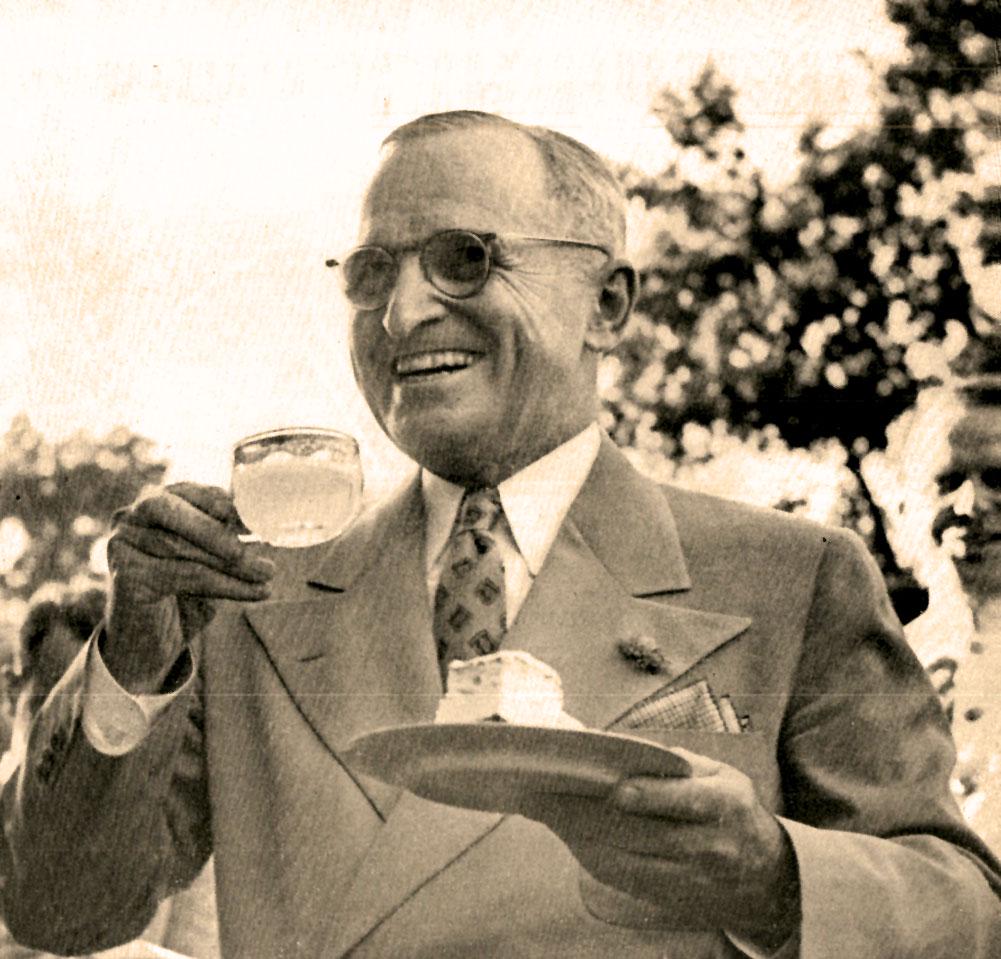
It also raises questions. Did the 33rd president really drink bourbon every morning? Was he an alcoholic in an era that looked the other way? And what does this habit tell us about Truman, his presidency, and American attitudes toward alcohol?
Harry Truman’s “morning medicine” was a small daily ritual, not a secret addiction. It was a modest shot of bourbon taken early in the day, part of a broader, controlled drinking pattern that never rose to the level of alcoholism by the standards of his time or ours.
To understand why that matters, you have to see Truman as he saw himself: a tough, self-disciplined farm boy from Missouri who believed in routine, moderation, and a little whiskey as a tonic.
What was Truman’s “morning medicine,” really?
By most reliable accounts, Harry S. Truman’s “morning medicine” was a single shot of bourbon taken early in the day, usually before breakfast, mixed with orange juice or taken neat, depending on the source. He used the phrase himself, half joking, half serious, to describe what he saw as a mild stimulant and digestive aid.
Truman was not the only one who thought this way. In the late 19th and early 20th centuries, doctors sometimes prescribed small amounts of whiskey or brandy as a tonic, especially for digestion, circulation, or as a pick-me-up for the elderly. By the time Truman was president in the 1940s, that medical fashion was fading, but the habit lingered in older generations.
Truman’s daily routine is fairly well documented. He rose early, often around 5 a.m., did his famous brisk walk, read the papers, and then had breakfast. Somewhere in that early block of time, he took his “morning medicine.” That was usually it for hard liquor until the evening, when he might have another drink or two, often during social events or small gatherings.
Harry Truman’s “morning medicine” was a small, regular shot of bourbon, not a day-long bender. It was part of his morning routine, not the engine of it.
So what? Defining the habit clearly matters because the phrase “shot of bourbon every morning” easily mutates into “drunk in the Oval Office,” which distorts both Truman’s character and how presidents actually lived and worked.
Why did Truman start his day with bourbon?
Truman was born in 1884 in rural Missouri, into a world where alcohol was ordinary, not exotic. Whiskey was farm currency, medicine, and social glue. His parents were Baptists, and he grew up in a culture that frowned on drunkenness but did not panic over a daily drink.
By the time he reached adulthood, the temperance movement was strong, and then Prohibition arrived in 1920. Truman’s relationship with alcohol formed in the crossfire between old rural habits and new moral crusades. He disliked public drunkenness and chaos, but he never bought into the idea that all alcohol was evil.
There were a few other reasons the “morning medicine” fit him:
1. A generational belief in whiskey as a tonic. Truman was part of a cohort for whom a small daily drink was considered good for circulation, digestion, and nerves. This was not fringe quackery in his youth. It was mainstream folk medicine.
2. A nervous stomach and high-pressure job. Truman had digestive issues and a job that would have shredded most people’s nerves. He came into the presidency in April 1945, with World War II still raging, no briefing on the atomic bomb, and a sense that he was in over his head. A small morning drink, in his mind, steadied the system.
3. A culture of social drinking in politics. American politics in the mid-20th century ran on coffee, cigarettes, and alcohol. Senators, party bosses, and presidents drank together. A man who refused all alcohol could seem stiff or untrustworthy. Truman’s modest drinking kept him socially in step without losing control.
Harry Truman started his day with bourbon because he believed, as many in his generation did, that a small daily dose of whiskey was good for the body and the nerves. It was a folk remedy, not a secret vice.
So what? Understanding the cultural and generational roots of his habit helps separate a period-typical routine from modern assumptions about addiction and professionalism.
Was there a turning point where it became a problem?
There is no solid evidence that Truman’s drinking ever crossed into what contemporaries or historians would call alcoholism.
Unlike some other presidents, Truman never faced a public scandal over alcohol. There were no reported incidents of him appearing drunk in public, slurring through speeches, or missing work because of drinking. His work habits were famously disciplined. He read everything, worked long hours, and kept a tight schedule.
Staff and journalists who watched him closely did not describe him as a heavy drinker. They did note that he enjoyed bourbon and that he could be blunt and sharp-tongued, especially in private letters. But that was his personality, not a symptom of intoxication.
Compare that to other presidents with real drinking problems or at least serious concerns: Ulysses S. Grant had a well-known struggle with alcohol earlier in life. Franklin Pierce’s drinking worsened after personal tragedy. More recently, George W. Bush has spoken openly about quitting alcohol in 1986. Truman simply does not fit that pattern.
Modern readers hear “shot of bourbon every morning” and think “functional alcoholic.” In Truman’s case, the pattern looks more like low to moderate daily drinking by mid-20th-century standards.
There is also no sign of escalation. The habit did not grow into larger quantities, daytime intoxication, or erratic behavior. If anything, Truman’s routines became more fixed and moderate as he aged.
Harry Truman never had a turning point where his “morning medicine” spiraled into a crisis. The habit stayed small, controlled, and consistent throughout his adult life.
So what? The absence of a downward spiral matters because it undercuts the easy narrative that any daily alcohol use by a leader must hide a darker story of addiction.
Who shaped Truman’s drinking habits and image?
Truman’s relationship with bourbon did not form in a vacuum. A few forces and people shaped both the habit and how we remember it.
1. His family and Missouri roots. Truman’s parents, John and Martha, were strict in some ways but not prohibitionist zealots. Rural Missouri culture accepted moderate drinking and condemned public drunkenness. That early lesson in “drink, but do not lose control” followed him into adulthood.
2. Bess Truman. His wife Bess was reserved, practical, and not fond of public display. She did not push him into abstinence, but she valued dignity and self-control. There is no sign she saw his drinking as a problem, which matters because spouses usually see the worst.
3. Military and political life. Truman served as an artillery officer in World War I, where alcohol was common, especially off-duty. Later, as a county official, senator, and then vice president, he moved in circles where bourbon and cocktails were part of the job. Yet he kept his intake steady and modest compared to some colleagues.
4. Postwar media and later biographers. Journalists of the 1940s and 1950s were far less intrusive about private habits than modern reporters. A president’s drinking was news only if it exploded into scandal. Later biographers, working with diaries, letters, and staff recollections, mentioned Truman’s bourbon but did not treat it as a defining flaw.
The “morning medicine” line survives partly because it fits Truman’s public image: plain-spoken, old-fashioned, a little rough around the edges, but disciplined.
Harry Truman’s drinking habits were shaped by family, region, military service, and a political culture that accepted moderate alcohol use, while later writers preserved the bourbon story as a colorful but minor part of his character.
So what? Seeing who influenced his habits and how the story was preserved helps explain why the bourbon anecdote looms larger in popular memory than it did in his actual presidency.
What did this habit change about his presidency, if anything?
On the surface, Truman’s “morning medicine” did not change policy. The Marshall Plan was not born in a whiskey glass, and the decision to fire MacArthur did not hinge on a hangover.
But the way Truman drank did say something about how he governed.
1. Discipline and routine. Truman’s day was clockwork. Early rising, exercise, reading, meetings, letters. The bourbon shot fit into that machine as a small, controlled element. It was not the center. That same discipline showed in his willingness to make unpopular decisions and stick with them.
2. Social lubrication, not escape. Truman used alcohol more as a social tool than an escape hatch. Evening drinks at the White House or Blair House helped soften tense conversations with congressmen, diplomats, and advisers. He was known to be direct, but not sloppy or erratic, in these settings.
3. Public image of toughness and normalcy. A president who drank bourbon, not champagne, fit the postwar American ideal of a plain man doing a hard job. Truman’s modest drinking habits reinforced his image as a no-nonsense Midwesterner, not an aloof aristocrat.
4. Contrast with genuine dysfunction. Because Truman’s drinking never interfered with his work, it throws into sharper relief the cases where alcohol really did damage political careers. His example shows that the presence of alcohol in a leader’s life is not the same as the presence of alcohol as a governing problem.
Harry Truman’s “morning medicine” did not steer policy, but it fit into a larger pattern of disciplined routine, social ease, and a carefully maintained image of ordinary toughness.
So what? Looking at what his drinking did not change helps keep the focus on the real drivers of his presidency: his judgment, work ethic, and political instincts.
Why does Truman’s bourbon habit still matter today?
The Reddit fascination with Truman’s shot of bourbon every morning is not really about one man and his whiskey. It is about how we think leaders should live, and how we judge the past through present-day norms.
Truman’s “morning medicine” matters for a few reasons.
1. It exposes changing standards around alcohol. What looked like normal moderate drinking in 1945 can sound alarming in 2025. Today, daily alcohol use is often treated as a warning sign. In Truman’s world, it was a sign you were not a teetotaler or a drunk, but something in between.
2. It warns against easy moral math. There is a temptation to draw straight lines: daily drink equals alcoholic, alcoholic equals unfit to lead. Truman’s life complicates that. He drank daily, stayed within limits, and performed under extraordinary pressure.
3. It humanizes the presidency. The image of Truman in his bathrobe, taking a brisk walk, reading the papers, and knocking back a small bourbon before breakfast reminds us that presidents are not marble statues. They have routines, superstitions, and small comforts, just like everyone else.
4. It shapes how we remember historical figures. A single detail, like “shot of bourbon every morning,” can overshadow a lifetime of decisions. It is catchy, easy to repeat, and easy to misinterpret. Being precise about what it meant helps keep the story honest.
Harry Truman’s “morning medicine” is a window into mid-20th-century habits, changing health norms, and the gap between colorful anecdotes and actual dysfunction.
So what? The next time a viral fact claims a leader drank, smoked, or self-medicated in some shocking way, Truman’s bourbon reminds us to ask better questions: how much, how often, and what did it really change?
Frequently Asked Questions
Did Harry Truman really drink a shot of bourbon every morning?
Yes. Multiple accounts describe Harry Truman taking a small shot of bourbon in the morning, which he jokingly called his “morning medicine.” It was part of his daily routine, usually before breakfast, and not the start of all-day drinking.
Was Harry Truman an alcoholic?
Historians and contemporaries do not describe Truman as an alcoholic. He drank regularly but in moderate amounts, kept a strict work routine, and showed no pattern of drunkenness, missed duties, or escalating use that would suggest alcoholism.
How much did Harry Truman drink in a typical day?
Truman usually had a small shot of bourbon in the morning and might have one or two drinks in the evening, especially at social or political gatherings. By mid-20th-century standards, that was considered moderate drinking, not heavy use.
Did Truman’s drinking affect his decisions as president?
There is no evidence that Truman’s drinking affected his judgment or major decisions. He maintained a disciplined schedule, worked long hours, and handled intense crises without any reported incidents of impairment related to alcohol.