They look similar because, at first glance, both flat Earth investigators and mainstream scientists say the same thing: “Go look for yourself.” In early 2024, a group of flat Earth YouTubers did exactly that in Antarctica. They went to film the 24-hour sun, convinced they would expose a globe-shaped conspiracy. Instead, they watched the sun circle the horizon without setting, in a way no flat Earth model could explain.
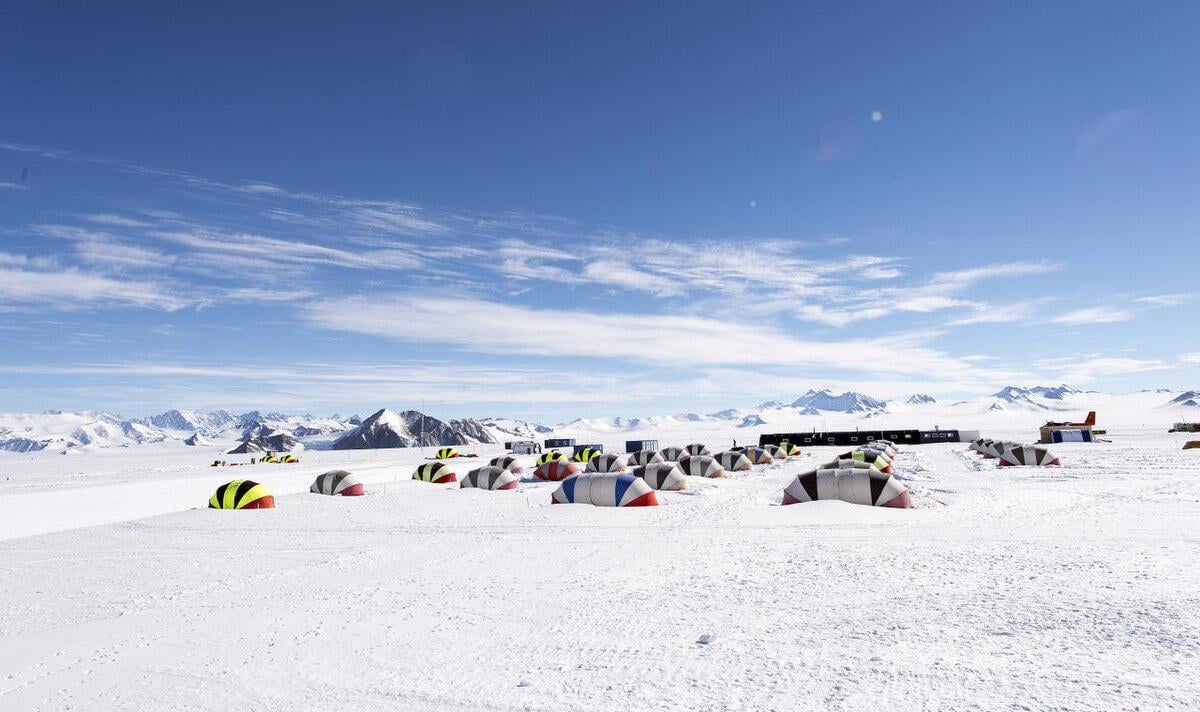
The trip was nicknamed “The Final Experiment” in flat Earth circles. It was meant to be the big one, the expedition that would finally prove the world was not a sphere. Instead, at least one prominent flat Earth creator publicly admitted they were wrong and walked away from the community. Same rhetoric of “doing experiments.” Very different outcome.
Flat Earth claims and scientific inquiry both talk about evidence and experiments, but they are built on different rules. This is a comparison of those rules: where they come from, how they work, what they produce, and why a few days of Antarctic sun could crack years of online certainty.
Where did flat Earth and modern science come from?
Flat Earth YouTube in the 2010s did not appear out of nowhere. It grew out of a wider distrust of institutions, especially in English-speaking countries. NASA, governments, universities, media: for many people these were no longer default sources of truth. The internet gave them something else, a place where anyone could upload a video saying, “They lied to you.”
Early modern flat Earth revivalists like Eric Dubay and Mark Sargent pulled from 19th century flat Earth societies, biblical literalism, and general conspiracy culture. Their pitch was emotional as much as logical: you are one of the few who can see through the lie. The world is not a spinning ball. Antarctica is not a continent but an ice wall at the edge of a disk. Space agencies are puppets faking images and data.
That story had a built-in appeal. It explained feelings of powerlessness by turning followers into insiders. It also made the movement self-sealing. Any evidence against flat Earth could be dismissed as part of the cover-up.
Modern science grew up in a very different way. From the 17th century onward, people like Galileo, Newton, and later Einstein built a culture where claims had to survive open attack. The scientific method is simple in theory. You make a hypothesis, test it, share your method and data, and let others try to break it. If they can, you change your mind. If they cannot, your idea survives another round.
By the 20th century, that culture had institutions behind it: universities, journals, conferences, funding agencies. That created its own problems and power structures, but it also created a habit. No matter how famous you are, your claims can be shredded by some grad student with better data.
Flat Earth culture and scientific culture both talk about questioning authority, but they were born into opposite relationships with doubt. For flat Earth, doubt points outward at “them.” For science, at least in theory, doubt points inward at “us.”
That difference in origin meant that when Antarctica entered the picture, each side carried a very different story about what an experiment is supposed to do.
How do flat Earthers and scientists actually do experiments?
Flat Earth YouTubers love the word “experiment.” They film sticks and shadows, laser tests across lakes, gyroscopes on planes, and long zoom shots over water. The style is DIY and often sincere. The method is usually not.
In many flat Earth videos, the conclusion is decided before the test begins. If a laser disappears over a lake, the explanation is “refraction” or “equipment problems,” not curvature. If a gyroscope drifts in a way that matches Earth’s rotation, the result is hidden or reinterpreted. The experiment is not a question. It is a prop.
There are exceptions. Some people in the community really do want to know. That is how you get to something like “The Final Experiment.” For years, flat Earth models have struggled with the 24-hour sun in Antarctica. On a globe, the explanation is straightforward. In the southern summer, the tilt of Earth’s axis points the South Pole toward the sun, so the sun circles the sky without setting. On a flat disk with the sun circling above, it is very hard to make that geometry work without breaking something else, like seasons or flight paths.
So a group of flat Earth creators arranged to travel to Antarctica in the 2023–2024 southern summer. They wanted direct footage of the sun circling the horizon. They expected to find cuts, camera tricks, or some kind of hoax. Instead, they saw what scientists, explorers, and station crews have been seeing for decades: a continuous, slow ring of sunlight around the sky.
Scientific expeditions to Antarctica look different. They are slow, bureaucratic, and expensive. Teams plan for years, write grant proposals, and submit detailed methods. When they measure the sun’s path, they use calibrated instruments, record times and angles, and compare them with orbital models. Their goal is not to “catch” anyone lying. It is to fit new data into an existing framework, or, if the data refuse to fit, to adjust the framework.
In both cases, people travel to a remote, hostile place to watch the same sun. The difference is what counts as success. For the flat Earth expedition, success was supposed to be confirmation. For science, success is clarity, even if it ruins your favorite idea.
That contrast in method is why the same Antarctic sky could feel like a victory for one side and a crisis for the other.
What happened in “The Final Experiment” and why did it matter?
Details of “The Final Experiment” are still emerging, since much of it played out on YouTube and social media rather than in formal reports. But the core story is clear enough. A group of flat Earth content creators joined a tourist or chartered expedition to Antarctica during the southern summer of 2023–2024. Their stated goal was to document the 24-hour sun and prove that mainstream footage was fake.
Once there, they saw the sun do exactly what globe-based models predict. Over the course of 24 hours, the sun traced a near-horizontal circle around the sky, dipping and rising but never disappearing below the horizon. This is the classic Antarctic “midnight sun” that scientists and station crews have filmed many times before.
On a spherical Earth, that is boring. On a flat Earth, it is a problem. Flat Earth maps usually put the North Pole at the center and Antarctica as an ice ring around the edge. The sun is imagined as a small light circling above the disk. That setup can be tweaked to sort of mimic northern seasons, but the geometry needed to give both the Arctic and Antarctic a 24-hour sun in opposite seasons breaks the model. You cannot make the sun’s path match observations in both hemispheres without abandoning the flat disk.
According to reports and clips shared online, at least one prominent flat Earth YouTuber on the trip admitted on camera that the 24-hour sun could not be reconciled with any flat Earth model they knew. They later posted content stepping away from the movement and acknowledging that they had been wrong.
That kind of public reversal is rare in conspiracy communities. Social pressure usually runs the other way. Admitting error means losing status, income, and a ready-made audience. It also means accepting that you helped spread misinformation.
By contrast, in scientific culture, changing your mind in the face of data is not shameful. It is expected. Famous examples include astronomers dropping the idea of crystal spheres, physicists accepting quantum mechanics, and geologists adopting plate tectonics. Careers have been made by killing old theories.
“The Final Experiment” did not convert the flat Earth community as a whole. Many doubled down, calling the trip fake or controlled. But it created a visible crack. It showed that some people, when confronted with a clear, personal contradiction between belief and observation, will walk away from the belief.
That matters because it turns an abstract argument about models and maps into a human story about what it costs to change your mind in public.
What outcomes do these systems produce over time?
Flat Earth culture and scientific culture both claim to be about truth, but they generate very different long-term outcomes.
Flat Earth channels produce viral content, tight communities, and a sense of shared mission. They also produce a moving target. When one claim fails, another appears. If Antarctica does not work as an ice wall, maybe it is off-limits military land. If the 24-hour sun is filmed, maybe it is CGI. The model is plastic because the core commitment is not to a specific map, but to the idea that “they” are lying.
That flexibility keeps the belief alive, but it makes it bad at prediction. A good scientific model can tell you what you will see before you see it. A bad one can only explain things after the fact. Flat Earth explanations often arrive after the observation, tailored to fit whatever just happened.
Science, for all its mess, is built to reward prediction. Newton’s law of gravitation let people predict eclipses and planetary positions. General relativity predicted the bending of light near the sun and the existence of black holes. The modern globe model of Earth predicts time zones, satellite paths, airline routes, and yes, the 24-hour sun in both polar regions.
When scientists are wrong, the failure is usually specific and testable. When flat Earth claims are wrong, the failure is often absorbed into a larger story about deception. That is why a single Antarctic trip will not “end” flat Earth. The belief is not just about geometry. It is about identity.
Yet, for individuals, outcomes can differ. Some people who watched “The Final Experiment” may quietly reconsider their views. Others may harden them. For the YouTuber who left the movement, the outcome was a public break, a loss of audience, and a chance to rebuild their sense of reality on different terms.
Those diverging outcomes show that the same piece of evidence can either reinforce a worldview or crack it, depending on how tightly that worldview is tied to a person’s sense of self.
What legacy will the Antarctica experiment leave?
Flat Earth as a movement will outlive any single failed experiment. Conspiracy cultures rarely die. They mutate. But “The Final Experiment” adds a new chapter to the story of how online belief collides with physical reality.
For science communicators, the episode is a reminder that just saying “trust the science” is not enough. The flat Earth YouTubers did not change their mind because of a NASA press release. They changed because they saw something themselves that their model could not handle, and because they were willing, however reluctantly, to say so out loud.
For skeptics, it is a case study in what can work. Inviting people to run real, risky tests of their beliefs can be more effective than arguing in comment sections. But it only works if there is some openness to being wrong, and if the social cost of changing your mind is survivable.
For the flat Earth community, the legacy is more awkward. The Antarctica trip is now a reference point, a moment some members will cite as proof of honesty (“we tried an experiment and reported the result”) and others will treat as a betrayal or a hoax. It is a reminder that even in tightly sealed echo chambers, reality sometimes leaks in.
At a larger scale, the story sits alongside earlier episodes where direct experience forced a rethink. Sailors watching ships disappear hull-first over the horizon. Travelers watching different stars appear in different latitudes. Astronauts seeing the whole Earth as a single sphere. The Antarctic sun is just the latest entry in a long list of moments when the planet refused to match our favorite stories about it.
Flat Earth belief and scientific inquiry may look similar on the surface. Both talk about experiments, evidence, and questioning authority. The difference shows up when the sun refuses to set where your model says it should. Science treats that as a gift. Conspiracy thinking treats it as a threat. “The Final Experiment” mattered because, for at least one person, the gift won.
Why do flat Earth and science look similar from the outside?
Flat Earth videos often borrow the language and aesthetics of science. They talk about hypotheses, data, and experiments. They show equipment, charts, and diagrams. That is not an accident. Scientific language carries authority, so movements that reject mainstream science often imitate its surface features.
Science communication also tells people to “think for yourself” and “do your own research.” Flat Earth communities take that advice literally, but strip away the second half of the scientific process: exposing your work to hostile review and accepting when it fails.
Both systems encourage curiosity, but they handle discomfort differently. When a result feels wrong, science asks, “Did we measure correctly? If yes, what does this break in our theory?” Flat Earth culture often asks, “Who is lying to us about what we saw?”
That is why an Antarctic expedition can be framed as an “experiment” by both sides and yet mean opposite things. For the YouTubers, it was supposed to confirm what they already believed. For scientists, it was just another confirmation of a model that has survived centuries of attempts to kill it.
The resemblance in language can confuse outsiders, especially online. “The Final Experiment” cuts through some of that confusion. It shows that what matters is not who uses the word “experiment,” but what they do when the result hurts.
Frequently Asked Questions
What was “The Final Experiment” Antarctica trip?
“The Final Experiment” was a 2024 Antarctica expedition by flat Earth YouTubers who went to film the 24-hour sun. They expected to disprove the globe model, but instead saw the continuous polar daylight that only a spherical Earth model can explain.
Did any flat Earthers change their mind after the Antarctica experiment?
Yes. At least one prominent flat Earth YouTuber on the 2024 Antarctica trip publicly admitted that the 24-hour sun could not be reconciled with flat Earth models and announced they were leaving the flat Earth community.
How does the 24-hour sun in Antarctica prove the Earth is round?
On a spherical Earth tilted on its axis, the South Pole points toward the sun during southern summer, so the sun circles the sky without setting. Flat Earth disk models cannot reproduce a 24-hour sun in both the Arctic and Antarctic without breaking their own geometry, which is why the Antarctic midnight sun is strong evidence for a globe.
Why do flat Earthers say they do experiments like scientists?
Flat Earth creators borrow scientific language to sound credible, and some genuinely try to test their ideas. The key difference is what happens when results conflict with belief. Science is structured to accept and publish failures, while flat Earth culture often reinterprets or rejects conflicting data as part of a wider conspiracy.