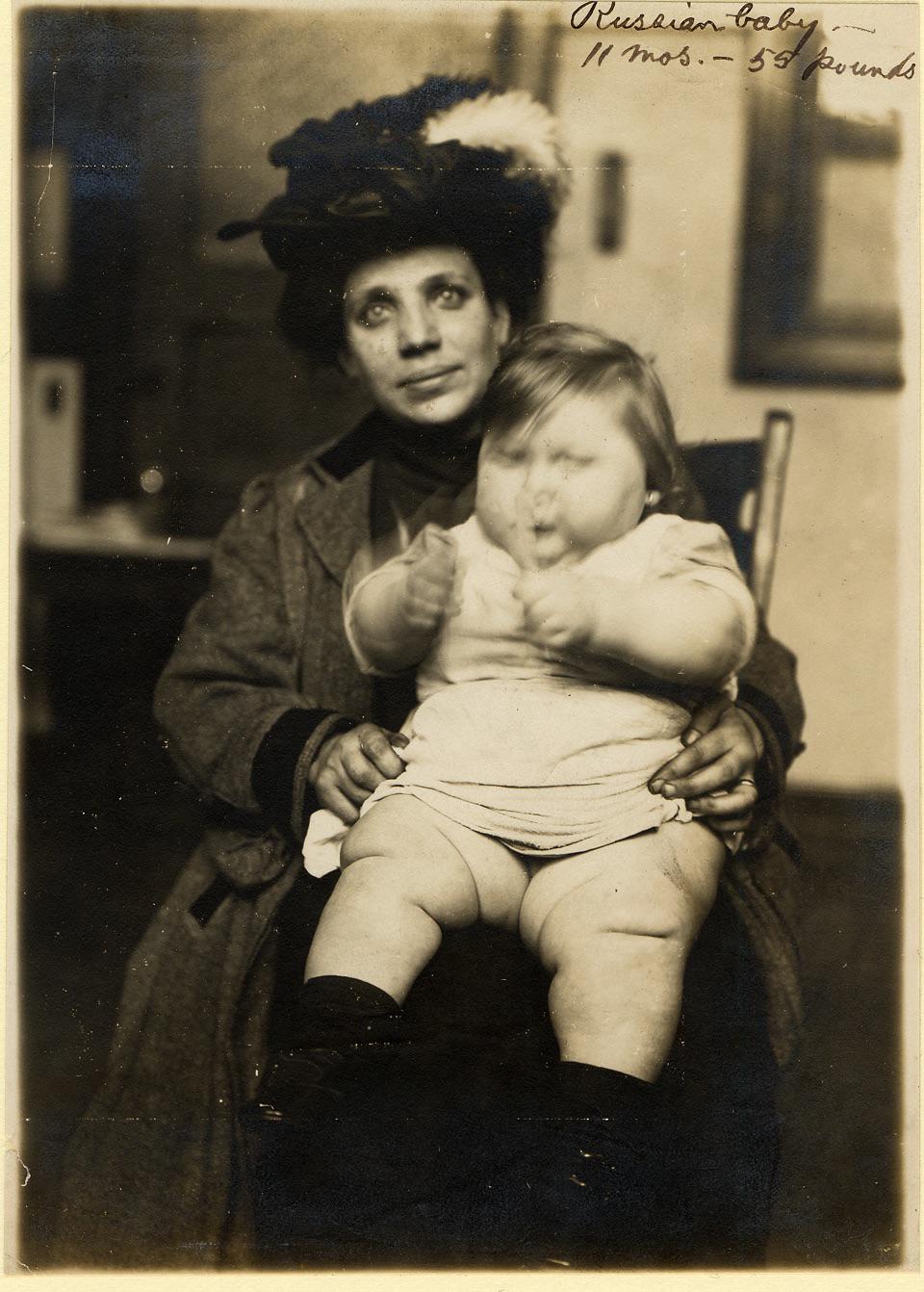
They look similar because the core image has not changed: a tired parent clutching a heavy baby, eyes fixed on a distant promise called “America.” The 1908 Ellis Island portrait of a Russian immigrant woman and her 55‑pound 11‑month‑old baby could be swapped, at a glance, with photos from the U.S.–Mexico border or an airport detention room today.
But behind that visual rhyme, the systems around them are very different. The Ellis Island era and today’s immigration regime share the same basic idea, a gate that decides who gets in, yet they differ in origins, methods, outcomes, and legacy. That is where the story gets interesting.
Ellis Island was the main federal immigration station from 1892 to 1954. It processed over 12 million arrivals, mostly from Europe. Today, the United States runs a sprawling, security‑driven immigration system spread across airports, land borders, and consulates worldwide.
Ellis Island immigration was defined by mass European migration, quick inspections, and a default assumption that most people would be admitted. Modern U.S. immigration is defined by strict quotas, complex visas, and a default suspicion that most applicants will not qualify.
Why was Ellis Island created and how did it compare to today’s system?
Picture New York Harbor in 1908. Steamships slide past the Statue of Liberty, decks crowded with people in shawls and caps. On one of those ships is a Russian woman, part of the wave of Eastern European Jews and peasants fleeing pogroms, poverty, and conscription in the Tsar’s empire. She is carrying an 11‑month‑old baby that, according to the caption, weighs 55 pounds. Whether that number is exact or not, the point is clear: the child is big, the journey was hard, and she is exhausted.
She is headed not for Manhattan, but for a small island in the harbor. Ellis Island had opened in 1892 after the federal government took over immigration from the states. Before that, places like Castle Garden in lower Manhattan had handled arrivals, with looser standards and less federal oversight.
Ellis Island’s creation grew out of late 19th‑century anxieties. Industrialists wanted cheap labor. Nativists worried about Catholics, Jews, and “undesirable” foreigners. Public health officials feared cholera and trachoma. The solution was a centralized federal inspection station where the government could screen, sort, and, when it chose, exclude.
Modern U.S. immigration has different roots. The system that shapes today’s debates took form in the mid‑20th century, especially with the 1965 Immigration and Nationality Act. That law scrapped the old national‑origins quotas that had favored Northern Europeans and replaced them with a system based on family ties and employment categories. Cold War politics, civil rights ideals, and economic planning all fed into it.
Instead of one island in New York Harbor, today’s “Ellis Islands” are everywhere: U.S. consulates that issue visas abroad, airport inspection lines run by Customs and Border Protection, asylum interviews, detention centers in Texas or Arizona, and an invisible web of databases and watchlists.
So the Russian mother in 1908 and a Honduran mother in 2024 are both meeting the same country at its front door, but the door was built for different reasons and by different fears. That shift in origins changed who was likely to be welcomed and who was likely to be turned away.
How did Ellis Island inspections work compared to modern methods?
When that Russian immigrant stepped off the ferry at Ellis Island, she entered a machine designed for speed. Most third‑class passengers went through “line inspection.” Doctors watched them climb the stairs to the Great Hall, looking for limps, labored breathing, or signs of weakness. A chalk mark on a coat could mean a closer medical exam.
Medical checks were blunt. Inspectors flipped back eyelids with buttonhooks to look for trachoma. They checked scalps for lice, watched for signs of mental disability, and scanned for contagious disease. The whole process for a healthy person could take minutes.
Then came the legal inspection. Clerks asked a set list of questions: name, age, occupation, destination, how much money they carried. They compared answers to the ship’s manifest. The law barred certain categories: people likely to become a “public charge,” those with dangerous diseases, anarchists, and some others. But the default setting was admission. Around 98 percent of Ellis Island arrivals were eventually let in.
Documentation was minimal. Many arrivals had no passports in the modern sense. The steamship companies had done their own screening in Europe, partly because they could be fined for bringing in people who were later excluded. The U.S. government relied on quick face‑to‑face judgment rather than deep background checks.
Modern methods flip that logic. Today, the main screening happens before a person ever gets on a plane or approaches a legal border crossing. Visa applicants submit forms, bank statements, job offers, marriage certificates. Their names are run through security databases. Consular officers decide, often in a few minutes at a window, whether they qualify.
At airports, biometric data is standard. Fingerprints, photos, sometimes facial recognition. Customs officers can search phones and laptops. At the southern land border, asylum seekers may be held in detention, interviewed about their fears of persecution, and processed through a maze of changing policies.
Instead of a chalk mark on a coat, there is a digital file that can follow a person for years. Instead of a brief medical exam on arrival, there are vaccination requirements and medical checks tied to visa categories and green card applications.
Both systems sort people, but Ellis Island’s methods were physical and immediate, while today’s are bureaucratic and data‑driven. That change in method shifted power from the dockside inspector to distant consular officers and algorithms, which reshaped who even gets the chance to stand at the gate.
Who got in, who was turned away, and what happened after arrival?
For the Russian mother in the 1908 photograph, the odds were in her favor. Most Eastern European arrivals were admitted, especially if they were young, able‑bodied, and had family or a job waiting. The main risks were medical exclusion or being labeled a likely public charge. Women traveling alone sometimes drew extra scrutiny, suspected of prostitution or vulnerability.
Those who were detained at Ellis Island usually waited days or weeks, not years. They slept in dormitories, ate in large dining halls, and could sometimes see the Manhattan skyline through barred windows. Appeals were possible, and immigrant aid societies, especially Jewish and Catholic groups, often intervened.
Once admitted, the U.S. government largely stepped back. There was no federal integration program. New arrivals were on their own, or in the hands of relatives, ethnic charities, and employers. The Russian woman might have gone to a Lower East Side tenement, a sweatshop, or a relative’s apartment in Brooklyn. Her heavy baby would grow up between two worlds, speaking Yiddish or Russian at home and English on the street.
Outcomes were uneven. Many Ellis Island immigrants faced slum housing, dangerous factory work, and open discrimination. Yet their children and grandchildren often climbed into the middle class, helped by public schools, industrial jobs, and, for some, the GI Bill after World War II.
Modern outcomes are more tightly controlled at the front end and more unequal after arrival. Legal immigrants today enter through specific channels: family reunification, employment‑based visas, refugee resettlement, or diversity lotteries. Each path comes with conditions. Work visas tie status to an employer. Family visas can mean long waiting periods. Refugees go through years of security checks.
People who arrive without authorization, or who overstay visas, face a different reality. Detention centers, deportation proceedings, and a constant risk of removal shape their lives. Children brought as minors, like the “Dreamers,” live in a gray zone, culturally American but legally precarious.
Yet the basic pattern repeats. Whether they came through Ellis Island or a modern airport, many immigrants start in low‑wage jobs, cluster in ethnic neighborhoods, and rely on informal networks. Their children navigate bilingual childhoods and identity questions. The difference is that today’s legal categories and enforcement tools can trap some families in limbo for decades.
So the Russian mother’s quick inspection and open path to settlement contrast sharply with the modern maze of visas and enforcement, and that contrast shapes who can turn hope into a stable life.
How did Ellis Island and modern immigration shape America’s identity?
Ellis Island did not just process people. It created a story. The image of the weary newcomer passing the Statue of Liberty, then facing a line of inspectors, became a national myth about America as a “nation of immigrants.”
Photographers like August Sherman helped fix that myth in the public imagination. Working as a clerk at Ellis Island, Sherman took formal portraits of arrivals from around the world. The Russian mother and her oversized baby were part of that project. He often posed people in traditional dress, turning them into symbols of “Old World” cultures arriving in the New World.
These images were not neutral. They reassured some Americans that newcomers were quaint and containable. They fed curiosity and, at times, condescension. Yet over time, families claimed those photos as proud origin stories. The Ellis Island generation became proof that the country could absorb waves of foreigners and still hold together.
Modern immigration shapes identity in a different media environment. Instead of staged portraits, we see cell phone videos from the Rio Grande, security footage from airports, and viral images of children in foil blankets. The dominant frame is not curiosity but security and crisis.
Policy reflects that shift. In the early 20th century, the main national fear was that immigrants would bring disease, radical ideas, or undercut wages. Today, the language is about terrorism, crime, and “border control.” After the attacks of September 11, 2001, immigration agencies were folded into the Department of Homeland Security. The symbolic center of gravity moved from Ellis Island to the border wall.
Yet the Ellis Island myth still hangs over debates. Politicians invoke “my grandparents came here legally” without mentioning that the legal bar in 1908 was far lower than it is today. The Russian mother in the photo did not need a visa, a sponsor affidavit, or a years‑long security check. She needed a ship ticket and the luck to pass a brief inspection.
So Ellis Island gave the United States a story about openness and upward mobility, while modern immigration policy has layered that story with fear and restriction. The tension between those two narratives shapes every argument over who belongs.
What does that 1908 photo reveal about myth vs reality?
Look again at the Russian immigrant and her 11‑month‑old baby. The baby’s reported weight, 55 pounds, jumps out. Some viewers today suspect a typo or exaggeration. Whether the number is accurate or not, the detail has done its job for more than a century. It makes the child seem almost comically large, the burden literal and symbolic.
That is part of how Ellis Island was sold to the public. Photos like Sherman’s turned individual lives into types. The Russian mother becomes “the immigrant mother,” a figure of both sympathy and distance. Her hardship is visible, but her name is not recorded in the caption. She is history’s extra, not its star.
Modern images repeat the pattern in new ways. A photo of a father and daughter who drowned in the Rio Grande, or of a child separated from parents at the border, becomes a stand‑in for thousands of unseen stories. The public argues over policy while knowing almost nothing about the specific people in the frame.
There is another myth at work: that Ellis Island was a gentle welcome center, while today’s system is uniquely harsh. The record is more mixed. Families were separated at Ellis Island too, if a child was sick or a parent failed inspection. Some people were deported after spending their savings on the journey. The island had a hospital, a psychiatric ward, and a morgue.
At the same time, the raw numbers matter. In the peak years, Ellis Island processed thousands of people a day and rejected only a small fraction. Today, the legal gates are far narrower. Many who would have walked through in 1908 never get near a modern inspection line, blocked by quotas, visa rules, or sheer cost.
So the 1908 photograph is both familiar and misleading. It looks like a timeless story of migration, but it comes from a moment when the United States, for all its prejudice and exclusion, kept the door far more open than it does now.
From Ellis Island to now: what really changed and what stayed the same?
Put the Russian mother on a modern plane and drop her into JFK Airport with that same baby on her hip. Her journey would start long before she reached the gate. She would need a visa, a sponsor, or an asylum claim. Her odds would depend on her passport, her bank account, and shifting political winds.
At the inspection line, she would meet officers backed by databases, not handwritten manifests. If she claimed asylum, she might be detained, interviewed, and placed in a legal process that could stretch for years. If she arrived without authorization at a land border, she might be turned back under fast‑changing rules.
Yet some things would feel familiar. The exhaustion. The gamble that life in America, even at the bottom, would be safer or more hopeful than the life she left. The way her child would grow up caught between languages and expectations.
Ellis Island immigration and modern U.S. immigration look similar at the level of human faces, but they differ sharply in origins, methods, outcomes, and legacy. Ellis Island grew from industrial expansion and basic public health fears, used fast physical inspections, admitted most arrivals, and fed a national myth of openness. Today’s system grows from security concerns and legal engineering, uses bureaucratic and digital filters, blocks many would‑be migrants before they depart, and feeds a narrative of crisis and control.
That is why the 1908 photo hits a nerve. It reminds us that the “nation of immigrants” story was built in a time when the gate was wider. Comparing Ellis Island to today does not just answer a historical curiosity. It forces a harder question: if we still like the old story, how much of the old openness are we willing to live with now?
Frequently Asked Questions
What was Ellis Island and how did it work?
Ellis Island was the main U.S. federal immigration station from 1892 to 1954, located in New York Harbor. Third‑class passengers were ferried there for medical and legal inspections. Doctors watched them climb stairs, checked for contagious diseases, and marked suspect cases with chalk. Inspectors then asked basic questions about identity, destination, and money. Around 98 percent of arrivals were admitted, usually within hours or days.
How is modern U.S. immigration different from the Ellis Island era?
Modern U.S. immigration is controlled by a global system of visas, quotas, and security checks. Most screening happens before people travel, at consulates abroad, using detailed forms and databases. At borders and airports, biometric data and security concerns dominate. Unlike the Ellis Island era, when most European arrivals were admitted after brief inspections, today many would‑be migrants never qualify to come at all.
Did immigrants at Ellis Island need visas like today?
No. In the early 1900s, most Ellis Island arrivals did not need visas in the modern sense. They bought a steamship ticket and were inspected on arrival for health and basic legal admissibility. The U.S. did not use a global visa system with quotas and categories until later in the 20th century. Today, most people must secure a visa or other authorization before traveling to the United States.
Were families separated at Ellis Island like at modern borders?
Family separation did happen at Ellis Island, though under different rules and on a different scale. If a child was sick or a parent failed inspection, family members could be held in detention or even deported while others were admitted. Aid societies sometimes helped reunite families or appeal decisions. Modern family separations are shaped by criminal prosecutions, asylum policies, and detention practices, but the basic trauma of being split up at the border has historical roots.