Emilia Clarke was alone with the Game of Thrones season 8 scripts when she found it.
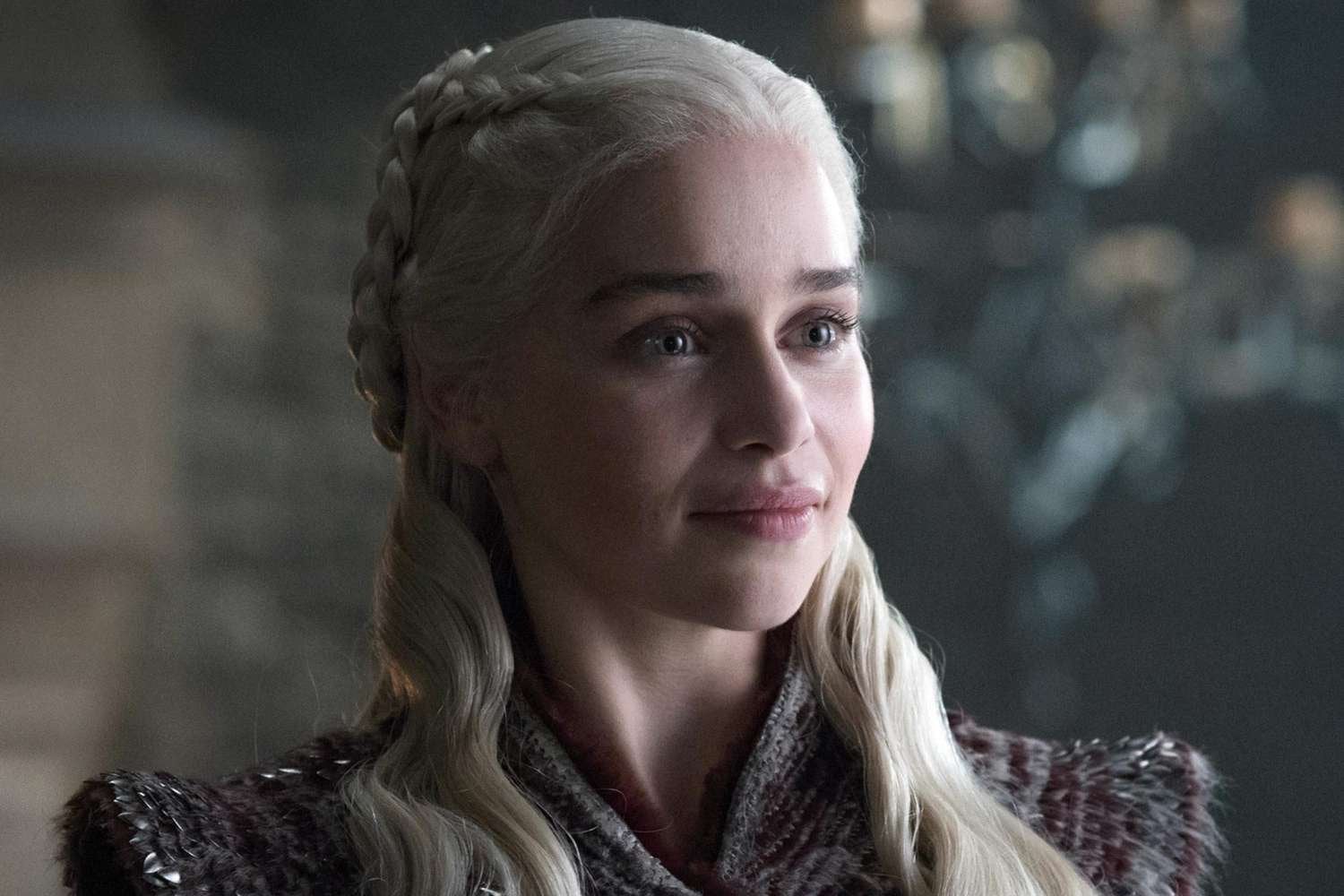
She has said she read the key lines about Daenerys Targaryen’s fate seven times in a row, saying to herself, “What, what, what, WHAT!?” Then she cried, walked for five hours until her feet blistered, and only later made peace with the idea that Daenerys would burn King’s Landing and die at Jon Snow’s hand.
For millions of viewers, that shock never really faded. The “Mad Queen” turn felt like it came out of nowhere. For others, it was the tragic end they had been expecting for years.
So what actually happened to Daenerys Targaryen, why did it feel so abrupt, and was it secretly baked into the story from the start?
What was Daenerys’ “Mad Queen” turn in Game of Thrones?
Daenerys Targaryen’s “Mad Queen” turn refers to her decision in season 8, episode 5, to burn most of King’s Landing after the city had effectively surrendered, killing tens of thousands of civilians. It is the moment the show frames her as having crossed from liberator to tyrant.
Across eight seasons, Daenerys is introduced as an abused exile, grows into a liberator of slaves in Essos, and arrives in Westeros as a would-be just queen. The turn happens very late. In the penultimate episode, after ringing bells signal the city’s surrender, she chooses to attack anyway, methodically burning streets, homes, and fleeing civilians from the back of her dragon, Drogon.
Within the story, this is the act that convinces Tyrion Lannister and Jon Snow that she has become a threat to the realm. In the finale, Jon kills her in the throne room, believing there is no safe way to let her rule.
Daenerys’ Mad Queen turn is the shift from a flawed but idealistic liberator to a ruler who embraces mass terror as a tool of power. It is presented as the tragic completion of her arc.
This matters because that single decision redefines eight seasons of character development and sparked one of the fiercest fan debates about character writing in modern TV history.
What set it off? The long roots of Daenerys’ darker side
To some viewers, Daenerys’ attack on King’s Landing felt like a personality transplant. Others point to a long trail of warning signs. Both reactions have some truth.
From the very beginning, Daenerys is framed with two competing traits: compassion for the powerless and a capacity for ruthless violence.
In season 1, after Viserys abuses her for years, she calmly watches him die when Khal Drogo pours molten gold over his head. Her line, “He was no dragon. Fire cannot kill a dragon,” is equal parts liberation and cold detachment. The show is already telling us she can accept horrific violence if she believes it is deserved.
In Essos, her campaign against slavery mixes genuine moral outrage with a growing taste for fire and fear. She crucifies 163 masters in Meereen in season 4, matching the number of slave children they nailed to mileposts. When one of her advisors points out that some of those men opposed the atrocity, she shrugs off the nuance. Justice, for her, is collective and absolute.
She burns Kraznys in Astapor, executes the khals in Vaes Dothrak, and later burns the Tarlys alive in Westeros when they refuse to bend the knee. Each time, the camera gives us a mix of triumph and discomfort. The pattern is simple: if you are an enemy, mercy is optional.
At the same time, she is repeatedly told she has a “destiny” and a “right” to rule because of her blood. Jorah, Barristan, Missandei, the freedmen chanting “Mhysa” in season 3, all feed a narrative that she is chosen. The more she is worshipped, the more she believes that whatever she does in pursuit of her vision is justified.
By the time she sails to Westeros in season 7, Daenerys is already someone who believes in liberation, but also believes that if people resist her idea of a better world, they can be burned.
This matters because the Mad Queen turn did not start in season 8. The seeds of moral absolutism and comfort with mass violence were planted from the first season, even if the show often framed those moments as crowd-pleasing victories.
The turning point: Why King’s Landing burned
The real controversy is not whether Daenerys had a dark side. It is why she chose that exact moment to unleash it at maximum scale.
Season 8 compresses a lot of psychological damage into a short span of time. In the space of a few episodes Daenerys loses:
• Two dragons, Viserion to the Night King and Rhaegal to Euron Greyjoy’s fleet.
• Her oldest friend and advisor, Ser Jorah Mormont, at Winterfell.
• Her closest confidante, Missandei, who is captured and executed by Cersei in front of her.
• Much of her army in the Battle of Winterfell.
• The emotional support of Jon Snow, who pulls away after learning he is Aegon Targaryen and thus has a stronger claim to the throne.
At the same time, she feels increasingly isolated in Westeros. The northern lords love Jon. Sansa distrusts her. Tyrion and Varys question her decisions. Varys even plots to replace her with Jon. Her fear that she will never be loved here, only feared, becomes explicit in her conversation with Jon before the attack on King’s Landing.
When she finally attacks the city, she does what she has always done: uses overwhelming force. She destroys the Iron Fleet, the scorpions on the walls, and much of the Lannister army. Then the bells ring, signaling surrender.
Here is the hinge. She pauses on Drogon, looking at the Red Keep, the symbol of the dynasty that slaughtered her family and hunted her since birth. The show gives us close-ups of her face, the sound dropping away, then she spurs Drogon forward and begins burning the city street by street.
Writers David Benioff and D.B. Weiss later said her decision was a mix of rage, grief, and a choice to rule through fear. Emilia Clarke has said that when she first read it, it felt like it “comes out of fucking nowhere,” but when she re-read earlier seasons, she could see the path.
The problem for many viewers is pacing. Years of slow-burn development are followed by a single episode where she jumps from harsh but targeted brutality to indiscriminate genocide. The internal logic is there, but the emotional bridge feels rushed.
This matters because that one directing and writing choice, to have her attack after the surrender, is what defines her as a Mad Queen in the eyes of the audience and her allies, rather than a brutal but conventional conqueror.
Who drove Daenerys’ fall? Writers, actors, and in‑world voices
There are two overlapping stories here: the fictional fall of Daenerys Targaryen, and the real-world decision to write her that way.
Inside the story, several characters help push or frame her descent.
Varys, who once said he serves the realm, decides Daenerys is too unstable and begins plotting to put Jon on the throne. His betrayal confirms her fear that no one in Westeros truly supports her. Tyrion, once her staunch advisor, keeps making bad calls and losing her trust. His horror at the burning of King’s Landing becomes the audience’s horror.
Jon Snow is the moral fulcrum. His refusal to return her romantic affection after learning his parentage leaves her emotionally alone. In the finale, their conversation about whether she did the right thing in King’s Landing ends with him killing her. The show uses Jon’s choice to tell us that Daenerys has gone too far to be redeemed.
Outside the story, the key drivers are Benioff and Weiss, working from broad outlines George R.R. Martin reportedly gave them. Martin has said that certain end points, including Daenerys’ general fate, were planned long in advance for the books, though the details are unknown.
Emilia Clarke’s reaction is a window into how jarring the script was even for the person who had inhabited the character for a decade. She has described reading the scene, walking for hours in shock, then eventually deciding that it did make sense if you looked at Daenerys as someone shaped by trauma, entitlement, and a belief that her vision of a better world justified anything.
She later said she “stands by” the Mad Queen turn, but that does not erase her initial disbelief. Her journey mirrors many fans: first, “What, what, what, WHAT!?” then a long attempt to reconcile the ending with the character they loved.
This matters because Daenerys’ fate was not just a plot twist. It was a contested interpretation of who she had been all along, argued over by writers, actors, and viewers in real time.
What did Daenerys’ turn change in Game of Thrones and beyond?
Inside Westeros, Daenerys’ destruction of King’s Landing wipes out most of the Lannister power structure, much of the civilian population, and the Iron Throne itself.
Her death at Jon’s hand ends the Targaryen bid to restore their dynasty. Drogon melts the Iron Throne, a not-so-subtle symbol that the old model of rule by conquest has literally been destroyed. The surviving lords choose Bran Stark as king, arguing that someone who cannot have children will break the cycle of hereditary power.
Her surviving followers scatter. Grey Worm sails to Naath. The Unsullied and Dothraki, who once believed they were fighting for a liberator, are left as an occupying force that suddenly has no queen. The political map of Westeros is reset in a rushed council scene that feels small compared to the firestorm that came before.
Outside the story, Daenerys’ turn changed how people talked about Game of Thrones as a whole. For years the show was praised for its character work and slow, patient set-ups. Season 8, and especially the Mad Queen arc, flipped that reputation. Petitions to remake the final season collected more than a million signatures. The phrase “Mad Queen Daenerys” became shorthand for a character arc that feels betrayed by its ending.
It also reshaped how audiences read earlier seasons. Scenes that once played as fist-pump moments, like the burning of the khals or the crucifixion of the masters, were reinterpreted as red flags. Fans went back to look for foreshadowing or for signs that the writers had changed course late in the game.
This matters because Daenerys’ fall did not just end one character’s story. It reframed the entire series, turned a beloved hero into a cautionary tale, and sparked a lasting argument about what counts as “earned” storytelling.
Why Daenerys’ Mad Queen arc still matters
Years after the finale aired in 2019, people are still arguing about Daenerys Targaryen. That alone tells you something.
Her arc hits a nerve because it sits at the intersection of several big questions.
First, can a story about power avoid turning its heroes into villains? Game of Thrones always hinted that it could not. Ned Stark dies for his honor. Robb dies for his misjudgments. Cersei’s cruelty destroys her. Daenerys’ fate is the most dramatic version of the same thesis: if you believe you are destined to rule and that your vision justifies any means, you will end up committing atrocities, even if you started with good intentions.
Second, what do audiences expect from long-form TV? Viewers invested eight years in Daenerys as a symbol of resistance, especially many women who saw in her a rare fantasy heroine with agency and ambition. When the story swerved into “she goes mad like her father,” it triggered a backlash not just about plot mechanics but about gendered tropes and the fear that powerful women in fiction are still often punished with madness.
Third, it is a case study in pacing and perception. On paper, you can trace a line from the girl who watched her brother die without flinching to the queen who burned a city. On screen, the timing and framing of that final leap made many feel blindsided. Emilia Clarke’s own shock, her seven re-reads of the script, became part of the public record of that disconnect.
Daenerys’ Mad Queen turn remains a reference point in debates about character arcs: Was it foreshadowed or forced? Tragic or cheap? Misogynistic or thematically consistent? Those questions keep the character alive long after the last episode.
That is why her fate still matters. It is not just about a dragon queen losing her mind. It is about how we tell stories of power, trauma, and idealism, and what happens when a show asks its audience, at the very end, to see their favorite hero in a different, much darker light.
Frequently Asked Questions
Was Daenerys always meant to become the Mad Queen?
George R.R. Martin has said that certain end points, including Daenerys’ general fate, were planned early in the book series. Showrunners David Benioff and D.B. Weiss have indicated that her turn toward tyranny was part of those outlines. The broad idea that Daenerys would become a dangerous ruler seems long planned, though the specific way and timing the TV show handled it are their choices.
Did Game of Thrones foreshadow Daenerys going mad?
Yes, the show seeded warning signs from early on. Daenerys often used extreme violence against enemies, from watching Viserys die to crucifying masters and burning opponents alive. She believed strongly in her destiny and in collective punishment. However, the scale and suddenness of the King’s Landing massacre in season 8 felt abrupt to many viewers, so the foreshadowing and the final execution did not line up cleanly for everyone.
Why did Emilia Clarke react so strongly to Daenerys’ fate?
Emilia Clarke has said she read the script pages about Daenerys burning King’s Landing and dying seven times, thinking, “What, what, what, WHAT!?” She then cried and went on a five-hour walk. After rewatching earlier seasons, she came to accept that Daenerys’ belief in her destiny and her history of ruthless choices could lead there. Her reaction reflects how emotionally attached she was to the character and how shocking the turn felt even to her.
Why do so many fans hate Daenerys’ ending in Game of Thrones?
Many fans dislike Daenerys’ ending because they feel the show rushed her transformation from flawed hero to mass murderer. They argue that the final season compresses too much trauma and isolation into a few episodes, then jumps to genocide after the city surrenders. Others are frustrated by the use of a “mad queen” trope for a powerful woman they had rooted for. Supporters of the ending see it as a tragic but logical outcome of her absolutist mindset and long history of brutal tactics.