In January 1972, a 45-year-old character actress walked onto the stage at the Academy Awards clutching a crumpled piece of paper. Cloris Leachman had just been named Best Supporting Actress for her raw, aching performance in “The Last Picture Show.” She spoke for barely 30 seconds, thanked almost no one, then left. It was one of the shortest Oscar speeches on record.
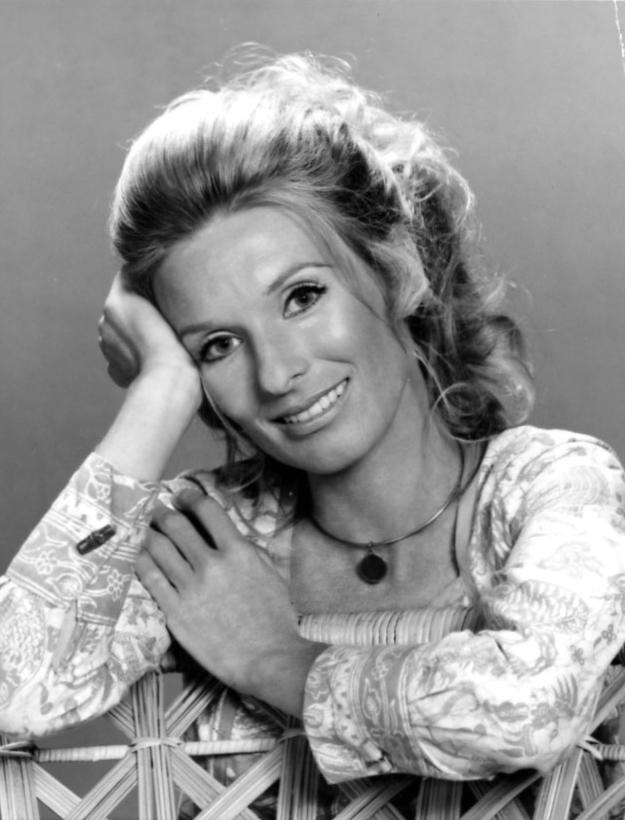
That blink-and-you-miss-it moment summed her up. Cloris Leachman was never quite what people expected. A former beauty queen who became a master of grotesque comedy. A sitcom side character who stole every scene. A woman born on April 30, 1926, in Des Moines, Iowa, who managed to stay culturally relevant from live radio days to Twitter memes.
Cloris Leachman was an American actress and comedian whose career spanned nine decades, from the 1940s to the 2010s. She moved from beauty pageants to Broadway, from serious drama to wild parody, and from black-and-white television to streaming-era animation. By the end of this article you will know what she actually did, how she kept reinventing herself, and why a 1926 birth announcement still matters to people watching TV reruns and clips online today.
What was Cloris Leachman’s career, really?
Cloris Leachman (1926–2021) was an American actress and comedian whose working life ran for roughly 75 years. She is best known for her Oscar-winning role in “The Last Picture Show” (1971), her Emmy-winning work on “The Mary Tyler Moore Show” and its spinoff “Phyllis,” and her gleefully unhinged comedy in Mel Brooks films like “Young Frankenstein.”
Put cleanly: Cloris Leachman was a character actress who crossed every medium. She did live television in the 1950s, prestige film in the 1970s, sitcoms in the 1970s and 80s, animated voice work, reality TV, and guest roles well into her 80s and 90s.
She collected one Academy Award and a stack of Emmys. Sources vary slightly on the exact count depending on how you tally daytime and guest categories, but she is often cited as one of the most Emmy-decorated performers in history, with eight Primetime Emmy wins and more than twenty nominations.
What made her unusual was the range. She could play a quietly devastated housewife in a black-and-white drama, then turn around and be Frau Blücher, the horse-spooking housekeeper in a broad horror spoof, or the deranged grandma on a raunchy cable sitcom. She was not a traditional Hollywood “star” in the glamorous sense. She was the person who made everyone else on screen more interesting.
So what? Defining her career as a long, shape-shifting run across stage, film, and television helps explain why a simple “born in 1926” post triggers curiosity: she is a thread that runs through nearly the entire history of modern American entertainment.
What set it off: From Des Moines to Miss Chicago to Broadway
Cloris Leachman was born on April 30, 1926, in Des Moines, Iowa, the oldest of three sisters. Her father owned a lumber company. This was not a Hollywood family. It was Midwestern, middle-class, and practical.
Like a lot of ambitious girls in the 1930s and 40s, she found her way into performing through local theater and beauty contests. She studied drama at Northwestern University in Illinois, which, even then, was a training ground for future performers. One of her classmates there was a young Paul Lynde. Another student around that era was Charlton Heston. The Midwest was quietly feeding Hollywood.
In 1946, Leachman entered the Miss America system as Miss Chicago. She did not win the national crown, but she did something more useful: she used the scholarship money and exposure to move to New York and study acting seriously. She trained at the Actors Studio, the same institution associated with method acting and names like Marlon Brando and James Dean.
By the late 1940s she was on Broadway, appearing in plays like “As You Like It” and replacing the lead in “South Pacific” for a time. She also started picking up small roles in early television, which was still a chaotic, live medium where anything could go wrong and often did.
So what? The path from Des Moines to Miss Chicago to Broadway shows how she hacked the limited options available to a young woman in the 1940s, using beauty pageants not as an end but as a launchpad into serious acting.
The turning point: From serious drama to unforgettable comedy
For the first decade or two of her career, Leachman worked steadily but without much fanfare. She had guest spots on shows like “Lassie” and appeared in films such as “Kiss Me Deadly” (1955), a hard-boiled noir where she dies in the opening sequence. She was the kind of actor audiences recognized without knowing her name.
The real turning point came in the late 1960s and early 1970s, and it had two tracks: one dramatic, one comic.
On the dramatic side, director Peter Bogdanovich cast her as Ruth Popper in “The Last Picture Show” (1971). Ruth is a lonely, middle-aged coach’s wife in a dying Texas town who has an affair with a high school boy. The performance is small in screen time but huge in emotional impact. Her breakdown in a parked car near the end of the film is still cited as one of the most devastating scenes of 1970s cinema.
That role won her the Academy Award for Best Supporting Actress. It proved she was not just a reliable TV face but a serious film actor capable of carrying deep, painful material.
At almost the same time, she was doing the opposite on television. On “The Mary Tyler Moore Show,” which debuted in 1970, she played Phyllis Lindstrom, the self-absorbed, socially tone-deaf neighbor. Phyllis was high-strung, often ridiculous, and a perfect foil to Mary Richards’ calm competence.
Leachman’s Phyllis was so memorable that she got her own spinoff, “Phyllis,” which ran from 1975 to 1977. That show earned her an Emmy and cemented her as a comedy force.
Then came Mel Brooks. In “Young Frankenstein” (1974), she played Frau Blücher, the severe housekeeper whose very name makes horses whinny in terror. In “High Anxiety” (1977), she was Nurse Diesel, a sadistic parody of Hitchcock’s icy blondes. These roles were broad, physical, and fearless. She was willing to look strange, sound strange, and push past vanity for a laugh.
So what? The early 1970s transformed Cloris Leachman from a working actress into a name people knew, by proving she could be both a serious dramatic presence and a fearless clown, which set the pattern for the rest of her career.
Who drove it: The woman behind the chaos
There is a common misconception that Cloris Leachman was “just” a funny old lady who popped up on sitcoms. The reality is that she was driving a lot of her own reinventions.
She married producer and director George Englund in 1953. They had five children together and divorced in the late 1970s, but stayed connected. Her personal life had real tragedy. One of her sons, Bryan, died in 1986. Friends and colleagues later said that grief sat just under the surface of her work, especially in more serious roles.
Professionally, she kept saying yes to strange opportunities. In the 1980s and 90s, when many actresses of her generation were fading from screens, she kept working. She replaced Charlotte Rae as the housemother on “The Facts of Life.” She did guest roles on shows like “The Love Boat” and “Murder, She Wrote.” She voiced characters in animated projects.
Then, in the 2000s, she reinvented herself again for a younger audience. On Fox’s “Raising Hope” (2010–2014), she played Maw Maw, the wildly inappropriate, dementia-addled great-grandmother. The role was often outrageous and sometimes uncomfortable, but it introduced her to viewers who had never heard of “The Mary Tyler Moore Show.”
She even went on “Dancing with the Stars” in 2008 at age 82. She did not win, but she turned the show into performance art, flirting with judges, ad-libbing, and clowning through rehearsals. It was a reminder that she was not a relic from television history. She was still hungry to perform, even in formats that did not exist when she started.
So what? Seeing Leachman as an active architect of her own career, not just a supporting player, explains how she stayed visible and relevant across generations that usually forget their grandparents’ favorite stars.
What it changed: Aging, comedy, and the “character actress”
Cloris Leachman did not single-handedly rewrite Hollywood, but she did push at some of its habits.
First, she complicated what it meant to be a “character actress.” That label is often code for “not conventionally glamorous, used in small parts.” Leachman showed that a character actress could win major awards, carry a spinoff series, and become the most memorable part of an ensemble. She blurred the line between “star” and “supporting” by stealing scenes in both categories.
Second, she changed expectations about age and comedy. In American entertainment, older women are often written as sweet grandmothers or invisible background figures. Leachman’s later roles were rarely sweet. Maw Maw on “Raising Hope” was filthy, chaotic, and sometimes mean. Even in guest spots, she leaned into being strange rather than dignified.
That had a cost. Some critics thought these parts were exploitative or one-note. But they also created space for older actresses to be weird, sexual, or aggressive on screen, not just wise and gentle.
Third, she helped make the idea of a long, non-linear career seem normal. She moved from prestige drama to lowbrow sitcoms and back without apology. In an industry obsessed with “staying on top,” she modeled a different path: stay working, stay curious, and accept that your best-known role might come decades after your supposed peak.
So what? By living out a messy, durable career, Leachman quietly expanded what was imaginable for women in Hollywood, especially those who were not ingénues and refused to retire on cue.
Why it still matters: A 1926 birth in a 2020s world
Cloris Leachman died in January 2021 at the age of 94. By then, clips of her work were circulating on YouTube and social media: Phyllis melting down in Mary’s apartment, Frau Blücher with the horses screaming off-screen, Ruth Popper sobbing in that car, Maw Maw wandering through a scene half-dressed and unbothered.
When a Reddit thread notes that “on April 30, 1926, Cloris Leachman was born,” what people are really reacting to is the span of that life. She was born between the two world wars, started acting when television was experimental, and was still working when people streamed shows on their phones.
Her career is a timeline of American entertainment: radio, live TV, studio films, New Hollywood, network sitcoms, cable, reality TV, streaming. Few performers touched that many eras.
There are also quieter reasons she sticks in memory. She made being odd look like a strength. She treated supporting roles as opportunities, not insults. She refused to age out of comedy. And she left behind performances that still feel sharp, not just nostalgic.
So what? Remembering that a 1926 baby from Des Moines became one of the longest-working actors in American history reminds us that the story of modern entertainment is not just about a few marquee names, but about durable, shape-shifting workers like Cloris Leachman who kept the whole machine interesting.
Frequently Asked Questions
What was Cloris Leachman best known for?
Cloris Leachman was best known for her Oscar-winning role as Ruth Popper in “The Last Picture Show,” her Emmy-winning work as Phyllis Lindstrom on “The Mary Tyler Moore Show” and “Phyllis,” and her comic turns in Mel Brooks films like “Young Frankenstein,” where she played Frau Blücher.
Did Cloris Leachman really have a nine-decade career?
Yes. Cloris Leachman began working professionally in the 1940s after studying in New York and continued acting into the 2010s. She appeared in live television, films, stage productions, network sitcoms, cable comedies, animated projects, and even reality TV, which adds up to roughly 75 years of active work across nine different decades.
How many Emmys did Cloris Leachman win?
Sources vary slightly depending on how categories are counted, but Cloris Leachman is widely credited with eight Primetime Emmy Awards from more than twenty nominations. That total makes her one of the most awarded performers in Emmy history, especially among actresses.
How did Cloris Leachman get her start in acting?
Cloris Leachman grew up in Des Moines, Iowa, and studied drama at Northwestern University. She entered the Miss America system as Miss Chicago in 1946, used that experience to move to New York, and trained at the Actors Studio. From there she landed roles on Broadway and in early live television, gradually building a steady career.