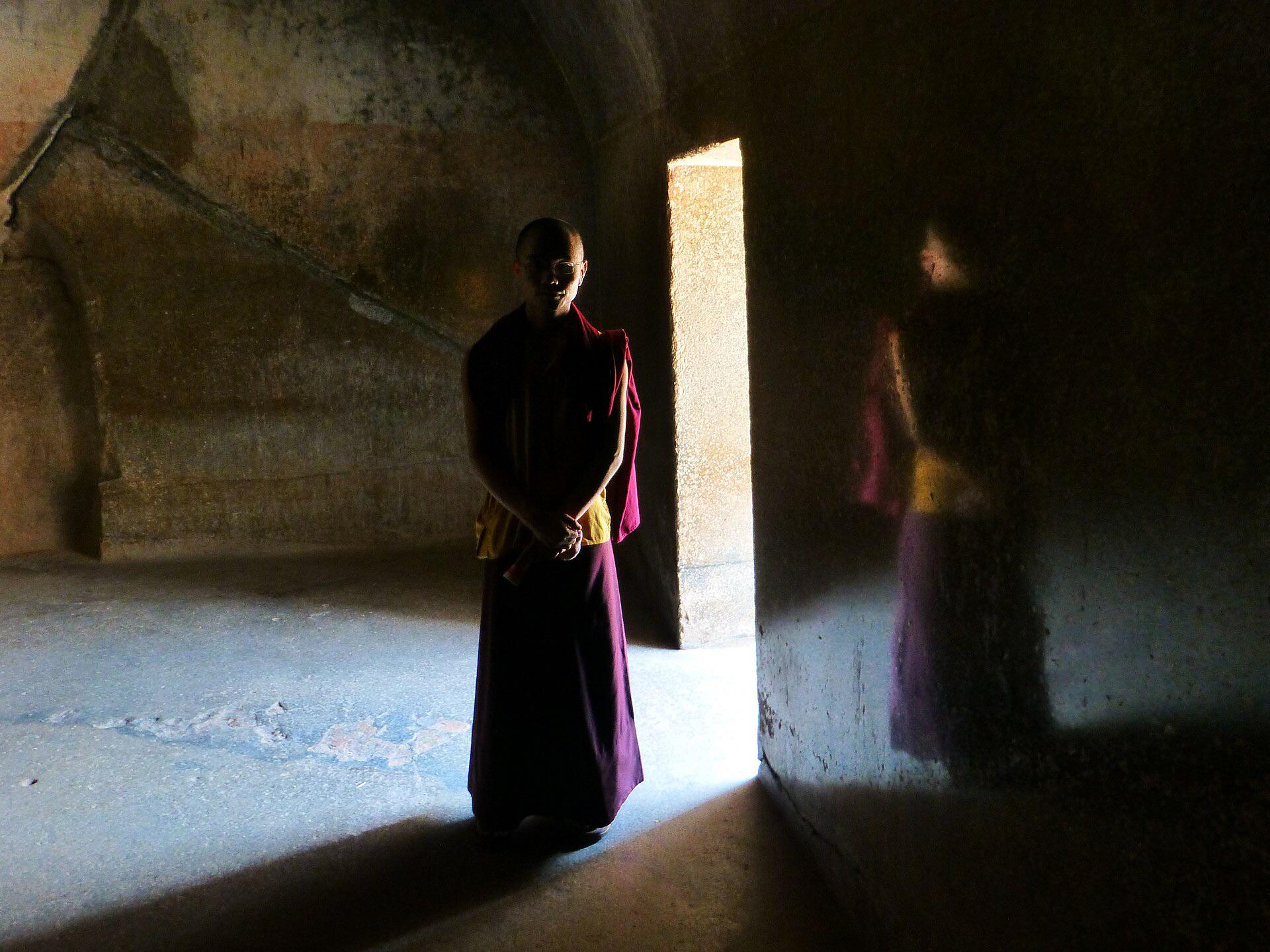
Walk into Lomas Rishi cave at Barabar in Bihar and the granite walls throw your reflection back at you. The surface is so smooth and glossy that photos often look fake, as if someone tiled the chamber with black glass. Yet this mirror-like polish is more than 2,200 years old, cut and finished in the Mauryan Empire of Ashoka.
Online, people see those photos and jump straight to the same question: how on earth did they do that, and is this like Egyptian stonework or something else entirely? They look similar because both Indian and Egyptian builders pushed stone to its limits, but they did it in different times, for different reasons, with different methods.
The Barabar Caves are the oldest surviving rock-cut caves in India, dating to about 261–250 BCE under Ashoka and his grandson Dasharatha. Ancient Egyptian stonework, from Old Kingdom pyramids to later temples, is over a thousand years older. By comparing origins, methods, outcomes and legacy, you can see why Barabar’s polish feels almost alien, and why it actually fits into a very human story of royal power, religion and engineering.
Why did Barabar Caves and Egyptian stonework begin?
Start with the basic motive. Barabar’s granite caves were not random experiments. They were royal religious projects. Inscriptions in Brahmi script on some caves name Ashoka, the Mauryan emperor who ruled most of the Indian subcontinent from about 268 to 232 BCE. Others mention his grandson Dasharatha. Several inscriptions say the caves were donated to the Ajivikas, an ascetic sect that competed with early Buddhists and Jains.
So these mirror-polished caverns were elite religious real estate. A king was giving a radical new kind of space to a radical religious movement. The fact that they are cut into hard granite, not softer rock, is part engineering flex, part spiritual theater. A flawless, echoing stone womb for meditation and teaching.
Ancient Egyptian stonework has a different origin story. Egyptians had been working stone on a massive scale since at least the 3rd millennium BCE. The Step Pyramid of Djoser at Saqqara (around 2600 BCE) and the Giza pyramids (around 2500 BCE) are the famous early peaks. Here, stone was tied to royal eternity. Pharaohs needed tombs that would last forever, temples where gods could be fed and festivals performed, and monuments that made their names impossible to ignore.
In Egypt, stonework grew out of a long tradition of mudbrick and timber building. Stone was the upgrade. It promised permanence in a culture obsessed with the afterlife. In India, by contrast, the Barabar Caves appear very early in the rock-cut tradition. They are not the end of a long series of experiments. They are closer to the starting gun.
So what? The different origins matter because they shaped everything that followed. Egyptian stonework was about building up: pyramids, temples, obelisks. Barabar was about cutting in: carving voids inside living rock. That basic difference in purpose drove different techniques and different kinds of perfectionism.
How were the Barabar Caves carved and polished vs Egyptian stone?
This is the part that fuels most of the online speculation. The Barabar Caves look so smooth that people assume lost machines or secret technologies. The reality is impressive without being magical.
The Barabar caves are cut into very hard granite or gneiss. Archaeologists generally think Mauryan workers used iron tools, which were available in India by this time, along with hammerstones and abrasives. They would have marked out the chamber, then attacked the rock with chisels and hammers, roughing out the shape. After that came the long, boring phase: grinding and polishing.
The interior surfaces of caves like Sudama and Lomas Rishi are not just smooth. They are finished with a high polish that reflects light like a dark mirror. This kind of polish can be achieved with abrasives such as quartz sand, emery, or other hard minerals, used with water and a lot of labor. The exact recipe is not recorded, but the physics is straightforward. You scratch the surface with finer and finer particles until the microscopic peaks and valleys disappear.
The result is so even that the curved ceilings and walls create odd acoustics. Visitors report strong echoes and a sense of being inside a stone bell. That acoustic effect is a side product of the visual perfection.
Egyptian stoneworkers, by contrast, spread their effort across a much wider range of tasks. They quarried and moved multi-ton blocks of limestone, granite, and other stones. They shaped and dressed them with copper or bronze tools, pounding stones, and abrasives. They carved hieroglyphs and reliefs, then painted them. They polished some surfaces to a fine finish, especially in statues and sarcophagi, but rarely entire large interior chambers to a mirror sheen.
In Egypt, you can see tool marks on many blocks. You can see where masons smoothed joints on the outer casing of pyramids or the floors of temples. Some granite statues and obelisks are highly polished, showing the same basic abrasive technique that Barabar likely used. But the Egyptians usually reserved that level of finish for specific objects or surfaces, not whole rooms.
So what? The methods were not alien. Both cultures used metal tools and abrasives, plus enormous amounts of labor. The difference is in focus. Egyptians spread their skill across vast complexes. Mauryan builders concentrated it in a few small, perfect voids, which is why Barabar’s polish looks so extreme compared to most surviving Egyptian interiors.
What did the finished spaces look and feel like?
When people compare Barabar to Egyptian stonework, they are often reacting to the vibe. The Barabar caves feel almost modern: geometric, minimal, glossy. That is partly because so little decoration survives. The walls are bare, the shapes simple. Sudama cave, for example, has a rectangular entrance hall and a circular inner chamber, both with polished surfaces that catch every flicker of light.
Imagine entering with a small oil lamp. The flame would multiply across the walls. The polished granite would turn a tiny light into an all-encompassing glow. For ascetics practicing meditation or group recitation, this was not just a shelter. It was an engineered sensory environment.
Lomas Rishi cave adds one famous decorative flourish: a carved stone façade over the entrance, with an arch-like shape and rows of elephants. That façade, not the interior, became a model for later Indian rock-cut architecture. Inside, the same smooth, echoing chamber.
Egyptian stone spaces were usually more visually busy. Temple walls were packed with carved scenes and hieroglyphic texts. Columns were shaped like papyrus or lotus plants. Tombs had painted scenes of daily life and the afterlife. Floors and some walls could be smoothed and polished, but the overall effect was narrative and symbolic, not minimalist.
There are, however, points of contact. Some Egyptian burial chambers in the Valley of the Kings have carefully finished stone surfaces, then painted. Granite sarcophagi in Old and New Kingdom tombs can be highly polished, giving the same glossy effect as Barabar, just on a smaller, box-like scale.
So what? The outcomes show different aesthetic priorities. Barabar’s mirror finish turned the entire room into a single, controlled surface. Egyptian builders tended to treat stone as a canvas for images and text. That is why Barabar looks eerily modern to us, while Egyptian interiors feel more like illustrated books carved in stone.
What were the religious and political stakes behind the stone?
None of this was just about engineering pride. In both India and Egypt, stone was a political and religious statement carved into geology.
Ashoka, ruling in the 3rd century BCE, is famous for his conversion to Buddhism after the bloody Kalinga war and for his rock and pillar edicts. Those inscriptions, cut into natural rock faces and free-standing pillars across his empire, announce moral and administrative policies. The Barabar caves fit into that same moment. They show a king using permanent materials to support and control religious movements.
The Ajivikas, who received several of the Barabar caves, followed a strict ascetic life and a doctrine of fate. They were rivals to Buddhists and Jains. By granting them such extraordinary spaces, Ashoka and Dasharatha were not just being generous. They were placing these sects under royal patronage, in highly visible, durable monuments.
In Egypt, pharaohs used stone to tie themselves to gods and to eternity. Pyramids were more than tombs. They were cosmic machines linking the dead king to the sun and stars. Temples were the official houses of the gods, where only priests and royalty could perform rituals that kept the world in order.
Every block of stone carried political weight. Building at Giza or Karnak was a way of saying: I control the labor, the quarries, the priests, and the gods. The smoother the joint, the more exact the alignment, the more convincing the claim to divine order.
So what? The religious and political stakes explain why such insane effort went into stone. Barabar’s polish and Egyptian precision were not hobbies. They were tools of persuasion, meant to impress humans and honor or manipulate gods.
How did these techniques spread and what legacy did they leave?
Here is where the comparison gets interesting. Egyptian stoneworking traditions lasted for well over two thousand years, from early dynasties through the Ptolemaic period. Techniques evolved but the basic toolkit of quarrying, dressing, carving and finishing stone remained in use, passed down through generations of craftsmen.
Egyptian methods influenced neighboring cultures in the eastern Mediterranean and Near East, especially in the use of large stone blocks, obelisks, and monumental statuary. Greek and Roman writers commented on Egyptian monuments, and the Romans even hauled Egyptian obelisks back to Italy as trophies.
In India, the Barabar Caves are early but not isolated. They helped launch a long tradition of rock-cut architecture. Later Buddhist chaitya halls and viharas at places like Ajanta, Karla, and Ellora borrow the arched doorway motif from Lomas Rishi’s façade. The idea of carving entire architectural complexes into cliffs and hillsides becomes a signature of Indian religious architecture for centuries.
The exact mirror polish of Barabar, however, is rarely repeated at the same level. Later caves are often finished more roughly or covered with plaster and paint. The Barabar technique seems to have been a peak of effort at a specific political and religious moment, not a standard practice.
Modern visitors and internet commenters sometimes assume that because Barabar looks so refined, it must be later than it is, or must involve lost technology. The inscriptions and archaeological context say otherwise. The polish is a reminder that ancient workers, given enough time and incentive, could do things that still surprise us.
So what? The legacy is uneven. Egyptian stonework became a long-running tradition that influenced many cultures. Barabar’s polish was a short, intense experiment whose visual language, more than its exact technique, shaped later Indian rock-cut spaces.
Why do Barabar’s walls look “too advanced” today?
The internet loves anomalies. A 2,200-year-old granite cave with mirror-like walls looks like an anomaly, especially in low-resolution photos where tool marks vanish and the surfaces look like poured resin.
Part of the shock is simply that most people’s mental image of “ancient” is rough stone and crumbling ruins. When they see something that looks like it came out of a modern design magazine, they reach for exotic explanations: lost machines, unknown alloys, forgotten civilizations.
But when you line Barabar up next to Egyptian stonework, the picture becomes less mysterious. Egyptians were drilling hard stone with copper tubes and sand abrasives in the 3rd millennium BCE. They were polishing granite statues to a deep shine. They were fitting limestone blocks so tightly that you can barely slip a knife between them.
Barabar is not an outlier in the sense of being beyond ancient capabilities. It is an outlier in how focused that capability is. Instead of spreading skill across a pyramid field or a temple complex, Mauryan builders concentrated it into a few small granite chambers and pushed the finish to an extreme.
So what? Once you see Barabar and Egyptian stonework as variations on the same human pattern, the mystery shifts. The real question is not “could they do this?” but “why did they choose to spend this much time and labor on this particular kind of perfection?” The answers lie in royal ambition, religious competition and the age-old desire to leave something in stone that looks like it might last forever.
What is the modern legacy of Barabar and Egyptian stonework?
Today, the Barabar Caves are relatively quiet compared to Egypt’s tourist magnets. But among archaeologists, architects and curious internet users, they have become a reference point. Photos of their polished walls circulate in debates about ancient technology. The caves themselves, though small, are key evidence for the early Mauryan state’s reach and resources.
Egyptian stonework, of course, is one of the main reasons people still talk about ancient Egypt at all. The pyramids, temples and statues are the surviving skeleton of a civilization whose papyrus and wood mostly rotted away. They are also laboratories for studying ancient engineering, logistics and labor organization.
Both traditions feed modern obsessions. Engineers study how ancient builders moved and set heavy stone. Conservationists wrestle with how to protect polished surfaces and carved reliefs from weather and tourism. Online, people argue about tool marks and drill holes.
So what? The legacy of Barabar and Egyptian stonework is not just about admiration. These stones shape how we imagine the past. They remind us that ancient people were not “primitive” in their ambitions or their patience. They just had different reasons for making rock shine.
Frequently Asked Questions
How old are the Barabar Caves in India?
The Barabar Caves in Bihar date to roughly 261–250 BCE, during the reign of the Mauryan emperor Ashoka and his grandson Dasharatha. They are considered the oldest surviving rock-cut caves in India.
How did ancient builders polish the Barabar Caves’ granite walls?
Most scholars think Mauryan workers used iron tools to rough out the caves, then abrasives such as quartz sand or similar hard minerals with water to grind and polish the granite. The process would have been extremely labor-intensive but does not require unknown technology.
Are the Barabar Caves related to Egyptian pyramids or temples?
No direct connection is known. Both traditions used stone with great skill, but Egyptian monuments are mostly built from blocks, while Barabar Caves are rock-cut chambers. Any similarity in smooth surfaces comes from similar use of abrasives and patient labor, not from a shared civilization.
Why do the Barabar Caves look so modern and smooth?
The Barabar interiors are unusually plain and highly polished, with simple geometric shapes and bare granite walls. That minimalism, combined with the mirror-like finish, makes them look modern compared to more decorated ancient sites, even though inscriptions firmly date them to the 3rd century BCE.