They look similar because on the surface, not much has changed. A dad at his birthday party in 1980s Montreal, Quebec, Canada: friends crowded around a kitchen table, beer bottles, a cake, maybe a cigarette or two, someone caught mid-laugh in a flash of harsh light.
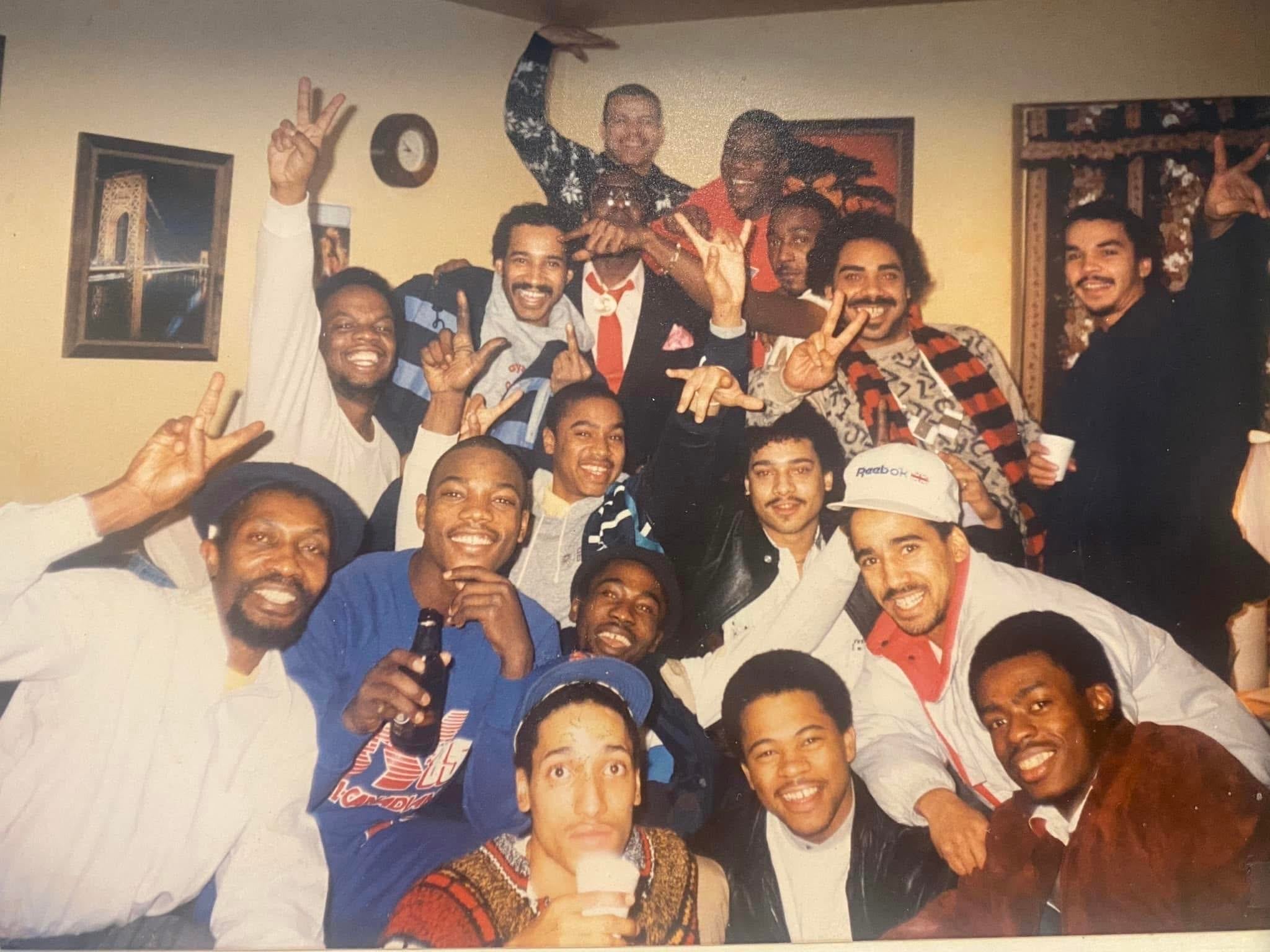
Scroll Instagram or TikTok today and you see the same thing. People in their 20s, 30s, 40s, gathered around tables, drinks in hand, smiling at a camera. The poses rhyme. The clothes echo each other. The human need is identical.
But that 1980s Montreal birthday photo and a 2020s social media post come from very different worlds. One was taken for a shoebox or a family album. The other is built for an audience, an algorithm, and a permanent archive you do not control.
This is the story of how two very similar-looking scenes grew out of different origins, used different methods, led to different outcomes, and left different legacies.
Origins: Why 80s Montreal Parties Happened vs Why We Post Now
Start with the dad in Montreal in, say, 1984. He might be turning 30 or 40. The Cold War is still on. Brian Mulroney is about to win big in 1984. The Montreal Expos are still a thing. The city is bilingual, tense, and alive. Wages are lower than in Toronto, rents are cheaper, and people actually go to each other’s apartments for fun.
In that world, a birthday party is simple. You invite whoever you can call from your landline or bump into at work or at the bar. Maybe you put up a paper calendar in the kitchen with a circle around the date. The goal is modest and very local: mark another year, see your people, drink, eat, talk. If a camera appears, it is an accessory, not the point.
Social life in 1980s Montreal is built on proximity and routine. Co-workers, cousins, neighbors in the same apartment block, guys from the dépanneur hockey pool. You do not need a pretext to see them. The party is one more node in an already dense web of in-person contact.
Now jump to the 2020s. The birthday party still exists, but the social media post has become the main record of it. The origin is different. You are not just planning a night. You are planning content.
Events are created on Facebook or group chats. People check Instagram for outfit ideas. The bar or restaurant is chosen partly for its lighting and backdrop. The guest list is shaped by who you actually see and who you want to be seen with. The party is both a real gathering and a production for a future audience.
Social media culture grew out of a different set of pressures. More mobility, more isolation, more people living far from family, more work hours, more gig jobs. Platforms like Facebook (2004), Instagram (2010), and TikTok (2016) stepped in to patch the gaps. They turned social life into something you can scroll, measure, and compare.
So the 1980s Montreal birthday party grows out of local ties and habit, while today’s social media culture grows out of distance, fragmentation, and the need to be visible in a crowded digital world. That origin story shapes everything that follows.
So what? Because the reasons these gatherings exist in the first place decide whether the camera is a side character or the main event.
Methods: How People Captured 80s Parties vs How We Post Now
In that Montreal kitchen in the 80s, there is probably one camera in the room. Maybe two. It is a 35mm film camera or a cheap point-and-shoot. Each roll has 24 or 36 exposures. Every click costs money and has to be developed at a pharmacy or photo shop.
That scarcity shapes behavior. You do not take 50 shots of the same cake. You get one, maybe two. Someone says, “Okay, everyone look here,” the flash pops, and then life resumes. People go back to talking, smoking, arguing about the Canadiens’ power play.
There is no instant feedback. You will not see those photos for days. Maybe weeks. You cannot delete the one where your aunt’s eyes are half closed. You cannot edit out the ashtray or the ugly curtains. The result is a record that is both curated and accidental.
Home video arrives in the 80s too, but it is clunky. VHS camcorders are big and expensive. If someone brings one, they become the cameraman for the night. Tapes are watched on a TV in a living room, not broadcast to the world.
Now look at the same kind of party in 2024. Every person in the room has a camera in their pocket. Storage is cheap, so people take dozens or hundreds of photos and videos. There is no cost per shot. The cost is attention and time.
Methods have flipped. Instead of one person with a camera, everyone is a photographer, editor, and broadcaster. People check the photo on the spot, retake it, adjust the angle, move the beer bottle, fix their hair. Then come filters, captions, tags, music overlays, and cross-posting to multiple apps.
Social media turns documentation into performance. The moment is not just captured, it is shaped to look good on a vertical screen. Lighting, symmetry, and facial expressions are adjusted for an imagined audience of friends, acquaintances, and strangers.
Here is a clean way to put it: 1980s party photos were souvenirs. Today’s party photos are both souvenirs and advertisements for your life.
So what? Because the tools we use to record our lives quietly push us to act for the camera, and that shift changes what the night feels like while it is happening.
Outcomes: Who Saw 80s Party Photos vs Who Sees Them Now
In 1980s Montreal, the life of that birthday photo is short and small. The roll gets dropped at a Jean Coutu or a local lab. A week later, a paper envelope comes back with glossy 4×6 prints and negatives tucked inside.
The family flips through them at the kitchen table. Maybe a few favorites go into an album with sticky pages and plastic covers. The rest live in a shoebox. If you visit years later, someone might pull them out, laugh at the haircuts, and tell stories about who moved away or who died.
The audience is tiny. Family. Close friends. Maybe a new girlfriend or boyfriend who is being introduced to the past. The photo’s power is in memory, not reach. It helps people remember who was there and what that time felt like.
There is also a kind of mercy in the limits. If you had a bad haircut, if you were drunk and red-eyed, if you said something stupid, the evidence is not going to be seen by an employer, a future partner, or a stranger in another country.
Now think about the same moment in the 2020s. The photo is taken, edited, and posted within minutes. It appears on Instagram Stories, maybe a main grid post, maybe in a group chat, maybe cross-posted to Facebook where older relatives live.
The audience is a mix of people you know well, people you barely know, and people you do not know at all. Algorithms decide who sees it, when, and how often. The success of the moment is measured in likes, comments, and shares. Silence can feel like failure.
That creates new outcomes. People at the party might be thinking about how they look to exes, co-workers, or high school classmates they have not seen in a decade. Some will avoid photos. Others will angle to be in them. The social hierarchy of the room can be reinforced or rearranged by who gets tagged and who does not.
There is also the issue of permanence. A 1980s photo could be lost in a move or damaged in a flood. A 2020s photo is backed up on multiple servers, scraped by data brokers, and sometimes resurfaced years later by “memories” features.
Here is another clean line: 1980s party photos were private records that might fade. Today’s party posts are semi-public records that are hard to erase.
So what? Because who sees the image, and for how long, changes how risky it feels to be yourself in front of the camera.
Legacy: What 80s Photos Left Behind vs What Social Media Will
That Montreal birthday party from the 80s is now a piece of family history. The dad might be older, sick, or gone. The apartment might have been renovated or demolished. The friends in the photo might be scattered across provinces or countries.
The photo survives as a physical object. Someone finds it in a box. They scan it and post it on Reddit’s r/TheWayWeWere, where thousands of strangers click on it and feel a strange mix of nostalgia and curiosity. The image has jumped from private memory to public artifact.
What hits people is the mix of familiarity and distance. The clothes are dated, but the body language is not. The kitchen looks cheaper, but the expressions are the same. Commenters often say some version of, “This looks like my parents,” or, “This could be my friends, except for the hair.”
That is the legacy of 1980s party photos. They become time capsules. They show how ordinary people actually lived, not how they wanted to appear to the internet. Historians and sociologists already use family albums to study class, fashion, housing, and relationships.
What will be left from our era? On one hand, there will be far more material. Billions of photos and videos. On the other hand, most of it sits on private servers controlled by a few companies. Accounts get deleted. Passwords are lost. Terms of service change.
Future historians may not be able to see your Instagram Stories, but they might see screenshots, scraped datasets, or whatever survives in public or leaked archives. The record will be huge, but skewed toward what people thought would play well online.
That means our legacy may look more polished and more anxious. Less ashtray on the table, more curated brunch. Less argument in the corner, more group cheers for the camera. The raw, unflattering moments are still there, but they are buried in private chats or never recorded at all.
So what? Because the way we record our lives decides what future generations think “normal” looked like.
Why 80s Parties and Today’s Posts Feel So Similar Anyway
So why do people react to an 80s Montreal birthday photo with, “This looks just like us”?
Because underneath the tech and the context, the core script has not changed. People gather to mark time. They drink, flirt, complain about work, talk about money, gossip about relatives, and pose for a camera when someone asks.
The human body has not changed since 1984. The way a group leans toward the person they like, the way someone at the edge of the frame looks half in and half out of the moment, the way a kid clings to a parent’s leg. All of that reads instantly across decades.
Another snippet-ready way to say it: 1980s party photos and today’s social media posts look similar because the human need for recognition and connection is the same, even when the tools are different.
What has changed is the pressure. The Montreal dad in the 80s did not expect his birthday photo to be seen by thousands. His performance was for the room. Today, many people live with an invisible audience in their heads. They are always half aware that anything can be posted, shared, and judged.
That is why old photos often feel relaxing. People look less self-conscious. They are not sucking in their stomachs for a grid post. They are not thinking about their “brand.” They are just there, in bad lighting, with a beer and a cheap cake.
So what? Because recognizing the sameness beneath the surface makes it easier to see what is new, and to decide how much of the new pressure you actually want to accept.
What That 80s Montreal Party Tells Us About Ourselves
When a Reddit post titled “My dad’s birthday party in the 80s” pulls in tens of thousands of upvotes, it is not just about nostalgia for wood paneling and cigarette smoke. It is about people noticing how ordinary happiness used to be recorded, and comparing it to their own feeds.
Montreal in the 1980s was a specific place, with its own politics, language tensions, and culture. Yet a single photo from a birthday party there can feel universal. That is the power of analog records. They are specific and small, but they travel well across time.
Our era will leave its own records. Screenshots of group chats. Viral TikToks. Tagged photos from nights out. Future strangers might scroll through them and feel the same mix of recognition and distance we feel when we look at that 80s kitchen.
The comparison is not about which era was “better.” It is about seeing how the same human script plays out under different rules. In 1980s Montreal, the rules were set by film, distance, and local life. Today, they are set by smartphones, algorithms, and global visibility.
So what? Because once you see that, you can look at your next birthday photo and ask a simple question: am I doing this for the room, or for the feed?
Frequently Asked Questions
Why do 1980s party photos look so similar to today’s pictures?
They look similar because the basic human script has not changed. People still gather around tables, celebrate birthdays, drink, talk, and pose for a camera when asked. The technology and context are different, but body language, group dynamics, and the desire to be seen and remembered are the same.
How were birthday parties in 1980s Montreal different from parties today?
1980s Montreal birthday parties were organized through landlines and in-person networks, held mostly in homes, and documented with a few film photos that were developed days later. Today’s parties are often coordinated online, shaped with social media in mind, and documented with hundreds of digital photos and videos shared instantly with a large audience.
Who saw 1980s family photos compared to social media posts now?
In the 1980s, family photos were usually seen by a small circle of relatives and close friends, stored in albums or shoeboxes. Today, similar images posted on social media can be seen by hundreds or thousands of people, including acquaintances and strangers, and are often stored on company servers for years.
What will be the legacy of our social media photos compared to old film photos?
Old film photos become physical time capsules that show everyday life with minimal self-editing. Our social media photos will leave a much larger but more curated record, shaped by algorithms and social pressure. Future historians may see a polished version of our lives that emphasizes what people thought would look good online rather than everything that actually happened.