On the night of 22 August 1962, a black Citroën DS sped through the Paris suburb of Petit-Clamart. Inside sat French president Charles de Gaulle and his wife Yvonne, on their way to an air base. A few seconds later, the car was riddled with bullets. Tires shredded. Windows blown out. Glass everywhere.
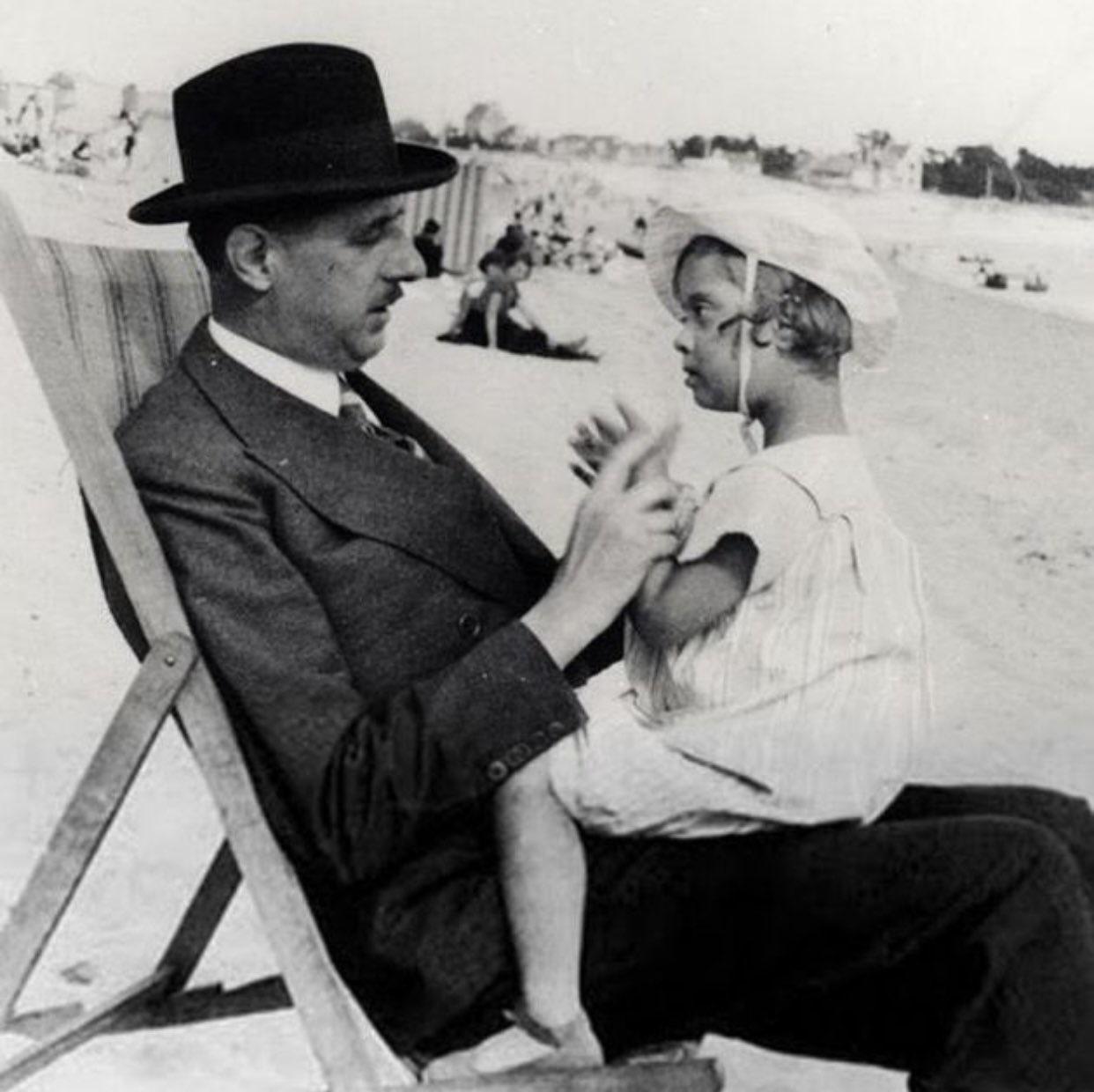
De Gaulle, 6’5 and 71 years old, sat upright and refused to duck. When the shooting stopped, he was untouched. One detail from that night became legend: a framed photo of his late daughter Anne, who had Down syndrome and died in 1948, was said to have stopped a bullet that might have killed him.
The Petit-Clamart attack was a failed assassination attempt by far-right French officers furious at de Gaulle’s decision to grant independence to Algeria. Around 187 shots were fired at his car. None killed him. By the end of this story, you can see how a colonial war, a president’s gamble, and a group of embittered officers collided on a suburban road.
What was the 1962 attempt on de Gaulle’s life?
The Petit-Clamart assassination attempt was an armed ambush on French president Charles de Gaulle carried out on 22 August 1962 by members of the far-right Organisation armée secrète (OAS) and sympathetic officers. Their goal was simple: kill the man they saw as betraying “French Algeria.”
De Gaulle’s motorcade, in a Citroën DS 19, was driving through Petit-Clamart, southwest of Paris, when a commando team opened fire with automatic weapons. The attackers had positioned themselves along the route and unleashed a barrage at close range. Contemporary accounts speak of roughly 140 to 200 bullets fired; 187 is often quoted, though exact counts vary.
Miraculously, no one in the car died. The DS lost its rear tires and much of its bodywork, but the driver, Francis Marroux, accelerated out of the kill zone and kept control of the car. De Gaulle and his wife were sprayed with glass but uninjured. One bullet reportedly struck the framed photo of Anne de Gaulle that the president kept in the car, a detail that quickly took on a near-mythic quality in French memory.
In plain terms: the Petit-Clamart attack was a failed coup-by-assassination, an attempt by hardline pro-empire officers to reverse France’s retreat from Algeria by removing the head of state.
So what? Because it failed, France did not plunge into a military coup or civil war, and de Gaulle was able to finish dismantling the French empire on his own terms.
What set it off? Algeria, empire, and a sense of betrayal
The roots of the attack lie in the Algerian War of Independence, which began in 1954. Algeria was not just a colony. It was legally part of France, with over a million European settlers (pieds-noirs) and a large Muslim majority treated as second-class citizens. When the National Liberation Front (FLN) launched its insurgency, Paris responded with brutal counterinsurgency tactics.
By 1958, the war had destabilized French politics. The Fourth Republic, already shaky, seemed unable to win in Algeria or negotiate peace. In May 1958, French generals and settlers in Algiers staged an uprising, demanding a government that would keep Algeria French. They turned to an old hero: Charles de Gaulle, who had led Free France in World War II.
De Gaulle returned to power that year, backed by many in the army who believed he would crush the FLN and preserve French Algeria. He created a new constitution, the Fifth Republic, with a strong presidency. At first he spoke in terms that reassured the army, talking about the grandeur of France and visiting Algeria to cries of “Algérie française!”
Then he changed course. By 1959 he was publicly speaking of “self-determination” for Algeria. He had concluded that the war was unwinnable at acceptable cost and that clinging to Algeria would drag France down. For many officers and settlers, this was not just a policy shift. It was a personal betrayal by the man they had helped bring to power.
That sense of betrayal hardened into rage. In 1961, four generals in Algeria launched a putsch against de Gaulle. It failed within days, but out of its wreckage came a new, more desperate organization: the OAS, dedicated to using terror to keep Algeria French and punish de Gaulle.
So what? The assassination attempt was not a random act of extremism. It was the violent endpoint of a colonial war and a broken political promise that turned former supporters into would-be regicides.
The turning point: from war in Algeria to bullets in Petit-Clamart
By early 1962, the writing was on the wall. De Gaulle’s government was negotiating with the FLN. In March 1962, the Evian Accords were signed, granting a ceasefire and setting the path to Algerian independence. For the OAS, this was the apocalypse.
The OAS responded with a campaign of terror in Algeria and in mainland France. Bombings, shootings, and assassinations targeted Algerian nationalists, French officials, and anyone suspected of supporting independence. The group hoped to provoke chaos that would derail the peace process and force the army to step in.
But the army did not rise. Public opinion in France was exhausted by the war. Many officers accepted that the political decision had been made. The OAS grew more isolated, more radical, and more willing to strike at the very top.
Enter Lieutenant-Colonel Jean-Marie Bastien-Thiry, an air force engineer and devout Catholic monarchist. He was not a frontline Algerian officer but shared the OAS worldview that de Gaulle had betrayed France and Christendom. Bastien-Thiry began planning an assassination that would succeed where the generals’ putsch had failed.
On 22 August 1962, his team put the plan into action. They knew de Gaulle’s route to the Villacoublay air base. They placed shooters along the road at Petit-Clamart. As the presidential DS approached, the gunmen opened fire.
The car was hit repeatedly. Two motorcycle escorts were wounded. Tires exploded. The DS, famous for its advanced suspension and handling, stayed controllable even with its rear tires destroyed. Marroux accelerated, swerving out of the ambush. De Gaulle later remarked drily that the attackers “shoot like pigs.”
The famous story of the photo of Anne stopping a bullet comes from accounts that a projectile struck the framed picture he carried. Whether that specific bullet would have killed him is hard to prove, but the image resonated deeply in a country that knew de Gaulle as a distant, almost monarchical figure and Anne as his one visible soft spot.
So what? The failure at Petit-Clamart marked the moment when the last, most violent attempt to reverse Algerian independence collapsed, confirming that the era of French Algeria was over.
Who drove it? De Gaulle, Bastien-Thiry, and Anne in the background
Charles de Gaulle was not an easy man to like, but he was easy to recognize. Towering, austere, with a sense of destiny that bordered on theatrical, he saw himself as the embodiment of France. He believed that France’s greatness required independence from both the United States and the Soviet Union, and that clinging to a bloody colonial war would weaken that independence.
His decision to negotiate Algerian independence was cold, strategic, and deeply unpopular with the right. Yet he stuck to it. That stubbornness is what put him in the crosshairs of the OAS and officers like Bastien-Thiry.
Jean-Marie Bastien-Thiry, by contrast, was a relatively obscure figure before 1962. An engineer in the air force, he was highly educated, Catholic, and monarchist in sympathy. He saw de Gaulle’s policy as a betrayal of the European settlers and of France’s mission. To him, killing de Gaulle was not murder but an act of higher loyalty.
After the attack, Bastien-Thiry was arrested, tried by a military court, and sentenced to death. De Gaulle commuted several other death sentences for OAS members, but not his. In March 1963, Bastien-Thiry was executed by firing squad, the last person to be executed in France by that method. He reportedly shouted “Vive la France!” as he died.
Anne de Gaulle never chose any of this. Born in 1928 with Down syndrome, she was the child to whom de Gaulle was most openly affectionate. She died of pneumonia at age 20. Her parents later founded a home for disabled girls, the Fondation Anne-de-Gaulle. The story that her photograph stopped a bullet in 1962 turned her into a quiet symbol in the French imagination: the private love that shielded a very public man.
So what? The clash between de Gaulle and Bastien-Thiry shows how a single political decision on empire could split France’s elite, while the story of Anne’s photo gave a human, almost intimate frame to a high-stakes struggle over the future of the country.
What did it change? Consequences for France and the OAS
In the short term, the Petit-Clamart attack failed to kill de Gaulle but succeeded in hardening his resolve. He used the attempt to justify a tougher line against the OAS and other extremist networks. Security was tightened. Arrests followed. The state made clear that violence would not alter the Algerian settlement.
Algeria formally gained independence on 5 July 1962, just weeks before the attack. The OAS had already been losing ground, but the failed assassination accelerated its collapse. Its leaders were hunted down, arrested, or fled into exile. The dream of “Algérie française” was finished.
Politically, the attack helped de Gaulle argue for stronger presidential powers. Only a few months later, in October 1962, he pushed a referendum to have the president elected by direct universal suffrage rather than an electoral college. He framed this as giving the people a direct say in choosing the head of state, who had just survived an attempt on his life. The referendum passed.
The trial and execution of Bastien-Thiry also sent a message. De Gaulle, who had granted amnesty or clemency to other opponents, refused to spare the man who had tried to kill him. That decision reinforced the idea that the Republic could be generous to political enemies, but not to those who took up arms against its institutions.
So what? The failed assassination did not just end a terrorist plot. It helped cement the Fifth Republic’s strong presidency and closed the door on any serious attempt to reverse decolonization by force.
Why it still matters: memory, myth, and modern politics
The Petit-Clamart attack lives on in French memory for several reasons. It is one of the most dramatic near-misses in modern European political history. It is also a window into how violently a country can react when it is forced to give up an empire.
The Algerian War remains a raw subject in France. Debates over torture, migration, and the place of French citizens of Algerian origin are all haunted by that conflict. The fact that French officers once tried to kill their own president over Algeria is a reminder of how close the country came to a deeper internal rupture.
The story about Anne’s photo stopping a bullet has its own afterlife. Historians tend to treat it cautiously. A bullet did strike the photo, but whether it truly “saved” de Gaulle is hard to prove. Yet the story persists because it humanizes a man who cultivated distance and grandeur. It turns a political assassination attempt into a family story, with a dead daughter’s image as a kind of silent shield.
There is also a more modern angle. In an age where political violence and terrorism are again part of public life, the 1962 attempt shows how a democratic state can be attacked from within by its own security elites. It raises uncomfortable questions about loyalty, ideology, and what happens when parts of the military feel betrayed by elected leaders.
So what? The failed assassination of Charles de Gaulle is not just a dramatic anecdote about 187 missed shots and a bullet-stopped photograph. It is a case study in how decolonization, nationalism, and personal conviction can push a modern state to the edge, and how surviving that edge shapes the institutions and myths that follow.
Frequently Asked Questions
Why did French officers try to assassinate Charles de Gaulle in 1962?
They believed de Gaulle had betrayed France by granting independence to Algeria. Many far-right officers and members of the Organisation armée secrète (OAS) wanted to keep Algeria French. When de Gaulle negotiated the Evian Accords and accepted Algerian self-determination, they saw him as a traitor and tried to kill him to reverse that policy.
How many shots were fired at de Gaulle’s car in Petit-Clamart?
Contemporary accounts say around 140 to 200 shots were fired at Charles de Gaulle’s Citroën DS during the Petit-Clamart ambush on 22 August 1962. The number 187 is often quoted, but exact counts vary by source. Despite the heavy gunfire, de Gaulle and his wife were not hit, though the car was badly damaged.
Did a photo of de Gaulle’s daughter really stop a bullet?
A bullet did strike the framed photograph of Anne de Gaulle, his daughter who had Down syndrome and died in 1948, which he kept with him. The popular story is that this photo stopped a bullet that might have killed him. Whether it truly made the difference between life and death is hard to prove, but the incident became a powerful part of the legend surrounding the failed assassination.
What happened to the man who organized the 1962 attack on de Gaulle?
The main organizer, Lieutenant-Colonel Jean-Marie Bastien-Thiry, was arrested after the attack, tried by a military court, and sentenced to death. Unlike some other OAS members, he did not receive a pardon from de Gaulle. He was executed by firing squad in March 1963, the last person in France to be executed in that way.