In the autumn of 1927, in a Dutch manor house far from Berlin, the former German Kaiser picked up his pen and wrote something chilling.
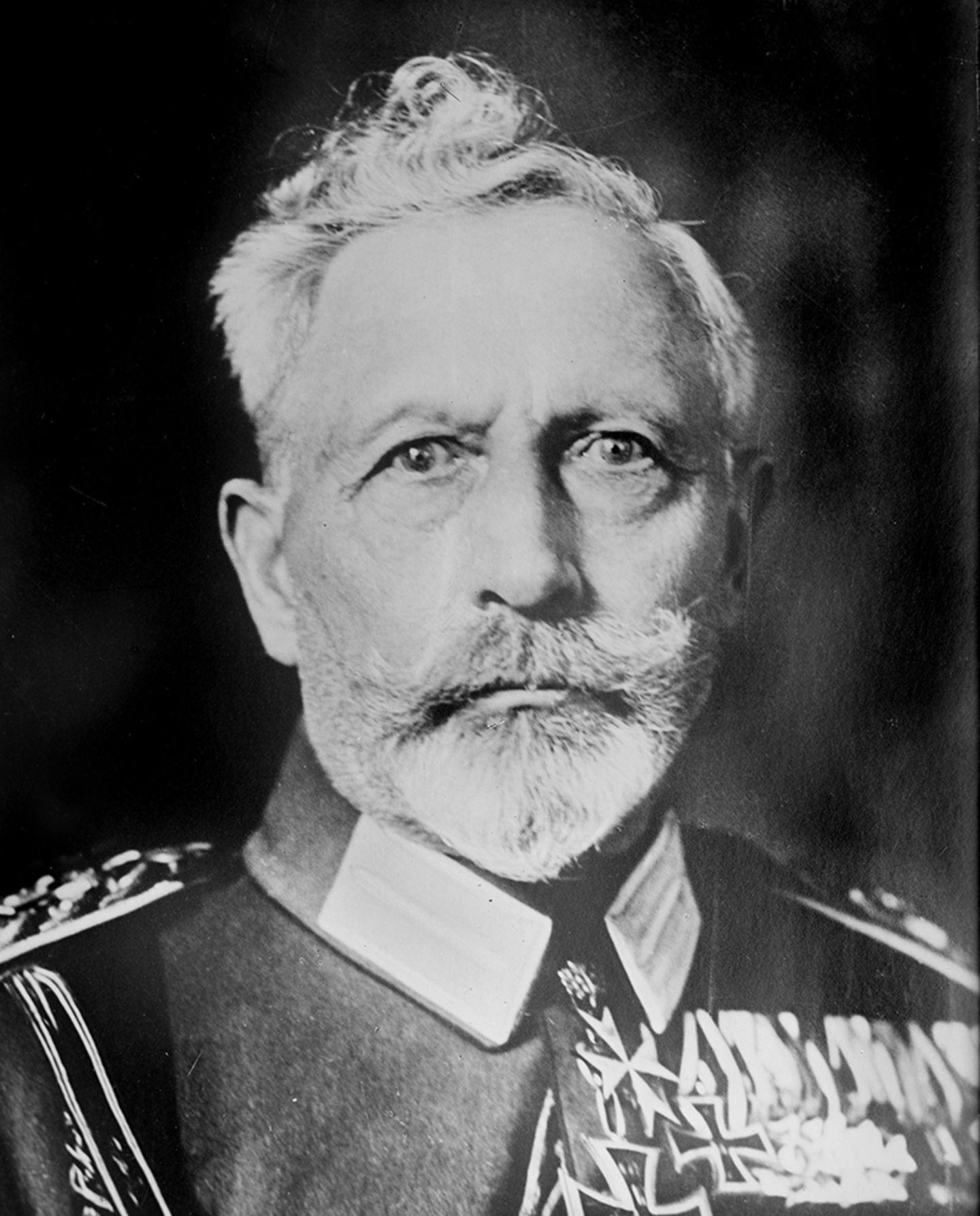
Wilhelm II, the man who had led Germany into the First World War and then fled into exile, told a friend that Jews were “a plague of which humanity must rid itself one way or another.” Then he added a line that reads like a prelude to the worst crime of the 20th century: “I believe the best would be gas.”
That sentence did not cause policy in 1927. Wilhelm had no throne, no army, no power. But it did capture something people still argue about: how much of the Holocaust was “Hitler’s idea,” and how much grew from older, wider hatreds inside European elites.
Here are five things that letter reveals about Wilhelm II, about Germany between the wars, and about why blaming everything on Hitler alone lets too many people off the hook.
1. Wilhelm II’s antisemitism was old, obsessive, and got worse after 1918
What it is: The 1927 “gas” line was not a sudden outburst. It was the hardening of prejudices Wilhelm had carried for decades, sharpened by defeat and exile.
Wilhelm II had grown up in a Prussian court where antisemitic stereotypes were common. He could be cordial to individual Jewish businessmen or officers when it suited him, but in private he often repeated the usual tropes: Jews as greedy, rootless, unpatriotic.
Before 1914, this prejudice coexisted with political calculation. He liked to present himself as a monarch “above parties,” and he occasionally pushed back against open antisemitic agitation when it threatened social order or foreign relations. His antisemitism was real, but it was not yet his organizing obsession.
That changed after Germany’s defeat in 1918. Wilhelm abdicated in November, fled to the Netherlands, and spent the rest of his life in Doorn, a Dutch estate where he brooded over what had gone wrong. In his mind, the answer was simple and convenient: betrayal.
In letters and conversations from the 1920s, he repeatedly blamed “the Jews” for Germany’s collapse, the November Revolution, and the hated Weimar Republic. He folded in the popular “stab-in-the-back” myth, which claimed that Germany had not been beaten on the battlefield but sabotaged by leftists and Jews at home.
By the time he wrote the 1927 letter, this had hardened into a fantasy of racial war. Jews were no longer just annoying rivals or political opponents. They were a “plague” to be eliminated.
Example: In a 1920 letter, Wilhelm wrote that Jews were “parasites” and that “the Jews are responsible for the misery of the world.” His private correspondence from Doorn is full of similar lines, long before the 1927 “gas” remark.
Why it mattered: Wilhelm’s radicalization shows how defeat and humiliation can turn ordinary prejudice into exterminationist thinking. His letter is a window into a wider shift among conservative elites, not just a personal quirk.
2. The “gas” remark shows genocidal thinking before Hitler took power
What it is: The 1927 line about gas is often read backwards from Auschwitz. It is one of several pre-Nazi examples where influential figures imagined mass killing of Jews long before the Third Reich built death camps.
Wilhelm wrote that Jews were a “plague” and that “the best would be gas.” He was not laying out a policy paper. He had no state to command. But the choice of words matters. He was not talking about expulsion or legal discrimination. He was contemplating mass murder.
Poison gas was not an abstract horror to him. It had been used on the Western Front since 1915. German and Allied soldiers had died choking in clouds of chlorine and phosgene. Gas was part of the mental toolbox of anyone who had lived through the First World War.
So when a former emperor reached for “gas” as the “best” way to deal with a “plague,” he was drawing on both modern technology and older fantasies of cleansing. He was not alone. Antisemitic writers and politicians across Europe had started to talk about “extermination” and “annihilation” as if they were options on a menu.
Historians are careful here. There is no straight line from Wilhelm’s letter to the gas chambers of Belzec or Auschwitz. The Nazis did not need his advice, and there is no evidence they even read this particular letter.
But the letter destroys one comforting myth: that genocidal thinking appeared suddenly with Hitler in 1933. It was already circulating in the heads of educated, respectable men who had once ruled empires.
Snippet-ready: The Holocaust did not begin with gas chambers. It began with decades of elites describing Jews as a disease that had to be removed.
Example: In 1919, the influential British writer H. G. Wells, no antisemite, casually used the phrase “the sterilization of the unfit” when discussing eugenics. Across Europe, eugenic and racial language made the idea of eliminating whole groups sound technical rather than murderous. Wilhelm’s “gas” line sat inside this wider culture.
Why it mattered: The letter shows that the mental step from prejudice to imagining mass killing had already been taken by some elites before Hitler had any power, which made Nazi radicalism easier to accept or ignore later.
3. Wilhelm’s words fed into a broader elite antisemitism in Weimar Germany
What it is: The ex-Kaiser was not ranting in a vacuum. His views reflected and reinforced a current of antisemitism among conservative, nationalist, and military circles during the Weimar Republic.
After 1918, many in the old ruling classes felt dispossessed. They hated the democratic Weimar system, resented the Treaty of Versailles, and looked for scapegoats. Jews, socialists, and “November criminals” became the standard villains in right-wing newspapers, veterans’ groups, and aristocratic salons.
Wilhelm, from his Dutch exile, kept up a steady correspondence with German conservatives. He wrote letters, received visitors, and tried to shape opinion. He wanted his throne back, or at least a restoration of authoritarian rule. Blaming Jews for everything that had gone wrong fit neatly into that project.
He praised right-wing coups, such as the failed Kapp Putsch of 1920, and expressed sympathy for nationalist paramilitaries. He spoke warmly of General Erich Ludendorff, who himself drifted into wild antisemitic conspiracy theories in the 1920s.
In this world, antisemitism was not just pub talk. It was a shared language among judges, officers, landowners, and bureaucrats who still held real power. When a former emperor described Jews as a “plague,” he was echoing what many in his social circle already believed, and giving it a royal stamp of approval.
Example: The infamous “stab-in-the-back” myth, pushed by Ludendorff and others, claimed that Jewish politicians and leftists had betrayed the army in 1918. This myth shaped court decisions, press coverage, and public opinion. Wilhelm’s letters show him fully bought into that narrative.
Snippet-ready: Elite antisemitism in Weimar Germany did not just tolerate Nazi ideas. It prepared the ground for them by treating Jews as permanent outsiders and traitors.
Why it mattered: Wilhelm’s rhetoric helped normalize the idea that Jews were a racial enemy inside the nation, which made later Nazi persecution seem like a harsh “solution” to a problem many elites already believed existed.
4. The letter exposes the myth of the “good old elites” versus Hitler
What it is: After 1945, many Germans liked to draw a sharp line: Hitler and the Nazis were the real villains, while the old elites were either victims or reluctant partners. Wilhelm’s 1927 letter cuts straight through that story.
The ex-Kaiser never joined the Nazi Party. He could be snobbish about Hitler’s lower-middle-class origins and vulgar style. At times he mocked Nazi propaganda. Some of his relatives disliked the Nazis too.
Yet on the core issue of Jews, his private views were at least as extreme as Hitler’s public speeches in the 1920s. He fantasized about expulsion, dispossession, and, as the letter shows, mass killing by gas.
When Hitler came to power in 1933, Wilhelm’s reaction was not horror at antisemitic policy. He was pleased that someone was tearing up Versailles and crushing the left. He hoped, briefly, that the monarchy might even be restored under Nazi patronage.
Only later, as the regime sidelined the old nobility and tightened control, did some aristocrats start to distance themselves. After 1945, it was convenient to remember only that part, and to forget how much ideological overlap there had been on Jews, on democracy, and on “national renewal.”
Example: In 1933, Wilhelm reportedly said of Hitler, “He is a great man,” and expressed approval of the early Nazi measures against political opponents. While he disliked some Nazi theatrics, he did not object to antisemitic laws on principle.
Why it mattered: The 1927 letter shows that lethal antisemitism was not a Nazi import into an otherwise innocent elite culture, but something many traditional conservatives already shared, which made cooperation with Hitler far easier.
5. The letter reminds us how words prepare people for mass violence
What it is: Wilhelm’s “plague” and “gas” language is a textbook case of how dehumanizing metaphors and casual talk of killing can make atrocities thinkable long before anyone builds a camp.
Calling Jews a “plague” did two things at once. It stripped them of individuality, turning millions of people into a single diseased mass. And it implied that “treatment” was not just allowed but necessary. Once a group is a disease, anything done to them can be framed as hygiene.
Gas, in this metaphor, is not just a weapon. It is a disinfectant. That is how Nazi propaganda later talked about it. SS men at death camps were told they were “disinfecting” or “delousing” rather than murdering. The language softened the horror for perpetrators and bystanders.
Wilhelm’s letter shows this mental move years earlier. He was not a Nazi propagandist. He was an aging monarch writing to a friend. That almost makes it worse. The casualness shows how far the moral ground had already shifted.
Historians of genocide often point to three steps: defining a group as a problem, describing it as less than human, and then discussing its removal in technical terms. Wilhelm’s 1927 letter hits all three in a few lines.
Example: During the Rwandan genocide in 1994, Tutsi were repeatedly called “cockroaches” on radio broadcasts. That language did not kill anyone by itself, but it made killing easier for those who listened. Wilhelm’s “plague” metaphor played a similar role in his own world.
Snippet-ready: Genocide rarely begins with bullets or gas. It begins with metaphors that turn neighbors into vermin, disease, or dirt to be cleaned up.
Why it mattered: The letter is a stark reminder that when powerful people talk about groups as diseases to be wiped out, they are not just venting. They are helping build the mental world in which mass murder becomes thinkable.
Why Wilhelm II’s 1927 letter still matters
Wilhelm II died in 1941, in that same Dutch exile, as German troops occupied the Netherlands and Nazi killing operations in Eastern Europe escalated. He never returned to his throne. He never ordered a gas chamber built. But his 1927 letter reads today like a dark preface to what followed.
It tells us that the idea of using gas to kill Jews was already imaginable to a former emperor long before Auschwitz. It shows that antisemitism among traditional elites was not a mild social prejudice but, in some cases, an exterminationist fantasy.
It also complicates comforting stories about “good” monarchists and “bad” Nazis. The line between them, on the question of Jews, was often much thinner than postwar memoirs suggested.
Most of all, the letter is a warning about how defeat, humiliation, and conspiracy thinking can radicalize people who once held responsible office. When they start to talk about human beings as plagues and about gas as a solution, history suggests we should take them at their word.
Wilhelm’s words did not cause the Holocaust. But they show that by 1927, the moral floor in parts of Europe had already collapsed far enough that an ex-emperor could dream of extermination and still think of himself as a civilized man.
Frequently Asked Questions
Did Kaiser Wilhelm II really suggest using gas against Jews?
Yes. In a 1927 private letter from his Dutch exile, former Kaiser Wilhelm II described Jews as a “plague of which humanity must rid itself one way or another” and added, “I believe the best would be gas.” He had no power to act on this, but the wording shows he was imagining mass killing, not just discrimination or expulsion.
Was Kaiser Wilhelm II antisemitic before World War I?
Wilhelm II held antisemitic views before 1914, repeating stereotypes about Jews as greedy or unpatriotic, even while he sometimes cooperated with individual Jewish businessmen and officers. After Germany’s defeat in 1918, his antisemitism hardened. In exile he increasingly blamed Jews for Germany’s loss, the revolution, and the Weimar Republic, moving toward openly exterminationist language by the 1920s.
Did Wilhelm II influence Hitler’s antisemitism?
There is no clear evidence that Hitler’s antisemitism came from Wilhelm II or that Hitler read this specific 1927 letter. Hitler had developed radical antisemitic ideas independently by the early 1920s. What Wilhelm’s views show is not direct influence, but that genocidal thinking about Jews was already present among conservative elites before Hitler took power, which made Nazi policies easier for many to accept or ignore.
What does Wilhelm II’s 1927 letter tell us about pre-Holocaust Europe?
The letter shows that by the late 1920s some members of Europe’s old ruling classes were already describing Jews as a disease and imagining their elimination with modern technology like gas. It challenges the idea that genocidal thinking appeared suddenly with the Nazis and instead points to a longer buildup of racial hatred, conspiracy myths, and dehumanizing language in the years after World War I.