Picture this: it’s 2026, Black Ops 6 is in full seasonal swing, and a player quits in Season 2. Not because the guns are bad or the maps are awful, but because every match feels like a job interview. Skill-based matchmaking, microtransactions, and a sense that there’s “nothing else to do” push them out.
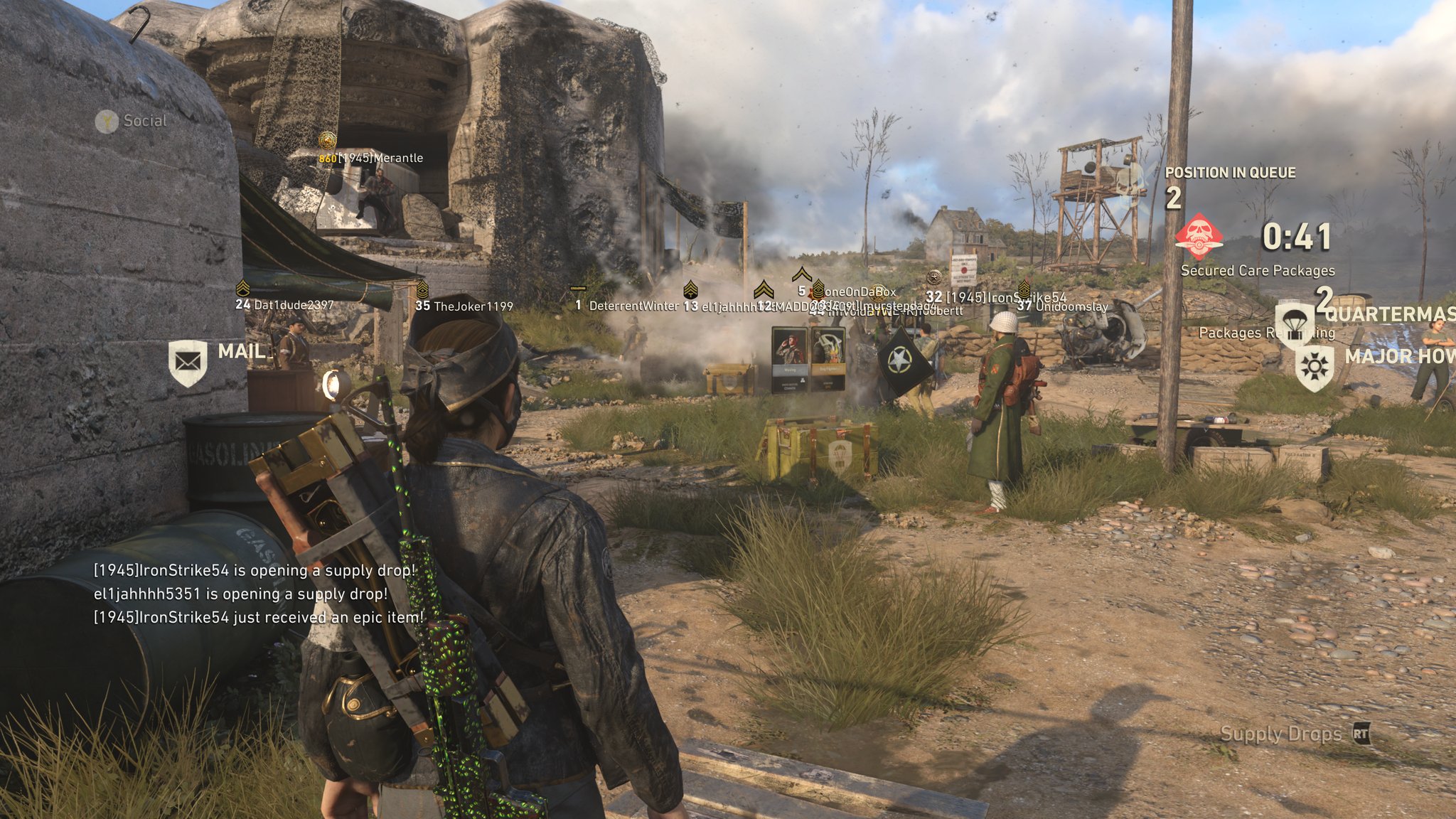
Then they boot up Call of Duty: WWII, a game from 2017 that just hit Xbox Game Pass. Suddenly they are laughing, getting stomped by low-level players, beating high-tier sweats, and, most shocking of all, not feeling punished for playing well. No strict SBMM. No pressure. Just chaos, streaks, and lobbies full of new players and grizzled veterans.
That Reddit post is not about nostalgia for World War II. It is about a design shift in online shooters. By the end of this story, you can see why a seven-year-old Call of Duty can feel more fun than the newest one, and how things like SBMM and monetization quietly rewired what multiplayer feels like.
How Call of Duty got from chaos to controlled matchmaking
Early Call of Duty multiplayer, from Call of Duty 4: Modern Warfare (2007) through the late 2000s, was built on a simple idea: throw people into lobbies, sort by connection, and let the skill gap sort itself out. Some nights you were a god. Some nights you were cannon fodder. The experience was uneven, but it was rarely boring.
Matchmaking was mostly connection-based. The game tried to find you a low-latency lobby, then you stayed with that lobby for multiple matches. You got to know names. You learned who to avoid and who to hunt. Stat-padding lobbies and stomp-fests were common, but so were those wild comeback stories people still tell.
As Call of Duty grew into a billion-dollar franchise, that chaos started to look like a problem. New players would buy the game in November, get destroyed for a week, and never touch it again. Retention mattered more. So did engagement. If you want players to buy map packs, loot boxes, or battle passes, you need them to stick around.
Skill-based matchmaking, or SBMM, was the answer publishers liked. SBMM is a system that tries to place players in lobbies with others of similar skill, usually measured by hidden ratings like recent performance, kill/death ratio, or win rate. The idea is simple: fairer matches keep more people playing.
By the mid-2010s, SBMM was quietly tightening its grip on mainstream shooters. Call of Duty titles started to feel different, even if the developers refused to spell out the exact formulas. Players noticed that the better they played, the sweatier their lobbies became. The old rollercoaster of good and bad games flattened into a narrow band of “tense, close matches.”
That shift matters because it changed the emotional rhythm of playing Call of Duty. Instead of a mix of power trips and humiliations, every game felt like ranked play. For some, that was great. For others, it felt like work.
So what? This move from connection-based chaos to skill-controlled lobbies is the background for why an older title like Call of Duty: WWII can feel like a breath of fresh air to someone burned out on Black Ops 6.
What made Call of Duty: WWII different when it launched?
Call of Duty: WWII launched in November 2017, developed by Sledgehammer Games. It followed the jetpack era of Advanced Warfare and Black Ops 3, and its big marketing promise was “boots on the ground” again. No wall-running, no exo suits, just rifles, trenches, and Normandy.
At launch, WWII had its share of problems. The Headquarters social space was broken for days. Supply drops and cosmetic loot boxes were very much present. The weapon balance took time to settle. But the core of the game was a fairly traditional COD experience: three-lane maps, fast time-to-kill, and lobbies that felt more like the old days.
There was some form of skill consideration in matchmaking, as there had been in earlier titles, but it was looser and less aggressive than what players describe in recent games. Connection and region still mattered a lot. You could stay in the same lobby for multiple matches. You could stomp, get stomped, or have a mix of both in a single session.
Call of Duty: WWII used a loot box system for cosmetics and some weapons, which drew criticism. But it was still the era before the full seasonal battle pass treadmill became standard across the franchise. There were events and grinds, but not the same constant pressure to log in every week or lose out forever.
For many players, WWII was “solid but not spectacular” when it launched. It did not get the same cultural grip as Modern Warfare (2019) or Warzone. Yet that relative simplicity is exactly what makes it attractive in hindsight.
So what? WWII’s mix of old-school lobby structure, less aggressive SBMM, and simpler progression set up the conditions for it to feel refreshing years later, even if it did not feel special at release.
How Black Ops 6 and modern COD turned every match into a test
By the time Black Ops 6 arrived, the Call of Duty formula had absorbed a decade of free-to-play logic and engagement science. Seasonal content, battle passes, cosmetics, and cross-progression across modes were not side features. They were the spine of the game.
Modern COD titles rely heavily on SBMM in standard multiplayer. While Activision and Treyarch are careful with wording, player experience and data mining have made one thing clear: your recent performance matters a lot. If you have a few good games, your next lobbies feel like ranked play. If you struggle, the game quietly eases off.
Skill-based matchmaking is a system that tries to keep your win rate and performance hovering near a target range. It does this by placing you against tougher or weaker opponents depending on how you have been playing. The goal is to avoid blowouts and keep matches close.
For casual players who just want to avoid being farmed by veterans, this can feel fair. For players who improve, grind, or simply have a hot streak, it can feel like punishment. The Reddit poster’s line, “I’m not getting punished for playing too good,” is a direct reaction to this. In Black Ops 6, playing well often means your next few games are sweaty, stressful, and full of equally skilled opponents.
Layered on top of this is the modern monetization structure. Microtransactions, cosmetics, and battle passes are not just cosmetic fluff. They shape how the game is structured. Weekly challenges, seasonal unlocks, and limited-time modes all aim to keep you on a treadmill. There is always something to do, but it can start to feel like chores.
When the Reddit poster says they quit Black Ops 6 in the second season because they were “burnt out” and felt there was “nothing else to do,” that is not a contradiction. It is a description of psychological fatigue. The game is full of content, but the content feels like work, not play.
So what? Black Ops 6 represents the mature form of modern live-service design, where SBMM and monetization combine to keep you engaged, but at the cost of that loose, unpredictable fun that defined earlier COD experiences.
Why COD WWII on Game Pass suddenly feels alive again
Fast forward to 2026. Call of Duty: WWII drops onto Xbox Game Pass. A whole wave of players who never bought it now download it “just to try.” Some are veterans looking for nostalgia. Others are new players who started with Warzone or Modern Warfare 2019 and never touched WWII.
The Reddit poster describes exactly what happens next: “This game is fully populated with the bunch of new players and veterans alike.” That mix is key. Lobbies are no longer stratified into tight skill bands. You can run into a level 5 player who beams you, or a prestige veteran who has not touched the game in years and is rusty.
They write: “I’m able to compete against high tier players but also get punished by lower tier players.” That sentence captures what loose matchmaking feels like. You are not locked into your skill bracket. You get variety. Some games you dominate. Some games you get embarrassed by someone with a default loadout and scary aim.
Most importantly for them, “The best thing is there’s no skill based matchmaking. I’m not getting punished for playing too good.” Whether WWII has some hidden SBMM or not, the experience is clearly much lighter. The player feels like the game is not constantly recalibrating to keep them at 50 percent.
There is also the social effect of Game Pass. When a game hits a subscription service, it gets a second life. Lobbies fill up. Queue times shrink. Modes that were dead wake up. That alone can make an older shooter feel new. You are not just playing against diehards who never left. You are in a messy, unpredictable crowd.
And then there is the absence of pressure. WWII still has microtransactions, but the live-service treadmill is not active in the same way. There are no current seasons to keep up with, no FOMO about missing this month’s skin. You are just playing because you want to.
So what? Game Pass revived WWII’s player base at the exact moment many COD fans were tired of strict SBMM and seasonal grind, turning an old title into a kind of refuge from the modern formula.
Skill-based matchmaking vs fun: what players are really arguing about
SBMM debates in the Call of Duty community often get framed as “good players mad they can’t stomp noobs.” That is part of it, but the Reddit post hints at something deeper: the desire for emotional variety.
In a loose matchmaking system, your session has highs and lows. You might drop a 40-bomb one game, then go 10–20 the next. You might run into a clan that wipes the floor with you, then a lobby where you feel unstoppable. That variety creates stories. It also gives you a sense of growth when you do well, because you know the game is not secretly stacking the deck against you.
In a strict SBMM system, your matches are more consistent. Your K/D hovers around your true skill level. Blowouts are rarer. But that consistency can feel like a ceiling. No matter how well you do, the game drags you back to equilibrium. The feeling of “I’m being punished for playing too good” is really “the system will not let me ride a hot streak for long.”
There is also the social piece. Old-school lobbies let you stay with the same group for multiple matches. You could learn people’s habits, trash talk, form rivalries. Modern COD often breaks lobbies after every match, partly to help SBMM reshuffle. That kills a certain kind of organic social fun.
SBMM is not evil. It keeps new and average players from getting obliterated. It probably keeps more people playing, which keeps games alive. But it changes what “fun” looks like. For some, fun is close, tense matches. For others, fun is the chaos of not knowing if you will be predator or prey.
So what? The Reddit post is not just nostalgia for WWII. It is a live example of how different matchmaking philosophies create different emotional experiences, and why a segment of players will happily retreat to older games to get the kind of fun they miss.
What this says about the future of Call of Duty and old games
When a player in 2026 says they enjoy Call of Duty: WWII more than Black Ops 6, they are not simply comparing gun balance or map design. They are comparing two eras of business and design philosophy.
On one side, you have modern COD: heavy SBMM, seasonal content, microtransactions, and a constant push to keep you engaged. On the other, you have an older title with looser matchmaking, fewer live pressures, and a revived player base thanks to Game Pass.
This pattern is not unique to Call of Duty. You see it in older Battlefield titles, classic Halo MCC playlists, even in retro servers for MMOs. When modern design leans hard into retention and fairness, some players go looking for messier, less optimized fun.
Subscription services like Game Pass and PlayStation Plus make that migration easier. They can resurrect old shooters and create windows where those games briefly feel like launch day again. For publishers, that is a way to squeeze extra value out of back catalogues. For players, it is a way to escape the current meta without leaving the franchise entirely.
None of this means SBMM or live-service models are going away. They are too profitable and, for many, genuinely enjoyable. But it does explain why Reddit threads pop up every time an older COD hits a subscription service, full of people saying, “This is more fun than the new one.”
So what? The WWII vs Black Ops 6 comparison shows how design choices about matchmaking and monetization ripple out over years, shaping not just how a game plays, but where burned-out players choose to spend their time.
Why one Reddit post about WWII hits a nerve
The original Reddit post is short, almost offhand. Someone quit Black Ops 6, tried WWII on Game Pass, and found themselves laughing again. That is not a technical analysis. It is a gut check.
“I have been laughing enjoying the game and well just keeps me coming back,” they write. No mention of weapon tuning, tick rates, or meta builds. Just the basic test of any game: do you want to queue up one more match?
That feeling comes from a cocktail of factors: looser matchmaking, a revived player pool, less pressure from seasonal grinds, and the nostalgia of a simpler COD era. It is not that WWII is objectively better than Black Ops 6. It is that, for this player, it aligns better with what they want from multiplayer right now.
Designers talk about retention curves and engagement metrics. Players talk about burnout and fun. The gap between those two conversations is where posts like this live.
So what? That one Reddit story is a small but sharp reminder that older games can thrive again when modern design leaves some players tired, and that the way we structure matchmaking and monetization can matter as much as guns and maps in deciding which Call of Duty people actually enjoy.
Frequently Asked Questions
Why do some players prefer Call of Duty WWII over newer COD games?
Many players prefer Call of Duty: WWII because its matchmaking feels looser, with less aggressive skill-based matchmaking, fewer live-service pressures, and a mix of new and veteran players. That creates more varied matches and less of the constant “sweaty” feeling common in newer titles like Black Ops 6.
Does Call of Duty WWII have skill-based matchmaking?
Call of Duty: WWII appears to use some form of skill consideration in matchmaking, as many COD games do, but it is generally perceived as less strict than in recent titles. Players report more mixed-skill lobbies, more lobby persistence, and less sense of being punished for playing well.
Why do people dislike SBMM in Call of Duty?
Some players dislike SBMM because it makes every match feel like ranked play. When the system constantly adjusts lobbies to match your skill, hot streaks are short-lived and you rarely get easy games. That can feel like punishment for improving, and it removes the wild swings and power trips that older COD titles often had.
How did Xbox Game Pass affect Call of Duty WWII?
When Call of Duty: WWII arrived on Xbox Game Pass, it brought in a wave of new and returning players. That revived the multiplayer population, shortened queue times, and created mixed-skill lobbies that many found more fun than the tightly controlled matches in newer Call of Duty releases.