In 1952, Soviet schoolchildren opened new textbooks and found an old hero missing.
Leon Trotsky, once Lenin’s right-hand man, had been airbrushed out of photos, cut from stories, and recast as a villain. The same man who helped lead the Bolshevik Revolution was now a traitor who barely existed. The ink on the past was still wet, and Joseph Stalin held the pen.
They look similar because the basic move has not changed. Whether it is Stalin erasing rivals, American school boards fighting over how to teach slavery, or modern governments passing “memory laws,” the pattern is the same. Politics rewrites history to control what people think about the past, and by extension, what they think is possible in the present.
By the end of this article, you will see how political history rewriting in the 20th century compares to the way states and movements rewrite history today, across four simple dimensions: origins, methods, outcomes, and legacy.
Why do politics rewrite history in the first place?
History gets rewritten when power feels insecure.
In authoritarian regimes of the 20th century, the origins were blunt. Stalin’s Soviet Union, Mao’s China, and Nazi Germany all treated history as a weapon in a total political war. If the past did not fit the story the regime wanted, the past had to change.
In the Soviet case, the motive was survival inside a one-party system. After Lenin’s death in 1924, there was no clear succession plan. Stalin needed to look like Lenin’s natural heir. That meant Trotsky, Bukharin, and other rivals had to fade from the historical record. The origin of Soviet historical rewriting was a power struggle inside the Communist Party that spilled into the history books.
In Nazi Germany, the motive was racial ideology. The regime needed a story in which Germans were a chosen people, eternally victimized by Jews and foreign enemies. Historians were pushed to frame German history as a march toward racial awakening. That meant rewriting World War I as a “stab in the back” by Jews and leftists, not a military defeat.
In Maoist China, the origin was revolutionary purity. The Communist Party claimed to be the voice of the people and of history itself. When policies failed, like the Great Leap Forward in the late 1950s, the official story could not admit that Mao’s vision was flawed. So history was rewritten to blame “rightists,” saboteurs, or bad weather.
Modern democratic states usually do not rewrite history through a single dictator, but the origins are still political. Governments and parties fight over history when they feel their national story is under threat.
In Japan, conservative politicians have pushed textbook revisions that soften or omit details of wartime atrocities like the Nanjing Massacre or the use of “comfort women.” The motive is national pride and a desire to see Japan as a victim of war, not only as an aggressor.
In Russia under Vladimir Putin, the state has promoted a heroic story of the Great Patriotic War (World War II) and passed laws against “rehabilitating Nazism.” In practice, that can mean punishing people who discuss Soviet crimes on the same level as Nazi crimes. The motive is to anchor modern Russian identity in a glorious, unblemished victory.
In the United States, history wars over slavery, the Civil War, and civil rights often flare when demographics and politics are shifting. Debates over the 1619 Project, Confederate monuments, and how to teach race in schools are not just about facts. They are about who gets to define what America has been and what it should be.
So what? The origin is almost always the same: when power feels shaky or identity feels threatened, history becomes a battleground rather than a record.
How did old regimes rewrite history, and how is it done now?
In the 20th century, authoritarian regimes had a simple toolkit. Control the press, the schools, and the archives. Then rewrite.
Stalin’s Soviet Union used censorship, propaganda, and literal photo editing. Famous images of the 1917 Revolution were retouched so that Trotsky disappeared from Lenin’s side. Encyclopedias were updated to remove purged officials. New editions of party histories, like the 1938 “Short Course” on the history of the Communist Party, recast Stalin as Lenin’s closest comrade from the beginning and painted rivals as traitors.
Textbooks were rewritten overnight. Teachers who did not keep up could be denounced. Historians who resisted often lost their jobs, their freedom, or their lives. The state archive system was closed to the public, so there was no easy way to check the official story.
Nazi Germany used a similar mix. The regime purged Jewish and politically suspect historians from universities. It created new institutions, like Alfred Rosenberg’s “Office for the Supervision of Ideological Education,” to enforce a racial reading of the past. Schoolbooks taught children that German history was a story of racial struggle. Museums and monuments were redesigned to fit the new myth.
Maoist China went even further during the Cultural Revolution (1966–1976). Red Guards attacked “old ideas,” which included books, archives, and historical sites. Temples, graves, and artifacts were destroyed. Official campaigns rewrote the recent past, turning yesterday’s loyal officials into “capitalist roaders.” The past 20 years could be reclassified overnight.
Modern methods look softer but can be just as effective.
Instead of one dictator ordering a single textbook, many countries now fight history wars through school boards, curriculum committees, and media ecosystems.
In the United States, textbook content varies by state. In 2015, a Texas textbook described enslaved Africans as “workers” brought to the United States. After public outcry, the publisher revised the language. That kind of wording is not an accident. It is the product of political pressure on how to frame uncomfortable facts.
In Poland, a 2018 law made it a crime to accuse “the Polish nation” of complicity in Nazi crimes. After international criticism, parts of the law were softened, but the message was clear. Certain interpretations of history could bring legal trouble.
Turkey has long prosecuted people who call the 1915 mass killings of Armenians a genocide. Official history frames it as wartime chaos, not a planned extermination. Schoolbooks follow that line. Public commemoration is tightly managed.
Digital tools add a new layer. Governments and movements can flood social media with their version of events. Search algorithms can be gamed. Conspiracy theories about the Holocaust, colonialism, or recent wars can spread faster than historians can respond.
At the same time, digital archives and leaked documents make it harder to fully erase the past. Soviet photo edits can now be compared to original negatives. Declassified files can be shared worldwide. The same internet that spreads propaganda also arms skeptics.
So what? The methods have shifted from scissors and secret police to curriculum fights, laws, and algorithms, but the goal is the same: control what most people see as the “normal” version of the past.
What outcomes did political history rewriting produce then vs now?
In the short term, authoritarian rewriting often worked.
Millions of Soviet citizens grew up believing that Stalin had always been Lenin’s chosen successor. Many knew that something was off, especially those who had seen purges firsthand, but the official story shaped what could be said in public. When Stalin died in 1953, his cult of personality was so strong that Nikita Khrushchev’s 1956 “Secret Speech,” which exposed some of Stalin’s crimes, shocked party members.
In Nazi Germany, the rewritten story of World War I and German history helped prepare the public for rearmament and expansion. If you believed that Germany had been betrayed from within and that history was a racial struggle, then a new war for “living space” in the East could feel like justice, not aggression.
In Maoist China, constant rewriting created a culture of fear and uncertainty. If yesterday’s hero could be today’s traitor, people learned to repeat the current line and forget the rest. That helped the party survive internal crises, but it left deep scars. After Mao’s death, Chinese leaders quietly revised the official verdict on the Cultural Revolution, calling it a “serious setback.” Yet they kept tight control over how far that reassessment could go.
The long-term outcomes were messier.
Once archives opened in the late Soviet period, especially under Mikhail Gorbachev’s glasnost in the late 1980s, the gap between official history and documented reality became obvious. That gap helped fuel public disillusionment with the Communist Party. When people realized how much had been hidden, they did not just lose faith in Stalin. They questioned the whole system.
In Germany after 1945, the Allied occupation and later West German governments pushed a very different historical narrative. Denazification, war crimes trials, and new school curricula slowly replaced Nazi myths with a more honest account of the Holocaust and German aggression. The earlier rewriting did not vanish overnight, but it was weakened by defeat and foreign oversight.
Modern outcomes are more fragmented.
In democracies, history rewriting often produces parallel realities rather than a single official line. In the United States, some students learn that the Civil War was mainly about states’ rights, while others learn it was fundamentally about slavery. Both can find media and political leaders who affirm their version. The outcome is not uniform belief, but polarized memory.
In countries with strong state control, like Russia or China today, the outcome is a mix of genuine belief, quiet skepticism, and strategic silence. Many Russians sincerely embrace the heroic World War II narrative promoted by the state. At the same time, independent historians and activists try to document Soviet-era crimes, often facing harassment or legal pressure.
One clear outcome across contexts is that rewritten history shapes policy. If a government insists it has nothing to apologize for, it is less likely to pay reparations, sign human rights agreements, or admit wrongdoing. If a society believes it was always on the right side of history, it is less likely to question its current actions.
So what? The outcome of political history rewriting is not just confusion about the past. It changes what people think their country owes to others and what kinds of injustice they are willing to see in the present.
How did rewritten history shape identity and memory over time?
Legacy is where the comparison gets interesting.
In the old authoritarian cases, the legacy of rewritten history is a double memory: the official story that people learned, and the whispered stories that families kept.
In the Soviet Union, many families knew that a grandfather had been arrested in 1937 or that an aunt had vanished in the Gulag. Official histories called these people “enemies of the people.” Family memory said otherwise. After 1991, when the USSR collapsed, those private memories rushed into public view. Memorial groups like Memorial International began documenting victims of repression, often using family archives that had been hidden for decades.
In China, the official line on events like the Great Leap Forward famine or the Cultural Revolution remains tightly controlled. Yet family stories, underground writings, and overseas scholarship keep alternative memories alive. The legacy is a society where many people know more than they can safely say.
In Germany, the legacy went in a different direction. Postwar generations wrestled with what their parents and grandparents had believed and done. The term Vergangenheitsbewältigung (coming to terms with the past) captures a long process of confronting Nazi crimes. That process was uneven and often resisted, but it created a culture where open discussion of past atrocities became part of national identity.
Modern history wars leave a different kind of legacy because information is so much harder to lock down.
In countries like Poland, Turkey, or Russia, state-backed narratives coexist with a global historical conversation. A Polish student can learn one version of World War II at school, then read foreign historians online who tell a more complicated story about Polish behavior toward Jews. A Turkish citizen can watch official TV dramas that frame 1915 as tragedy without blame, then find Armenian sources that describe genocide.
In the United States and other democracies, the legacy is a permanent argument. Projects like the 1619 Project, which frames slavery as central to American history, compete with older narratives that center the Founding Fathers and the Revolution. Neither side has the power to fully erase the other. The result is a plural memory, often angry, but also rich in sources.
One more legacy is institutional. Past history rewriting leaves behind laws, school systems, monuments, and archives that shape what future generations can learn.
Monuments to Confederate generals in the American South, many erected decades after the Civil War during Jim Crow, were not neutral. They were part of a Lost Cause narrative that framed the Confederacy as noble and downplayed slavery. Their presence in public spaces kept that narrative alive long after the textbooks began to change.
So what? The legacy of political history rewriting is not just false stories. It is a whole memory environment, from family tales to monuments, that future generations have to either accept, question, or tear down.
Are today’s history wars the same as the old propaganda states?
They look similar because the motives rhyme. Power, pride, and fear still drive people to rewrite the past. But there are key differences.
Authoritarian regimes of the 20th century could enforce a near-monopoly on public truth. If the Soviet textbook said Trotsky never mattered, most people had no way to check. If Nazi Germany said Jews betrayed the nation, dissenting historians were silenced or killed.
Today, even strong states struggle to fully control the narrative. China censors the internet, but information leaks. Russia prosecutes some historians, but others publish abroad. Democracies cannot stop people from reading foreign or dissenting accounts, though they can shape what is taught in public schools.
Another difference is speed. In the past, rewriting history took years. New textbooks had to be printed. Old books had to be withdrawn. Now, a government statement, a viral thread, or a new documentary can shift public perception in days. Corrections and counter-arguments can appear just as fast.
There is also a difference in who rewrites. In the 20th century, the main actors were states and ruling parties. Today, political movements, influencers, and media outlets also rewrite history from below. A YouTube channel can push a distorted version of World War II or colonial history to millions without any government involvement.
Yet the stakes remain high. History is still used to justify wars, borders, reparations, and domestic policies. When Russia claims that Ukraine has no real history as a separate nation, that is not an academic argument. It is a prelude to invasion.
So what? The tools and players have multiplied, but the core danger is familiar: when history becomes a weapon in current political fights, it gets harder for societies to agree on basic facts, and easier for leaders to drag people into new disasters by misusing old stories.
Why this still matters whenever you see a meme about history
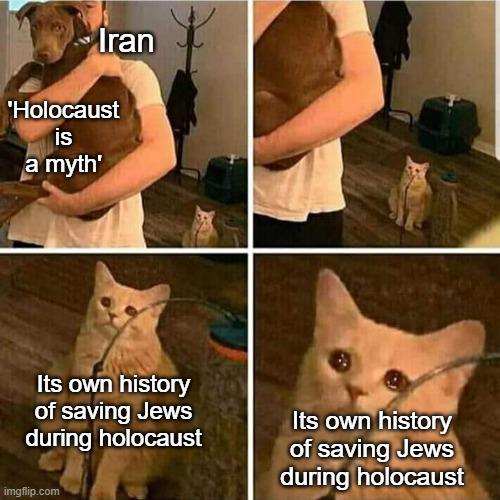
History memes about “when politics rewrite history” land because people sense something real. Textbooks change. Statues come down. New heroes appear in old stories. It can feel like the past itself is being edited in real time.
The comparison between old propaganda states and today’s history wars shows both continuity and change.
The continuity: political power still tries to bend the past to its needs. Whether it is Stalin erasing Trotsky, a government denying a genocide, or a school board softening the word “slavery,” the impulse is the same. Control the story, control the future.
The change: information is harder to bury, and more people can join the argument. That does not guarantee better history. It just means the fight is louder and more visible.
The practical lesson is not that history used to be pure and is now corrupted, or that all versions are equally biased. It is that any time a government, party, or movement insists on a single, flattering story about itself, your historian alarm should go off.
So what? The way politics rewrites history is not just an academic curiosity. It shapes what we teach children, how we judge past crimes, and what we think our societies are capable of doing again.
Frequently Asked Questions
What does it mean when politics rewrite history?
When politics rewrite history, those in power change how past events are described, taught, or remembered to serve current goals. That can mean erasing certain people, downplaying crimes, or exaggerating heroism. The aim is to shape how citizens see their country, its enemies, and what actions seem justified now.
Did Stalin really erase people from Soviet history?
Yes. Under Stalin, Soviet authorities removed purged officials like Leon Trotsky and Nikolai Bukharin from photos, encyclopedias, and official histories. Textbooks were rewritten to present Stalin as Lenin’s closest ally and to portray rivals as traitors. This was part of a broader effort to control how the Russian Revolution and early Soviet years were remembered.
How is modern history rewriting different from old propaganda?
Old propaganda states like Nazi Germany and Stalin’s USSR had near-total control over media, schools, and archives, so they could enforce a single official story. Today, even powerful governments face the internet, foreign scholarship, and independent media. Modern history rewriting often happens through school curricula, memory laws, media campaigns, and social media, leading to competing narratives rather than one uncontested version.
Can school textbooks really change how people see history?
Yes. Most people first meet national history through school textbooks, so the way events are framed has a big impact on how they think about their country. Calling enslaved people “workers,” softening descriptions of colonial violence, or omitting certain atrocities can make past injustices seem less serious or less central. Those early impressions often last into adulthood, even if people later encounter more detailed histories.