The photo is simple: two kids flanking their dad, all soft cheeks and crooked smiles. The Reddit caption is not. “My brother passed away yesterday unexpectedly (age 57)… He was the best brother.”
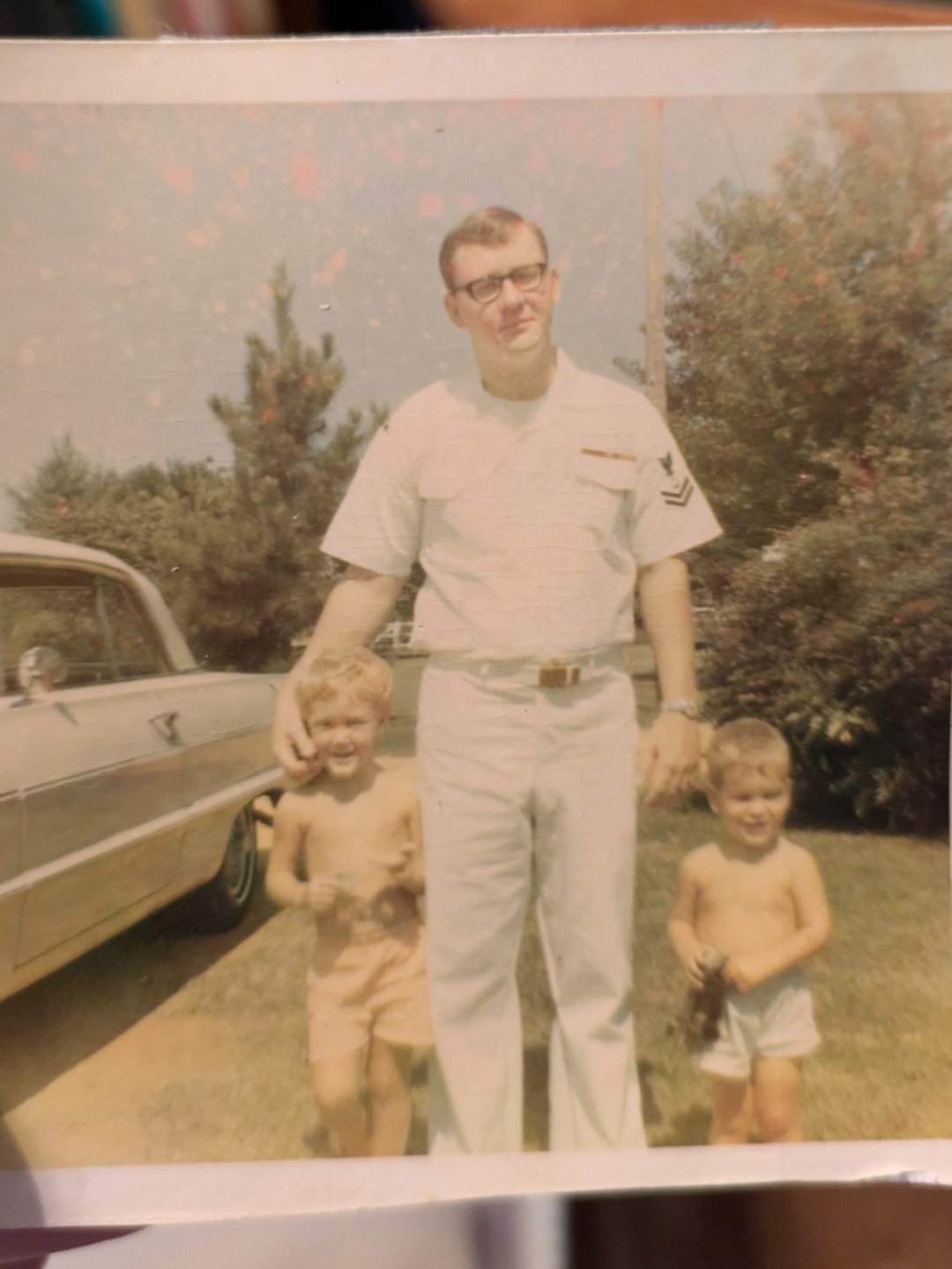
There is no long obituary, no medical report, no epic backstory. Just a snapshot and a shock. One day there were two brothers, the next day there was one.
Counterfactual history usually plays with emperors and elections. Here, the question is smaller and sharper: what if this one man, this one brother, had not died yesterday at 57? What actually changes when a single life continues instead of ending early?
We do not know his name, job, or cause of death. So the scenarios below are grounded in what is statistically likely for a 57‑year‑old man in a wealthy country in the early 21st century: heart disease, stroke, accident, maybe an undiagnosed condition. From that, we can sketch three plausible “what if” paths, and then ask which one history itself suggests is most likely.
Counterfactual history is not about fantasy. It is about tracing how one changed variable, held against real-world constraints, can bend the line of events. A single unexpected death at 57 can alter family economics, emotional health, and even small civic stories for decades.
What if he’d had warning and treatment instead of a sudden death?
Most “unexpected” deaths at 57 are not lightning bolts from nowhere. Statistically, they are often heart attacks, strokes, or sudden cardiac arrests linked to long‑building problems: high blood pressure, clogged arteries, diabetes. In many countries, heart disease is the leading cause of death for men in their 50s and 60s.
So scenario one: the same underlying condition, but caught six months earlier.
Imagine that instead of dying yesterday, he had a scare last year. Chest pain at work. A fainting spell at home. Someone calls an ambulance. In the ER, they find a blocked coronary artery or a dangerous arrhythmia. He gets a stent, or a bypass, or an implanted defibrillator. He walks out of the hospital with a plastic bag of prescriptions and a cardiologist’s lecture ringing in his ears.
Modern cardiology does not erase risk, but it does buy time. A 57‑year‑old American man who survives a first heart attack and adheres reasonably well to treatment can often gain years, sometimes decades. Statins, beta blockers, ACE inhibitors, blood thinners: this is the quiet arsenal that has pushed down cardiovascular mortality since the 1970s.
In that world, what changes for the brother who posted the photo?
First, the emotional arc. Instead of a phone call saying “He’s gone,” there is a different call: “He’s in the hospital, but he’s stable.” The family rushes in. They see him with tubes and monitors, pale but alive. Fear gets mixed with relief. There is time for conversations that, in the real timeline, never happened.
Second, the relationship shifts. Surviving a near‑death event tends to reorder priorities. Some people quit drinking, lose weight, change jobs, or repair old rifts. Others do not, but the possibility is real. The two brothers might start calling more, planning that fishing trip they always talked about, or finally scanning and labeling those old family photos with their dad.
Third, the economics change. If he is working a regular job, a major cardiac event at 57 might push him into early retirement or disability. That affects household income, health insurance choices, and even where he lives. Maybe he sells the house and moves closer to family. Maybe he stays put but cuts expenses, which in turn affects his kids’ college plans or his partner’s work hours.
There is also a public side, even if small. Every person who survives a heart scare and changes behavior is a tiny data point in public health. He might join a cardiac rehab group, show up in anonymized hospital statistics, or become the guy at work who tells younger colleagues to get their blood pressure checked. That is not world history, but it is how health norms slowly shift.
The catch is that this scenario depends on systems working: access to healthcare, someone recognizing symptoms, an ambulance that arrives in time, a hospital with a cath lab, insurance that does not bankrupt him. Geography and class matter. A 57‑year‑old in a major US city with employer insurance has a better shot at this path than someone in a rural county with no coverage.
So what? If his condition had been caught and treated, the brother might not only have lived longer, but the family’s emotional script would have changed from shock and regret to vigilance and second chances, reshaping how they used the next ten or fifteen years together.
What if he’d changed one habit ten years earlier?
Another scenario is less dramatic and more boring, which is exactly why it matters. Instead of a last‑minute rescue, imagine a quiet course correction in his late 40s.
Statistically, the biggest modifiable risks for sudden death at 57 are smoking, uncontrolled blood pressure, high LDL cholesterol, obesity, and untreated diabetes. These are not mysteries. They are on posters in every clinic waiting room. The problem is not knowledge, it is behavior and circumstance.
Say he was a pack‑a‑day smoker in his 30s and 40s. Around 47, his doctor gives him the talk. Maybe a coworker has a stroke. Maybe his dad’s old friend dies. Something spooks him. He uses nicotine patches, chews gum, snarls at everyone for a month, and quits.
Or maybe smoking was never the issue. Maybe it was diet and stress. He works long shifts, eats fast food, drinks too much soda or beer. At 45, his blood pressure is 150/95. At 50, his A1C creeps into prediabetic range. In our alternate timeline, someone catches this early and he actually responds: medication, a bit of weight loss, 30‑minute walks after dinner.
These are small, unglamorous changes. Yet epidemiological studies are blunt about their impact. Quitting smoking in your 40s can cut your risk of heart disease by about half within 10 years. Controlling high blood pressure slashes stroke risk. Managing diabetes prevents the slow damage that makes a sudden event at 57 more likely.
In this world, there is no dramatic hospital scene. There is just absence of disaster. The brother reaches 57 and nothing “unexpected” happens. He goes to work, complains about his knees, posts a throwback photo with their dad on Facebook, and texts his sibling about Thanksgiving plans.
For the family, the difference is invisible until it is not. There is no funeral to plan. No scramble to find passwords and insurance policies. No sudden hole in the family chat thread. Instead, he is there for graduations, for his dad’s eventual decline, for the slow accumulation of shared jokes and minor arguments that make up a sibling relationship in late middle age.
Economically, the gains are real. A sudden death at 57 can blow up a mortgage, leave a partner scrambling to cover bills, or force adult children to step in. If he avoids that fate, the family keeps his earning power, his unpaid labor, his childcare, his DIY home repairs. That affects everything from whether his kids take on debt to whether his surviving brother has to raid his own savings to help.
There is a broader social angle too. Public health is not just about hospitals. It is about millions of individuals making slightly less damaging choices. If enough 47‑year‑olds like him quit smoking or control their blood pressure, the whole country’s mortality curve shifts. That means fewer sudden funerals, more slow, expected goodbyes.
So what? If he had tweaked one or two risk factors a decade earlier, the “unexpected” part of his death might have vanished, trading a shocking exit at 57 for a quieter, later decline that would have let his brother’s grief arrive on a more predictable, less violent schedule.
What if he’d died earlier instead of at 57?
The darkest counterfactual is also the one that history forces us to consider. What if the shock phone call had come not at 57, but at 27 or 37?
For men in their 20s and 30s, the leading causes of sudden death shift. Accidents, overdoses, suicides, and violence loom larger. Genetic heart conditions sometimes surface in these years too. In many countries, the so‑called “deaths of despair” among middle‑aged men have risen since the 1990s, tied to economic dislocation, opioids, and social isolation.
Imagine an alternate world where the brother in the photo never makes it to 57. Maybe he is in a car crash at 29. Maybe he overdoses at 35. Maybe a congenital heart defect, never diagnosed, kills him on a jog at 32.
For the surviving brother, the emotional map of life changes completely. Instead of losing a sibling in late middle age, he loses him in his own young adulthood. The photo with their dad becomes not a nostalgic post after a recent death, but a relic he clings to for decades.
That early loss would shape everything: how he approaches risk, whether he has kids, how close he stays to his parents. Parents who bury a child in their 20s or 30s often age faster, physically and emotionally. Family gatherings change tone. The empty chair is there for forty years, not a handful.
Economically, the damage might be even sharper. A man dying at 30 has not had time to build savings, buy life insurance, or pay off debts. If he leaves a partner or small children, their trajectory shifts. Maybe his kids grow up on a tighter budget, in a smaller apartment, in a different school district. Maybe his parents, instead of planning retirement, help raise their grandkids.
There is also the question of who he would have been. At 57, many people are at or near the top of their career arc. They have skills, networks, and influence. At 27, they are still building. If he died younger, the world would lose whatever he did between 27 and 57: the projects he finished, the people he mentored, the neighbors he helped, the quiet ways he made his corner of the world function.
From a cold statistical view, early deaths carry more “years of life lost” than deaths at 57. Public health planners use that metric to decide where to focus resources. A life cut off at 30 is a different kind of alarm bell than a life ending in the late 50s, which is sad but not unheard of.
So what? If he had died decades earlier, the surviving brother’s entire adult identity would have been built around an absence, and the economic and emotional shockwaves would have been deeper and longer, showing how even a death at 57, awful as it is, could have been an even harsher counterfactual.
Which alternate history is most plausible, and why does it matter?
We have three roads not taken: a medical save at the last minute, a quiet preventive shift years earlier, or a harsher world where he never reached 57 at all. Which one fits best with what we know about real‑world constraints?
Start with healthcare systems. In many OECD countries, a 57‑year‑old man has at least some access to primary care. That makes the “small preventive changes” scenario statistically strong. Most heart attacks and strokes do not come out of the blue. They are the end of a long, measurable process. If blood pressure, cholesterol, or blood sugar had been checked and managed in his 40s, his odds of an “unexpected” death at 57 would have dropped.
On the other hand, millions of people skip checkups, lack insurance, or ignore symptoms. That is where the “last‑minute rescue” scenario lives. Emergency medicine is very good at pulling people back from the brink, but only if someone calls 911 in time and the hospital has the right gear. In rural areas or underfunded systems, that chain breaks more often.
The early‑death scenario is sadly common too, but the Reddit post itself is a clue. The poster writes about losing his brother at 57 with the shock of someone who had decades of shared history. That suggests the brother did not die young. The grief here is about an expected future cut short, not a life that never got going.
From a historian’s angle, the most plausible alternate world is the boring one: he lives. Not forever, but into his 70s or 80s, because either he or his doctors managed the slow‑burn risks in time. That is what has happened, in aggregate, across rich countries since the mid‑20th century. People who once would have died in their 50s now die in their 70s, because of blood pressure cuffs, generic statins, and nagging doctors.
So what actually changes if this one brother follows that broader trend instead of dropping out of it?
First, the surviving brother’s memory of the photo changes tone. It is not something he posts the day after a death. It is something he posts on his brother’s 80th birthday, or at his funeral when he is 83 and frail and everyone knew this was coming. The caption might still say “He was the best brother,” but it would not have the same stunned edge.
Second, the family’s internal history looks different. More shared holidays. More old‑man arguments about politics. More chances to say the things people regret not saying when death is sudden. The emotional trauma is still there when he dies, but it is less jagged, more folded into the normal rhythm of aging.
Third, at the tiny scale where most of us live, the world is a bit more stable. A 57‑year‑old who does not die unexpectedly keeps paying taxes, voting, helping neighbors, and supporting relatives. None of that will show up in a textbook, but history is made out of those invisible threads.
So what? The most plausible alternate history is not a dramatic rescue or a tragic earlier loss, but a quiet extension of an ordinary life, which would have softened the surviving brother’s grief and slightly strengthened the social and economic web around them, reminding us that the difference between “gone at 57” and “around till 77” is often a mix of small choices and systemic support rather than fate alone.
Frequently Asked Questions
What does “unexpected death at 57” usually mean medically?
For men around 57, an unexpected death is often due to heart disease, stroke, sudden cardiac arrest, or sometimes accidents. These events can appear sudden, but they are frequently linked to long‑term issues like high blood pressure, high cholesterol, smoking, diabetes, or obesity that were not fully treated or recognized in time.
Could lifestyle changes really have prevented a sudden death at 57?
In many cases, yes. Quitting smoking, controlling blood pressure, managing cholesterol, treating diabetes, and modest exercise can significantly reduce the risk of heart attacks and strokes. These changes do not guarantee survival, but population studies show they push many deaths from the 50s and 60s into the 70s and 80s.
How does one person’s early death affect their family’s future?
A death in the late 50s can reshape a family’s emotional and financial path. It can leave a partner with less income, children with fewer resources, and siblings with unresolved conversations. It also affects caregiving for aging parents and the emotional tone of family gatherings for years afterward.
Why do historians use counterfactuals about ordinary people?
Counterfactuals help show how small changes can alter outcomes within real constraints. Looking at an ordinary person, not just famous leaders, reveals how health systems, economic conditions, and personal choices interact. It makes clear that broad trends like rising life expectancy are built from millions of individual “what ifs.”