You walk into Cave 16 at Ellora, the Kailasa temple, and the first thing that hits you is scale. An entire freestanding temple, courtyards and all, carved down into solid basalt. No blocks, no scaffolding, just a mountain turned inside out.
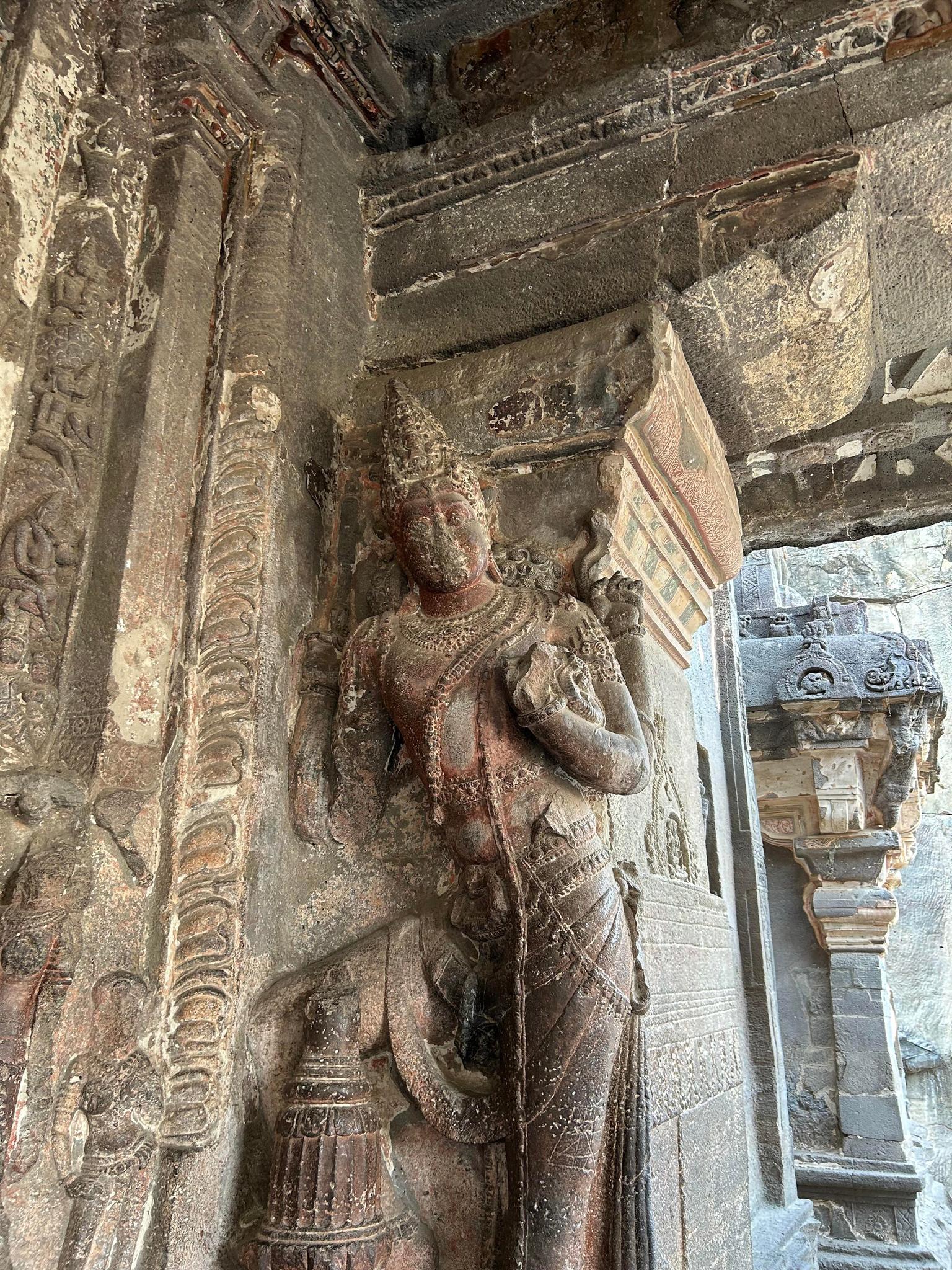
Archaeologists estimate workers removed hundreds of thousands of tons of rock here between roughly the mid 8th and 9th centuries. The Rashtrakuta kings poured money, labor and political will into this cliff. Then history moved on. Ellora became a stop on the pilgrimage circuit, not the center of anything.
So what if that had gone differently? What if Ellora had become a permanent royal capital, a pan-Indian pilgrimage magnet on the scale of Varanasi, or even a fortified imperial city that changed the map of medieval India?
Ellora is a complex of more than 100 caves in Maharashtra, India, carved between about the 6th and 11th centuries by Buddhist, Hindu and Jain patrons. It shows three major Indian religions sharing one sacred hill. That alone makes people ask: why did this place not become the religious capital of the subcontinent?
Below, three grounded what‑if scenarios, built on real constraints of money, manpower, politics and geography. Then a hard look at which path history could actually have taken.
Why Ellora mattered in the real world
Before changing the past, you need to know what actually happened.
Ellora sits on the Deccan plateau, about 30 kilometers from Aurangabad in today’s Maharashtra. The caves run roughly north–south along a basalt escarpment formed by ancient lava flows. They were carved in phases:
• Early Buddhist caves (roughly 6th–7th centuries), with monasteries and chaitya halls.
• Hindu caves (mostly 7th–9th centuries), including the massive Kailasa temple under the Rashtrakutas.
• Jain caves (late 9th–11th centuries), smaller but finely detailed, linked to later dynasties like the Yadavas.
Ellora was never a single project. It was a construction habit that lasted for centuries, as different rulers and merchant groups paid for their own caves. The site sat near trade routes connecting the western coastal ports to the inland Deccan and further east. That gave it donors, pilgrims and stonecutters.
But the big money phase came under the Rashtrakutas, who ruled much of the Deccan between about 753 and 973 CE. King Krishna I is usually credited with starting Kailasa around the mid 8th century. His successors kept it going. This was not a side project. It was an assertion of power in stone.
Ellora’s caves are rock-cut temples and monasteries carved into a basalt cliff in western India between the 6th and 11th centuries. They were funded by dynasties like the Rashtrakutas and Yadavas, as well as merchants and monks.
Yet the Rashtrakuta capitals were elsewhere: Manyakheta (in present-day Karnataka) and other fortified cities closer to their core power base. Ellora was important, but it never got the full package of palace, permanent bureaucracy and city walls.
That choice mattered. It left Ellora as a religious complex on a trade route, not a city that could anchor a long-lived state. So any counterfactual has to answer one question: what would have made a king bet his capital on a cliff of temples?
Scenario 1: Ellora becomes the Rashtrakuta capital
Imagine Krishna I, dazzled by the early progress on Kailasa, deciding to go all in. Instead of treating Ellora as a prestige project, he moves his main court there around 770 CE.
Could that have worked?
Geography and logistics
Ellora’s location is not absurd for a capital. It sits near fertile river valleys, on routes linking the Deccan to the rich ports of the Konkan coast. Water could be stored in rock-cut tanks. The basalt plateau offers natural defensive high ground, though not as dramatically as some hill forts in the Western Ghats.
But a capital needs more than a temple cliff. It needs:
• Space for palaces and administrative quarters on the plateau above.
• Fortifications, probably earthen and stone ramparts encircling the plateau edge.
• Housing for thousands of artisans, soldiers, scribes and their families.
• Reliable water management and grain storage for sieges and droughts.
All this is technically feasible with 8th century Indian engineering. The Rashtrakutas already controlled cities and forts. They knew how to build them.
Money and manpower
Kailasa alone likely took decades and a huge labor force. Estimates vary wildly, but we are talking about thousands of workers over generations. Turning Ellora into a full capital would demand even more.
That means tax extraction from a wide area, stable control of trade routes and no catastrophic wars during the main building phase. The Rashtrakutas did fight major campaigns against the Pratiharas in the north and the Palas in the east. A king who prioritized Ellora as capital would probably scale back some distant campaigns to free resources.
So in this scenario, Rashtrakuta foreign policy becomes less expansive and more Deccan-focused. They pour surplus into one mega-capital instead of a rotating set of royal camps.
Religion and politics
Would a Hindu dynasty make its capital at a site that also had Buddhist and Jain caves? Yes, if it suited them.
Early medieval Indian rulers often used religious pluralism as a political tool. Patronizing multiple sects meant more allies, more donors, more legitimacy. A Rashtrakuta king could easily present Ellora as a sacred hill where Shiva, the Buddha and the Jinas were all honored under royal protection.
The capital would likely grow in layers:
• Kailasa and nearby Hindu caves as the royal cult center.
• Monastic quarters for Buddhist and Jain communities, tied to merchant guilds.
• A palace complex on the plateau, with audience halls and royal temples.
• A walled city spreading east and south, fed by trade and pilgrim traffic.
So what? If Ellora had become the Rashtrakuta capital, the Deccan might have had a long-lived temple city comparable in political weight to Angkor in Cambodia, tying royal authority directly to a single monumental sacred complex rather than a shifting set of courts.
Scenario 2: Ellora turns into India’s dominant pilgrimage center
In our world, Varanasi, Kanchipuram and later Tirupati drew huge pilgrim flows. Ellora is famous today, but it never rivaled those places in religious pull. What if it had?
The ingredients of a mega-pilgrimage site
To become a dominant pilgrimage center in premodern India, a site usually needed:
• A strong mythic story, often tied to pan-Indian epics or Puranic lore.
• Continuous royal patronage over centuries.
• Good access to trade routes so pilgrims could actually get there.
• Monastic or priestly institutions that could organize festivals, fairs and donations.
Ellora had trade access and institutions. It had monks, merchants and later temple priests. What it lacked was a single, widely known story that every village storyteller repeated.
In this scenario, that changes early.
Myth-making and texts
Suppose by the 9th century, poets at the Rashtrakuta court compose a popular Purana that identifies Ellora’s hill with a major event in Shiva’s mythology. Maybe Kailasa is promoted as a direct earthly replica of Mount Kailash in the Himalayas, with a strong promise of spiritual merit for visiting.
That is not far-fetched. Medieval temple towns often rose on the back of such textual campaigns. If those stories get copied, sung and carried by bards along trade routes, Ellora’s religious profile rises.
Economics of faith
As pilgrim numbers grow, so do donations. Merchant guilds fund new rest houses and feeding halls. More caves or free-standing shrines are carved or built on the plateau. Seasonal fairs tie into agricultural cycles, drawing farmers from a wide radius.
The site’s mixed religious character could even help. Jains, Buddhists and multiple Hindu sects could all claim Ellora as one of their own. That spreads the donor base. Think of it as a medieval religious “multi-brand mall,” funded by different communities but sharing the same hill.
Political consequences
Rulers who control Ellora in this scenario gain soft power. They can tax pilgrim traffic, host grand festivals to display generosity and attract scholars. When dynasties change, each new ruler competes to out-donate the previous one.
Ellora does not need to be a capital. It becomes a religious engine that any nearby capital wants to plug into. The city of Aurangabad, founded later by the Mughals, might have grown earlier or in a different form as a service hub for Ellora pilgrims.
So what? If Ellora had become a top-tier pilgrimage center, it could have reshaped religious geography in western India, pulling devotional energy and money away from rival sites and giving its patrons a steady stream of prestige and revenue for centuries.
Scenario 3: Ellora as a fortified imperial city in the age of invasions
Fast forward to the 13th century. The Delhi Sultanate is expanding into the Deccan. The Yadavas of Devagiri, whose capital lies not far from Ellora, are under pressure. Historically, Devagiri fell to Alauddin Khalji in 1294 and again in the early 1300s.
What if, a century earlier, the Yadavas or a predecessor dynasty had turned Ellora into a serious hill fort and urban center?
Topography and defense
The Deccan is full of hill forts carved out of basalt, with steep cliffs and narrow approaches. Places like Daulatabad (Devagiri) show what is possible. Ellora’s escarpment could be integrated into a defensive ring, with:
• Fortified gates controlling access to the cave area.
• Ramparts along the plateau edge.
• Rock-cut moats or ditches in vulnerable spots.
• Storage caves repurposed for grain and armories.
The caves themselves are not ideal barracks, but some could be adapted. More likely, new structures would rise on the plateau, while the caves become a protected inner sanctuary.
Military logic
Why would a dynasty choose Ellora over somewhere like Devagiri?
• Religious legitimacy: defending a sacred hill gains moral capital.
• Existing infrastructure: caves, water tanks and pilgrim facilities provide a base to build on.
• Symbolic value: a fortress wrapped around a marvel like Kailasa sends a message.
In this scenario, the Yadavas fortify Ellora in the 12th century as a secondary stronghold. When northern armies push south, the court retreats there. The site becomes a rallying point for Deccan resistance.
Limits and risks
There are hard constraints. A rock-cut temple complex is not a magic shield. Siege warfare in India relied on cutting supply lines, bribing defenders and waiting out monsoons. A fortified Ellora might hold out longer than Devagiri, but not forever.
There is also the risk of damage. Turning Ellora into a fortress invites attack. Artillery in later centuries could scar the caves. Religious images might be defaced in the course of conquest, as happened in other places.
So this scenario trades artistic preservation for short-term military relevance.
So what? If Ellora had become a major hill fort and refuge, it might have slightly slowed northern conquest in the Deccan and turned the caves into a contested symbol of power, at the cost of more physical damage and less continuous religious life.
Which Ellora is most plausible, and what would really change?
Of these three alternate paths, which one actually fits the constraints of medieval India?
Capital city scenario: attractive but unlikely
Making Ellora the main Rashtrakuta capital sounds dramatic, but it clashes with how those kings ruled. Rashtrakuta power was spread across a wide Deccan zone. They used multiple royal camps and cities, not a single fixed capital in the way Angkor or Baghdad did.
Shifting the entire administrative core to Ellora would mean:
• Moving far from their early power base in Karnataka.
• Investing huge resources in fortifications on a plateau that is defensible but not exceptional by Deccan standards.
• Tying the dynasty’s fate to one site that is vulnerable to drought and siege.
It is not impossible, but it asks a lot of a king who already had functioning cities. The Rashtrakutas did invest heavily in Kailasa without needing to live next door.
Fortress city scenario: technically feasible, historically risky
Fortifying Ellora in the 12th–13th centuries is more plausible. The technology and political incentives existed. Yet we have a nearby real-world comparison: Devagiri/Daulatabad.
Devagiri was a formidable hill fort. It still fell to the Delhi Sultanate. Later, Muhammad bin Tughluq tried to make Daulatabad his capital. The experiment failed, partly because of logistics and resistance from elites rooted in the north.
Ellora would face similar problems, with an added twist: the caves. Defenders might hesitate to militarize a sacred complex. Attackers might target it precisely because of its symbolic value. The net effect on broader Indian history would likely be modest. Conquest routes might shift slightly, but the Delhi Sultanate and later Deccan sultanates would still emerge.
Pilgrimage powerhouse: the quiet favorite
The most plausible alternate Ellora is the religious super-magnet.
Why?
• It builds on what Ellora already was: a multi-religious sacred hill on trade routes.
• It requires no radical political gamble, just more sustained patronage and better myth-making.
• It fits patterns seen elsewhere, where texts and royal donations turned local shrines into pan-regional centers.
If Ellora had acquired a widely known origin myth and kept receiving big donations from successive dynasties, it could easily have rivaled places like Srisailam or even Varanasi in western India’s religious map.
That would change several things:
• Merchant guilds might concentrate more wealth there, funding schools, hospitals and rest houses.
• Nearby towns, including what became Aurangabad, might grow earlier as service hubs.
• Art and architecture in the region might show more direct Ellora influence, as artisans trained there spread out.
What it probably would not change is the big political story. The Delhi Sultanate, the Bahmani and Deccan sultanates, the Mughals and the Marathas would still fight over the plateau. They would just have one more rich, sacred town to tax, patronize or, in bad years, loot.
So what? The most realistic alternate Ellora is not a world-changing capital or impregnable fortress, but a much busier, richer pilgrimage center whose main impact would be on religious geography, regional art and local economies rather than on the grand arc of Indian political history.
Today, when visitors post photos of Ellora’s caves online and people wonder why this place is not more famous, they are bumping into a real historical near-miss. The ingredients for a major religious city were there: trade routes, royal donors, shared sacred space. What Ellora never quite got was the long, steady run of patronage and storytelling that turns stone into a living center of the world.
Frequently Asked Questions
Why was Ellora built, and who funded the caves?
Ellora was built as a complex of monasteries and temples for Buddhists, Hindus and Jains between about the 6th and 11th centuries CE. Different dynasties and donors funded different phases. Early Buddhist caves likely drew on local rulers and merchant guilds. The massive Kailasa temple (Cave 16) was sponsored by the Rashtrakuta kings, especially Krishna I in the 8th century. Later Jain caves were linked to regional powers like the Yadavas and wealthy Jain merchants.
Why didn27t Ellora become a major capital city in India?
Ellora never became a capital because ruling dynasties already had established political centers elsewhere, closer to their core territories and better suited for large-scale administration and defense. The Rashtrakutas, who funded the Kailasa temple, ruled from places like Manyakheta in present-day Karnataka. Turning Ellora into a capital would have required huge extra investment in fortifications, palaces and urban infrastructure, and would have pulled the court away from its main power base. Using Ellora as a prestigious religious project was cheaper and less risky than moving the entire government there.
Could Ellora have become a major pilgrimage center like Varanasi?
Yes, that is the most plausible counterfactual. Ellora already sat on trade routes and hosted Buddhist, Hindu and Jain communities. If medieval poets and priests had created widely known myths tying Ellora to key stories about Shiva, the Buddha or the Jinas, and if successive dynasties had kept funding festivals and facilities, Ellora could have attracted far more pilgrims. In that scenario, nearby towns would have grown as service hubs and Ellora might have rivaled other famous temple towns in western India, though it would not necessarily change the larger political history of the subcontinent.
How long did it take to carve the Kailasa temple at Ellora?
Exact dates are debated, but most scholars think the Kailasa temple (Cave 16) was begun in the reign of Rashtrakuta king Krishna I, around the mid to late 8th century CE, and continued for several decades under his successors. The project involved removing hundreds of thousands of tons of basalt from the top down to create a freestanding temple complex. While we do not have precise construction records, the scale and detail suggest a multi-generational effort with thousands of workers.