Her curls still hold their shape after 2,700 years.
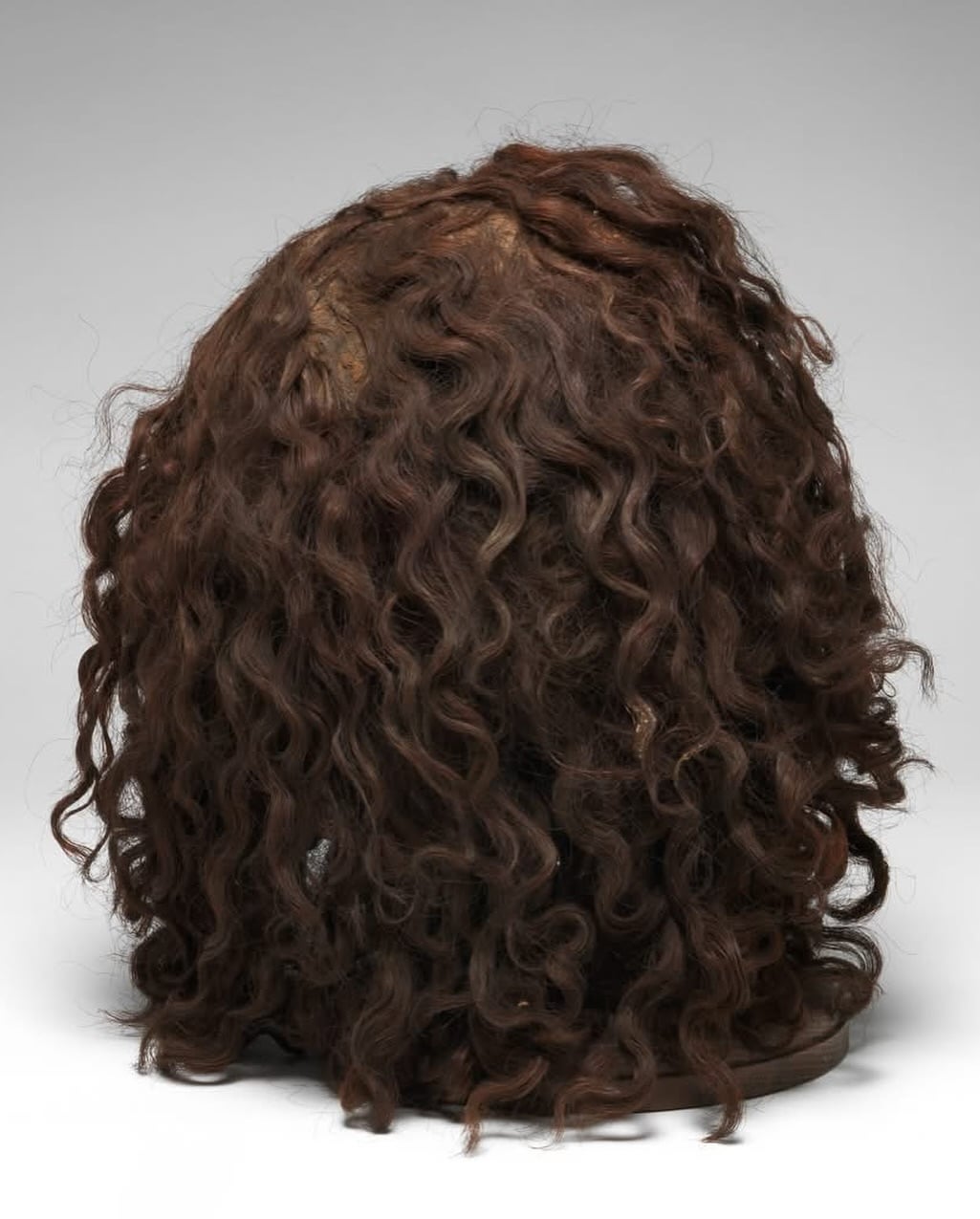
The mummified head of an elite Egyptian woman, dated to around 700 BC, stares back through a thin sheet of gold. Her hair is carefully arranged, her face covered with a golden mask meant, the priests said, to help her soul recognize her body in the afterlife. The body was gone. The curls and the mask remained.
That head is more than a museum curiosity. It is physical proof of how seriously ancient Egyptians took the idea that the body, the soul, and memory were tied together. Mummification was not a weird side habit of a desert people. It was the core technology of their religion and their social order.
So what if it had not been? What if mummification had failed, or never caught on, or gone in a very different direction? Using what we know about Egyptian religion, economics, and politics, we can sketch three grounded what-if paths, then ask which one comes closest to something that could really have happened.
Mummification was the Egyptian solution to a problem: how to keep a person “alive” after death in a hot climate where bodies rot fast. If that solution had been different, Egyptian religion, art, and even who held power would have changed with it.
Why mummification mattered so much in real Egypt
Before playing with counterfactuals, it helps to be clear on what actually happened.
By around 2600 BC, Egyptians had moved from simple desert burials to elaborate tombs and full-body mummification for kings and elites. By the time of our gold-masked woman, around 700 BC in the Third Intermediate Period, the practice had spread far beyond pharaohs. Priests, officials, wealthy artisans, and even some ordinary people could buy a version of it.
Egyptian mummification was a religious technology. The body (the khat) had to be preserved so that the life force (ka) and the roaming personality (ba) could reunite and become an effective spirit (akh) in the afterlife. If the body decayed, the person risked a second, final death.
That is why you get gold masks, painted coffins, and careful hair styling. The mask was not just decoration. It was a recognizable face for the soul. Hair, which could be washed, perfumed, and curled in life, was part of that recognizable identity. The woman with the preserved curls was not just a body. She was a project: a coordinated effort by embalmers, priests, and family to keep her “present” forever.
By the first millennium BC, mummification was also big business. There were workshops, price tiers, and specialist priests. Temples controlled access to sacred oils and natron, the salt used to dry the body. Tombs and funerary goods soaked up a lot of Egypt’s surplus wealth.
So what? Because mummification sat at the intersection of theology, economy, and politics, any change to it would have reshaped Egyptian society from the graveyard up.
Scenario 1: What if Egyptians had never perfected mummification?
Imagine the early Egyptians around 3500–3000 BC burying their dead in shallow desert graves, as they really did. The dry sand naturally desiccated some bodies. People saw that these corpses stayed recognizable for a long time. In our timeline, that observation helped push them toward artificial preservation.
In this first scenario, that link never fully forms. Maybe a series of unusually humid centuries means natural mummies are rare. Maybe early elites prefer stone tombs away from the desert edge, where bodies rot instead of dry. The key point: the idea that a preserved body equals a secure afterlife never becomes central.
Without reliable preservation, religious thought would have had to adjust. Egyptian belief already had room for non-physical survival. The name (ren), the shadow (shut), and the heart (ib) all mattered. The “Opening of the Mouth” ritual and the weighing of the heart in the Hall of Judgment focused on moral worth, not chemistry.
In a no-mummification Egypt, priests might have leaned harder into those non-material elements. Instead of gold masks to help the soul recognize the body, you might get carved portrait stelae or ancestor statues as the main anchors for the dead. The tomb becomes less a sealed body vault and more a shrine to memory and moral reputation.
This would have real economic effects. Stone carving and painting would still be important, but the whole industry of embalmers, linen suppliers, and natron traders would be smaller or nonexistent. Temples would lose a major revenue stream from selling funerary packages.
Politically, the pharaoh’s claim to special treatment in death would be weaker. In our world, the royal mummy and its grand tomb made a visible argument: this person is different. Without that physical difference, kings might lean even more on ideology and military power in life, and less on giant stone tombs as eternal propaganda.
So what? A non-mummifying Egypt would likely have a more memory-based religion, a less tomb-centered economy, and a royal ideology that relied less on eternal bodies and more on moral and military narratives.
Scenario 2: What if mummification stayed exclusive to kings and top elites?
Now take the opposite path. In reality, by the New Kingdom (around 1550–1070 BC) and later, mummification had filtered down the social ladder. There were cheap options. You could get a basic embalming and a simple coffin if you had modest means.
In this scenario, that democratization never happens. The priesthood and palace keep tight control over the knowledge and materials. Natron sources are monopolized. Rituals are restricted. Only the king, his immediate family, and a handful of top officials are allowed full mummification with gold masks and personalized coffins.
Everyone else gets something closer to what poor Egyptians often had in reality: simple burials, maybe some amulets, and prayers. No carefully preserved curls for middle-ranking wives. No personalized coffin faces for scribes and craftsmen.
This would sharpen the social divide around death. The message would be brutal and clear. The king and his circle are literally built for eternity. You are not.
Religiously, this might push common people toward alternative paths to salvation. In later periods, we already see a trend where moral behavior and reciting certain spells could secure a good afterlife even if your burial was modest. If full-body mummification stayed out of reach, that moral and magical route would probably grow stronger and earlier.
Economically, the funerary industry would be smaller but more concentrated. Workshops would focus on a handful of very rich clients. The gold mask on our 700 BC woman’s head, in this world, would mark her as near-royal, not just elite. The gap between her and everyone else would be even wider.
Politically, the priesthood’s alliance with the royal house would be tighter. If only the king and his favorites can get the full package, then access to that package becomes a tool of control. Reward a loyal general with a promise of mummification. Punish a rival by denying it.
So what? A more exclusive mummification system would harden class lines, give priests and kings sharper tools of reward and punishment, and push ordinary Egyptians toward more “spiritual” routes to the afterlife.
Scenario 3: What if Egyptians focused on preserving hair and faces, not whole bodies?
Now look again at that 2700-year-old head with its preserved curls and gold mask. It hints at a third path that is not as far-fetched as it sounds.
By the first millennium BC, embalmers were sometimes more concerned with the appearance of the mummy than with perfect internal preservation. There are mummies where the face is carefully molded, the hair arranged, but the internal organs are treated less carefully than in earlier periods. The goal was recognizability as much as biology.
So imagine a tradition where, early on, Egyptians decide that the key to afterlife recognition is the head and hair, not the entire body. The rest of the corpse might be buried or even cremated, but the head is dried, preserved, and encased in a mask or reliquary.
This is not completely alien to ancient practice. In other cultures, ancestor skulls were kept, painted, or displayed. The Egyptian twist would be to wrap that head in gold and linen, give it a stylized face, and place it in a small shrine.
Economically, this would be cheaper and more scalable than full-body mummification. You need less natron, less linen, smaller coffins. More families could afford some version of it. The gold mask on our woman’s head fits this logic: a high-status, recognizable face that does not require preserving every toe and finger.
Religiously, the theology would adjust. Priests could argue that the ba and ka only need a focal point, not a full skeleton. The head, with its face and hair, is that point. The rest of the body returns to the earth. The soul recognizes the mask and the hair as “home.”
This would change tomb architecture. Instead of long corridors for full coffins, you might get compact family shrines filled with head reliquaries and portrait masks. The visual culture would tilt even more toward faces and hairstyles. The curls of our 700 BC woman would not be an extra detail. They would be the main event.
Politically, this could weaken the monopoly of large temples over death rituals. Smaller, local shrines could handle head preservation. Families might keep ancestor heads closer, perhaps in chapel-like spaces attached to homes or village shrines, which would give local elites more religious clout.
So what? A head-and-hair focused mummification tradition would spread the practice more widely, shift religious focus to recognizable faces, and empower local shrines and families at the expense of giant tomb complexes.
Which scenario is most plausible, and what does it tell us?
Of the three paths, the one that fits best with what we know about Egypt is the third: a stronger focus on preserving heads and faces rather than entire bodies.
We already see hints of this in the archaeological record. By the Late Period and into the Ptolemaic and Roman eras, masks, painted portraits, and external appearance mattered more and more, even as internal mummification sometimes got sloppier. The famous Fayum mummy portraits from Roman Egypt are a later echo of the same idea: what counts is a recognizable face attached to a wrapped body.
The preserved curls and gold mask of the 700 BC woman fit this trend. Her embalmers spent time on her hair and face because those were the parts that mattered socially and religiously. People would see her in the funerary procession. The gods would “see” her in the afterlife. Her soul, according to belief, would need to recognize itself.
Economically, a head-focused system is attractive. It keeps the religious logic of recognition and continuity while lowering costs. That makes it more resilient in times of political chaos, like the Third Intermediate Period when our woman lived, when central power was weak and resources were scattered.
The first scenario, no mummification at all, is less likely because the environment itself pushed Egyptians toward preservation. Dry sand really does preserve bodies. It would have been hard not to notice that. The second scenario, permanent royal monopoly, runs against the long-term trend in Egyptian religion, which kept expanding access to afterlife goods and spells to wider groups.
So what? The most realistic alternate Egypt is not one without mummies, but one where the gold-covered head with perfect curls is the norm, and full-body mummies are rare. That possibility reminds us that even in a culture as seemingly rigid as ancient Egypt, religious technology could have flexed in different directions.
In the end, that 2700-year-old head with its preserved curls is a frozen argument about identity. The embalmers were betting that if they kept her face and hair intact, her soul would know where to go. Our what-if scenarios show how many other bets they could have made, and how each one would have rewritten Egyptian religion, art, and power from the grave up.
Frequently Asked Questions
Why did ancient Egyptians mummify bodies?
Ancient Egyptians mummified bodies because they believed the soul needed a preserved, recognizable body to live on in the afterlife. The body was the anchor for parts of the person like the ka (life force) and ba (personality). If the body decayed, the person risked a final, permanent death.
What was the purpose of gold masks on Egyptian mummies?
Gold masks on Egyptian mummies were meant to give the dead a recognizable, idealized face in the afterlife. Priests believed the soul would use this face to identify its body. Gold also symbolized the flesh of the gods, so a gold mask linked the dead person to divine qualities and eternal life.
Did all ancient Egyptians get mummified?
No, not all Egyptians were mummified. Full mummification was expensive and began as a royal privilege. Over time, cheaper versions spread to priests, officials, and some commoners, but many people still had simple burials with few or no embalming procedures.
Could Egyptian religion have worked without mummification?
Egyptian religion could have evolved without full-body mummification, but it would have looked different. Beliefs might have focused more on memory, names, and moral behavior, or on preserving only parts of the body like the head. Mummification shaped Egyptian art, tombs, and temple wealth, so changing it would have changed their whole religious system.