In the spring of 305, the most powerful man in the Roman world walked away from the job and went home to garden.
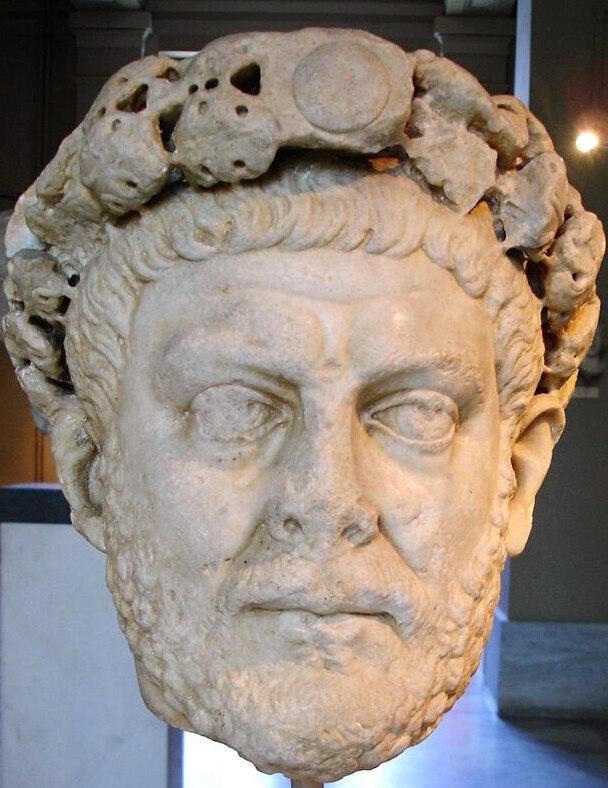
Diocletian, emperor since 284, took off the purple, moved to his palace near Salona on the Dalmatian coast, and started growing vegetables. When former colleagues begged him to return during a political crisis, he supposedly replied that if they could see the cabbages he grew with his own hands, they would not talk to him about empire.
He was the first Roman emperor to retire voluntarily. That single decision helped trigger a chain of civil wars that ended with Constantine and a Christian empire. So what if Diocletian had not retired? Or if he had come back? Grounded in what we know about Roman politics, economics, and Diocletian’s health, we can sketch three plausible alternate timelines.
Diocletian’s retirement in 305 removed the one man who could enforce his new power-sharing system. His exit opened the door to rival emperors and civil war.
Why did Diocletian retire at all?
Before changing the story, we need the original one straight. Diocletian came to power in 284 after a period Romans later called the “Crisis of the Third Century.” Between 235 and 284, more than twenty emperors rose and fell, most of them murdered or killed in battle. The empire nearly fell apart under invasions, plagues, and economic collapse.
Diocletian’s answer was structural. He split power. By the 290s he had created the Tetrarchy, a rule of four: two senior emperors (Augusti) and two junior emperors (Caesares). He ruled the East. His colleague Maximian ruled the West. Their juniors, Galerius and Constantius, were supposed to succeed them in an orderly way.
He also tried to fix the economy. He reformed taxes, tied some workers to their professions, and in 301 issued the Edict on Maximum Prices, a price control law that tried to stop inflation. It mostly failed, but it shows he knew the empire’s problems were not just military.
By 303, Diocletian was ill. Ancient sources describe a serious sickness that forced him to leave public life for months. When he reappeared in 304, he looked frail. On 1 May 305, in a carefully staged ceremony, he abdicated in Nicomedia. Maximian did the same in Milan. The plan: the juniors, Galerius and Constantius, would become Augusti, and two new Caesars, Severus and Maximinus Daia, would be appointed.
The problem was the human factor. Diocletian’s system sidelined powerful dynastic interests, especially Constantius’s son, Constantine, and Maximian’s son, Maxentius. They would not accept being cut out. When Diocletian stepped back to his garden, he took the only real referee off the field.
His retirement mattered because it removed the one figure both sides feared and respected enough to obey, which made the Tetrarchy far more fragile than it looked on paper.
Scenario 1: Diocletian never retires in 305
Imagine Diocletian in slightly better health. He decides to postpone retirement, perhaps by five years, and remains Augustus in the East past 305. What changes?
First, the succession crisis of 306–308 looks different. In our timeline, Constantius died in Britain in 306. His troops proclaimed his son Constantine emperor. In Rome, Maxentius, angry at being left out of the Tetrarchy, seized power. Galerius tried to impose his own candidates. The result was a crowded imperial roster and civil war.
If Diocletian is still ruling, Galerius is not the senior voice. Diocletian could insist on a cleaner succession. He might still promote Constantius to senior partner in the West, but he would be in a stronger position to dictate what happens to Constantine and Maxentius.
Diocletian distrusted hereditary monarchy. He had built the Tetrarchy to avoid it. So he is unlikely to simply accept Constantine as heir because the troops like him. At the same time, Diocletian was a pragmatist. He knew the army’s loyalty made or broke emperors. A plausible compromise: Constantine is made Caesar under his father Constantius, but with Diocletian’s explicit blessing and limited authority.
That alone could dampen the spark that led to Constantine’s open rebellion. Constantine would still be ambitious, but he would not be a usurper from day one. His power would grow inside the system, not against it.
What about Maxentius in Rome? Diocletian never liked the city of Rome. He ruled mostly from Nicomedia. He also distrusted the Roman Senate and the old capital’s sense of entitlement. If he stays in power, he probably keeps the Tetrarchic capital system and continues to marginalize Rome. But he would also be around to pressure Maximian to keep his son in line.
Maximian, the older western Augustus, had already been forced to retire in 305. With Diocletian still active, he is less likely to stage a comeback in support of his son. Diocletian had a reputation for being ruthless with disloyal colleagues. The threat of being removed, exiled, or worse might keep Maximian from playing kingmaker.
Religious policy is another lever. Diocletian launched the Great Persecution of Christians in 303, but the harshest measures were pushed by Galerius. If Diocletian lives and stays in control, he might moderate or end the persecution earlier, especially if he sees it is destabilizing the cities. A somewhat softer religious climate could reduce one of the moral claims Constantine later used: that he was the protector of Christians against pagan tyrants.
In this scenario, the Tetrarchy survives longer, perhaps into the 310s or 320s, with Constantine rising inside it rather than smashing it. The empire might still end up with one dominant emperor, but the road there is slower and less bloody.
If Diocletian never retires, he could delay or soften the civil wars that brought Constantine to power, which might keep the Tetrarchic system alive for another generation and change the timing and style of Rome’s shift toward one-man rule.
Scenario 2: Diocletian returns from retirement when begged
Now take the famous cabbage quote and flip it. In our world, when Diocletian was asked to return during the chaos of 308, he refused. In this scenario, he sighs, looks at his garden, and says yes.
The context: by 308, the Tetrarchy was a mess. Constantius was dead. Constantine controlled Britain and Gaul. Maxentius ruled Rome and Italy without recognition. Galerius was Augustus in the Balkans and Asia Minor. Severus, the official western Augustus, had been defeated and killed. Maximinus Daia ruled the eastern provinces beyond Galerius. The empire had at least four, arguably five, emperors.
Historically, Galerius called Diocletian out of retirement to a conference at Carnuntum on the Danube. Diocletian came, but only as an elder statesman. There, in November 308, he helped reorganize the Tetrarchy on paper, naming Licinius as Augustus in the West, demoting Constantine and Maximinus to Caesars, and declaring Maxentius a usurper.
Then he went back to his cabbages. No army. No direct rule.
Change one decision. At Carnuntum, Diocletian not only advises but resumes the purple. He becomes senior Augustus again, perhaps with Galerius as junior partner. What could he actually do?
First, he would need troops. Diocletian had no personal army in 308. To be more than a figurehead, he would have to take command of Galerius’s forces or call loyal officers from his old eastern armies. That is plausible. Many senior officers owed their careers to him. His name still carried weight.
With an army and his old authority, Diocletian could try a hard reset. One likely priority: crush Maxentius in Rome. Diocletian had no patience for unrecognized usurpers. Instead of Constantine marching on Rome in 312, we might see Diocletian leading or directing a campaign into Italy around 309–311.
Constantine’s position becomes more complicated. In our history, he used the chaos and Maxentius’s unpopularity to present himself as a liberator. If Diocletian is back, Constantine faces a choice: submit to the man who built the system that legitimized him, or risk being branded a rebel against the empire’s founding father.
Given Diocletian’s prestige, Constantine might accept a deal. He keeps Gaul and Britain as Caesar, in exchange for recognizing Diocletian’s authority and joining a coordinated campaign against Maxentius. That would put Constantine’s military talent at Diocletian’s disposal, not in competition with it.
Religious policy again matters. Diocletian’s return could harden pagan resistance to Christianity. He might double down on traditional cults as a way to unify the empire under his restored authority. If he pushes Galerius and others to restart or intensify persecution, Christian support for Constantine becomes even more intense, but Constantine has less room to maneuver inside the official system.
Alternatively, an older, tired Diocletian might decide the persecution was a mistake and allow a limited toleration to calm things down. In that case, Constantine loses part of his unique selling point as the pro-Christian emperor.
Either way, Constantine’s path to sole rule is blocked or delayed. Diocletian’s return could produce a negotiated balance among several emperors, with Diocletian as arbiter until his death.
If Diocletian had come back in 308, he could have turned the Carnuntum conference from a paper fix into a real restoration of his authority, which might have contained Constantine and Maxentius and reshaped the religious and political settlement of the early 4th century.
Scenario 3: Diocletian retires, but picks a different succession
There is a third, quieter what-if. Keep the retirement, keep the cabbages, but change who Diocletian promotes in 305.
His actual choices were politically loaded. He elevated Galerius, his son-in-law and hardline ally, to senior status. He passed over Constantine and Maxentius entirely. He picked Severus and Maximinus Daia as new Caesars, both men tied closely to Galerius.
That made the Tetrarchy look like Galerius’s personal network. It alienated Constantius’s troops, who favored Constantine, and the Roman elite, who saw Maxentius as their man. The system that was supposed to balance power instead looked like a stitched-together clique.
What if Diocletian had been more inclusive? One alternate slate in 305: Constantius and Diocletian remain Augusti, but Constantine and Maxentius are made Caesars. Galerius is either sidelined or kept as a powerful general, not as heir.
This would have been a sharp break with Diocletian’s real preferences. He distrusted Rome and had reasons to keep Maximian’s family out of power. But if he had been thinking less about personal loyalties and more about buy-in from all factions, this kind of broad coalition makes sense.
With Constantine and Maxentius inside the system, their incentive to revolt drops. Maxentius gets status and a path to power without a coup in Rome. Constantine gains formal legitimacy and a share of command without needing his troops to proclaim him emperor on his father’s deathbed.
Galerius is the odd man out. He was ambitious and aggressive. Cutting him down would create its own risk of rebellion. Yet Diocletian, still active in 305, might have been able to manage that risk by giving Galerius a rich military command and honors, while keeping him away from the succession.
Religious policy might soften earlier. Galerius was the main driver of the Great Persecution. If his influence is reduced, the persecution might never reach the same intensity. Constantine’s later pro-Christian stance would still matter, but it would be less of a dramatic break from the past.
The long-term effect could be a more dynastic but less violent transition. The empire might move toward a shared rule among imperial families, with Constantine and Maxentius as heirs, instead of a brutal winnowing through civil war.
If Diocletian had built a broader coalition into his succession plan, he might have reduced the incentive for Constantine and Maxentius to rebel, which could have produced a slower, more negotiated shift from the Tetrarchy to dynastic rule.
Which scenario is most plausible, and what changes?
So which of these alternate Diocletians is closest to reality: the one who never retires, the one who comes back, or the one who retires but chooses better heirs?
The least plausible is the comeback emperor. By 308, Diocletian was old, sick, and clearly done with politics. Ancient writers describe him as worn out and even depressed by the memory of ruling. His famous cabbage line, whether word-for-word accurate or not, fits everything else we know about his state of mind. A full return to power would have required energy, travel, and years of campaigning. That does not match the man in his late fifties or early sixties who could barely handle court ceremonies in 304.
The “never retires” scenario has some physical problems too. His 303–304 illness was serious. It may have been chronic. Expecting him to carry on as an active emperor for another decade is optimistic. Still, a delay of a year or two is not crazy. If he had postponed retirement even briefly, he could have managed the first round of succession more directly.
The most realistic change is the quiet one: different succession choices in 305. Diocletian was still mentally sharp then. He designed the Tetrarchy. He understood the risks of leaving powerful sons outside the system. He simply misjudged how strong those dynastic pressures would be once he was gone, and how much resentment Galerius’s dominance would create.
Had he included Constantine or Maxentius as Caesars, or balanced Galerius with a rival of equal rank, the Tetrarchy might have survived his retirement in a more stable form. That would not erase all conflict. Ambitious generals and emperors still clash. But the scale and speed of the civil wars that produced Constantine as sole ruler might have been reduced.
What does that change in the big picture?
First, the timing and style of Christianization. Constantine’s victory at the Milvian Bridge in 312, with its famous Christian vision story, became a founding myth for Christian Rome. If there is no dramatic showdown at Rome, or if Constantine rises more slowly inside a collegial system, Christianity might still gain imperial favor, but with less of a single turning point.
Second, the shape of imperial government. Diocletian’s Tetrarchy was one of the boldest experiments in shared rule in premodern history. Its failure helped convince later emperors that power-sharing was dangerous. A slightly more successful Tetrarchy, lasting another generation, might have normalized multi-emperor rule and made later divisions of the empire less violent.
Third, the prestige of Rome itself. The civil wars of the early 4th century, especially Maxentius’s rule and Constantine’s conquest, were part of the long story of Rome’s decline as a political center. A smoother transition might have kept Rome politically marginal but less battered by sieges and coups.
Diocletian’s cabbages matter because they mark the moment when a tired emperor chose his garden over his creation. A different choice of heirs in 305 is the most believable fork in the road, and it could have meant a less bloody path to Constantine’s world and a slower, less dramatic Christian turn for the Roman Empire.
Why does Diocletian’s retirement still matter today?
Modern readers latch onto the cabbage story because it feels like a rare moment of sanity in imperial politics. A man at the top of an unstable system chooses to walk away and touch the soil.
Behind the anecdote is a hard political lesson. Diocletian built a system that depended on his personal authority to keep rival ambitions in check. When he left, the structure looked solid, but the human loyalties that made it work were gone. The empire slid back toward the pattern of strongmen and civil wars that had haunted the third century.
In counterfactual terms, small changes in his last years could have shifted the timing and tone of Rome’s transformation. A different set of heirs might have meant fewer civil wars, a slower rise for Constantine, and a less theatrical Christianization. But the deeper forces he was wrestling with, military power, regional interests, religious change, were not going away.
That is why historians keep coming back to Diocletian’s retirement. It is not just a charming gardening story. It is a reminder that even the best-designed political systems crack when the person holding them together steps aside without building a succession that people actually accept.
Diocletian’s choice to retire, and the way he managed it, helped set the stage for Constantine, for Christian Rome, and for the late antique world that followed. Change that choice, and you do not erase those outcomes, but you do change how, and how violently, they arrive.
Frequently Asked Questions
Did Diocletian really retire to grow cabbages?
Ancient sources report that Diocletian retired to his palace near Salona on the Dalmatian coast in 305 AD and devoted himself to gardening. The famous cabbage quote comes from later writers and may not be word-for-word accurate, but it reflects a real tradition that he proudly took up farming and refused to return to power when asked.
Why was Diocletian the first Roman emperor to retire voluntarily?
Before Diocletian, most emperors left office by dying, being murdered, or being overthrown. Diocletian had ruled for two decades, was seriously ill around 303–304, and had created the Tetrarchy, a system meant to allow orderly succession. He used that system to step down in 305, hoping that his co-emperors and appointed heirs would keep the empire stable without him.
What would have happened if Diocletian had not retired in 305 AD?
If Diocletian had delayed retirement, he might have managed the succession more directly and reduced the chaos that followed. He could have kept ambitious figures like Constantine and Maxentius inside the system as junior emperors, which might have delayed or softened the civil wars of the early 4th century. However, his poor health makes a long extension of his rule unlikely.
Did Diocletian’s retirement cause Constantine to become emperor?
Diocletian’s retirement did not automatically make Constantine emperor, but it removed the one figure who could enforce the Tetrarchic succession. Diocletian’s choices in 305 sidelined Constantine and Maxentius, which pushed both men toward rebellion after Constantius died in 306. The resulting civil wars created the opening that Constantine used to defeat rivals and become sole ruler.