On a January night in 2000, the temperature in Saskatoon dropped below minus 20 Celsius. A Cree man named Darrell Night was drunk, angry, and in the back of a police cruiser. He thought he was headed to the drunk tank.
Instead, two officers drove him to the edge of the city, near the Queen Elizabeth power station, took off his handcuffs, and left him there in the dark. No houses. No phone. Just snow and industrial lights in the distance.
For years, Indigenous people in Saskatoon had told the same kind of story. Police would pick them up, drive them out of town in winter, and abandon them. The practice had a euphemistic name: “starlight tours.” Most non‑Indigenous Canadians either had never heard of it or dismissed it as rumor.
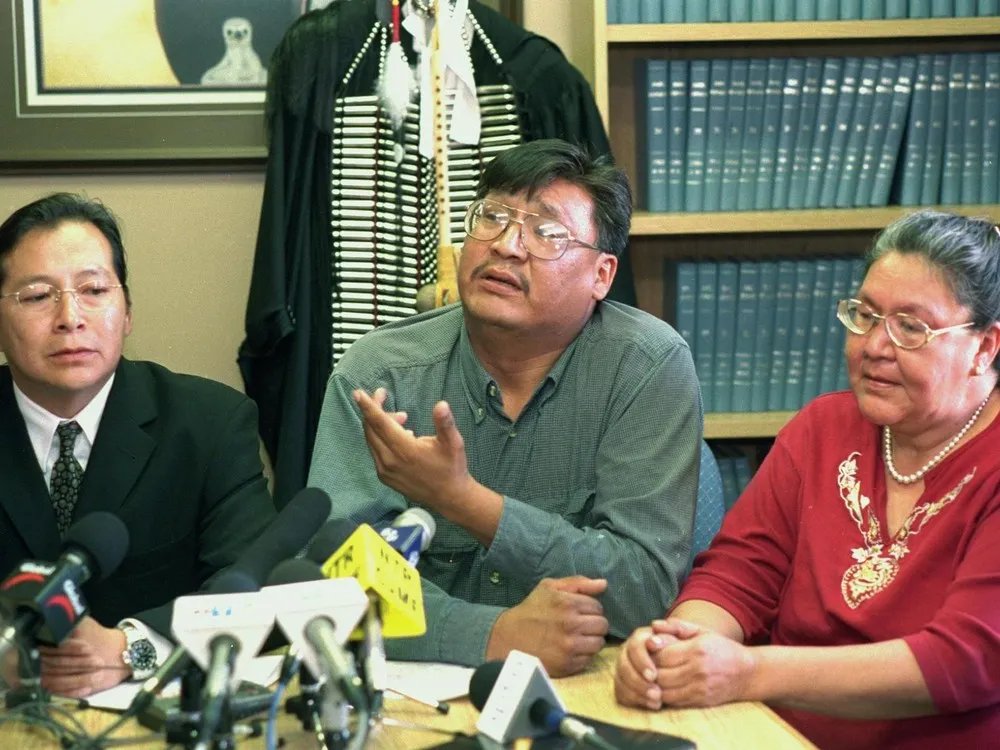
Darrell Night survived. He walked back, found help, and refused to shut up. In 2001, after two officers were convicted of unlawful confinement, he spoke to the press and forced Canada to look at a practice that had been going on for decades.
Starlight tours were a pattern of police abuse in which officers drove Indigenous people to the outskirts of cities in freezing weather and left them to walk back, sometimes leading to death. The exposure of starlight tours in Saskatoon forced a national reckoning with police racism and Indigenous deaths in custody.
So what if that reckoning had come earlier? Or not at all?
Counterfactual history cannot rewrite the past, but it can test how much turned on timing, politics, and one man’s decision to speak. Here are three grounded scenarios: an early exposure in the 1970s, a mid‑exposure in the late 1980s, and a dark path where Darrell Night never makes it back.
How did starlight tours actually come to light?
Before we bend the timeline, we need the real one.
By the late 1990s, Saskatoon had a pattern that Indigenous families knew too well. Men went out drinking or were picked up by police. Then they were found frozen on the outskirts of the city.
In January 2000, 25‑year‑old Neil Stonechild’s case from 1990 was still officially unsolved. Two more Indigenous men, Rodney Naistus and Lawrence Wegner, were found frozen that winter near the Queen Elizabeth power station. Both had prior contact with police. Both deaths were initially treated as unremarkable.
Then came Darrell Night, on January 28, 2000. He survived the same pattern. He told his family, then a lawyer, then the media. The Saskatoon Police Service first denied it, then suspended the two officers, constables Larry Hartwig and Bradley Senger.
In September 2001, a jury convicted both officers of unlawful confinement. They received eight‑month sentences. The judge did not call it attempted murder, but the public heard the story and drew its own conclusions.
Night’s case triggered a chain reaction. The Saskatchewan government ordered RCMP to investigate other freezing deaths. A public inquiry into the 1990 death of teenager Neil Stonechild began in 2003. In 2004, the inquiry concluded that Stonechild had been in police custody shortly before he died and that officers had not told the truth about their contact with him.
By the mid‑2000s, “starlight tours” had become a national shorthand for racist police abuse of Indigenous people. The term showed up in newsrooms, classrooms, and human rights reports. It fed into a wider debate about missing and murdered Indigenous women, deaths in custody, and systemic racism in Canadian policing.
The actual timeline matters because it shows how much hinged on a few things: a survivor who talked, a media environment willing to listen, and a political climate where provincial authorities felt forced to act. That is the baseline for asking what could have gone differently, and why it matters.
Scenario 1: What if starlight tours had been exposed in the 1970s?
Imagine the same practice, but the whistleblower appears in, say, 1975.
The ingredients were already there. By the 1960s and 70s, Canadian cities on the Prairies were seeing more Indigenous residents because of forced relocations, residential school legacies, and economic migration. Police forces were overwhelmingly white. Racism was open, not coded.
There is evidence that rough rides and abandonment practices were not invented in the 1990s. Indigenous people in Saskatoon and other Prairie cities have described similar incidents going back decades, though the record is patchy and often oral.
So picture this: an Indigenous man survives a winter dump in 1975, walks back, and finds an ally in one of the new Indigenous political organizations, like the National Indian Brotherhood (precursor to the Assembly of First Nations) or a local friendship centre. They help him file a complaint and call a press conference.
What happens next depends on the 1970s media and political climate.
National TV news in the 1970s did cover Indigenous issues, but usually in the context of protest, land claims, or “unrest.” A story about police dumping Indigenous people outside city limits might get a segment, framed as a shocking abuse but also as a “local matter.”
Police oversight was weaker. Civilian review boards were rare and had limited power. The Charter of Rights and Freedoms did not exist yet, so legal tools for challenging police conduct were narrower. Courts were less inclined to see systemic discrimination as a legal concept.
In that environment, an early exposure of starlight tours probably plays out like this:
There is a short burst of media attention. The police chief denies any pattern, maybe suspends one or two officers “pending investigation.” A coroner’s inquest into one freezing death hears testimony about abandonment but stops short of finding systemic wrongdoing. The provincial government orders an internal review rather than a full public inquiry.
Without the Charter, without the 1990s language of “systemic racism,” and with Indigenous organizations still fighting for basic recognition, the story likely fades faster. The practice might go underground, become less brazen, or shift form, but not disappear.
On the other hand, an early exposure could plant a seed. It might influence the creation of early civilian oversight bodies in the 1980s. It might show up in law school classrooms and policing manuals as “what not to do.” It might make some officers think twice before driving out of town on a cold night.
The most realistic 1970s outcome is not a clean break but a partial one: some public awareness, some quiet policy changes, and a long, slow continuation of similar abuses under different names. The shock would come earlier, but the structural tools to force deep change were not yet in place.
So what? An earlier exposure in the 1970s probably saves some lives through deterrence and awareness, but without the legal and political frameworks of the 1990s and 2000s, it is less likely to trigger the kind of public inquiries and systemic language that later reshaped the debate.
Scenario 2: What if a freezing death in 1988 had sparked a national inquiry?
Shift the clock forward. Imagine that in 1988, an Indigenous man in Saskatoon survives a starlight tour and his case hits the news in a bigger way than anything in the 1970s.
By 1988, some key conditions have changed. The Canadian Charter of Rights and Freedoms is six years old. Section 15, the equality rights clause, has been in force since 1985. Indigenous political organizations are stronger and more media savvy. The Oka Crisis is still two years away, but Indigenous resistance is already more visible.
In this scenario, the survivor’s story lands in a media environment that is more willing to talk about “civil rights” and “police brutality,” partly influenced by coverage from the United States. Think of how Canadian outlets covered the Rodney King beating in 1991 in our real timeline. A 1988 starlight tour case could be framed in similar language, just a bit earlier.
The Saskatchewan government, facing pressure from Indigenous groups and perhaps opposition parties, might order a public inquiry in the late 1980s. The inquiry would hear from families of people who froze to death in previous winters, from officers about unofficial practices, and from experts on racism in policing.
Because the Charter is in play, lawyers could argue that abandonment practices violate section 7 (life, liberty, and security of the person) and section 15 (equality). The inquiry might recommend:
• Stronger civilian oversight of police.
• Mandatory recording of police custody and transport.
• Specific bans on off‑the‑books “drunk runs” or “starlight tours.”
• Training on Indigenous rights and history.
Would those recommendations stick? That depends on politics. The late 1980s saw rising concern about crime and public order, but also a growing rights culture. A high‑profile inquiry could have fed into early 1990s reforms, ahead of the real‑world wave that followed the Stonechild inquiry and later the Truth and Reconciliation Commission.
An earlier inquiry might also change the 1990 death of Neil Stonechild. If Saskatoon police had already been burned by a scandal about dumping Indigenous people outside city limits, officers might be more cautious. They might avoid the practice entirely, or at least avoid leaving someone in a life‑threatening situation.
In that world, Stonechild might not die. Or if he did die, the investigation might be more thorough from the start, with less room for officers to deny contact.
There is a flip side. Police unions in the 1980s were already politically active. A strong backlash could frame the inquiry as “anti‑cop,” leading to a defensive culture where officers close ranks even tighter. Some reforms might be watered down in practice.
Even so, a late‑1980s exposure has a better chance than a 1970s one of creating lasting institutional changes: written policies, oversight bodies with teeth, and case law that treats abandonment as a serious Charter violation.
So what? An exposure in the late 1980s is the scenario most likely to prevent some 1990s deaths, embed anti‑abandonment rules in law and policy, and feed into the broader rights‑based scrutiny of police that defined the 1990s and 2000s.
Scenario 3: What if Darrell Night had died in 2000?
The darkest scenario is the one where the real hero of this story never gets to talk to reporters outside a courthouse.
On that January night in 2000, the temperature and distance were not abstract. If Night had been more intoxicated, less dressed, or dropped a few kilometers further out, he could easily have frozen to death. The bodies of Naistus and Wegner that same winter show how thin the margin was.
If Night dies, what changes?
First, the pattern looks different. Instead of one survivor and two dead men, Saskatoon has three frozen Indigenous men in the same winter, all with some contact with police. Families and Indigenous leaders would still raise alarms. They had been doing that for years.
But without a living witness who can describe the ride, the stop, the cuffs coming off, and the officers driving away, the story is easier to dismiss as rumor. Police can say, as they had before, that these men were drunk, that they wandered out of town, that no one knows how they ended up where they did.
The RCMP might still be called in to review the deaths, but with less public pressure. There is no dramatic trial of two officers for unlawful confinement. No photo of a survivor talking to the press. No single case that reporters can hang the term “starlight tours” on.
In that world, the 2003–2004 Stonechild inquiry might never happen, or it might have a narrower mandate. Without Night’s case breaking the dam, the 1990 file on Stonechild stays cold. The public does not see the same pattern of police contact followed by freezing death.
Nationally, the term “starlight tours” might remain mostly within Indigenous communities and activist circles, not in mainstream headlines. When the national inquiry into Missing and Murdered Indigenous Women and Girls begins in the 2010s, it would still hear about abandonment practices, but with less prior public awareness.
Could someone else have survived and spoken up later? Possibly. Abusive practices rarely stop on their own. But every year that passes without a high‑profile survivor increases the risk that more people die quietly, their stories never fully told.
There is another chilling angle. If Night had died, the officers involved would not have faced criminal charges. They might have stayed on the force. Their colleagues would have seen that nothing happened to men who drove Indigenous people to the edge of town in sub‑zero temperatures.
Impunity is contagious. A practice that already existed for decades could have persisted longer, perhaps into the 2010s, before some other case finally broke through.
So what? If Darrell Night had died in 2000, the practice of starlight tours might have continued longer, with more deaths and weaker public recognition, because the most compelling witness to the abuse would never have been able to speak.
Which scenario is most plausible, and what does it tell us?
Of the three counterfactuals, the late‑1980s exposure is the most plausible and the one that probably changes the most.
The 1970s scenario runs into hard limits. The legal tools, oversight structures, and public language for talking about systemic racism were underdeveloped. A scandal could have erupted, but it would likely have been treated as a few “bad apples” rather than a systemic practice. Some lives might be saved by deterrence, but deep reform would be unlikely.
The 2000 death‑of‑Night scenario is sadly plausible too. People die of exposure in Canadian winters every year, and many of their stories never reach the front page. That said, the pattern of freezing deaths and community pressure in Saskatoon by 2000 was already strong. Even without Night, there is a decent chance that some kind of inquiry would have happened in the 2000s, though probably later and with less clarity.
The late‑1980s exposure fits best with how institutions actually change. By then, Indigenous political organizations were more established, the Charter gave lawyers tools to attack abusive practices, and media were more tuned to rights language. A high‑profile starlight tour case in 1988 or 1989 could realistically have led to a provincial inquiry, policy changes, and case law by the early 1990s.
That timing matters. If Saskatoon had gone through its reckoning five to ten years earlier, some specific deaths in the 1990s might never have happened. The Stonechild case might have been investigated properly from day one. The phrase “starlight tours” might have entered the national vocabulary earlier, shaping how Canadians thought about police racism before the 2000s.
There is a wider lesson here about how abuses come to light. It is not just about the existence of wrongdoing. It is about three things lining up at once: a survivor willing to talk, organizations ready to amplify the story, and institutions that feel enough pressure to respond.
Darrell Night’s press conference in 2001 did not create starlight tours. It made them undeniable. In a different decade, or with a different outcome on that frozen road, the same practice might have stayed in the shadows much longer.
So what? The most plausible alternate timeline suggests that earlier exposure of starlight tours could have saved lives and shifted Canadian debates on policing and Indigenous rights sooner, which shows how much real history depended on one survivor’s walk back to the city and his refusal to be quiet.
Frequently Asked Questions
What were starlight tours in Canada?
Starlight tours were a pattern of police abuse, especially reported in Saskatoon, where officers drove Indigenous people to the outskirts of the city in winter and left them there, forcing them to walk back in dangerous sub‑zero temperatures. Some of those abandoned died of exposure.
Did starlight tours really happen or is it a myth?
There is strong evidence that starlight tours happened. In 2001, two Saskatoon police officers were convicted of unlawful confinement for abandoning Darrell Night outside the city in extreme cold. A later public inquiry into the 1990 death of Neil Stonechild found that he had been in police custody shortly before he froze to death and that officers were not truthful about their contact with him.
When did Canada first expose starlight tours?
Indigenous people had spoken about starlight tours for years, but the practice gained national attention in 2000–2001 after Cree man Darrell Night survived being abandoned outside Saskatoon in freezing weather and two officers were convicted. A 2003–2004 inquiry into the earlier death of teenager Neil Stonechild deepened public awareness.
Could starlight tours have been stopped earlier?
It is possible they could have been curbed earlier if a survivor’s story had gained attention in the 1970s or 1980s, especially after the 1982 Charter of Rights. Earlier exposure might have led to public inquiries, stronger oversight, and legal rulings that deterred officers from using abandonment as an unofficial punishment.