She is small enough that the screen door dwarfs her, but she is clearly in charge of the moment. One hand on the frame, the other gripping a cat-shaped purse almost as big as her torso, she steps toward her grandmother’s house in 1957. The dress is neat, the hair is set, the purse is pure whimsy. It looks like something between a toy and a fashion statement.
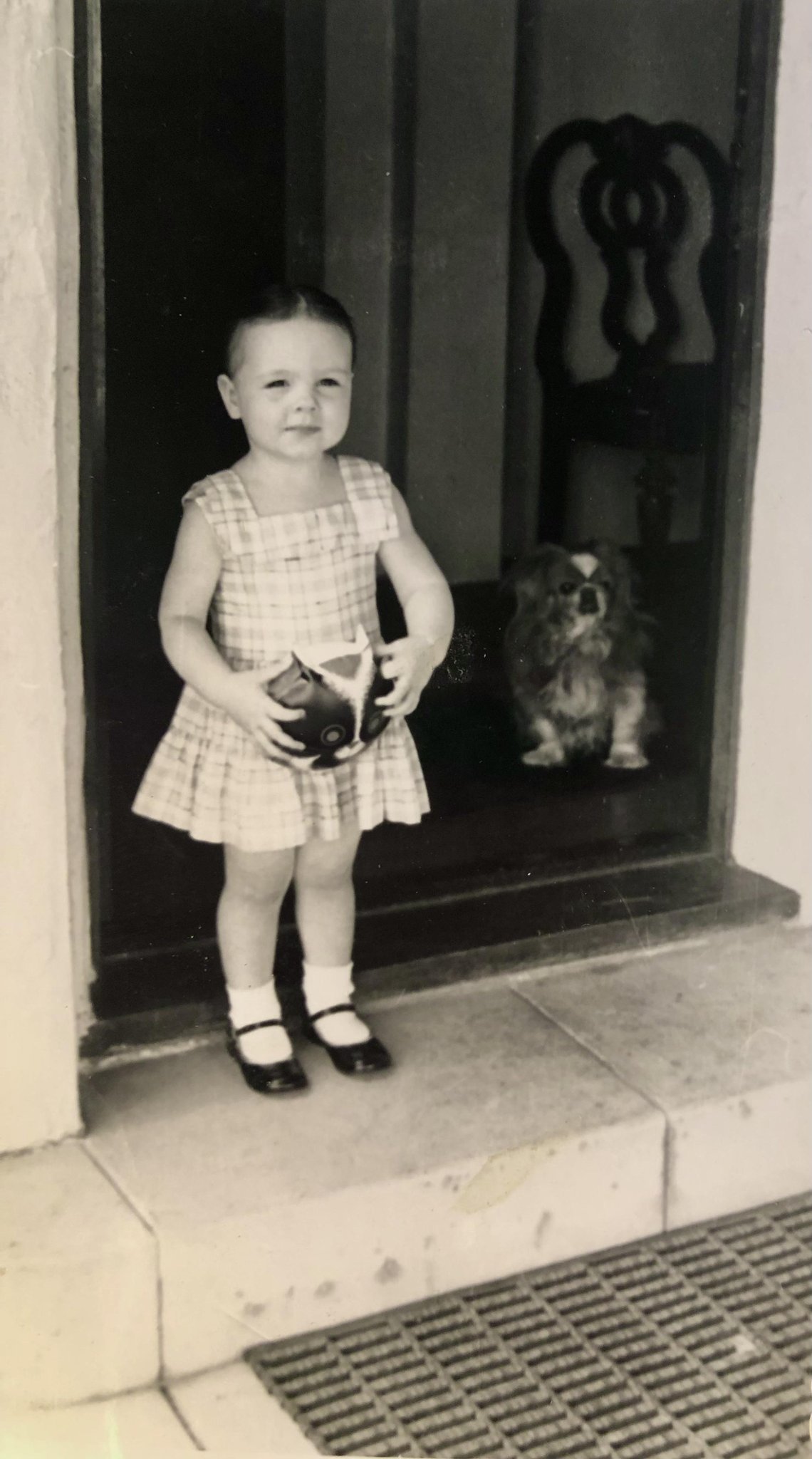
That single image, shared on Reddit as “Visiting my grandmother with my cat purse in hand, 1957,” hits a nerve. People recognize the posture, the porch, the generational ritual. But what catches the eye is the purse. It is consumer culture in miniature: postwar prosperity, childhood, gender expectations and marketing all packed into one novelty accessory.
So what if that world had gone differently? What if the 1950s girl with the cat purse had grown up in a consumer culture that took her tastes more seriously, or less seriously, or in a radically different direction? Counterfactual history cannot rewrite the past, but it can test how much weight that little purse was carrying in a decade of big changes.
What did a cat purse mean in 1957 America?
By 1957, the United States was deep into the postwar boom. GDP was high, suburban housing developments were spreading, and consumer goods were flooding into homes. Children born in the late 1940s and early 1950s were the first true “baby boomers,” and companies were learning to market directly to them.
A cat-shaped purse for a little girl was not just cute. It was a product of several converging forces. Manufacturers had cheap plastics, synthetic fabrics and globalized supply chains just beginning to form. Department stores and mail-order catalogs pushed novelty items for kids. Parents, with more disposable income than their own Depression-era mothers and fathers, were willing to spend on small luxuries.
Gender norms were baked into the design. Boys got toy guns, model planes, chemistry sets. Girls got dolls, tea sets and fashion accessories. A cat purse said: you are a future woman, and even your playthings will train you for that role. It was a bridge between toy and handbag, between childhood and the adult femininity the culture expected.
At the same time, there was a streak of autonomy in it. A purse is a container for personal treasures. Even if it only held a nickel and a handkerchief, it gave a child a sense of ownership and self. The cat face, the whimsy, softened the message but did not erase it.
In 1957, a cat purse for a little girl captured the tension between conformity and individuality in midcentury America, so any change to that object’s world hints at a different path for consumer culture and gender roles.
Scenario 1: What if 1950s kids had been marketed to as equals, not apprentices?
In our timeline, children in the 1950s were a growing market, but the real explosion of kid-centered branding came in the 1980s with deregulation of children’s TV advertising and the rise of tie-in toys. In the 1950s, most marketing still treated kids as future adults. Products trained them for the roles they were expected to play.
Imagine that starting around 1950, big companies and ad agencies had decided that children were not future consumers but full consumers right now, with distinct tastes and long-term brand value. The economics were already there. By the mid-1950s, U.S. advertising spending was around $10 billion a year. Television ownership was climbing fast. Saturday morning programming existed, even if it was not yet the merchandising machine it would become.
In this alternate 1957, the girl with the cat purse is not carrying a generic novelty item. She is carrying a branded character, part of a larger universe aimed squarely at her. Maybe it is tied to a cartoon cat from a syndicated TV show, with matching lunchboxes, bedspreads and cereal prizes. The purse is not training her to be a woman. It is training her to be a fan.
Ad agencies, sensing the long-term payoff, commission research into children’s preferences a generation earlier than they did in reality. They discover that girls like adventure stories as much as boys, that boys will happily buy cute animal merchandise if the story is right, and that parents are willing to indulge more variety.
That shifts the product line. Instead of strictly pink, frilly accessories for girls and rugged gear for boys, you get more crossover items. The cat purse might come in darker colors, with pockets for a toy magnifying glass and notebook, marketed as a “detective cat bag.” The same character might appear on a toy tool belt or a science kit.
Television networks, seeing ratings spikes from kid-focused shows, push the Federal Communications Commission for looser rules on advertising to children. If that happens in the late 1950s instead of the 1980s, an entire generation grows up with branded childhoods two decades earlier.
So what? If marketers had treated 1950s kids as full consumers, the girl with the cat purse might have grown up in a more commercial but less rigidly gendered toy world, which could have softened some of the sharp pink-blue divide that hardened in the later 20th century.
Scenario 2: What if postwar austerity had lasted longer and novelty items vanished?
There is another fork in the road. The cat purse exists because the United States emerged from World War II with its industrial base intact, its consumer demand pent up and its political system committed to mass consumption as a bulwark against communism. But that was not guaranteed.
Imagine a different economic path. Suppose the Korean War had dragged on longer or escalated, keeping defense spending high and consumer goods rationed. Or suppose a sharper postwar recession had hit in 1949 and persisted into the mid-1950s, with unemployment higher and wages flatter.
In that world, the political rhetoric about thrift and sacrifice that lingered from the war years might have stuck around. Federal policy could have favored savings bonds and war-debt repayment over consumer credit expansion. Banks might have been slower to push installment plans and credit cards. Families would have had less spare cash for novelty items.
Manufacturers, facing weaker demand, would focus on durable, multipurpose goods. Toy departments would shrink. A purse for a little girl would be a hand-me-down from her mother, not a cat-shaped plastic accessory bought at Woolworth’s. Grandmothers might sew simple cloth bags at home instead of buying factory-made novelties.
Without a flood of cheap plastics and imports, the visual clutter of midcentury childhood would be thinner. Fewer branded lunchboxes, fewer themed accessories, more plain metal and cloth. The girl visiting her grandmother in 1957 might carry nothing at all, or a simple brown satchel, or just the family’s shared grocery bag.
That does not mean no fun. Children in the 1930s and 1940s played with sticks, marbles, homemade dolls. They invented worlds without licensed characters printed on their belongings. A longer austerity era would have extended that ethos into the 1950s.
The social message would shift. Instead of “you are special, here is your own personalized object,” the message would be “we share, we make do, we do not waste.” That could have reinforced community norms but also kept individual expression in check.
So what? If postwar austerity had lingered, the cat purse might never have existed, and a generation of children would have grown up with fewer personal consumer objects, which could have delayed both the rise of kid-centered marketing and the culture of individualized, object-based nostalgia we see today.
Scenario 3: What if second-wave feminism had arrived a decade earlier?
The cat purse is not just about consumerism. It is about gender. In 1957, the dominant ideal for American women was domestic: wife, mother, homemaker. Girls’ toys and accessories reflected that. They rehearsed care work, beauty routines and quiet decorum.
In our timeline, second-wave feminism surged in the late 1960s and 1970s, with books like Betty Friedan’s The Feminine Mystique (1963) and organizations like the National Organization for Women (founded 1966). Those movements challenged the narrow roles that had shaped the 1950s girl with the cat purse.
What if those ideas had broken into the mainstream a decade earlier? The seeds were there. Women had worked in factories during World War II. Some stayed in the labor force. Legal battles over employment discrimination and reproductive rights were already brewing in the 1950s, even if they had not yet coalesced into a mass movement.
Imagine a scenario where a high-profile court case about workplace discrimination in 1952 sparks a national conversation. A charismatic figure, perhaps an earlier version of Friedan or Pauli Murray, publishes a widely read critique of domestic confinement in the mid-1950s. Magazines like Life and Look run sympathetic pieces. Church groups debate the issue. The word “housewife” starts to sound less like a destiny and more like a choice.
Manufacturers, always sensitive to shifts in respectability, adjust. Toy makers begin to sprinkle in more “serious” options for girls earlier. Chemistry sets and building kits are marketed with girls on the box. Department stores stock more practical clothing for girls, less frill, more function.
In that climate, the cat purse might evolve. Instead of a dainty, purely decorative accessory, it could be sold as a “field bag” for curious girls, with compartments for a notebook, a magnifying glass, maybe even a small camera. The cat motif remains, but the message changes: this is for a girl who goes places and does things, not just one who looks cute on a porch.
Parents, influenced by early feminist arguments, might be more willing to let daughters roam, explore, and imagine futures beyond marriage. Grandmothers, who in the 1950s often embodied traditional roles, might be the ones slipping their granddaughters books about women doctors or pilots along with the purse.
Advertising copy would lag behind but not by much. A 1957 catalog might feature a girl with her cat purse on a bike, heading to a science club, instead of standing primly in a dress. The object is the same category, but the script around it is different.
So what? If second-wave feminism had arrived early, the cat purse could have become a symbol of active girlhood rather than decorative femininity, nudging consumer culture to support broader roles for girls a decade ahead of schedule.
Which scenario fits the real 1957 cat purse best?
Counterfactuals are only useful if they bump up against reality. So which of these imagined paths sits closest to the world that produced the girl with the cat purse on that porch in 1957?
The photographic evidence we have, from this Reddit post and thousands of similar family snapshots, suggests that novelty items like animal-shaped purses were already common by the mid-1950s. That rules out the extended-austerity world as anything more than a thought experiment. The economic boom happened. Credit expanded. Plastics and imports filled stores. The cat purse was a real product of that abundance.
At the same time, the specific look of the purse and the girl’s outfit lines up with a strongly gendered consumer culture. Dresses, curls, dainty accessories. This was not yet a world where girls were routinely shown as scientists or explorers in ads. That makes the early-feminism scenario feel like a stretch for 1957, even if some families quietly pushed their daughters beyond the script.
What we are left with is something very close to Scenario 1, but on a slower timetable. In reality, marketers were already learning to target children in the 1950s, but they still filtered that targeting through adult expectations. The girl with the cat purse was a consumer in her own right, but she was also an apprentice woman in the eyes of the culture.
Over the next few decades, the path we imagined in Scenario 1 did arrive. By the 1980s, kids were full-fledged targets for brands, with character universes, tie-in products and entire aisles of gender-coded merchandise. Girls got more options, but also more pink. Boys got more action figures, but less permission to like cute things.
The cat purse in 1957 sits at the beginning of that arc. It is not yet a branded character, but it is a step beyond a plain bag. It is a signal that a child’s taste matters and can be catered to with a specific, whimsical object. It is also a signal that her taste is expected to fall within a narrow band of acceptable femininity.
So what? The most plausible world for the 1957 cat purse is the one we actually got: a booming consumer economy that began to recognize children as a market while still channeling them into strict gender roles, setting the stage for both the explosion of kid-centric branding and the later backlash against it.
Why a single cat purse photo still matters
That Reddit photo resonates because it is familiar. Many people remember their own small, beloved objects from childhood: a purse, a lunchbox, a toy that felt like an extension of self. Those items were not just things. They were the first ways mass culture spoke directly to them.
Looking back at a 1957 cat purse lets us see the early stages of that conversation. We can trace how economic growth, gender norms and marketing strategies converged on the body of a child in the form of a cute accessory. We can imagine how different choices by policymakers, advertisers or activists might have produced different childhoods.
We cannot rerun history, but we can recognize that the objects we hand to children today carry similar weight. A tablet, a branded backpack, a gender-neutral toy set: each one encodes assumptions about who that child is and who they are supposed to become.
The girl with the cat purse grew up, as did her generation. Many of them later questioned the roles they were handed, or embraced them, or tried to rewrite them for their own children. The purse itself may be long gone, but the questions it raises about consumer culture, gender and memory are still very much alive.
So what? A single 1957 snapshot of a girl and her cat purse is a small but sharp lens on how midcentury America taught children who they were, and on how easily that teaching could have taken a different form.
Frequently Asked Questions
What does the 1957 cat purse photo tell us about the 1950s?
The 1957 photo of a girl with a cat-shaped purse reflects postwar prosperity, the rise of child-focused consumer goods, and strongly gendered expectations. It shows how even small novelty items were used to train girls for adult femininity while giving them a sense of personal ownership and taste.
Were novelty items like cat purses common for kids in the 1950s?
Yes. By the mid-1950s, mass production, plastics, and growing disposable income meant that department stores and catalogs carried many novelty items for children, including animal-shaped purses, character toys, and themed accessories. They were affordable treats for middle-class families in the booming postwar economy.
How did 1950s consumer culture shape gender roles for children?
1950s consumer culture reinforced traditional gender roles through toys and clothing. Girls were steered toward dolls, tea sets, and fashion accessories, while boys were offered tools, toy weapons, and science kits. Items like a cat purse encouraged girls to see themselves as future homemakers and decorative adults.
Could 1950s childhood have looked very different under other conditions?
Yes. If postwar austerity had lasted longer, children might have had fewer personal consumer items and more homemade or shared toys. If feminism or kid-centered marketing had taken off earlier, products for girls might have been less narrowly feminine and more focused on adventure, science, or unisex play.