Picture this: James Madison, 5-foot-4 and bookish, sitting in front of a C-SPAN livestream, watching Congress argue about surveillance powers. He reads the Patriot Act on a tablet, scrolls, frowns, and quietly mutters something that sounds a lot like, “We wrote the Fourth Amendment for this.”
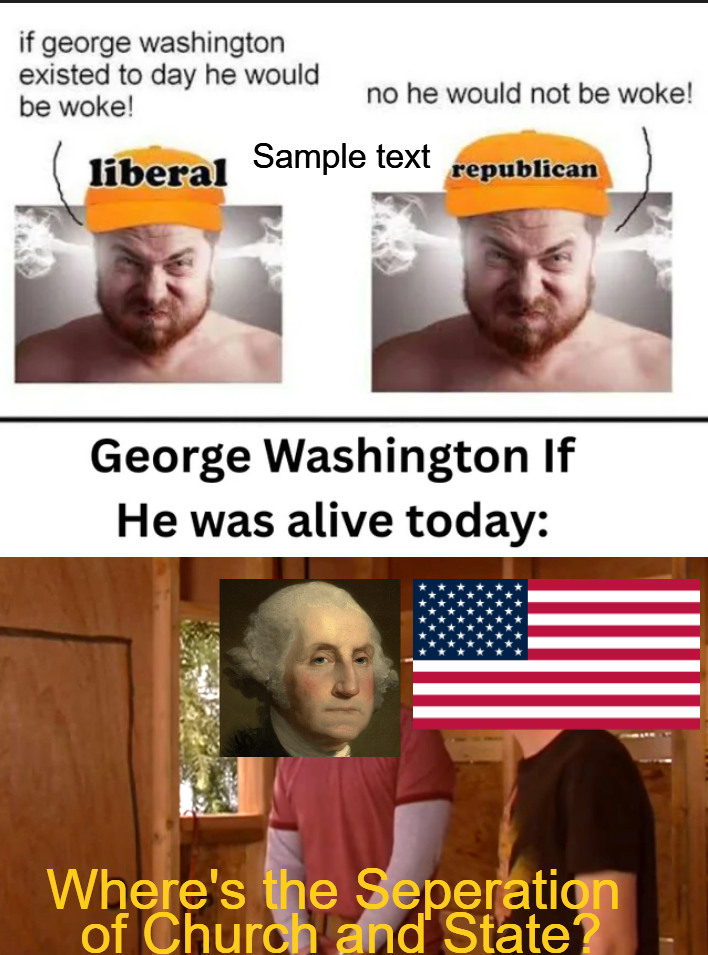
That Reddit question, “What would the founding fathers’ priorities be if they were actually alive today?” hits a nerve because it asks something people often get wrong. We drag the Founders into every modern argument, from gun control to student loans, as if they left us a cheat sheet for 5G and TikTok.
The truth is sharper and more interesting. We actually can make educated guesses about what they would care about now, not by treating them as prophets, but by reading what they obsessed over in their own time: power, corruption, faction, money, and war.
By the end of their lives, the Founders had already started arguing about what their own revolution meant. If you resurrected them in 2026, they would not arrive as a united Avengers squad of liberty. They would show up mid-argument and then aim that argument straight at our world.
How the Founders actually thought about the future
The first mistake people make is assuming the Founders wrote the Constitution as a sacred, finished product. They did not. They wrote it as a patch, a workaround for a system they already knew had failed.
In 1787, the Articles of Confederation were collapsing. Congress could not tax, could not enforce laws, and could not pay debts. Shays’ Rebellion in Massachusetts, where angry farmers shut down courts over debt and taxes, scared men like Washington and Madison. They saw a real risk of the republic falling apart in less than a decade.
The Constitutional Convention in Philadelphia was not a calm seminar. It was a summer-long argument about how to keep power from concentrating while still having a government that could actually function. They worried about standing armies, demagogues, foreign influence, and what they called “factions”. Today we call those parties and interest groups.
Madison, in Federalist No. 10, wrote that the main danger in a republic was faction: groups of citizens, united by passion or interest, who might trample the rights of others. His answer was not to eliminate faction, which he thought impossible, but to design a system where factions would compete and cancel each other out.
Hamilton, in Federalist No. 70, wanted an energetic executive, a president strong enough to act decisively in crises, but hemmed in by elections, impeachment, and shared powers.
They were not writing for 1787 only. They were writing for a future they knew would be bigger, richer, and more complicated than their world. They argued about what would happen when the country expanded west, when population exploded, when commerce grew.
So what? If you ask what their priorities would be today, you are really asking: which of the threats they worried about in the 1780s look most like our problems now?
What they feared most: concentrated power and corruption
One clean definition: The Founders’ central fear was concentrated power, whether in a king, a mob, or a moneyed elite. They built a system of checks and balances to slow down and fragment that power.
They did not agree on much, but they agreed on this: power tends to swell, and people in office will abuse it if they can. That is why the Constitution is full of friction. Two houses of Congress. A president who can veto. A Congress that can impeach. Courts that can strike down laws. States that keep their own powers.
Corruption, to them, did not just mean bribes. It meant the decay of civic virtue, the moment when officeholders stopped thinking about the public good and started thinking only about their own gain or their faction’s gain.
George Washington’s Farewell Address in 1796 reads like a warning label for modern politics. He worried about “the spirit of party” taking over everything. He warned about foreign influence in domestic politics. He warned about debt and permanent wars. He did not sound relaxed about the future.
John Adams, writing to Jefferson years later, said flatly that democracies tend to “commit suicide.” He thought republics were fragile and that human vanity and greed would always push them toward collapse or tyranny.
So what? If you dropped the Founders into 2026, their eyes would go straight to any place where power looks concentrated and unaccountable: the presidency, the security state, giant corporations, and the machinery of modern campaigning and lobbying.
What would shock them first: the imperial presidency and the security state
One of the simplest snippet-ready claims you can make: The Founders would see the modern presidency as far more powerful than they intended, especially in war and surveillance.
They gave Congress the power to declare war for a reason. They had just fought a war against a king who could drag his country into conflict. Yet since 1945, American presidents have sent troops into combat many times without a formal declaration of war.
Hamilton wanted an energetic executive, but he still imagined a president who needed Congress for money, war, and lawmaking. Madison, who wrote much of the Constitution, would look at modern executive orders, emergency powers, and permanent national security agencies and see something very close to what he feared: power that is hard to check in practice, even if it is limited on paper.
The modern surveillance state would probably horrify most of them. The Fourth Amendment, written in response to British “writs of assistance” that allowed broad, suspicionless searches, was supposed to protect people from general warrants and fishing expeditions.
Mass data collection, secret courts, and broad surveillance justified by national security would feel uncomfortably familiar to men who had just fought an empire that used those tools. Benjamin Franklin’s famous line about trading liberty for temporary safety is overquoted, but it reflects a real debate they had about security and freedom.
So what? A major priority for several Founders today would likely be reining in executive power, tightening war powers, and putting sharper legal limits on surveillance, because those are the exact pressure points they worried about in the 1780s.
Money, inequality, and the problem of a new aristocracy
Another common misconception is that the Founders were all free-market absolutists who would cheer any form of capitalism. In reality, they worried that concentrated wealth could corrupt republican government as badly as a king could.
Jefferson feared the rise of a “monied aristocracy” that would control government through debt and influence. He imagined a republic of small farmers and artisans, not giant corporations and global finance. He pushed for limits on inheritance and supported progressive taxation later in life.
Hamilton, by contrast, embraced national debt and a strong financial sector. He wanted a national bank and close ties between government and commerce. He thought this would stabilize the country and fuel growth.
Yet even Hamilton did not imagine corporations on the scale of modern tech or finance giants. Early American corporations were chartered for specific purposes like building canals or banks, and their charters were often time-limited.
Campaign finance would likely alarm almost all of them. The idea that elections could cost billions of dollars, funded heavily by wealthy donors and interest groups, would look to them like a textbook case of corruption. They worried about British-style “rotten boroughs” and patronage. Super PACs and dark money would feel like a new version of the same disease.
So what? A major modern priority for many Founders would be attacking what they would see as a new aristocracy of wealth: campaign finance reform, stricter anti-corruption rules, and perhaps new rules on corporate power and lobbying.
Democracy, voting rights, and who counts as “the people”
This is where modern readers often get tangled. Some assume the Founders would back every expansion of democracy. Others assume they were all elitists who hated mass participation. The record is mixed, and that matters for guessing their modern priorities.
At the founding, voting rules were mostly set by states. Many states required property or taxpaying qualifications. Women could not vote in most places. Enslaved people were excluded entirely. Free Black men could vote in some states, like early New Jersey, then lost that right as white backlash grew.
Hamilton and Madison did not trust pure direct democracy. They wanted representation, filters, and what they called “republican” government. The Senate was originally chosen by state legislatures, not by popular vote. The Electoral College put a layer between voters and the presidency.
Yet over time, many of the Founders themselves moved toward broader participation. Adams and Jefferson both lived long enough to see property requirements fall in many states. They watched mass parties emerge and ordinary white men flood into politics.
If they saw modern voting rights fights, they would probably split. Some, like Adams, might worry about demagoguery and uninformed voters. Others, like the later Jefferson, might support wide suffrage but still carry blind spots about race and gender.
What would be different is the definition of “the people.” The Civil War, Reconstruction, and the 14th and 15th Amendments changed the constitutional ground. The Founders, resurrected in 2026, would be arriving after 200 years of legal change that made birthright citizenship and equal protection central principles.
So what? Their modern priority here would not be rolling back voting rights, but arguing about how to protect a system they now saw as much more inclusive than anything they built, while still guarding against what they feared: manipulation, fraud, and demagogues.
Race, slavery, and the part of their legacy they could not escape
No honest answer to the Reddit question can skip this: several Founders were enslavers. Washington, Jefferson, Madison, and others built their wealth on human bondage while writing about liberty.
They knew it was a moral and political time bomb. Jefferson called slavery a “fire bell in the night” when he saw the Missouri crisis coming. He also did not free most of the people he enslaved. The Constitution itself baked in protections for slavery: the three-fifths compromise, the fugitive slave clause, and a 20-year shield for the transatlantic slave trade.
By the 1820s and 1830s, some of the last surviving Founders were already watching their work get reinterpreted. Pro-slavery politicians claimed the Constitution protected slavery forever. Abolitionists claimed the Declaration’s “all men are created equal” condemned it.
If you brought the Founders into a world shaped by the Civil War, the 13th, 14th, and 15th Amendments, Jim Crow, and the civil rights movement, they would be forced to confront the long-term consequences of their compromises.
Some, like Adams, who never owned slaves and defended African captives in the Amistad case later in life, would probably embrace the end of slavery and legal segregation as a fulfillment of the principles they wrote down. Others, like Jefferson, might be defensive, conflicted, or simply overwhelmed by how far the country had moved.
So what? Their modern priority here would not be to restart the slavery debate, but to wrestle with how their words were used both to defend and to destroy slavery, and what that means for questions of racial equality, policing, and citizenship today.
Would they rewrite the Constitution for the 21st century?
One more clean definition: The Founders saw the Constitution as a framework that could be amended, not a frozen scripture. Article V, the amendment process, was their built-in admission that they did not have all the answers.
They used it quickly. The Bill of Rights came just a few years after ratification. Later generations added income taxes, direct election of senators, term limits for presidents, and more.
If you showed them a country of 330 million people, with nuclear weapons, global supply chains, social media, and AI, they would probably be less surprised by the technology than by the fact that we are still using their 18th-century operating system with relatively few structural changes.
Some Founders would likely push for formal reforms instead of workarounds. They might question lifetime tenure for Supreme Court justices in an era of much longer lifespans. They might revisit the Electoral College, which has produced presidents who lost the popular vote. They might want clearer rules for emergencies and war powers.
At the same time, they would probably be impressed that their basic structure of separated powers and federalism is still recognizable. The fact that their arguments in the Federalist Papers are still cited in court cases would have pleased their egos.
So what? Their priority here would be less about tearing up the Constitution and more about using the tools they left, like amendments and statutes, to bring the structure in line with the scale and complexity of 21st-century life.
So what would their top priorities really be?
If you forced a short list out of a very argumentative group of dead revolutionaries, it might look something like this:
First, checking concentrated power in the presidency and the security state. That lines up directly with their fears of kings and standing armies.
Second, attacking corruption and the influence of money in politics. They would see modern campaign finance and lobbying as a threat to republican government.
Third, protecting the basic structure of checks and balances while updating some mechanics, like war powers, emergency powers, and perhaps the Electoral College.
Fourth, wrestling with the long shadow of slavery and race, because their own compromises helped create problems that took a civil war and a century of struggle to partially fix.
They would not agree on everything. Hamilton and Jefferson would still fight. Adams would still grumble about democracy. Franklin would still crack jokes. But they would recognize the core problem: a large, powerful republic trying to stay a republic.
The real use of the Reddit question is not to pretend we can channel their exact opinions on student loans or gun control. It is to remember what they were actually trying to build and what they were afraid of. Their fears about power, corruption, and faction are not antique. They are still the live wires under American politics.
Frequently Asked Questions
What would the Founding Fathers think about the modern presidency?
Most Founders would see the modern presidency as far more powerful than they intended, especially in war and national security. They gave Congress the power to declare war and expected the executive to be energetic but tightly checked. Permanent national security agencies, broad emergency powers, and frequent military action without formal declarations of war would look to them like a drift toward the kind of concentrated power they fought against.
Would the Founding Fathers support modern surveillance programs?
They would likely be deeply skeptical. The Fourth Amendment was written in reaction to British general warrants and broad, suspicionless searches. Mass data collection, secret courts, and wide surveillance justified by security concerns would feel very similar to the abuses they knew. Someone like James Madison, who worried about government overreach, would probably push for stricter legal limits and more transparency.
How would the Founding Fathers view money in politics today?
They would probably see modern campaign finance as a form of corruption. While they accepted that wealth and influence would always exist, they feared a “monied aristocracy” capturing government. The scale of modern campaign spending, super PACs, and lobbying would look like a new version of the patronage and elite control they associated with the British system. Many of them would likely support tighter rules on donations and lobbying.
Did the Founding Fathers expect the Constitution to stay the same forever?
No. They built an amendment process into the Constitution because they knew they did not have all the answers. The Bill of Rights was added shortly after ratification, and later generations changed the document to address slavery, voting rights, income taxes, and presidential terms. If they saw 21st-century America, they would probably be surprised that the basic structure had changed so little and might argue for new amendments to address modern problems.